
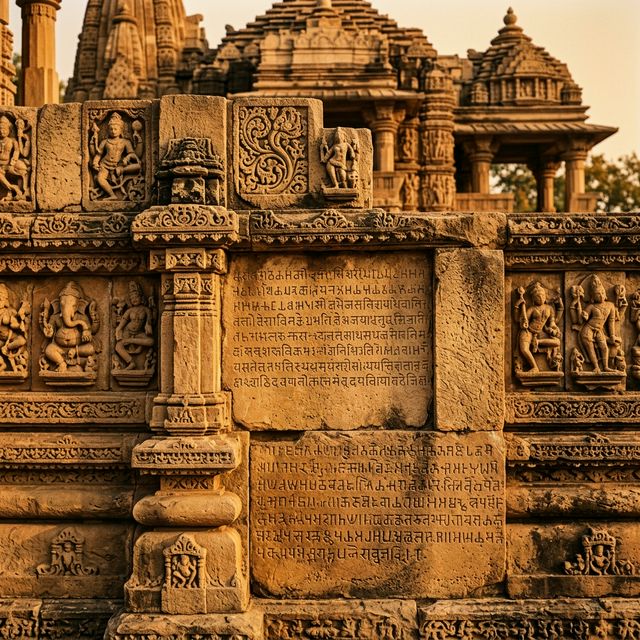
Discovered at Sankheda in the Vadodara district in 1895, these two copper-plates were issued by Dadda II, bearing the title Praśāntarāga. The Sanskrit charter employs the two variations of the Brāhmī script and can be dated to the fifteenth tithi of the bright fortnight of Vaiśākha, Kalacuri era 392 (20th April 642 CE).
Issued from his capital Nāndīpura (modern Nandod, Gujarat), the charter records the donation of an agricultural field situated on the eastern boundary of Suvarṇārapalli village within the Saṅgamakheṭaka district (modern Sankheda, Gujarat). Defined by exact physical boundaries, including a tank and adjoining village limits, the plot requires one piṭaka of paddy for seed. The beneficiary is Sūrya, a brāhmaṇa of the Bhāradvāja gotra and student of the Vājasaneya Mādhyandina recension. The grant transfers all customary revenues, including udraṅga and uparikara, along with broad administrative immunities. The explicit purpose is to sustain the continuous performance of the five primary Vedic sacrifices. The edict concludes with imprecatory verses and the royal sign-manual and was authored by the minister of peace and war, Reva.
 Editor's Comment:
First Plate
1. siddhām svasti | nāndīpurātsajaladhanapaṭalanirggatarajanikarakarāvabodhitaku mudadhavalayaśaḥ-
2. pratānāsthagitanabhomaṇḍalonekasamarasaṅkaṭa pramukhāgatanihataśatrusāmantakulavadhūprabhā–
3. tasamayaruditacchalodgīyamānavimalanistrimśa pratāpo devadvijātigurucaraṇakamalapraṇā–
4. modghṛṣṭavajramaṇikoṭiruciradīdhitivirājitamakuṭodbhāsitaśirāḥ dīnānāthāturābhyā–
5. gatārtthijanākliṣṭaparipūritavibhavamanorathopacīyamāna triviṣṭapaikasahāyadharmmasañ–
6. cayaḥ praṇayaparikupitamāninījanapraṇāmapūrvvamadhura vacanopapāditaprasādaprakāśī–
7. kṛtavidagdhanāgarakasvabhāvo vimalaguṇakiraṇapañjarākṣiptabahalakalitimiranicayaḥ
8. samadhigatapañcamahāśabdaśrīdaddakuśalī sarvvāneva rājasāmantabhogikaviṣayapatirāṣṭra–
9. grāmamahattarādhikārikādīnsamanuvarṇṇya bodhayati | astu vo viditamasmābhiḥ saṅgamakheṭakaviṣa–
10. yāntarggatasuvarṇṇārapalligrāme pūrvvasīmni | tadviṣayamānena vrīhipiṭakavāpam kṣetram
11. yasyāghāṭanāni pūrvvataḥ kṣīrasaragrāmasīmāsandhiruttarataḥ kukkuṭavallikāgrāmasīmāsandhiḥ
12. aparataḥ brahmadeyakṣetram vaṭavṛkṣastalāikā ca | dakṣiṇataḥ suvarṇṇārapalligrāmagāmī panthāḥ
13. aṭavīpāṭakagrāmasandhiśca || evametaccaturāghāṭanaviśuddham kṣetram sodraṅgam
14. soparikaram sarvvādānasaṅgrāhyam sarvvadityaviṣṭiprātibhedikāparihīṇam
Second Plate
15. bhūmicchidranyāyenācāṭabhaṭaprāveśyamā candrārkkārṇṇavakṣitisthitisamakālīnam
16. putrapautrānvayabhogyam daśapuravinirggatakṣīrasaragrāmavāstavyabharadvājasagotravāja sa-
17. neyamādhyandinasabrahmacāribrāhmaṇasūryyāya balicaruvaiśvadevāgnihotrapañcamahāyajñādikkri–
18. yotsarppaṇārttham mātāpitrorātmanaśca puṇyayaśobhivṛddhayedya vaiśākhaśuddhapañcadaśyāmudakātisarggeṇā–
19. tisṛṣṭam | yatosyāsmadvaṃśyairanyairvvāgāmi bhogapatibhiḥ prabalapavanapreritodadhijalataraṅgacañcalam
20. jīvalokamabhāvānugatānasārānvibhavāndīrgghakālastheyasaśca guṇānākalayya sāmānyabhogabhūpra-
21. dānaphalepsubhiḥ śaśikararuciram yaśaścirāya cicīṣubhirayamasmaddāyonumantavyaḥ pālayitavyaśca |
22. yo vājñānatimirapaṭalāvṛtamatirācchindyādācchidyamānakam vānumodeta sa pañcabhirmmahāpātakaiḥ samyuktaḥ
23. syāditi | uktañca bhagavatā vedavyāsena vyāsena | ṣaṣṭim varṣasahasrāṇi svargge tiṣṭhati bhūmidaḥ | ācchettā cānuma–
24. ntā ca tānyeva narake vaset || 1 || bindhyāṭavīṣvatoyāsu śuṣkakoṭaravāsinaḥ | kṛṣṇāhayo hi jāyante bhūmidāyam hara–
25. nti ye || 2 || bahubhirvvasudhā bhuktā rājabhiḥ sagarādibhiḥ | yasya yasya yadā bhūmistasya tasya tadā phalam || 3 || yānīha dattāni
26. purā narendrairddānāni dharmmārtthayaśaskarāṇi | nirvbhuktamālyapratimāni tāni ko nāma sādhuḥ punarādadīta || 4 || svada-
27. ttām paradattām vā yatnādrakṣa yudhiṣṭhira | mahīm mahimatām śreṣṭha dānācchreyonupālanam || 5 || iti samvatsaraśatatraye
28. dvinavatyadhike vaiśākhaśuddhapañcadaśyām svamukhājñayā likhitamidam sandhivigrahakaraṇādhikṛtareveṇa
29. sam 300 90 2 vaiśākha śu 10 5 | dinakaracaraṇārccanaratasya śrīvītarāgasūnoḥ svahastoyam śrīpraśāntarāgasya ||
Lines 1 to 8
The illustrious Dadda [II], who has attained the pañcamahāśabda; who has covered the expanse of the sky all round with the shoots of his fame as white as the night-lotuses which are made to bloom by the rays of the moon as she emerges from a mass of water-laden clouds; the prowess of whose spotless sword is always being loudly celebrated in songs in the guise of the morning lamentations of the virtuous wives of the hostile neighbouring princes, who were slain by him when they opposed him in many dangerous battles; whose head is radiant with a crown shining with the bright rays of the tips of diamonds set in it, which are scratched in making obeisance to the lotus-like feet of gods, brāhmaṇas, and elderly persons; the store of whose religious merit, the sole companion in heaven, is being increased by the unwearied fulfilment of the desire for wealth of the poor, the helpless, the sick, guests, and supplicants; who shows himself as a cultured man of the town by winning, by means of sweet words preceded by obeisance, the favour of proud ladies who are made angry by their love for him; who has cast the mass of the dense darkness of the Kali age into the cage of the rays of his spotless virtues; he, being in good health, thus informs all the kings, feudatories, bhogikas, and heads of viṣayas, the mahattaras of rāṣṭras and villages, officials, and others:
Lines 9 to 18
Be it known to you! For the increase of the religious merit and fame of our mother and father and of ourself, we have granted, with a libation of water today, on the fifteenth tithi of the bright fortnight of Vaiśākha, the field on the eastern boundary of the village Suvarṇārapalli situated in the viṣaya of Saṅgamakheṭaka, requiring a piṭaka of paddy for its seed grains, whose boundaries are: on the east, the junction with the boundary of the village Kṣīrasara; on the north, the junction with the boundary of the village Kukkuṭavallikā; on the west, a field donated to a brāhmaṇa, a banyan tree, and a talā-ikā; and on the south, the way leading to the village Suvarṇārapalli. The field, marked clearly with these four boundaries, together with undraṅga and uparikara, inclusive of all dues and exempt from all gifts, forced labour, and special rights; which is not to be entered by cāṭas and bhaṭas, according to the maxim of waste land; and which is to be enjoyed by a succession of sons and sons’ sons as long as the moon, the sun, the ocean, and the earth will endure, is granted to the brāhmaṇa Sūrya of the Bharadvāja gotra, a student of the Vājasaneya Mādhyanadina śākhā, who, having emigrated from Dāśapura, now resides in the village Kṣīrasara, for the maintenance of the five great sacrifices such as bali, caru, vaiśvadeva, and agnihotra, and other religious rites.
Lines 19 to 22
Wherefore, future rulers, whether of our family or others, considering that this world of living beings is unsteady like the waves of the water of the ocean tossed by a strong wind, that wealth is liable to be lost and worthless, and that virtues alone endure for a long time, and desiring to share in the reward of this donation of land, which can be equally enjoyed by them, and to accumulate for a long time fame as lovely as moon-beams, should consent to this our gift and preserve it! Whoever, with his mind shrouded by the veil of the darkness of ignorance, confiscates it or allows it to be confiscated, shall incur the five great sins!
Lines 23 to 26
And it has been said by the holy Vyāsa, the redactor of the Vedas:
(Here follow five benedictive and imprecatory verses).
Lines 27 to 29
In the year three hundred increased by ninety-two, on the fifteenth tithi of the bright fortnight of Vaiśākha, this charter has been written, at the command of our mouth, by Reva, who is in charge of the department of Peace and War. The year 300 and 90 and 2; the month Vaiśākha; the bright fortnight; the lunar day 10 and 5. This is the sign-manual of the illustrious Praśāntarāga, the son of the illustrious Vītarāga, who is devoted to the feet of the sun.
| Dynasty: | Gurjara |
| Ruler: | Dadda II |
| Date: | 20th April 642 CE (Vaiśākha, śuddha 15, varṣa 392) |
| Donor: | Dadda II (Praśāntarāga) |
| Donee: | Brāhmaṇa Sūrya |
| Language: | Sanskrit |
| Script: | Brāhmī |
| Occasion: | A full moon day |
| Religion: | Vedic |
| Nature of grant: | Land donation |
| Purpose: | To perform the religious rites including bali, caru, vaiśvadeva, and agnihotra |
| Provenance of inscription: | Sankheda, Vadodara, Gujarat |
| Type of Inscription: | Copperplate grant |
| Source: |
Bibliography & Research
Bühler, G. (n.d.) Sitzungsberichte der philos.-histor, Classe der Wiener Akademie, CXXXV, No. VIII.
- Bühler, G. (1899). No 5. Two Grants of Dadda IV Praśāntarāga [Chedi] Samvat 392. Epigraphia Indica, V, 37-41.
- Mirashi, V. V. (Ed.). (1955). Corpus Inscriptionum Indicarum Inscriptions of the Kalachuri Chedi Era. In (Vol. Vol 4 (Part 1), li-lvii and 75-78. Archaeological Survey of India.
