
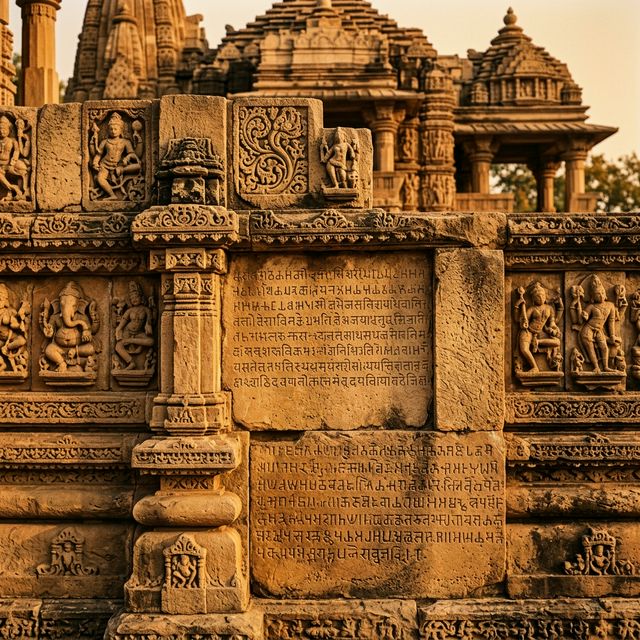
The Kaira copper-plate inscription, discovered in Kheda, Gujarat, was issued by Dadda II, also known as Praśāntarāga. It can be dated to Kārttika, fifteenth tithi of the bright fortnight, the Kalacuri year 385 which corresponds to 12th October 634 CE. The Sanskrit charter employs the Brāhmī script and Sasnkrit language. Written by the peace and war officer Reva, the document is a direct re-issuance of a prior grant made five years earlier. It modifies the beneficiary list for the donation of Śirīṣapadraka village located in the Akrūreśvara viṣaya.
Issued from Nāndīpurī (modern Nandod, Gujarat), the charter formally records the donation of the village Śirīṣapadraka (modern Sisodra, Gujarat) in the Akrūreśvara viṣaya (modern Ankleshwar, Gujarat) to thirty-four Brāhmaṇa scholars residing in Jambūsaras and other localities. These donees belong to various gotras and Vedic recensions, including the Bhāradvāja, Kāśyapa, and Hārīta lineages. Granted on the full-moon day, the land includes revenues like udraṅga and uparikara, and carries exemptions from standard taxes, administrative interference, and forced labor. The endowment strictly funds the perpetual performance of the five primary Vedic sacrifices including bali, caru, vaiśvadeva, and agnihotra. Concluding with standard imprecatory verses invoking the sage Vyāsa, the text ends with the royal sign-manual of the king.
First plate
1. siddham svasti | nāndīpurītaḥ || vividhavimalaguṇaratnasampadudbhāsitasakaladiṅmukheparitrātāśeṣasapakṣa mahāmahībhṛti satatamavilaṅghi-
2. tāvadhau sthairyya gāmbhīryya lāvaṇyavati mahāsattvatayātiduravagāhe gurjjaranṛpativamśa mahodadhau śrīsahajanmā kṛṣṇahṛdayāhitā–
3. spadaḥ kaustu bhamaṇiriva vimalayaśodīghitinikaravinihatakalitimiranicayaḥ satpakṣovainateya ivākṛṣṭaśatrunāgakulasantati-
4. rutpattita eva dinakaracaraṇakamalapraṇāmāpanītāśeṣaduritanivahassāmantadaddaḥ | pratidinamapetaśaṅkam yena sthitamacala-
5. guṇanikarakesaravirājitavapuṣā vinihatārigajakumbhavigalitamuktāphala cchalaprakīrṇṇavimalayaśovitānenarūpānurū-
6. pam sattva mudvahatā kesarikiśorakeṇevopari kṣitibhṛtām | yañcātimalinakaliyugatimiracandramasamanudivasamanyonyasparddhaye-
7. vāyayuḥ kalāsamūhādayo guṇāḥ vikkramānītamadavilāsālasagatayorātigajaghaṭāḥ pramadāśca | yasya cāvirata–
8. dānapravāhaprīṇitārtthimadhukarakulasya rucirakīrttivaśāsahāyasya satatamaskhalitapadam prasarataḥ sadvamśāhita śobhā-
9. gauravasya bhadramataṅgajasyeva karaghātavinihatakṣitibhṛdunnatatanūruhasya revānirjjharasalilaprapātamadhuraninadasya
10. bhagodbhavāssamunnatapayodharāhitaśriyo dayitā iva mude vindhyanagopatyakāḥ | yaścopamīyate śaśini saumyatvavaimalyaśobhāka-
11. lābhinnam kalaṅkena śrīniketaśobhāsamudayādhakṛtakulakaṇṭakatayā kamalākare na paṅkajanmatayā | sattvotsāhavikkramaimṛ-
12. gādhirāje na krūrāśayatayā | lāvaṇyasthairyyagāmbhīryyasthityanupālanatayā mahodadhau na vyālāśrayatayā | satkaṭakasa-
13. munnatavidyādharāvāsatayā himācale na khaśaparivāratayā | yasya ca sadbhogaḥ śeṣoragasyeva vimalakiraṇamaṇiśatāviṣkṛta-
14. gauravassakalajagatsādhāraṇaḥ | yasya prakāśyate satkulam śīlena | prabhutvamājñayā | śastramarātipraṇipātena | koponigraheṇa |
15. prasādaḥ pradānairddharmmo devadvijātigurujanasaparyyayeti | tasya sūnuḥ prataptarucirakanakāvadātaḥ kalpatarurivāviratama-
16. bhirucitaphalapradaḥ satatamṛtugaṇasyeva vasantasamayo vasantasamayasyeva pravikasitanibiḍacūtataruvanābhogaḥ sarasa iva
17. kamalanivahaḥ kamalanivahasyeva prabodho mahāviṣadharasyeva maṇirmmaṇeriva svacchatārabhāvo mahodadherivāmṛtakalaśomṛtaka-
18. laśasyevāmaraṇadāyitvaprabhāvaḥ kariṇa iva madaḥ pramadājanasyeva vilāso vibhavasyeva satpātraviniyogo dharmma-
19. syeva kratuḥ kratoriva svadakṣiṇākālaḥ premṇa iva sadbhāvaḥ śaśina ivāmalakalāsamūho niyatamalaṅkārabhūtaḥ sakala–
20. niśākarābhirūpavadanaḥ śaklo vadānyaḥ prabalaripubalānīkasamarasamavāptavijayaśrīḥ śrīvītarāgāparanāmā śrījayabha-
21. ṭaḥ kalipratipakṣabhayāccharaṇārtthina iva yamāśritāḥ savinayā guṇāḥ sphuritavimalakīrttisaudāmaṇinā yena sakalajī-
22. valokānandakāriṇā kālabalāhakenevāvandhyaphalam garjjatā praṇayināmapahṛtāstṛṣṇāsantāpadoṣāḥ | yaśca śūropi satata-
23. mayaśobhīrurapagatatṛṣṇopi guṇārjjanāvicchinnatarṣaḥ sarvvapradānaśīlopi parayuvatihṛdayadānaparāṅmukhaḥ paṭurapi pa-
24. raparivādābhidhānajaḍadhīḥ | yasya ca na virodhi rūpam śīlasya yauvanam sadvṛttasya vibhavaḥ pradānasya trivarggasevā parasparā-
25. pīḍanasya prabhutvam kṣānteḥ kalikālo guṇānāmiti || tasya sūnuḥ sajalaghanapaṭalanirggatarajanikarakarāvabodhi–
26. takumudadhavalayaśaḥ pratānāsthagitanabhomaṇḍalonekasamarasamkaṭapramukhāgatanihataśatrusāmanta-
27. kulavadhūprabhātasamayaruditacchalodgīyamānavimalanistrimśa pratāpo devadvijātiguru-
Second Plate
28. caraṇakamalapraṇāmodghṛṣṭavajramaṇikoṭiruciradīdhiti virājitamukuṭodbhāsitaśirā
29. dīnānāthāturābhyāgatārtthijanākliṣṭaparipūrita vibhava manorathopacīyamānatriviṣṭapaikasa –
30. hāyadharmmasañcayaḥ praṇayaparikupitamāninī janapraṇāmapūrvamadhuravacanopapāditaprasādaprakāśī-
31. kṛtavidagdhanāgarakasvabhāvo vimalaguṇakiraṇapañjarākṣiptavahalakalitimiranicayassamadhigatapañca-
32. mahāśabdaḥ śrīdaddakuśalī sarvvaneva rājasāmantabhogikaviṣayapatirāṣṭra grāmamahattarādhikārikādīnsa-
33. manubodhayatyastu vo viditamasmābhirakrūreśvaraviṣayāntarggata | śirīṣapadrakam | eṣa grāmassodraṅgaḥ
34. soparikaraḥ sarvvādānasaṅgrāhyaḥ sarvvadityaviṣṭiprātibhedikāparihīṇo bhūmicchindranyāyenācāṭabhaṭaprā–
35. veśya ācandrārkkārṇṇavakṣitisthitisamakālīnaḥ putrapautrānvayabhogyo jambūsarovāstavyabharadvājasa-
36. gotrakaṇvasabrahmacāribrāhmaṇādityaravi | tathā tāpiśūra | indraśūra | īśvara | tathā vatsasagotra bhaṭṭya
37. dhyāpaka | gopāditya | vāḍa | viśākha | agniśarmma | bhaṭṭigaṇa | droṇa | māṭharasagotraviśākha | dhara | nandi |
38. rāma | dauṇḍakīya sagotratāpiśarmma | dvitāpiśarmma | droṇa | bhaṭṭi | pitṛśarmma | bhāgisvāmi | dattasvāmi | lākṣma-
39. ṇyasagotradhara | dāmadhara | īśvara | kauṇḍinyasagotrabāva | ghoṣa | śaila | kāśyapasagotrabhaṭṭidāma| vatra |
40. hārītasagotradharmmadhara | dhaumrāyaṇasagotrakarkkādhyāpaka | āvuka | indraśūrādibrāhmaṇebhyaścatustrimśadbhyo
41. balicaruvaiśvadevāgnihotrapañcamahāyajñādikkriyotsarppaṇārtham mātāpitrorātmanaśca puṇyayaśobhivṛddhaye kārtti–
42. kyāmudakātisarggeṇātisṛṣṭaḥ yatosmadvamśyairanyairvvāgāmi bhogapatibhiḥ prabalapavanapreritodadhijalataraṅga–
43. cañcalam jīvalokamabhāvānugatānasārāvinabhavāndīrgghakālastheyasaśca guṇānākalayya sāmānyabhogabhū-
44. pradānaphalepsubhiḥ śaśikararuciram yaśaścirāya cicīṣubhirayamasmaddāyonumantavyaḥ pālayitavyaśca | yo vājñā–
45. natimirapaṭalāvṛtamatirācchindyādācchidyamānakam vānumodeta sa pañcabhirmmahāpātakaissamyuktassayāditi | uktam ca bhaga–
46. vatā vedavyāsena vyāsena || ṣaṣṭim varṣasahasrāṇi svargge tiṣṭhati bhūmidaḥ | ācchetā cānumantā ca tānyevā narake vaset || 1 ||
47. vindhyāṭavīṣvatoyāsu śuṣkakoṭaravāsinaḥ | kṛṣṇāhayo hi jāyante bhūmidāyam haranti ye || 2 || bahubhirvvasudhā bhuktā rājabhissa–
48. garādibhiḥ | yasya yasya yadā bhūmistasya tasya tadā phalam || 3 || yānīha dattāni purā narendrairddānāni dharmmārtthayaśaskarāṇi | nirbhukta–
49. mālyapratimāni tāni ko nāma sādhuḥ punarādadīta || 4 || iti || samvatsaraśatatraye pañcāśītyadhike kārttikapaurṇṇamāsyām
50. likhitam sandhivigrahādhikaraṇādhikṛtareveṇa svamukhājñayeti | sam 300 80 5 kārttika śu 10 5 dinakaracaraṇā–
51. rccanaratasya śrīvītarāgasūnoḥ svahastoyam praśāntarāgasya ||
Seal
sāmanta daddaḥ|
Lines 1 to 14
Success! Hail! From Nāndīpurī:
In the family of the Gurjara kings which resembles the ocean; which has brightened the faces of all regions with the abundance of its manifold and spotless excellences as the ocean does with its varied and stainless jewels; which has protected all great kings who are its allies, as the ocean has saved all the great mountains possessed of wings (that sought refuge in it); which always refrains from transgressing the limits (of proper conduct), as the ocean abstains from overflowing its shores; which is possessed of firmness, serenity and beauty, as the ocean has stability, depth and saltiness; which, on account of its great courage, is difficult to be attacked, as the ocean, on account of its having large animals, is difficult to be plunged into; there (was) the sāmanta Dadda [I], who, possessing the goddess of (royal) fortune since his birth and occupying a (royal) position hostile to the evil-minded (kṛṣṇā-hṛdaya), destroyed (the influence of) the Kali age by the mass of his spotless fame, as the Kaustubha jewel which was produced together with Lakṣmī, and has found a resting place on Kṛṣṇa’s breast, dispels a mass of darkness with the multitude of its rays; who, having good allies, has uprooted the descendants of the families of his adversaries even as Vainateya (Garuḍa), possessing excellent wings, destroyed the progeny of the hostile families of serpents; who, even from his birth had all his calamities removed by bowing to the lotus-like feet of the sun.
He, who had a body adorned with a multitude of steady excellences and a canopy of white and spotless fame in the guise of pearls falling from the frontal globes of the elephants of (his) enemies that were slain (in battles), and who was possessed of courage suitable to his (majestic) form, stood always fearlessly at the head of kings, even as a young lion, with his body adorned with a mane, and a canopy of his bright and spotless fame spread over him in the guise of pearls from the frontal globes of hostile elephants slain by him, stands fearlessly on the top of mountains. Accomplishments such as (proficiency in) a number of fine arts, (and) troops of the elephants of his enemies, walking slowly on account of rut, that were captured by his valour, and young and beautiful women walking languidly owing to the gracefulness (of their gait) caused by intoxication, who were attracted by his prowess, day after day, as if in mutual rivalry, resorted to him who was the moon (dispelling) the darkness of the extremely sinful Kali age.
Like young women obtained by good fortune and rendered beautiful by their plump breasts, the regions at the feet of the Vindhya mountain created by Bhaga and adorned by high clouds, delighted him, who pleased a multitude of supplicants by the incessant flow of his charity, as an excellent elephant pleases swarms of bees by the unceasing flow of his rut; who was attended by splendid glory as the elephant is attended by his charming mate; who always walked with an unfaltering step and whose great excellence was due to his noble descent, as the elephant’s splendid form is due to his excellent back-bone; who had his body horripilated when he struck down (hostile) kings by the blow of his arm (and) whose voice was sweet like (the sound of) the falling of the water of the stream of the Revā (Narmadā). He was compared with the moon in respect of gentleness, purity, beauty and (proficiency in) arts, but not in that of any stain, with an assemblage of lotuses in respect of having overcome the troublesome members of (his) family (as lotuses get over thorns) by the mass of (his) splendour on account of his being the abode of royal fortune (Śrī) (as the lotuses are the abode of Lakṣmī), but not in respect of being produced from sin, with the lord of beasts (i.e., the lion) in point of courage, energy and valour, but not in that of having a cruel heart, with the great ocean in respect of beauty, stability, serenity and maintenance of the bounds of morality, but not in that of giving shelter to wicked persons, with the mountain Himālaya, in respect of being the resort of noble men of learning in his excellent capital, but not in that of being surrounded by degraded warriors. His excellent wealth, which, like the excellent hood of the serpent Śeṣa, had its magnificence manifested by hundreds of jewels of spotless rays, was shared by the whole world. His noble birth was revealed by (his) character, his power, by (the implicit obedience of his) commands, his (skill in the use of) weapons, by the submission of (his) foes, his wrath, by the punishment (inflicted on his enemies), his favour, by (his) gifts, (and) his piety, by the worship of gods, Brāhmaṇas and elderly persons.
Lines 15 to 24
His son (was) the illustrious Jayabhaṭa [I], who had the other name of the illustrious Vītarāga, who was resplendent like heated glittering gold; who, like the wish-fulfilling tree, incessantly granted the desired objects (of supplicants), who was always and invariably an ornament (to his family) as the vernal season is to the cycle of seasons, as a grove of blossoming and densely growing mango trees is to the vernal season, as an assemblage of lotuses is to a lake, as blooming is to an assemblage of lotuses, as a jewel is to a great serpent, as spotless radiance is to a jewel, as the pot of nectar was to the ocean, as the power of conferring immortality is to the pot of nectar, as rutting is to an elephant, as dalliance is to a young lovely woman, as conferment on a worthy person is to wealth, as a sacrifice is to religion, as the time of distributing the sacrificial fee is to a sacrifice, as good nature is to love, (and) as a collection of spotless digits is to the moon; whose face was lovely like the full moon; who was affable (and) liberal and who had won the goddess of victory in fighting with the armies of his powerful foes. To him all virtues together with humility resorted as if seeking his protection from fear of their foe the Kali (age). He, who had shining and spotless fame as a dark cloud has a bright flash of lightning, and who delighted the whole living world, removed the evils of avidity and worry of supplicants as a dark cloud roaring, not in vain, removes the thirst and heat of those who long (for rain). Though brave, he was always apprehensive of (incurring) infamy; though free from avarice, he had an unceasing thirst for the acquisition of virtues; though he was in the habit of giving everything, he was averse to giving his heart to others’ wives; though eloquent, he was dull-witted in abusing others. His handsome form was not opposed to good character; (nor) his youth, to good conduct; (nor) his wealth, to charity; (nor) his pursuit of the three (aims of life), to the absence of mutual conflict (among them); (nor) his power, to forgiveness; (nor his living in) the Kali age, to (his possession of) virtues.
Lines 25 to 32
His son, the illustrious Dadda [II] who has attained the pañcamahāśabda, who has covered the expanse of the sky all round with the shoots of his fame as white as the night-lotuses which are made to bloom by the rays of the moon as she emerges from a mass of water-laden clouds; the prowess of whose spotless sword is (always) being loudly celebrated in songs in the guise of the morning lamentations of the virtuous wives of the hostile neighbouring princes, who were slain (by him) when they opposed him in many dangerous battles; whose head is radiant with a crown shining with the bright rays of the tips of diamonds (set in it) which are scratched in making obeisance to the lotus-like feet of gods, brāhmaṇas and elderly persons; the store of whose religious merit the sole companion in heaven is being increased by the unwearied fulfilment of the desire for wealth of the poor, the helpless and the sick, guests and supplicants; who shows himself as a cultured man of the town by winning (again) by means of sweet words preceded by obeisance, the favour of proud ladies who are made angry by (their) love (for him); who has cast the mass of the dense darkness of the Kali age into the cage of the rays of his spotless virtues, (he), being in good health, thus informs all the kings, feudatories, bhogikas and heads of viṣayas, the mahattaras of rāṣṭras (provinces) and villages, officials and others:
Lines 33 to 41
Be it known to you! For the increase of the religious merit and fame of (our) mother and father and of ourself, we have granted, with a libation of water on the full-moon day of Kārttika, this village, (viz.,) Śrīṣapadraka, situated in the viṣaya of Akrūreśvara, together with udraṅga and uparikara, inclusive of all dues and exempt from all gifts, forced labour and special rights, which is not to be entered by cāṭas and bhaṭas, according to the maxim of waste land, (and) which is to be enjoyed by a succession of sons and sons’ sons (of the donees) as long as the moon, the sun, the ocean and the earth will endure, to the thirty-four Brāhmaṇas, (namely,) the brāhmaṇa Ādityaravi, who is a resident of Jambūsaras, who is of the Bharadvāja gotra and a student of the Kaṇva (caraṇa), and also Tāpiśūra, (and) Indraśūra, (and) Iśvara; and also Bhaṭṭi, the teacher, who is of the Vatsa gotra, (and) Gopāditya, (and) Vāḍa, (and) Viśākha, (and) Agniśarman, (and) Bhaṭṭigaṇa, (and) Droṇa; Viśākha of the Māṭhara gotra, (and) Dhara, (and) Nandi, (and) Rāma; Tāpiśarman of the Dauṇḍakīya gotra, (and) the second Tāpiśarman, (and) Droṇa, (and) Bhaṭṭi, (and) Pitṛiśarman, (and) Bhāgisvāmin, (and) Dattasvāmin; Dhara of the Lākṣmaṇya gotra, (and) Dāmadhara, (and) Iśvara; Bāva of the Kauṇḍinya gotra, (and) Ghoṣa, (and) Śaila; Bhaṭṭi Dāma of the Kaśyapa gotra, (and) Vātra; Dharmadhara of the Hārita gotra, Karka, the teacher, of the Dhaumrāyaṇa gotra, (and) Āvuka, (and) Indraśūra, for the maintenance of the five great sacrifices (such as) bali, caru, vaiśvadeva, agnihotra and such other (religious) rites.
Lines 42 to 44
Wherefore, future rulers whether of our family or others, considering that (this) world of living beings is unsteady like the waves of the water of the ocean tossed by a strong wind, that wealth is liable to be lost and worthless, and that virtues (alone) endure for a long time and desiring to share in the reward of (this) donation of land, which can be equally enjoyed (by them) and to accumulate for a long time fame as lovely as moon-beams, should consent to this Our gift and preserve it! Whoever, with his mind shrouded by the veil of the darkness of ignorance, confiscates it or allows it to be confiscated, shall incur the five great sins!
Lines 45 to 48
And it has been said by the holy Vyāsa, the redactor of the Vedas:
(Here follow four benedictive and imprecatory verses).
Lines 49 to 51
In the year three hundred increased by eighty–five, on the fifteenth (lunar day) of Kārttika, (this charter) has been written at the command of (our) own mouth by Reva, (the officer) in charge of the Department of Peace and War.
The year 300 (and) 80 (and) 5, (the month) Kārttika, (the lunar day) 10 (and) 5.
This is the sign-manual of Prasāntarāga, the son of Vītarāga, who is devoted to worship of the feet of the sun.
Seal
The sāmanta Dadda.
| Dynasty: | Gurjara |
| Ruler: | Dadda II |
| Date: | 12th October 634 CE (Kārttika, śukla 15, varṣa 385) |
| Donor: | Dadda II (Praśāntarāga) |
| Donee: | Thirty-four Brāhmaṇas various gotras and vedic recensions |
| Language: | Sanskrit |
| Script: | Brāhmī |
| Religion: | Vedic |
| Nature of grant: | Land donation |
| Purpose: | To perform the religious rites including bali, caru, vaiśvadeva, and agnihotra |
| Provenance of inscription: | Kheda, Gujarat |
| Type of Inscription: | Copperplate grant |
| Source: |
Bibliography & Research
Dowson, J. (1865). Kairā Plates of Dadda II. Journal of the Royal Asiatic Society (New Series), I, p. 247.
- Fleet, J. F. (1884). Sanskrit and Old Canarese Inscriptions. Indian Antiquary, XIII, 81-91.
- Prinsep, J. (1838). VII. Examination of the Inscriptions from Girnar in Gujarat, Dhauli in Cuttack, continued by James Prinsep. Journal of the Asiatic Society of Bengal, VII, 334-356, here 348.
- Mirashi, V. V. (Ed.). (1955). Corpus Inscriptionum Indicarum Inscriptions of the Kalachuri Chedi Era. In (Vol. Vol 4 (Part 1), li-lvii and 67-72. Archaeological Survey of India.
