
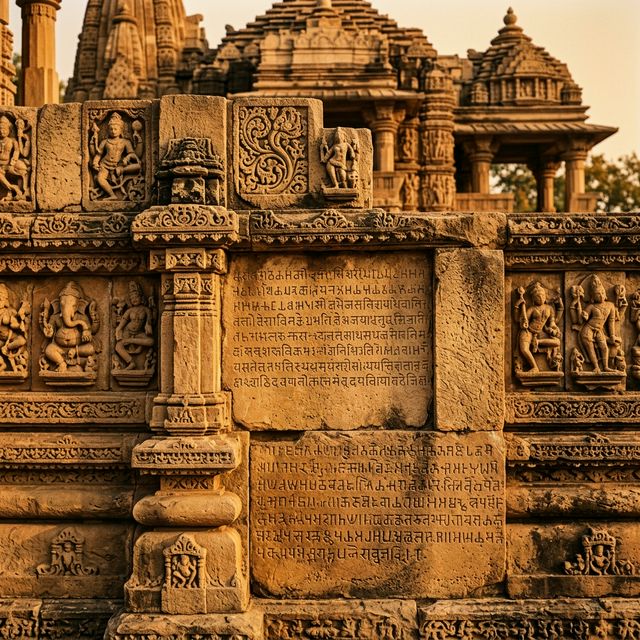
Discovered in 1875 in Kavi within the Baruch district, Gujarat, this single copper plate constitutes the second half of a charter issued by the Gurjara ruler Jayabhaṭa IV. Originally found within a water tank behind a local temple, the artifact preserves its text in the Brāhmī script and Sanskrit language, along with the royal sign-manual.
The inscription opens with a eulogy of Jayabhaṭa IV, highlighting his military triumph over the Tājjika forces in the city of the lord of Valabhī. The charter formally records the royal donation of fifty nivartanas of land situated in the village of Kemajju, within the Bharukachchha viṣaya (modern Bharuch, Gujarat). The donation was made for the maintenance and repairs of the temple of Āśramadeva. The endowment also includes funds for daily offerings, musical services, an alms-house, and architectural repairs. Granted on the tenth tithi of the bright half of Āṣāḍha, Kalcuri year 486 corresponding to 22nd June 736 CE, Friday, during the sun's transit into Karkaṭa. The charter also delineates precise agrarian boundaries and conveys administrative immunities, concluding with standard imprecatory verses and the monarch's sign-manual.Second Plate
1. turaṅgamanikarabhaṅgabhāsuro drutadalitadviradakumbhasthalagalitamuktāphalanikaradanturāsi-
2. latāmarīcinicayamecakitadakṣiṇabāhuśikharaḥ padmākara eva prakaṭānekalakṣaṇo na punarjja-
3. lāśayaḥ kṣapākara iva sakalakalākalāpānvito na punarddoṣākaraḥ sāgara ivāntaḥ praveśitavipakṣabhūbhṛdmaṇḍalo na
4. punargrāhākulaḥ nārāyaṇa iva sudarśanacakrakṣapitavipakṣo na punaḥ kṛṣṇasvabhāvaḥ hara ivāṅgīkṛtabhūtinicayo na
5. punarbhujaṅgaparivṛtaḥ | bālendubimbapratimena yena pravarddhamānasvatanūdayena | praṇāmakāmolpakareṇa lokaḥ kṛtāñjaliḥ
6. kāntimatā kṛtoyam || 1 || asidhārājalenaśamitaḥ prāsabham valabhīpateḥ pure yena janasantāpakalāpadatājjikānalo-
7. jayabhaṭa jalada eśaḥ || 2 || savigīyante devavadhūkadamba kairnṛpaśatamakuṭaratnakikaraṇāvaliramjinapādapaṅkajaḥ samadhigatapañcamahāśa-
8. bdo mahāsāmantādhipatiśrījayabhaṭaḥ kuśalī sarvvāneva rājasāmantabhogikaviṣayapatirāṣṭragrāmamahattarādhikārikādī–
9. nsama nudarśayatyastu vassamviditam | yathā mayā mātāpitrorātmanaścaihikāmuṣmika-puṇyayaśobhivṛddhaye kemajjṛgrāma–
10. niviṣṭāśramadevapādebhyaḥ gandhadhūpapuṣpadīpaprabhātasamgītakasattvapravartanasatmārjjanodayena devakulasya khaṇḍasphuṭita-
11. viśīrṇṇa samskāranavakarmmoktādyutsarppaṇārttha śrībharukacchaviṣayāntarggatakemajjugrāme grāmasyāparadakṣiṇasīmni pañcāśannivarttanapramā-
12. ṇo bhūkhaṇḍaḥ yasyāghāṭanāni pūrvvataḥ chīrakahagrāmagāmipanthā dakṣiṇataḥ jambhāgrāmasīmāsandhiḥ aparataḥ jambhāgrāmāt goliavali–
13. grāmagāmī panthā uttarataḥ kemajjugrāmātsīhugrāmagrāmī panthā vaṭavāpī ca | evam caturāghāṭanopalakṣitakṣetram soparikaram
14. sabhūtavātapratyāyam sadhānyahiraṇyādeyam sadaśāparādham sotpadyamānaviṣṭikam acāṭabhaṭaprāveśyam sarvvarājakīyānāmahastapra-
15. kṣepaṇīyam pūrvvāparadevabrahmadāyarahitam bhūmicchidranyāyenācandrārkkārṇṇavakṣitisaritparvvatasamakālīnama dyāṣāḍhaśuddhadaśamyām
16. karkkaṭakaraśau saṅkrānte ravau puṇyatithāvudakātisarggeṇa devadāyatvena pratipāditam | yatosyocitayā tapovanācārasthityā bhuñjataḥ kṛ-
17. ṣataḥ karṣayataḥ pratidiśato vā na kaiścidvyāṣedhe varttitavya māgāmibhadranṛpatibhiḥ asmadvamśyairanyairvvāyamasmaddāyonumantavyaḥ pāla-
18. yitavyaśca | yaścājñānatimirapaṭalāvṛtamatirācchindyādācchidyamānakam vānumodeta | sa pañcabhirmmahāpātakaissopapātakaiḥ
19. samyuktaḥ syāditi | uktam ca | bhagavatā vedavyāsena vyāsena | ṣaṣṭīm varṣasahasrāṇi svargge tiṣṭhati bhūmidaḥ | ācchettā cānuman–
20. tā ca tānyeva narake vaset || 3 || vindhyāṭavīṣvatoyāsu śuṣkakoṭaravāsinaḥ | kṛṣṇāhayo hi jāyante bhūmidāyam haranti ye || 4 || bahubhirvva-
21. sudhā bhuktā rājabhiḥ sagarādibhiḥ | yasya yasya yadā bhūmistasya tasya tadā phalam || 5 || agnerapatyam prathamam suvarṇabhūrvaiṣṇavī
22. sūryasutāśca gāvaḥ | lokatrayam tena bhaveddhi dattm yakācanam gām ca mahī ca dadyāt || 6 || yānīha dattāni purā narendrairddānāni dharmārtham–
23. yaśaskarāṇi | nirbhuktamālyapratimāni tāni ko nāma sādhuḥ punarādadīta || 7 || svadattām paradattām vā yatnādrakṣa yudhiṣṭhira | mahīm
24. mahimatām śreṣṭha dānācchreyonupālanamiti || 8 || śrīkaṇḍakaṇakadūtakam || samvatsaraśatatuṣṭaye ṣaḍaśītyadhike āṣāḍhaśuddha-
25. dvādaśyām sam 400 80 6 āṣāḍha śu 10 2 ādityavāre nibaddham likhitam caitanmayā …………………………..
26. ………………………………….ṣvahasto mama śrījayabhaṭasya |
Lines 1 to 6
His son is the illustrious Jayabhaṭa IV, who appears resplendent by his destruction of troops of horses….; the top of whose right arm becomes dark blue with the multitude of rays from his creeper-like sword, which becomes uneven with clusters of pearls from the frontal globes of elephants cleft in haste; who has manifested many auspicious marks as a lotus pool exhibits cranes, but who (unlike a lotus pool, which contains a store of water) has not an insensible heart; who has acquired the multitude of all fine arts even as the moon contains all the digits, but who (unlike the moon, which marks the night) has no blemish; who has given refuge to a multitude of hostile princes as the ocean gave shelter to a number of wingless mountains, but who (unlike the ocean, which is infested by alligators) is not affected by greed; who destroys his enemies with his well-equipped army just as Nārāyaṇa (Viṣṇu) does with his discus Sudarśana, but who (unlike Nārāyaṇa, who is dark-complexioned) is not evil-intentioned; who has acquired abundant prosperity as Śiva takes a large quantity of ashes to smear his body with, but who (unlike Śiva, whose body is entwined by serpents) is not surrounded by dissolute men.
Verse 1
These people are made to fold their hands and to bow to him, who resembles the disc of the crescent moon, since he is possessed of brilliance, has an increasing splendour of the body, and levies light taxes (even as the moon looks lovely, increases in size, and sheds tender rays).
Verse 2
This is that Jayabhaṭa who, with the edge of his sword, has forcibly vanquished, in the city of the lord of Valabhī, the Tājjikas who greatly oppressed all people, even as a cloud extinguishes with its showers the fire that troubles all people.
Lines 7 and 8
He, the illustrious Jayabhaṭa, who is praised in songs by assemblages of the wives of gods; whose lotus-like feet are reddened by the lines of the rays of jewels set in the diadems of hundreds of kings; who has attained the pañcamahāśabda and is the lord of the great sāmantas (feudatory chiefs), being in good health, addresses the following order to all kings, feudatories, bhogikas, heads of viṣayas, the mahattaras of rāṣṭras, and villages, officials, and others:
Lines 9 to 16
Be it known to you that for the increase of the religious merit and fame, in this world and the next, of my mother and father as well as of myself, I have today, on the occasion of the sun’s entering the sign of Karkaṭaka (Cancer), on the holy day of the tenth tithi of the bright fortnight of Āṣāḍha, granted, with a libation of water as a devadāya, a piece of land measuring fifty nivartanas and lying on the south-western boundary of the village, in the village Kemajju situated in the famous viṣaya of Bharukaccha, the boundaries of which are: on the east, the road leading to Chīrakaha; on the south, the junction with the boundary of the village Jambhā; on the west, the road going from the village Jambhā to the village Goliavali; on the north, the road going from the village Kemajju to Sīhu and the well near the banyan tree, the field defined by these four boundaries, together with the uparikara, with taxes on things manufactured or imported, with its income in grain and gold, with the fines imposed for the ten offences, with the right of forced labour arising therefrom; which is not to be entered by caṭas and bhaṭas; which is to be free from interference of all officers of the State; exclusive of all grants previously made to gods and brāhmaṇas; and the grant of which is to last as long as the moon, the sun, the ocean, the earth, rivers, and mountains will endure, according to the maxim of waste land, to the divine god Āśramadeva established in the village of Kemajju, in order to defray the expenses of perfume, frankincense, flowers, lamps, and the morning musical service, of the maintenance of an alms-house, of cleaning the temple, and of the repairs of the broken, rent, and dilapidated portions, and of building new structures.
Lines 16 to 18
Wherefore, none should cause obstruction while he is enjoying it, cultivating it, or causing it to be cultivated in accordance with the rules applicable to brahmadāya land. And future gracious kings, whether born in our family or others, should consent to this our gift and preserve it! Whoever, with his mind shrouded by the veil of the darkness of ignorance, would confiscate it or allow it to be confiscated, shall incur the five great sins together with the minor sins.
Lines 19 to 23
And it has been said by the holy Vyāsa, the redactor of the Vedas:
(Here follow six benedictive and imprecatory verses.)
Lines 24 to 26
This charter, the dūtaka of which is the illustrious Kaṇḍakaṇaka, has been written and recorded by me in the year four hundred increased by eighty-six, on the twelfth tithi of the bright fortnight of Āṣāḍha, the year 486, the month Āṣāḍha, the bright fortnight, the lunar day 12, on Sunday.
Seal
This is the sign manual of me, the illustrious Jayabhaṭa.
| Dynasty: | Gurjara |
| Ruler: | Jayabhaṭa IV |
| Date: | Granted on Friday, 22nd June 736 CE (Āshāḍha, śuddha 10, varṣa 486) Recorded on 24th June 736 CE (Āshāḍha, śuddha 12, varṣa 486) |
| Donor: | Jayabhaṭa IV |
| Donee: | The temple of the divine god Āśramadeva |
| Language: | Sanskrit |
| Script: | Brāhmī |
| Occasion: | Karkaṭa saṅkrānti |
| Religion: | Vedic, Śaiva |
| Nature of grant: | Land donation |
| Purpose: | To supply materials for worship, maintenance of an alms-house, and repairs to the temple of the god Āśramadeva |
| Provenance of inscription: | Kavi, Bharuch, Gujarat |
| Type of Inscription: | Copperplate grant |
| Source: |

The copper plate details the logistical requirements of the Āśramadeva temple, specifying provisions for morning musical services, alms-house maintenance, and structural repairs.