
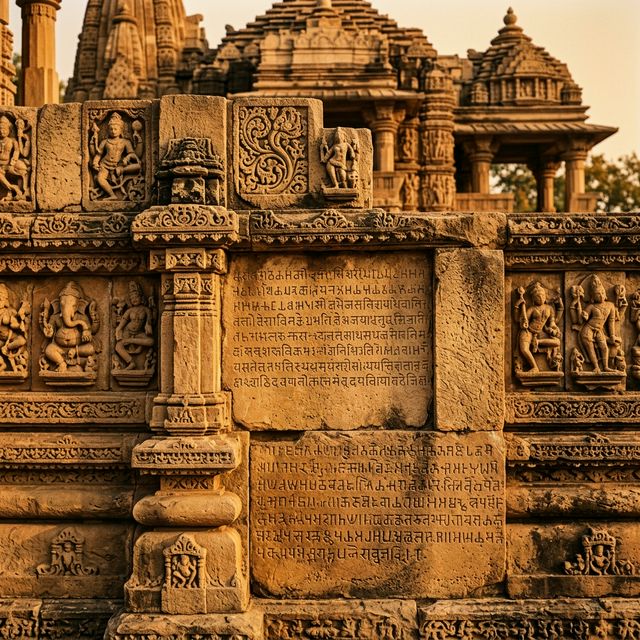
The Anjaner plates of Jayabhaṭa III, issued in the Kalacuri year 460 (710 CE), were discovered in the Nashik district of Maharashtra. This Sanskrit charter records a land grant by the Gurjara ruler Jayabhaṭa III. The inscription is engraved on two copper plates utilising the Brāhmī script, featuring a solar symbol on its seal.
Issued from Bharukachchha (modern Bharuch, Gujarāt), the charter records the donation of sixty nivartanas of land, divided into three distinct plots, within Tōraṇaka village of the Nāndīpura districts. The beneficiary was the brāhmaṇa Nārāyaṇa, a student of the Kauthuma śākhā of the Sāmavēda residing at Brahmapurī. The grant was made on the occasion of the Tulā saṅkrānti to support the five great sacrifices (pañcamahāyajña). Detailed boundaries mention the river Karillinī, various roads, and neighboring family fields. It was executed by the dūtaka Bāvulla and written by Sahabhaṭa, carrying the royal sign-manual.First Plate
1. siddham | svasti | śrībharukacchātsatatalakṣmīnivāsabhūte | tṛṣṇāsantāpahāriṇi | dinanāthavistāritānubhāve | dvijakulopajīvyamānavibhavaśā–
2. lini | mahati mahārājakarṇṇanviye kamalākara iva rājahamsaḥ prabalakalikālavilasitānākulitavimalasvabhāvo gambhīro-
3. dāracaritavismāpitasakalalokapālamānasaḥ parameśvaraśrīharṣadevābhibhūtavalabhīpatiparitrāṇopajātabhramada–
4. dabhraśubhravibhramayaśovitānaḥ śrīdaddastasya sūnuraśaṅkitāgatapraṇayijanopabhuktavibhavasañcayopacīyamānama–
5. nonirvṛtiranekakaṇṭakavamśasandohadāhadurllalitapratāpānalo | niśitanistrimśadhārādāritārātikarikumbhamuktāphalaccha-
6. lollasitasitayaśoṅśukāvaguṇṭhitadigvadhūvadanasarasijaḥ śrījayabhaṭastasyātmajo mahāmunimanupraṇītapravacanādhiga-
7. mavivekasvadharmmānuṣṭhānapravīṇo varṇṇāśramavya vasthonmūlitasakalakalikālāvalepaḥ praṇayijanamanorathaviṣayavyatītavibhava–
8. sampādanāpanītāśeṣa pārtthivadānābhimāno madavivaśāṅkuśātivarttikupitakarinivāraṇaprathitagurugajādhiro-
9. haṇaprabhāvo | vipatprapātapatitanarapatiśatābhyuddharaṇanikhilalokaviśruta paropakārakaraṇavyasanaḥ prācyapratīcyādhi–
10. rājavijṛmbhitamahāsamgrāmanarapatisahasrapari vāritānekagajaghaṭāvighaṭanaprakaṭitabhujavīryyavikhyātabāhusahāyā–
11. paranāmā | paramamāheśvarassamadhigatapañcamahāśabdaḥ śrīdaddastasya sūnuranekasamarasamghaṭṭaghanaghaṭitagajaghaṭāpāṭa-
12. napaṭurasahiṣṇuvanagahanadāvānalo | dīnānāthāturasuhṛtsvajanabandhukumudākarakaumudīniśākaro | bhāgīrathīpravāha i-
13. va vipakṣakṣobhakṣamaḥ śāntanuriva samudbhūtakalakalārāvamahāvāhinīpatirādivarāha iva svabhujabalaparākramoddhṛtadha-
14. rādharaḥ paramamāheśvarassamadhigatapañcamahāśabdaḥ śrījayabhaṭakuśalī sarvvāneva rājasāmantabhogika | viṣayapatirāṣṭra–
15. grāma mahattarādhikārikādīnsamanudarśam yat yastu vassamviditam yathā mayā mātāpitrorātmanaścaihikāmuṣmikapuṇyayaśobhi–
16. vṛddhaye | brahmapurīnivāsyetaccāturvvidyasāmānyaśāṇḍilyasagotra | chandoga | kauṭhumasabrahmacāribrāhmaṇacaṣṭasvāmiputra–
17. brāhmaṇanārāyaṇāya | balicaruvaiśvadevāgnihotrātithipañcamahāyajñādikriyot sarppaṇārttham | nāndīpuraviṣayāntarggata |
18. toraṇakagrāmasya pūrvvottaradigvibhāge | dvāpañcāśannivartanapramāṇam bhūkhaṇḍam | yasyāghāṭanāni |
Second Plate
19. pūrvvataḥ jayapuragrāmayāyī panthā hastinikāgarttāsamlagnam saro dakṣiṇataḥ chredakīvṛkṣopalakṣitamairāntari-
20. takuṭumbidīpasatkakauṭumbakṣetram | mairātassamutthito dakṣiṇābhimukho bahaśca | tathā aparataḥ toraṇakagrā–
21. māt viddherakagrāmayāyī panthāḥ tathā kṣetramadirotthito sumi āravṛkṣaḥ tathā dhammaṇagarttāgāmī bahaśca | uttarataḥ dhammāṇakhaṭṭā |
22. evame | taccaturāghāṭanopalakṣitam bhukhaṇḍam tathāsyaiva grāmasya dakṣiṇadigvibhāge kacche | pañcanivarttanapramāṇam bhūkhaṇḍam | yasyāghāṭanāni pū–
23. rvvataḥ varaṭa kamaryyādāntaritakuṭumbirevallasatkakauṭumbakṣetram | dakṣiṇataḥ karilliṇīḥ nadī | aparataḥ chattrābhyupalakṣitavaraṭakamaryā–
24. dāntaritakuṭumbivijaḍambasatkakauṭumbakṣetram | uttarataḥ brāhmaṇadāmodarasatkabrahmadeyakṣetram | rājakīyacarikā ca | tadevam caturāghāṭa–
25. nopalakṣitam bhūkhaṇḍam | tathāsyaiva bhūkhaṇḍasya dakṣiṇādigvibhāge kacche kacchikāmranibaddhanivarttanatrayapramāṇam bhūkhaṇḍam yasyāghāṭanāni
26. pūrvvataḥ karilliṇī nadī | dakṣiṇataḥ saiva karilliṇī nadī | aparataḥ bhūtiṣohīgrāmagāmī sīmāsandhiḥ uttaratoṅkollavṛkṣopalakṣita–
27. karilliṇīnadīvitaṭī | evametacatuścaturāghāṭanopalakṣitabhūkhaṇḍatrayāvastitaṣaṣṭi nivarttanapramāṇam kṣetram soparikaram sabhūtavāta
28. pātapratyāyam | sadhānyahiraṇyādeyam | sadaśāparādham sotpadyamānaviṣṭikam sarvvarājakīyānāmahastaprakṣepaṇīyam | pūrvvapratta-
29. devabrahmadāyarahitam | bhūmicchidranyāyenācandrārkkārṇṇavakṣitisaritparvvatasamakālīnam putrapautrānvayakramopabhogyam | gṛhasthāva–
30. racalakasahitamadyāśvayujabahulaikādaśyām tulāsaṅkrānteravāvudakātisarggeṇa pratipāditam | yatosyocitayā brahmadāyasthityā bhum-
31. jataḥ kṛṣataḥ karṣayata pratidiśato vā na kaiścidvyāsedhe varttitavyamāgāmibhadranṛpatibhirasmadvamśyairanyairvvāya masmaddāyonumantavyaḥ
32. pālayitavyaśca | yaścājñānatimirapaṭalāvṛtamatirācchindyādācchidyamānakam vānumodeta sa pañcabhirmmahāpātakaissopa-
33. pātakaissamyukkataḥ syāditi | uktam ca bhagavatā vedavyāsena vyāsena | ṣaṣṭim varṣasahasrāṇi svargge tiṣṭhati bhūmidaḥ | ācchettā cānumantā ca tā–
34. nyeva narake vaset || 1 || vindhyāṭavīṣvatoyāsu śuṣkakoṭaravāsinaḥ | kṛṣṇāhayo hi jāyante | bhūmidāyam haranti ye || 2 || bahubhirvvasudhā bhuktā
35. rājabhissagarādibhiḥ | yasya yasya yadā bhūmistasya tasya tadā phalam || 3 || agnerapatyam prathamam suvarṇṇam bhūrvvaiṣṇavī sūryyasutāśca gāvaḥ |
36. lokatrayam tena bhavettu dattam | yaḥ kāñcanam gām ca mahīm ca dadyāt || 4 || yānīha dattāni purā narendrairdānāni dharmmārtthayaśaskarāṇi | ni-
37. rbhukktamālyapratimāni tāni | ko nāma sādhuḥ punarādadīta || 5 || svadattām paradattām vā yatnādrakṣa yudhiṣṭhira | mahīm mahimatām śreṣṭha dānā–
38. cchreyonupālanam || 6 || iti || likhitamidam balādhikṛtadurggabhaṭasūnunābalādhikṛtasahabhaṭeneti || balādhikṛtabāvulla–
39. dūtakaṃ || sam 400 60 | āśvayuja ba 10 1 | nibaddham || svahasto mama śrījayabhaṭasya ||
Seal
śrī-jayabhaṭaḥ |
Lines 1 to 4
Success! Hail! From the camp at Bharukaccha:
In the great lineage of the mahārāja Karṇa which, like a lake full of lotuses, has become the perpetual abode of Lakṣmī; which allays the suffering caused by desire for wealth, as a lake quenches thirst for water; which has its greatness enhanced by the sun; and which shines with prosperity affording support to the families of Brāhmaṇas, as a lake gives shelter to multitudes of birds, there was, like a swan, the illustrious Dadda [II]; whose pure disposition was not affected by the freaks of the powerful Kali age; who, by his inscrutable and noble deeds, excited the wonder of all the guardians of the world; and who possessed a canopy of glory having the grace of a moving, large, white cloud, which had sprung from his protection of the King of Valabhī when he was attacked by the Emperor, the illustrious Harṣadeva.
Lines 5 and 6
His son was the illustrious Jayabhaṭa [II]; the joy of whose mind was heightened as his stores of wealth were enjoyed by supplicants who fearlessly approached him; whose valour was nurtured by the destruction of the families of many foes, even as fire is fed by the burning of a mass of thorns and bamboos; and who covered the lotus-like faces of the damsels of the cardinal regions with the shining white garment of his fame, in the guise of pearls from the frontal lobes of the elephants of his enemies, cleft by the sharp edge of his sword.
Lines 7 to 12
His son was the illustrious Dadda [III]; who was clever in performing his duty through discrimination acquired by the study of the sacred treatise composed by the great sage Manu; who, by maintaining the institutions of varṇas and āśramas, completely uprooted the pride of the Kali age; who annihilated the vanity of all kings by spending in charity the wealth he had acquired in excess of the desires of his supplicants; whose valour in mounting mighty elephants, uncontrollable through rut, had grown restive under the goad; whose habit of performing acts of benevolence was celebrated throughout the world through his deliverance of hundreds of kings who had fallen under the blow of adversity; whose second name, Bāhusahāya, meaning one whose arm is the sole helper, became renowned through the valour of his arm exhibited in routing numerous hosts of elephants in the great wars fought with the supreme rulers of the east and the west; and who was a devout worshipper of Maheśvara and attained the pañcamahāśabda.
Lines 13 to 15
His son, the illustrious Jayabhaṭa [III], who is clever in destroying the hosts of elephants thickly arrayed in the clash of many battles; who is a wild fire in burning the forests of the rebellious; who is to the destitute, helpless, and distressed people, friends, servants, and relatives as the full moon is to clusters of lotuses; who is able to confound his adversaries as the current of the Bhāgīrathī is to undermine the opposite banks; who is the commandant of a large and boisterous army, even as Śāntanu was the lord of a great and noisy river; and who has rescued kings by the might and valour of his arm, even as the primeval Boar rescued the earth, who is a devout worshipper of Maheśvara and has attained the pañcamahāśabda; being in good health, addresses the following order to all kings, feudatories, bhogikas, heads of viṣayas, the mahattaras of rāṣṭras and villages, officials, and others:
Lines 15 to 30
Be it known to you that for the increase of the religious merit and fame, in this world and the next, of (my) mother and father and of myself, I have today, on the eleventh (tithi) of the dark fortnight of Āśvayuja, on the occasion of the sun’s entering the Tulā (rāśi), granted with a libation of water, fields measuring sixty nivartanas in three pieces of land with their boundaries defined as follows: a piece of land measuring fifty-two nivartanas in the north-east direction of the village Toraṇaka situated in the Nāndīpura viṣaya, the boundaries of which are on the east, the road going to the village Jayapura (and) the tank adjacent to the pit Hastinikā; on the south, the family field belonging to the householder Dīpa, separated by the field boundary marked by the Charedakī tree, and a stream flowing from the field boundary towards the south; and on the west, the road going from the village Toraṇaka to the village Viddheraka and the sumiāra tree growing on the boundary of the field and a stream flowing into the Dhammāṇa pit; on the north, the Dhammāṇa pit. The piece of land defined by these four boundaries; further, in the marshy region in the southern direction of this very village, a piece of land measuring five nivartanas, the boundaries of which are: on the east, the family field belonging to the householder Reevalla separated by the boundary of baraṭaka; on the south, the river Karilliṇī; on the west, the family field belonging to the householder Vijaḍamba separated by the boundary of baraṭaka and marked by an umbrella; on the north, the brāhmadeya field belonging to the brāhamaṇa Dāmodara and a royal road, the field marked by these four boundaries; and on the south of this very piece of land, in the (same) marshy region, (another) piece of land measuring three nivartanas and surrounded by mango trees of the marshy region, the boundaries of which are: on the east, the river Karilliṇī; on the south, the same river Karilliṇī; on the west, the boundary leading to the village Bhūtishohī; on the north, the vitaṭī of the river Karilliṇī marked by the aṅkolla tree, (the fields measuring sixty nivartanas in all in three pieces of land with their four boundaries defined as above), together with the uparikara, with taxes on commodities manufactured and imported, with the income in grain and gold, with (the fines imposed for) the ten offences, with the right to forced labour arising therefrom, free from the interference of all officers of the state, exclusive of the gifts to gods and brāhamaṇas previously made (and) including houses, immovables and movables, which are to be enjoyed by a succession of sons and sons’ sons as long as the moon, the sun, the ocean, the earth, rivers and mountains will endure, according to the maxim of waste land, to the brāhmaṇa Nārāyaṇa, the son of the brāhamaṇa Caṣaṭasvāmin, of the Śāṇḍilya gotra, (who is) a student of the Kauṭhuma śākhā of the Chandoga (i.e., Sāmaveda) who resides at Brāhmapurī and belongs to the community of the Caturvedins of that place, for the performance of five great sacrifices, viz., bali, caru, vaiśvadeva, agnihotra, (reception of) guests and such other (religious) rites.
Lines 31 to 33
Wherefore, none should cause obstruction while he is enjoying it, cultivating it, or causing it to be cultivated in accordance with the rules applicable to brahmadāya land. And future gracious kings, whether born in our family or others, should consent to this our gift and preserve it! Whoever, with his mind shrouded by the veil of the darkness of ignorance, would confiscate it or allow it to be confiscated, shall incur the five great sins together with the minor sins.
Lines 33 to 37
And it is said by the holy Vyāsa, the redactor of the Vedas:
(Here follow six benedictive and imprecatory verses.)
Lines 38 and 39
This (charter), the dūtaka of which is the balādhikṛtā Bāvulla, has been written by the balādhikṛta Sahabhaṭa, the son of the balādhikṛta Durgabhaṭa. Recorded in the year 400 (and) 60, (the month) Āśvayuja (and) the dark (fortnight) (and) (on the lunar day) 10 (and) 1. This is the sign-manual of me the illustrious Jayabhaṭa.
Seal
The illustrious Jayabhaṭa
| Dynasty: | Gurjara |
| Ruler: | Jayabhaṭa III |
| Date: | Tuesday, 23rd September 710 CE (Āśvayuja, vadya di. 11, varṣa 460) |
| Place: | Anjaneri, Nashik, Maharashtra |
| Donor: | Jayabhaṭa III |
| Donee: | Brāhmaṇa Nārāyaṇa |
| Language: | Sanskrit |
| Script: | Brāhmī |
| Occasion: | Tulā saṅkrānti |
| Religion: | Vedic |
| Nature of grant: | Land donation |
| Purpose: | To perform the religious rites including bali, caru, vaiśvadeva, and agnihotra |
| Provenance of inscription: | Anjaneri, Nashik, Maharashtra |
| Type of Inscription: | Copperplate grant |
| Source: |
