
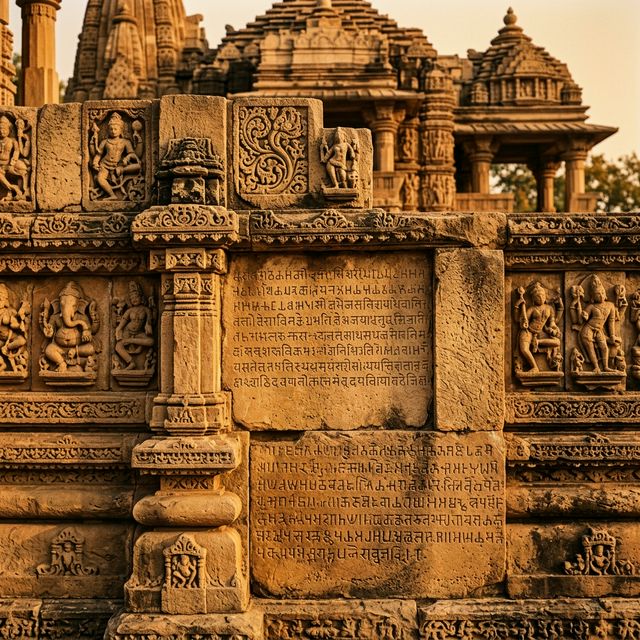
The Ramtek copper-plate charter, currently lost, is represented by a single extant plate, the fourth plate of a standard Vākāṭaka set. It was originally discovered by contractors digging for manganese at Mansar, Nagpur district, Maharashtra. The text, preserved through photographs taken before the disappearance of the plate, is engraved in the box-headed Brāhmī script, and composed in Sanskrit.
The opening lines indicate the grant was made for the increase of the donor's own religious merit, life, strength, and prosperity. Because of the loss of the initial plates, critical details regarding the donor, donee, and the specific village granted are unknown. However, the paleography closely aligns with other charters issued by Pravarasena II, suggesting he was the donor. The surviving text outlines the standard immunities and privileges associated with an agrahāra grant, concluding with a royal injunction against obstructing the donees' enjoyment of the gift and a warning of punishment for any hindrance.
Fourth Plate : First Side
1. sarvvāddhyakṣaniyoganiyuktā ājñāsañcārikulaputrādhikṛtā bhaṭāśchātrāśca
2. viśrutapūrvvayājñayā | vaktavyā yathāsmābhirātmadharmmāyurbbala-
3. iśvaryya vivṛddhaye imāmutra cātmānugrahāya abhaṭa-
4. śchātraprāveśyaḥ apāramparagobalivarddaḥ apuṣpakṣīrasando-
5. haḥ acārāsana carmmāṅgāraḥ alavaṇakiṇva-
Fourth Plate : Second Side
6. kreṇikhanakaḥ sarvvaviṣṭiparihāraparihṛtaḥ saklṛpto
7. paklṛptaḥ ācandrā dityakālīyaḥ pautrānugāmi | bhu-
8. ñjataḥ na kenacidvyāghāta karttavyaḥ sarvvakriyābhīrakṣi-
9. tavyaḥ parivarddhayitavyaśca | yaścāsmacchāsanamagaṇayamānaḥ
10. svalpāmapi paribādhāṃ kūryyātkārayedvā tasya brāhmaṇai-
(The first three plates of the grant are not forthcoming.)
Our officers of noble birth who are employed by the order of the sarvādhyakṣa (General Superintendent) and who exercise their authority by our command, our soldiers and policemen should be directed by the following order which is already well-known to them:
“Be it known that, in order to increase our religious merit, life, power, and prosperity, and to obtain blessings for ourself in this world and the next...we grant the following exemptions: It is not to be entered by regular soldiers and policemen; it does not carry with it the State's customary right to cows and bulls, nor does it carry the royalties on flowers and milk; it is exempt from the obligation to provide pasturage, hides for seats, and charcoal to touring royal officers; it is exempt from royalties on the purchase of fermenting liquors and the digging of salt; it is completely free from all kinds of forced labour (sarva-viṣṭi); it carries with it major and minor taxes (klṛpta and upaklṛpta); it is to be enjoyed for as long as the sun and the moon endure; and it is to follow the succession of grandsons.
No one should cause an obstruction while it is being enjoyed. It should be protected and increased by all means. And whosoever, disregarding our charter, causes or makes others cause even the slightest obstruction, upon him, when complained against by the Brāhmaṇas...
(The subsequent plates of the grant are not forthcoming.)
| Dynasty: | Vākāṭaka |
| Ruler: | Pravarasena II |
| Date: | c. 420 to 455 CE |
| Language: | Sanskrit |
| Nature of grant: | Land donation |
| Purpose: | For increasing religious merit, life, power, victory, prosperity, and blessings of the donor |
| Provenance of inscription: | Ramtek, Nagpur, Maharashtra |
| Type of Inscription: | Copperplate grant |
| Source: |
