
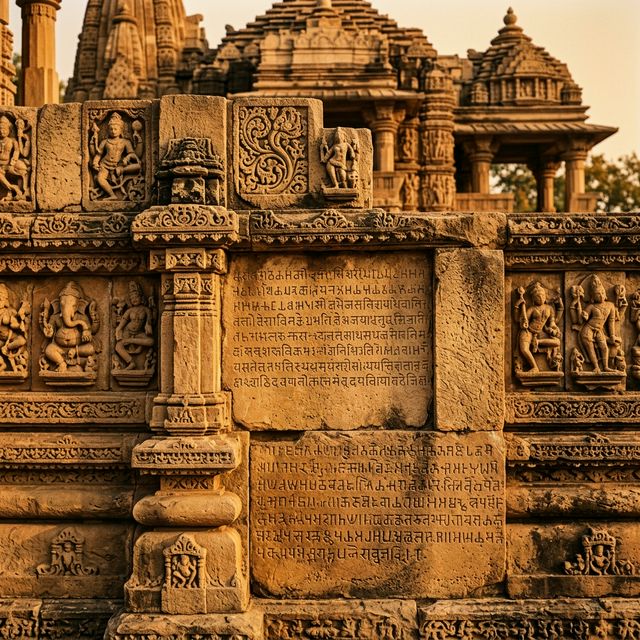
The Deoṭek stone inscription, currently housed in the Central Museum, Nagpur, is the earliest discovered epigraph of the Vākāṭaka dynasty till now. It belongs to the reign of king Rudrasena I. Engraved on stone slab, this fourth century CE text utilises the box-headed Brāhmī script. The text is composed entirely in Sanskrit prose. This Vākāṭaka record was incised over an earlier record issued by King Aśoka
The text of the inscription documents the establishment of a dharmasthāna, or a designated place of religious worship, at the ancient settlement of Cikkamburi. This place has been identified with the modern village of Chikmara, Chandrapur district, Maharashtra, which encompassed the contemporary Deotek area. The record explicitly assigns this foundational act to king Rudrasena I, who is said to have been born into the Vākāṭaka lineage. The text being fragmentary in nature, also retains the name Pravara, likely referring to his predecessor Pravarasena I.
1. cikkamburi ……. sa ………………
2. …………….. saja ……………………………
3. pravarama ……………………masyāyam
4. ………………………vamśajātasyedam rudra-
5. senarājasya dharmmasthānam ||
At Cikkamburi … … … … … Pravarasena… … … … …This is a special place for religious worship of rājan Rudrasena I, born in the family of the Vākāṭakas.
| Dynasty: | Vākāṭaka |
| Ruler: | Rudrasena I |
| Date: | c. 335 to 360 CE |
| Place: | Nagpur Central Museum |
| Language: | Sanskrit |
| Deities: | Svāmi Mahābhairava i.e. Śiva |
| Nature of grant: | Religious endowment |
| Purpose: | Establishment of a dharmasthāna (religious place of worship) |
| Provenance of inscription: | Deotek, Chandrapur, Maharashtra |
| Type of Inscription: | Stone inscription |
| Source: |
