
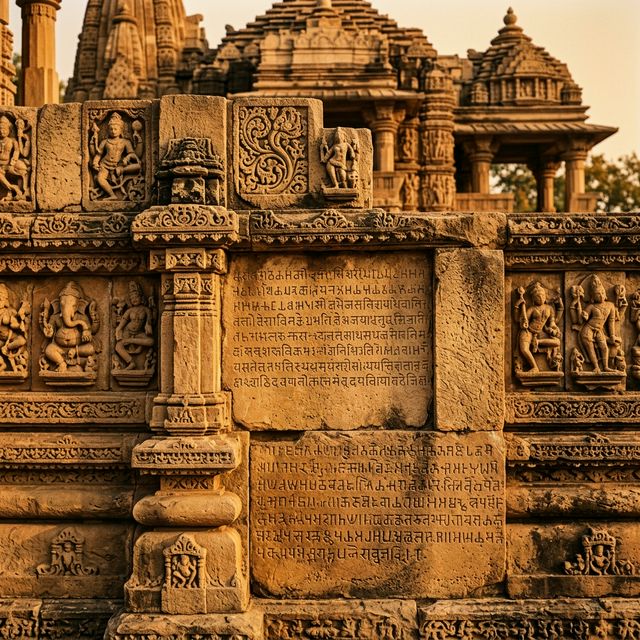
An unfinished epigraphic record intended to be issued by the Vākāṭaka ruler Pṛthivīṣeṇa II was discovered in the Balaghat district, Madhya Pradesh. The set comprises five plates strung on a ring with a blank seal, with only three plates bearing text. Engraved in the box-headed Brāhmī script, the available text is composed in Sanskrit The text abruptly terminates mid-sentence and does not contain the authorising mark of dṛṣṭam.
The extant text serves primarily as an extended genealogical preamble, tracing the Vākāṭaka lineage up to Pṛthivīṣeṇa. The edict was intended to be issued from a royal camp at Vembāra. The command addresses administrative officers appointed by the general superintendent (sarvādhyakṣa), however, details regarding the donee, the granted land, the date, and the executing officers remain unrecorded.
First Plate
1. vembāravāsāadagniṣṭomāptoryyāmokthya-
2. ṣoḍaśyatirātravājapeyabṛhaspatisavasādya-
3. skracaturaśvamedhayājinaḥ viṣṇuvṛddhasagotra-
4. sya samrājo vākāṭakānāmmahārājaśrī pravarase-
5. nasyasūnossūnoḥ atyantasvāmimahā-
6. bhairavabhaktasya | amsabhārasanniveśitaśiva-
7. liṅgodvahanaśivasuparituṣṭasamutpādita-
8. rājavaṅśānāparākramādhigatabhāgirathyamala-
9. jalamūrddhābhiṣiktānāndaśāśvamedhāva-
Second Plate : First Side
10. bhṛthasnātānāmbhāraśivānāmmahārājaśrīrudrase-
11. nasya sūnoḥ atyantamāheśvarasya satyārjjava-
12. kāruṇya śauryyavikramanayavinayamāhā-
13. tmyadhimattvapātragatabhaktitvadharmma vijayitvamano-
14. nairmmalyādirguṇasamuditasya varṣaśata-
15. mabhivarddhamānakośadaṇḍasādhanasantānaputra-
16. pautriṇaḥ yudhiṣṭhiravṛttervvā kāṭakānāmmahā-
17. rājaśrīpṛthiviṣeṇasya sūnoḥ bhagavata-
18. ścakrapāṇeḥ prasādopārjjitaśrī-
Second Plate : Second Side
19. samudrayasya vākāṭakānāmmahārājaśrīrudra-
20. senasya sūnoḥ pūrvvarājānuvṛttamārggānusā-
21. riṇaḥ sunayabalaparākramomcchinnasarvvadvi-
22. ṣaḥ mahārājādhirājaśrīdevaguptasutāyā-
23. mprabhāvatiguptāyāmutpannasya vākāṭa-
24. kavamśālaṅkārabhūtasya śambho prasādāddhṛ-
25. takārttayugasya vākāṭakānāmmahārājaśrī-
26. pravarasenasya sūnoḥ pūrvvādhigataguṇa-
27. viśvāsādapahṛtavamśa śriyaḥ kosalā-
Third Plate
28. mekalāmālavādhipabhirabhyarccitaśāsanasya pra-
29. tāpapralātārisanasya vākāṭakānāmmahā-
30. rājaśrīnarendrasenasya sūno kuntalādhipati-
31. sutāyāṃ mahādevyāmajjhitabhaṭṭārikāyāmu-
32. tpannasya tejaḥ kṣamāsannidhānabhūta-
33. sya | dvimagnavaṅśasyoddharttuḥ vākāṭakānā-
34. mparamabhāgavatamahārājaśrīpṛthivīṣe-
35. ṇasya vacanāt asmatsantakāḥ sarvvāddhyakṣa-
Line 1–9
From the camp fixed at Vembāra:
...[who was] the grandson of the illustrious Pravarasena I, the mahārāja of the Vākāṭakas, the Samrāṭa (Universal Monarch), who performed the Agniṣṭoma, Āptoryāma, Ukthya, Ṣoḍaśin, Atirātra, Vājapeya, Bṛhaspatisava, Sādyaskra, and four Aśvamedha sacrifices, and who belonged to the Viṣṇuvṛddha gotra;
...[and who was] the son of the illustrious Rudrasena I, the mahārāja of the Vākāṭakas and the son of Gautamīputra, an intense devotee of the god Svāmi-Mahābhairava and the daughter’s son of the illustrious Bhavanāga, the mahārāja of the Bhāraśivas, whose royal family was created by Śiva, who was greatly pleased by their carrying the Śiva liṅga like a load placed upon their shoulders, who were besprinkled on their heads with the pure water of the river Bhāgīrathī obtained by their valour, and who performed the ritual ablutions upon the completion of ten Aśvamedha sacrifices;
Line 10–18
...who was the son of the illustrious Pṛthivīṣeṇa I, the mahārāja of the Vākāṭakas, who was intensely devoted to the god Maheśvara, endowed with truthfulness, straightforwardness, compassion, heroism, valour, political wisdom, modesty, high-mindedness, intelligence, devotion to worthy persons, the state of being a righteous conqueror, purity of mind, and other such qualities, who had sons and grandsons and a continuous supply of treasure and an army accumulating for a hundred years, and who conducted himself like Yudhiṣṭhira;
...who was the son of the illustrious Rudrasena II, the mahārāja of the Vākāṭakas, who acquired an abundance of prosperity by the grace of the divine lord Cakrapāṇi (Viṣṇu);
Line 19–27
...who was the son of the illustrious Pravarasena II, the mahārāja of the Vākāṭakas, who was an ornament of the Vākāṭaka family; who, by the grace of Śambhu, established the Kṛta yuga (Golden Age); who was born of Prabhāvatīguptā, the daughter of the mahārājādhirāja, the illustrious Devagupta; who exterminated all his enemies by his excellent policy, strength, and valour; and who followed the path adopted by former kings;
...who is the son of the illustrious Narendrasena, the mahārāja of the Vākāṭakas—who, out of confidence in the excellent qualities previously acquired by him, carried off the royal fortune of his family;
Line 28–35
...whose commands were honoured by the lords of Kosalā, Mekalā, and Mālava; who held in check enemies bowed down by his valour;
By the order of the illustrious Pṛthivīṣeṇa II, the mahārāja of the Vākāṭakas, a paramount devotee of the Bhagavat (Viṣṇu); who is the rescuer of his twice-sunken family; who is the abode of valour and forgiveness; who was born of the mahādevī Ajjhitabhaṭṭārikā, the daughter of the lord of Kuntala:
Our officials of noble birth appointed by the sarvādhyakṣa (general superintendent)...
(The subsequent portion of the grant is not inscribed.)
| Dynasty: | Vākāṭaka |
| Ruler: | Pṛthivīṣeṇa II |
| Date: | c. 440 to 460 CE |
| Language: | Sanskrit |
| Deities: | Bhagavata i.e. Viṣṇu |
| Provenance of inscription: | Balaghat, Madhya Pradesh |
| Type of Inscription: | Copperplate grant |
| Source: |
