
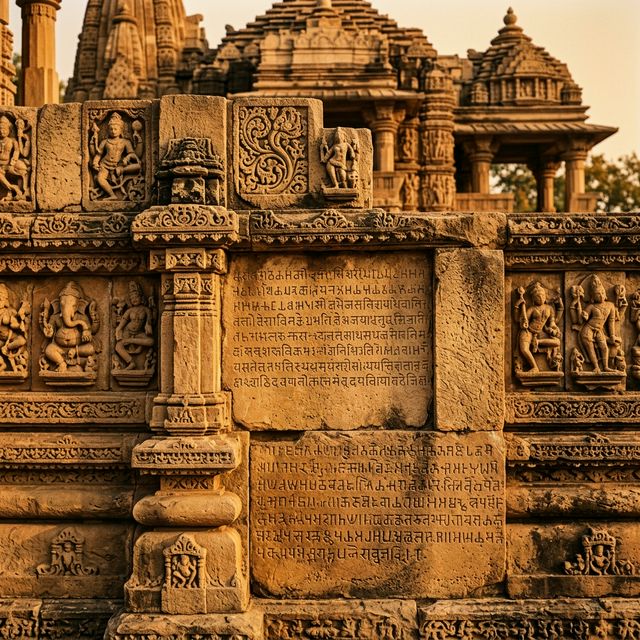
This set of two copper-plates, discovered separately at Mankani (Sankheda, Gujarat), records a grant attributed to Taralasvāmin of the Kaṭaccuri dynasty. Initially edited in fragments by H.H. Dhruva and A.S. Gadre, the reassembled plates present a single continuous charter. The grant is recorded in Sanskrit language and is engraved in the Brāhmī script.
Although dated to the Kalachuri year 346, corresponding to 595 CE, epigraphic analysis indicates that the plates are a forgery fabricated during the second half of the eighth century CE. The charter opens with the praise of maharaja Naṇṇa of the Kaṭaccuri dynasty, followed by the eulogy of his son Taralasvāmin, who is described as a devotee of Śiva, the son of Dadā, and the brother-in-law of Sūrya. Addressing both his own and the sovereign's royal officers, Taralasvāmin records the grant of a rice field on the northern boundary of Mankanika village. Measured by a large standard, the donation includes a farm-house, taxes, and excise exemptions. It was awarded to a brāhmaṇa named Jyeṣṭhasena of the Jātūkarṇa gotra and Vājasaneya śākhā to fund the five great religious sacrifices. The charter was executed by the minister Āditya and bears the numerical date 346.
First Plate
1. siddham | svastyavanatasāmantāmalamukuṭamaṇinighṛṣṭacaraṇayugalāravindaḥ ghanatuhinarajataśa
2. ṅkhakundakumudendukaranikarapratānavadātayaśodhavalitadigantarālaḥ kaṭaccurikulaveśmapradīpaḥ
3. śrīmahārājaṇaṇṇaḥ | tasya sūnuḥ vilandhitaprabhañjanodhūtavīcīcalitaśabdatrastamīnakulākulabhrānti-
4. prakṣobhitasalilodadhikīrttiḥ śivacaraṇakamalārādhanaparaḥ śrīsūryyabhāvukaḥ
5. dadātmajaḥ śatruvanitāvadanakamalaśobhāmlānikaraḥ kalpatarurivopabhujya mānākṣīṇa vibha-
6. vaḥ svaccho gābhīryyavānakalitasāraḥ sthityatikramabhīrurudadhiriva vijitārātitamojāla-
7. ścandramā iva śrītaralasvāmī sarvvāneva svān rājapādīyāmśca bodhayati | astu vaḥ samviditam yathā
8. mayā maṅkaṇikāgrāme uttarasīmni caturddiśāghāṭam bṛhanmānena vrīhipiṭakavāpam kṣetram saśi-
9. varam sodraṅgam bhūtavātapratyāyarahitam brāhmaṇajyeṣṭhasenāya jātūkarṇasagotravājasane –
10. yasabrahmacāriṇe balicaruvaiśvadevāgnihotrahavanapañcamahāyajñakriyotsarppaṇārttham
Second Plate
11. ācandrārkārṇṇavakṣitisthitisamakālīnam putrapautrānvayabhogya mudakātisarggeṇa
12. pratipāditam mātāpitrorātmanaśca puṇyayaśobhivṛddhaye | atosya brahmadeyasthityā kriṣataḥ kar-
13. ṣayato vā na kaiścidvyāsedhe varttitavyamāgāmirājabhirasmadvamśyairvvā sāmānyam bhūmi-
14. dānaphalamavetyāyamasmaddāyonumantavyaḥ pālayitavyaśceti | uktam ca bhagavatā vyā-
15. sena || bahubhirvvasudhābhuktā rājabhiḥ sagarādibhiḥ | yasya yasya yadā bhūmistasya tasya
16. tadā phalam || 1 || ṣaṣṭim varṣasahasrāṇi svargge modatī bhūmidaḥ | ācchettā cānumantā ca tānye-
17. va narake vaset || 2 || vindhyāṭavīṣvatoyāsu śuṣkakoṭaravāsinaḥ | kṛṣṇasarppā hi jāyante
18. brahmadeyāpahārakāḥ || 3 || yānīha dattāni purānarendrairddānāni dharmmārtthayaśaskarāṇi | nirmmā-
19. lyavāntapratimāni tāni ko nāma sādhuḥ punarādadīta || 4 || likhitam cātra sāndhivigrahikeṇā-
20. dityabhogikena | samvatsaraśatatraye ṣaṭcatvārimśaduttare || 346
Lines 1 and 2
Success! Hail! There was the mahārāja Ṇaṇṇa, a light in the house of the Kaṭacchuri family, the lotus-like pair of whose feet was scratched by the jewels on the bright diadems of feudatories who bowed before him, and whose fame, white like thick snow, silver, a conch, a kunda flower, a kumuda (lotus) and a mass of the moon’s rays, brightened the space between the quarters.
Lines 3 to 6
His son, the illustrious Taralasvāmin, whose fame has crossed the ocean, the water of which is agitated by the confused darting of fishes terrified by the roar of surging waves produced by wind; who is intent on adoring the lotus-like feet of Śiva; who is the sister’s husband of the illustrious Sūrya and the son of Dadā; who has caused the beauty of the lotus-like faces of (his) enemies’ wives to fade; who resembles the wish-fulfilling tree as his undiminishing wealth is enjoyed by supplicants; who resembles the ocean, being pure as the ocean is clear, serene as the ocean is deep, of ungauged strength as the ocean’s wealth is unmeasured, and afraid of transgressing the laws of moral conduct even as the ocean is afraid of overflowing the shore; and who overcomes his foes even as the moon dispels a mass of darkness, informs all his officers as well as those of the venerable King as follows:
Lines 7 to 11
Be it known to you that for the increase of religious merit and fame of my mother and father and of Myself, I have granted, with a libation of water, a field requiring for its seed-grains a piṭaka of paddy by the large measure, which is marked by boundaries in the four directions, (and is situated) on the northern boundary of the village Maṅkaṇikā, together with śibara (farm-house) and udraṅga, octroi and excise duties, to be enjoyed by a succession of sons and sons’ sons as long as the moon, the sun, the ocean and the earth will endure, to the brāhmaṇa Jyeṣṭhasena of the Jātūkarṇa gotra, (who is) a student of the Vājasaneya śākhā, for the performance of the five great sacrifices such as bali, caru, vaiśvadeva and agnihotra offerings.
Lines 12 and 13
Wherefore, none should act in such a way as to obstruct him while he is cultivating it or causing it to be cultivated according to the manner of a gift made to a brāhmaṇa. And future kings, whether born in our family or others, considering that the reward of a gift of land is shared in by him who for the time being is the ruler of the land), should consent to and preserve this our gift.
Lines 14 and 18
And the holy Vyāsa has said:
Here follow four benedictive and imprecatory verses.
Lines 19 and 20
This charter has been written by the sāndhivigrahika, the bhogika Āditya. In the year three hundred increased by forty-six, (in figures) 346.| Dynasty: | Kalacuri |
| Ruler: | Taralasvāmin |
| Date: | c. 8th century CE (Purported as 594–596 CE i.e. varṣa 346) |
| Donor: | Taralasvāmin |
| Donee: | Brāhmaṇa Jyeshṭhasena |
| Language: | Sanskrit |
| Script: | Brāhmī |
| Religion: | Vedic |
| Nature of grant: | Land donation |
| Purpose: | To perform the religious rites including bali, caru, vaiśvadeva, and agnihotra |
| Provenance of inscription: | Mankani, Sankheda, Gujarat |
| Type of Inscription: | Copperplate grant |
| Source: |
Bibliography & Research
- Dhruva, H. H. (1894). No 4. Three Land Grants from Sankheda. Epigraphia Indica, II, 19-23.
- Gadre, A. S. (1943). II A brief note on the fragmentary Maṅkaṇī Copper-Plate Grant of Taralasvāmin. In Important inscriptions from the Baroda State: Volume I (pp. 4-6) Śrī-Pratāpasiṃha Mahārāja Rājyābhisheka Granthamālā, Memoir No. 2. Baroda.
- Mirashi, V. V. (1944). A Note on the Maṅkaṇī grant of Taralasvāmin. Journal of the Ganganatha Jha Research Institute, 1 (Part 4), 389-394.
- Mirashi, V. V. (Ed.). (1955). Corpus Inscriptionum Indicarum Inscriptions of the Kalachuri Chedi Era. In (Vol. Vol 4 (Part 1), lxvii-cviii and 160-165. Archaeological Survey of India.
