
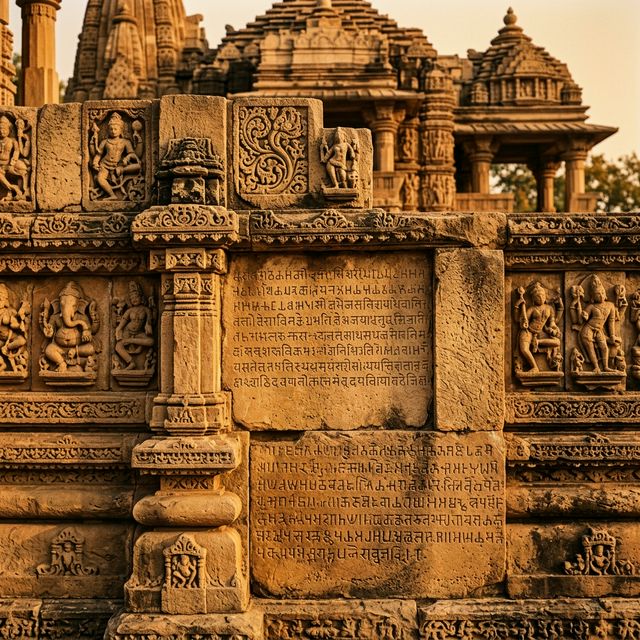
Discovered in 1938 by Dr. N.P. Chakravarti at the Bandhogarh fort, this Sanskrit rock inscription engraved in the Nāgarī script, belongs to the reign of the Kalacuri king Yuvarajadeva I.
Opening with the auspicious syllable Om, the inscription identifies a series of adjacent rock-cut sculptures representing the matsya (fish), kūrma (tortoise), and varāha (boar), and Paraśurāma incarnations of Visnu. The record mentions these religious figures were commissioned by Gollāka, the son of Bhānu. The inscription defines his political status as the amātya, or minister, serving the Kalacuri king Yuvarajadeva I.
1. om śrīyuvarājadevāmātyasya ………………………śrībhānusūnoḥ śrīgollākasyaite matsyakaccha-
2. pādivarāhaparaśurāmāḥ |
Om! These (figures of) the Fish, the Tortoise, the primeval Boar (and) Paraśurāma are of (i.e., are caused to be carved by) the illustrious Gollāka, the son of the illustrious Bhānu …………………… who was a minister (amātya) of the illustrious Yuvarājadeva (I).
| Dynasty: | Kalacuri |
| Ruler: | Yuvarājadeva |
| Date: | c. 10th century CE |
| Place: | Bandhogarh, Madhya Pradesh |
| Donor: | Gollāka |
| Language: | Sanskrit |
| Script: | Nāgarī |
| Religion: | Vaiṣṇava |
| Deities: | Avatars of Lord Viṣṇu: Matsya (the fish), Kūrma (the tortoise), Varāha (the boar), and Paraśurāma |
| Nature of grant: | Religious endownment |
| Purpose: | To officially credit and record the patronage of sculptures |
| Provenance of inscription: | Bandhogarh, Madhya Pradesh |
| Type of Inscription: | Stone Inscription |
| Source: |
