
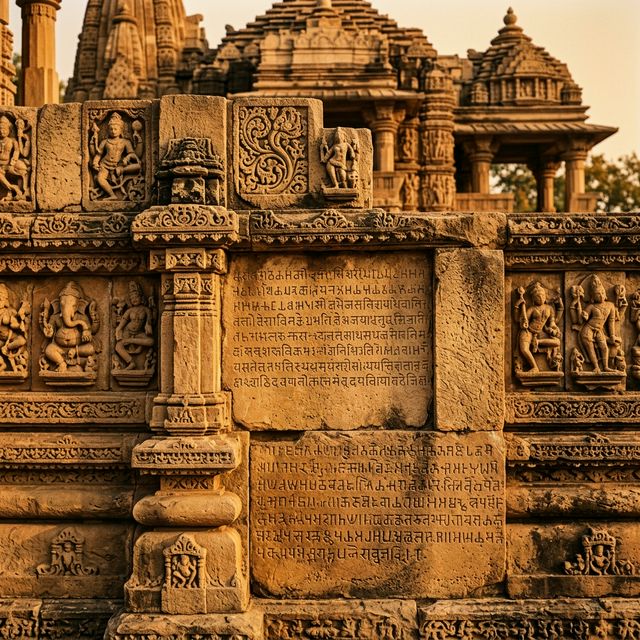
The Banaras plates of Karṇa were discovered in an old well within the Banaras fort (modern Varanasi, Uttar Pradesh). Executed in Sanskrit language and in the Nāgarī script, the record preserves a single Prākrit verse within its elaborate praśasti. The charter can be dated to Phālguna kṛṣṇa 9, varṣa 793 which corresponds to 18th January 1042 CE, Monday.
Issued from a victorious camp at Prayāga (modern Prayagraj, Uttar Pradesh), the record bears a seal depicting Pārvatī, elephants, and the bull Nandī. The inscription opens with invocations to Śiva and Brahman before recounting the Haihaya (Kalacuri) genealogy from Kārtavīrya down to the donor, Karṇa. It records that Karṇa, bearing paramount imperial titles, after bathing at the Veṇī-saṅgama and worshipping Śiva. This religious observance coincided with the first annual saṁvatsara-śrāddha of his deceased father, Gaṅgeyadeva. The transaction grants the village of Sṛsī (modern Sursi, Uttar Pradesh), situated within the Kashi division, to a Brāhmaṇa named Viśvarūpa of the Kauśika gotra, who had migrated from Veśāla (modern Vaishali, Bihar). The text concludes with the customary benedictory verses and legal injunctions.
First Plate
1. siddhiḥ || om namaḥ śivāya || nirguṇam vyāpakam nityam śivam paramakāraṇam | bhāvagrāhyam param jyotistasmai sadbrahmaṇe namaḥ || 1 || yadvedha sthitamavyam pa-
2. ramapi jyotiścidamśuprabham | sūryākhyasya ca bhāsvaraprabhṛtayo yasya sphurantyūrmmayaḥ | sarvvajñānamayo babhūva bhagavāmstasmānmanurmmānaso yasmātsṛṣṭirabhūdiyam gu–
3. ṇavatī strīpunnimittā tataḥ || 2 || devaḥ śrīkārttavīryaḥ kṣitipatirabhavadbhaṣaṇam bhūtadhātryā helotkṣiptādribibhyattuhināgirisutāśle ṣasantoṣiteśam | dorddaṇḍā-
4. kāṇḍasetupratigamitamahāpūrarevāpravāhavyādhautatrya kṣapūjāgurujanitaruṣam rāvaṇam yo vavandha || 3 || yasya bhrūbhaṅgabhītā dadhati nṛpatayaḥ kliṣṭa-
5. bhāve pratiṣṭhām ākailāsātsahelam haravṛṣabhasamutkhātaśṛm gāgrabhitteḥ | ā ca prācaḥ samudrātsurasaridatulasthūlamuktāvalīkādambhodherddakṣiṇācca sphu-
6. radatulamaṇeḥ setusīmantabhājaḥ || 4 || tadvamsaprabhavā narendrapatayaḥ khyātāḥ kṣitau haihayāsteṣāmanvayabhūṣaṇa ripumanovinyastatāpānalaḥ | dharmmadhyānadha-
7. nānusandhitasukhaḥ śāśvatsatām saukhyakṛtpreyānsarvvaguṇāṅkitaprabhutayā śrīmānabhūtkokkallaḥ || 5 || samyaksāstravicāraṇā pratidinam dharmmāya yogāya ca iṣṭā-
8. pūrttaparopakārakṛtaye yasyārthasaktā matiḥ | ānṛṇyādhigamāya dānaniratiḥ sadvamśapuṣṭestathā jñānābhyāsavaśānmumukṣu padavīmante ca yaḥ prāptavān || 6 || bhoje va-
9. llabharāje śrīharṣe citrakūṭabhūpāle | śaṅkaragaṇe ca rājani yasyāsīdabhayadaḥ pāṇiḥ || 7 || śacīmivendraḥ kamalāmupendro nagendrakanyāmiva candramauliḥ | candellavasaprabhavā
10. susilā naṭṭākhyadevī sa tu parjjanaiṣit || 8 || uddāmadarppadviṣato jayantam kandarppamāpīnadhanastanīnām | ajījanatsa sthitaye janasya tasyām mahāśaktidharam ku-
11. māram || 9 || nāmnā prasiddho bhuvanatrayepi prasiddhapūrvvo dhavalaḥ sa rājā | voḍhum dhuram yo gurubhārayuktāmanyānnupendrānkādīcakāra || 10 || ekaikam dadatā bhujaṅgamani-
12. śamsvasvam jīvitam rakṣatā bhakṣyārtham garuḍāya nāgapatinā nyakkāra unmīlitaḥ | cāritrāya dadaujalam surapatirggacchannahalyāmṛtau vandyāyā bhuvanatrayepyayamabhūdau-
13. citya vṛtteḥ padam || 11 || kim vāpareṇa | hohinti ettha vamse puridā puha-iyagāravamahagdhā | ia bhāvi-ūṇa jeṇam pālīṇa pariggaho gahi-o || 12 || tatsūnuḥ khyāta-
14. karmmā digibhakaranibhājānubāhurmahātmā bhūmerbharttābabhūvakṣataripunṛpatirbbālarharṣaḥ sujanmā | yam sadvṛtānurāgānukṛtakṛtayugācāramāśritya jātastya-
15. ktānyonyopamarddasthiravasatirapāstārivarggastri varggaḥ || 13 || dhanyotra dāśarathireva ripurddaśāsyo yasyābhavatkimaparam samarotsavāya bhrūbhaṅga bhagnasakaladviṣato
16. dhigasmānātmānamāhavarasāditi yaḥ śuśoca || 14 || satyavrataikaniratasya yudhiṣṭhirasya tasyānujaḥ prathitabāhubalo babhūva | duryodhanāribalavīravadhaikadha-
17. nvī pārthoparaḥ kaliyuge yuvarājadevaḥ || 15 || bhūbhārakṣamadṛkśrutiraṇayinīmālamba mānastanum kurvvāṇaḥ samarepi nākapathagānāgacchato vidviṣaḥ || vikhyā-
18. tām bhuvi bhūrimārggagamanāmuccairddadhadvāhinīm yaḥ sākṣātparameśvaraḥ samabhavatsamyakśivārādhanāt || 16 || tasmādabhūllakṣmaṇarājadevaḥ puṇyairjjanānām
19. janitavyavasthaḥ | avāpya yam dharmmamiva kṣitīśam cirāya lebhe jananā sukhāni || 17 || yaḥ satyasya nidhiḥ śriyām ca saraṇiḥ sāmnā ca dhāmnā ca yo yo dātā ca dayālu-
20. reva ca padam kīrtteścanīteśca yaḥ | tasyāsītparameṣa dūṣaṇakaṇaḥ kāruṇyapuṇyātmanaḥ pātrāpātravivecanam na yadabhūtsarvvasvadāneṣvapi || 18 || śrīśaṅkaragaṇadeva-
21. statobhavatsakalabhuvanatalatilakaḥ | śāsati vasudhām yasminpalāyitam kvāpi kalināpi || 19 || asau nistrimśatā yatra vakratvam palitāgame | rathacakreṣu cāri-
22. tvam vāyau svacchandacāritā || 20 || tasyānujobhūdyuvarājadevaḥ patiḥ kṣiteḥ kṣatrakulaprasūtiḥ | yasyāsidhārājaladhautamūrtteściram sthirāsīccapalāpi lakṣmī || 21 || arthi-
23. sārthāvadhistyāgaḥ sesam saurya śūrajayāvadhiḥ | yasasām dharmmarāśeśca nāvadhiryasya bhūpateḥ || 22 || srīsāsvatoyāyata yātakīrtuḥ kokalladevo vasvadhikanāthaḥ | yanmaṇḍa-
24. lāgro ripumaṇḍalāni puro dadhātīti yathārthaśabdaḥ || 23 || namra kāmukavat kṛtam niyamitam tūṇīravatpṛṣṭhataḥ | kāṣṭhāsu kṣaṇamātrasrastravihitaḥ bhrāntarādādaṇḍavat |
25. kṛtvā sāvraparicchadena rahita samyakkarai sthāpita satraṇāmakhela kulathenarapatiyi bhayenāsivat || 24 || kākkalanṛpādavāstasakalakvāṇīvapadakṣī-
26. rakṣālitahāragauraguṇabhūrgāṅgeyadevobhavatu | yasyājāyata kevalam raṇamukhe kaukṣeyakogresaraḥ | sarastriva pratibibitam punarabhūdārālitam sanmukham || 25 ||
27. agunejñeti loleti khyātam yadiha duryyasaḥ | lakṣmyā tadadhunā dhautam divyamādāya tadvapuḥ || 26 || khyātaḥ satyatayā sa dharmmatanayaḥ tyāgena vairoca-
28. niḥ sauryeṇedrasuto na caitadabhavatsatyam satām cetasi | ekasmimstritayam kalau samadhikam gāṅgeyadeve nṛpe dṛstavā niścitameva taira-
Second Plate
29. vitatham pūrvveyadyoktā nṛpāḥ || 27 || tasyātmajaḥ karṇṇa ivāvatīrṇṇaḥ karṇṇaḥ pṛthivyām prathitaprabhāvaḥ | yasyābhiṣekaśravaṇāddviṣa-
30. dbhirnaṣṭam prahṛṣṭam dvijamitravarggaiḥ || 28 || yatkīrttilatayā dūram prasarantyā dine dine | brahmāṇḍamaṇḍapābhogaḥ svalpatāmupanīyate || 29 || svayam samu-
31. tsṛjannarthānarthisārtheṣvacintitān | kopyeṣa bhūṣaṇam bhūmerjaṅgamaḥ kalpapādapaḥ || 30 || śaktitrayaikanilayasya guṇākarasya dharmmātmanaḥ
32. stutipadam kimihāsti kiñcit | āśāsyate paramidam kṛtibhiḥ sadaiva rājanvatī vasumatī bhavataiva bhūyāt || 31 || tadevam guṇagaṇālaṅkṛta-
33. śarīraḥ prayāgasamāvāsitaśrīmadvijayakaṭakātparamabhaṭṭārakamahārājādhirāja-parameśvaraśrīvāmadevapādānudhyāta paramabhaṭṭā-
34. rakamahārājādhirājaparameśvaraparamamāheśvaratrikaliṅgā-dhipatiśrīmatkarṇṇadevaḥ kuśalī mahādevī mahārājaputro mahāman-
35. triṇo mahāmātyā mahāsandhivigrahikā mahādharmmādhikaraṇikā mahākṣapaṭalikā mahākaraṇikāmahā pratīhāro mahāsāmanto
36. mahāpramātāro mahāśvasādhaniko mahābhāṇḍāgāriko mahādhyakṣa etānanyāmśca kīrttitākīrttitāmśca yathārhamānayati bodhayati samājñāpayati | vidita-
37. mastu bhavatām yathāhapāthākāśībhūmyantargatasrusīgrāmaḥ sāmramadhūkaḥ sagarttasthalajaloṣaraḥ sarvvākarakhaniprabhṛtisamutpa-
38. ttisametaścaturāghāṭasīmāparyantaḥ vesālagrāmavinirggatāya kauśi kagotrāya auddālakadevarātavisvāmitra tri-
39. pravarāya vājasaneyasākhāya | mahapraṇatre vāmananaptre nārāyaṇaputrāya paṇḍitaśrīviśvarūpāya | ihaiva pituḥ śrī-
40. madgāṅgeyadevasya samvatsarasrāddhe phālgunabahulapakṣadvitīyāyām śanaiscaścaravāsare veṇyām snātvā bhagavavantam devadevam trilocana-
41. maśanasambhāraprakalpitapañcopacāraprapañcena parayā bhaktyā samabhyarccyāsamaśraddhayā śrāddham viśvāyobhayabhogena śānatvena sampradattaḥ | ataḥ śrīmatka-
42. rṇṇadevapādāḥ srusīgrāmanivāsinaḥ samastajanapadānsamādiśanti | viditamastu bhavatām yathā grāmoyamasmābhiḥ śāsanatvena pradatta iti matvā-
43. bhāgabhogakarahiraṇyadaṇḍādāyakāsotpantiprabhṛti samastarājapratyādāyā asyopanetavyā iti | tadapacikīrṣayā madhye vātenāpi na
44. gantavyamiti || abhyarthanā || sarvvānetān bhāvino rājaputrān bhūyo bhūyo yācate rāmabhadraḥ | sāmānyoyam dharmmaseturnṛpāṇām kāle kā-
45. le pālanīyo bhavadbhiḥ || 32 || bahubhir vasudhā bhuktā rājabhiḥ sagarādibhiḥ | yasya yasya yadā bhūmistasya tasya tadā phalam || 33 || asminvamse dvijaghno-
46. pi yaścānyo nṛpatirbhavet | tasyāpi hastalagnoham śāsanam na vyatikramet || 34 || yānīha dattāni purā narendrairdānāni dharmmārthayaśaskarāṇi |
47. nirmālya pratimāni tāni ko nāma sādhuḥ punarādadīta || 35 || aśvamedhasahasreṇa rājasūyaśahatena ca | gavām koṭipradānena bhūmiha-
48. rttā na śudhyati || 36 || suvarṇṇamekam gāmekām bhūmerapyekamaṅgulam | harannarakamāpnoti yāvadābhūtasam plavam || 37 || samvat 793 phalgunavadi 9 some ||
Success! Om! Adoration to Śiva!
Verse 1
Adoration to that reality Brahman, which is attributeless, all-pervasive, eternal and auspicious, the ultimate cause of the universe and supreme light conceivable by the mind!
Verse 2
That which, though highest and changeless, appears in two forms, the light which has the refulgence of intelligence; from which, in the form of the sun, there shine forth waves such as the days, from it there sprang forth the venerable mind-born Manu, the repository of all knowledge, from whom proceeded this entire creation possessed of guṇas through male and female (creatures).
Verse 3
There was the king, the divine and illustrious Kārtavīrya, the ornament of the earth who threw into bondage Rāvaṇa, who had propitiated Īśa (Śiva) by making the terrified daughter (Pārvatī) of the snow-mountain embrace him when he (Rāvaṇa) lifted up the mountain Kailāsa with ease, and who was greatly enraged when his offerings to the three-eyed (Śiva) were washed away by the stream of the greatly flooded Revā, which was turned back by the suddenly placed dam of his (i.e., Kārtavīrya’s) mighty arms.
Verse 4
Being frightened by his frown, kings of the countries extending as far as Kailāsa, the slopes on the tops of whose summits are dug up by Śiva’s bull, and as far as the eastern ocean, which has a string of matchless and large pearls in the form of the celestial river i.e., the Gaṅgā, and again as far as the southern ocean, which has a shining peerless jewel and a parting line of hair, viz., the bridge of Rāma, adhere steadfastly to affliction.
Verse 5
The lords of kings, who were born in his race, became famous on the earth as the Haihayas. An ornament of their family was the illustrious Kokalla I, who kindled the fire of anguish in the minds of his enemies; whose pleasures were linked with the wealth of religious contemplation; who always made good people happy; and who was dear to all as his majesty was marked by all good qualities.
Verse 6
Day by day, he duly reflected on the śāstras for the knowledge of religion and union with God, (he) whose mind was fond of wealth only for religious and charitable works and for the benefit of others; who was devoted to charity to pay off the debt he owed for being brought up in a noble family; and who ultimately reached the path of beatitude through application to knowledge.
Verse 7
His hand afforded protection to Bhoja, the king Vallabha, the illustrious Harṣa, who was the lord of Citrakūṭa, and the king Śaṅkaragaṇa.
Verse 8
As Indra married Śacī, Upendra (Viṣṇu) Kamalā (Lakṣmī), the moon-crested god (Śiva) the daughter of the mountain (i.e., Pārvatī), even so did he espouse the good-natured queen Naṭṭā, born in the Candella family.
Verse 9
For the establishment of good order among the people, he begat on her a prince endowed with great prowess, who vanquished his enemies possessed of haughty arrogance, and who was the god of love to ladies of fully-developed and compact breasts.
Verse 10
The king was well-known in all the three worlds by (his) name Dhavala with Prasiddha prefixed (to it), who, in order to bear the very heavy yoke (of governing the earth), made other kings lend their (helping) hands (i.e., exacted tribute from them).
Verse 11
By constantly making serpents one by one to the Eagle, the lord of serpents caused (Śeṣa) (his own) humiliation. The lord of gods (i.e., Indra) lost his character by having intercourse with Ahalyā in season. This king, on the other hand, became the resort of proper conduct, adorable in all the three worlds.
Verse 12
Why say (anything) else?
‘In this family there will be men highly precious on account of their greatness in this world.’ Thinking so, he took possession of (the country of) Pālī.
Verse 13
His high-souled son, Bālaharṣa of noble birth, whose deeds are well-known, and whose arms, resembling the trunks of the quarter-elephants, stretched to (his) knees, became the lord of the earth, having destroyed all hostile kings. By resorting to him, who followed the practices of the Kṛta age out of his love for good conduct, the three (puruṣārthas), giving up their mutual hostility and doing away with the host of their enemies (i.e., passions), found a stable resting place.
Verse 14
‘Blessed was here the son of Daśaratha (i.e., Rāma) alone, who had-what else?; an enemy in the ten-faced (Rāvaṇa) for (enjoying) the festivity of fighting. Fie on us, who have routed all (our) enemies by a (mere) frown!’ Thus did he blame himself out of love for fighting.
Verse 15
Of him, who was Yudhiṣṭhira, being solely devoted to truth, there was a younger brother (named) Yuvarājadeva (I), endowed with well-known might of arms, a second Arjuna in the Kali age, the pre-eminent bow-man in exterminating warriors in the army of his invincible foes as Arjuna was in slaughtering those in the army of Duryodhana.
Verse 16
Having acquired knowledge suitable for bearing the burden of the earth, having a mind (lit., body) fond of the Vedas, sending his advancing foes along the path of heaven, and leading his powerful army, famous in the world, which marched by several routes, he, through his devotion to Śiva, became actually an Emperor (or Śiva incarnate, who is possessed of a body which is fond of serpents capable of bearing the burden of the earth, who sends his foes along the path of heaven and bears on high the river Gaṅgā that flows in several streams).
Verse 17
From him was born Lakṣmaṇarājadeva (II) through the religious merit of the people, (he) who established order (in this world), and in whom the people, having obtained a (righteous) king like Dharma, became happy for a long time.
Verse 18
He was a treasure of truth, the path for fortune won by conciliation and prowess, who (was) liberal and kind. (He) obtained fame and political wisdom. Meritorious as he was by compassion, he had this slight blemish that he did not discriminate between the worthy and the unworthy even when he was giving away all his property.
Verse 19
From him was born the illustrious Śaṅkaragaṇadeva (III), the ornament of the expanse of the whole world. While he was ruling over the earth, even Kali fled away, one does not know where.
Verse 20
Under his rule (only) the sword was nistrimśa (measuring more than thirty fingers) (none else being nistrimśa or devoid of compassion), (only) grey hair was curly (none else being crooked), and (only) the wheels of the chariot had aritva (i.e., had spokes) (there being aritva or hostility nowhere else), (and) (only) wind blew where it liked (but none else acted in a self-willed manner).
Verse 21
His younger brother was Yuvarājadeva (II), the lord of the earth, born of a warlike race; being bathed with the water of the sharp edge of whose sword, even the fickle goddess of fortune became steady.
Verse 22
His charity was limited (only) by the multitude of his suppliants, and his prowess (only) by the victory over (his) brave (adversary); but to that king’s fame and accumulation of religious merit there was no limit.
Verse 23
From that famous king was born the illustrious Kokalladeva (II), the sole lord of the earth. His maṇḍalāgra (sword) was rightly called so since it kept (in check) the maṇḍalas (multitudes of enemies) in front of it.
Verse 24
That foremost of kings made the entire host of his adversaries submissive even as he bent his bow, held it in check in the rear as he tied his quiver on his back, routed it in all directions the moment he cast an (angry) glance at it even as he whirled his arms whose revolutions in the different directions were noticed (only) for a moment, and depriving it completely of its possessions, made it pay tribute even as he completely unsheathed his sword and grasped it with the hand.
Verse 25
Then there was the (illustrious) Gaṅgeyadeva, who obtained the kingdom of the whole earth from the illustrious king Kokalladeva (II), who was the abode of virtue as stainless as a pearl-necklace washed with milk; who was preceded in the forefront of the battlefield only by his sword, and whose beautiful face became crooked (only) when it was reflected in that very (sword).
Verse 26
By resorting to his divine person, the goddess of fortune has now got rid of the scandal that she does not appreciate merit (and) is fickle.
Verse 27
That (well-known) son of Dharma (i.e., Yudhiṣṭhira) was known for his truthfulness, the son of Virocana (i.e., Bali) for his liberality, and the son of Indra (i.e., Arjuna) for his valour; this was not believed by the minds of the good. Seeing (however) that all the three (virtues) were present in (even) a greater measure in the king Gaṅgeyadeva, they concluded that the aforesaid kings were truly as described.
Verse 28
His son is Karṇa of well-known valour, who is as it were Karṇa descended on the earth. Hearing of his coronation, his enemies disappeared, (while) hosts of Brāhmaṇas and friends rejoiced.
Verse 29
Extending far and wide, the creeper of his fame, day by day, reduces the empty space inside the pavilion of Brahmā’s egg.
Verse 30
Granting personally inconceivable objects to multitudes of suppliants, he is some strange moving wish-fulfilling tree, decorating the earth.
Verse 31
Is there any (adequate) word of praise for him, the righteous-minded one, who is the sole abode of the three royal powers, and a mine of virtues? This is, however, prayed for by wise persons, ‘May the earth have always a good king only because of you!’
Lines 32 to 35
From his glorious and victorious camp fixed at Prayāga, the paramabhaṭṭāraka, mahārājādhirāja, and parmeśvara, the illustrious Karṇadeva, the devout worshipper of Maheśvara, the lord of Trikaliṅga, whose person is adorned by the multitude of such qualities, who meditates on the feet of the paramabhaṭṭāraka, mahārājādhirāja, and parameśvara, the illustrious Vāmadeva, being in good health, duly honours, informs and commands the following and other (officers) whether named or not, (viz.,) the mahādevī, the mahārājaputra, the mahāmantrins, the mahāmātya, the mahāsāndhivigrahika, the mahādharmādhikaraṇika, the mahākṣapaṭalika, the mahākaraṇika, the mahāpratihāra, the mahāsāmanta, the mahāpramātṛ, the mahāśvasādhanika, the mahābhāṇḍāgārika, (and) the mahādhyakṣa;
Lines 36 to 40
“Be it known to you that on Saturday, the second tithi of the dark fortnight of Phālguna, on the occasion of the first annual śrāddha of our father, the illustrious Gāṅgeyadeva at this very place. We, having bathed in the Veṇī, having worshipped with great devotion and with the five kinds of offerings made with a collection of food, and having performed the śrāddha with unequalled faith, have given as a grant with a libation of water, the village Srusī included in the bhūmi of Kāśī together with mango and madhūka trees, inclusive of pits, (cultivable) land, water, and waste land, together with the produce of mines, quarries, and so forth, extending to the four boundaries and limits, to the illustrious Paṇḍita Viśvarūpa, the son of Nārāyaṇa, grandson of Vāmana, (and) great grandson of Āmaha, of the Vājasaneya śākhā, the Kauśika gotra, (and) the three pravaras Auddālaka, Devarāta, and Viśvāmitra, who has emigrated from the village Vaiśālī.”
Lines 41 to 48
Wherefore, the illustrious and revered Karṇadeva commands all people living in the village Srusī;
“Be it known to you. Knowing that this village has been given by us as a grant, (you) should pay all dues such as bhāga, bhoga, taxes, levy in gold, the produce of mines, and so forth to this (grantee). Not even wind should blow in (the village) with a view to harm him!”
(The following is) the solicitation (of the grantor):
(Here follow six benedictive and imprecatory verses).
In the year 793, on the 9th, lunar day of the dark fortnight of Phālguna, on Monday.
| Dynasty: | Kalacuri |
| Ruler: | Karṇa |
| Date: | 18th January 1042 CE, Monday (Phālguna kṛṣṇa 9, varṣa 793) |
| Donor: | Karṇadeva |
| Donee: | Brāhmaṇa Viśvarūpa |
| Language: | Sanskrit |
| Script: | Nāgarī |
| Occasion: | The samvatsara-śrāddha of Gāṅgēyadēva, performed after bathing at Prayag |
| Religion: | Vedic |
| Nature of grant: | Land donation |
| Purpose: | To formally record the perpetual royal endowment of the village Srusī to a Brāhmaṇa |
| Provenance of inscription: | Banaras (Varanasi), Uttar Pradesh |
| Type of Inscription: | Stone Inscription |
| Source: |
Bibliography & Research
- Kielhorn, F. (1894). No 23. Benares copper-plate inscription of Karṇadeva, the Chedi year 793. Epigraphia Indica, II, 297-310.
- Mirashi, V. V. (Ed.). (1955). Corpus Inscriptionum Indicarum Inscriptions of the Kalachuri Chedi Era. In (Vol. Vol 4 (Part 1), lxvii-cviii and 236-250. Archaeological Survey of India.
- Wilford, C. (1809). Of the kings of Magadha; their chronology. In Asiatic Researches Or Transactions Of The Society (Vol. IX, pp. 32-117, here p. 108). Calcutta Gazette Office.
