
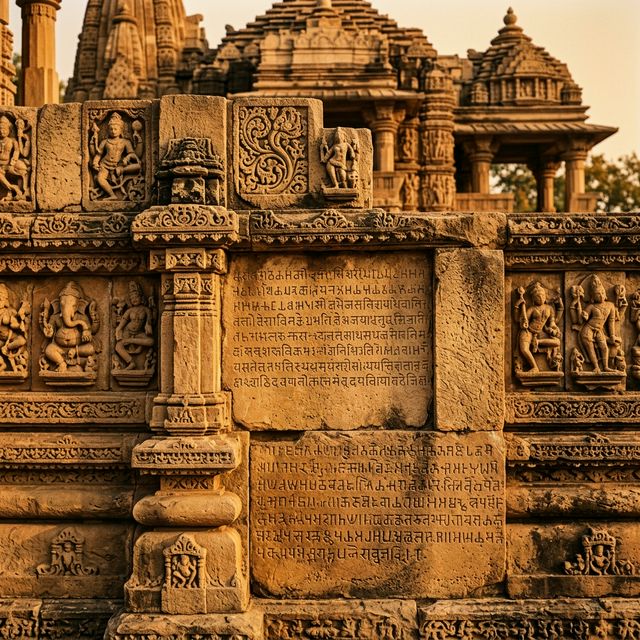
The Simra stone inscription of Karṇa is located in the Jabalpur district of Madhya Pradesh. It is a four-line Sanskrit epigraph incised in Nagari characters.
This undated record begins with an auspicious invocation wishing health and success, referencing the victorious rule of King Karṇa. The primary purpose of the epigraph is to record the demise of individuals, namely, Hemadopalī Gopī, Malorāgrāja, the Rāut Taipa Suvashṭhala, and Kaidehī. The record does not clarify the specific historical context or conflict during which these individuals lost their lives. It concludes by stating that this stone monument was prepared and erected by an individual named Janāda, likely a colloquial form of Janārdana.
1. svasti | śrībhaṭṭārakaprabha-śrīmatkarṇṇadeve vījayībhavati
2. hemadopalī gopī puṇyaloke | malorāgrājājaḥ punayaloke |
3. ta-ipa rā-utaḥ śuviṣṭhalaḥ punayaloke | kaidehī punayalo-
4. kī | kṛtam janārdanena |
| Dynasty: | Kalacuri |
| Ruler: | Karṇa |
| Date: | c. 11th century CE |
| Place: | Simra, Jabalpur, Madhya Pradesh |
| Donor: | Janāda (Janārdana) |
| Language: | Sanskrit |
| Script: | Nāgarī |
| Nature of grant: | Memorial Inscription |
| Purpose: | To record the passing of certain individuals to the holy world (puṇyalōka) and note the erection of the commemorative stone |
| Provenance of inscription: | Simra, Jabalpur, Madhya Pradesh |
| Type of Inscription: | Stone Inscription |
| Source: |
Bibliography & Research
Hiralal, R. B. (1916). Inscriptions in the Central Provinces and Berar. Government Printing.
Hiralal, R. B. (1929). Jubbulpore District Gazetteer, p. 185. Government Press
- Mirashi, V. V. (Ed.). (1955). Corpus Inscriptionum Indicarum Inscriptions of the Kalachuri Chedi Era. In (Vol. Vol 4 (Part 1), lxvii-cviii and 288-289. Archaeological Survey of India.
