
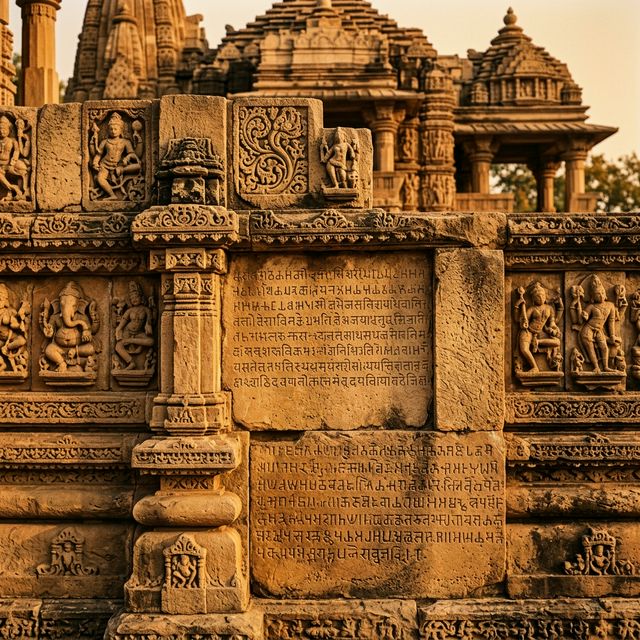
The Sankheda copper-plate inscription, discovered in the Vadodara district, Gujarat, is a fragmentary administrative charter representing the first half of a two-plate set. The single extant plate is inscribed in Brāhmī script and Sanskrit language, was issued during the reign of the Kalacuri ruler Śaṅkaragaṇa.
The inscription is issued from a military camp at Nirguṇḍipadraka by Śāntilla, a military officer (balādhikṛita) serving under Nirihullaka, who held the high-ranking positions such as the cess collector (bhōgikapālaka) chief superintendent (mahāpīlupati). Acknowledging the suzerainty of Śaṅkaragaṇa, Śāntilla issued an order to both, the paramount lord's officers and his own. The record mentions the donation of a field, quantified by its seed capacity of one piṭaka of paddy, situated on the western boundary of Śrī-Parṇakā within the Taṇḍulapadraka division. The grant was made to bhaṭṭika Anantsvāmin of the Kautsa gotra, a student of the Vājasanēyi śākhā residing in Pāshāṇihrada. The endowment, intended to support the five great sacrifices, was made on the occasion of a solar eclipse specifically to augment the religious merit and glory of the paramabhaṭṭāraka (presumably Śaṅkaragaṇa).
1. siddham svasti | nirguṇḍipadrakāvasthitavijayakaṭakāt sakalakṣitipatya
2. rccitacaraṇakamalaḥ śrīkṛṣṇarājaḥ tatsūnuranekasamaravijayaprāptakī-
3. rttirahitavadhūvadanapaṅkajamlānikaraḥ śrīśamkaragaṇastatpādānuddhyāta–
4. mahīmaṇḍalatalaprathitakirttirbbhogikapālakamahāpīlupatinirihulla–
5. kastahaddhalādhikṛtaśāntillaḥ sarvvāneva paramapādīyān svāṃścāvedayati |
6. yathā pāṣāṇi hrda vāstavyakautsasagotravājasaneyasabrahmacāriṇe
7. bhaṭṭikānantasvāmine pañcamahāyajñadharmmakriyotsarppaṇāya paramabhaṭṭā-
8. rakapādānām puṇyaśobhivṛddhaye taṇḍulapadrakāntargataśrīparṇṇakā-
9. yām paścimasīmanyacāṭabhaṭaprāveśyam putrapautrānvayabhogyam ādi–
10. tyoparāgakāla udakātisarggeṇa vrīhipitakavāpakṣetramācandrārkārṇa-
11. vakṣitisthitisamakālīnam pratipāditam atosmadvamśyairanyairvā
12. bhadranṛpatibhiḥ
Lines 1 to 5
Success! Hail! From the victorious camp fixed at Nirguṇḍīpadraka:
(There was) the illustrious Kṛṣṇarāja, whose lotus-like feet were worshipped by all kings. His son (is) the illustrious Śaṅkaragaṇa, who has obtained glory by his victories in many battles, who has made the lotuses, namely, the faces of the enemies’ wives, fade. Meditating on his feet (there is) the bhogikapālaka and mahāpilupati Nirihullaka, whose fame is well known on the globe of the whole earth. His military officer (balādhikṛta) Śāntilla informs (the officers) of the Great Lord (Śaṅkaragaṇa) and his own as follows:
Lines 6 to 10
To bhaṭṭika Anantasvāmin of the Kautsa gotra, (who is) a student of the Vājasaneyi (śākhā) and a resident of Pāsāṇihrada, there has been granted, with (a libation of) water, on the occasion of a solar eclipse, for the performance of the religious rites, namely, the five great sacrifices, for augmenting the religious merit and glory of the Great Lord, a field requiring one piṭaka of paddy as seed, situated on the western boundary of Śrī-parṇakā, which is included in (the sub-division of) Taṇḍulapadraka, (which is) not to be entered by cāṭas and bhaṭas, (and which is) to be enjoyed by a succession of sons and sons’ sons, as long as the moon, the sun, the ocean, and the earth will endure.
Lines 11 and 12
Therefore this gift should be consented to and preserved] by good kings, whether born in our family or others-
(The second plate of this grant is not forthcoming.)
| Dynasty: | Kalacuri |
| Ruler: | Śaṅkaragaṇa |
| Date: | 6th century CE |
| Donor: | Śāntilla |
| Donee: | Anantasvāmin |
| Language: | Sanskrit |
| Script: | Brāhmī |
| Occasion: | Solar eclipse |
| Religion: | Vedic |
| Nature of grant: | Land donation |
| Purpose: | To augment the religious merit and glory of the Great Lord and for the performance of the five great sacrifices |
| Provenance of inscription: | Sankheda, Vadodara district, Gujarat |
| Type of Inscription: | Copperplate grant |
| Source: |

The granted land is not measured in standard areal units like nivartanas, but rather by its seed capacity (requiring one piṭaka of paddy as seed), reflecting localised agricultural practices for assessing land value or size.