
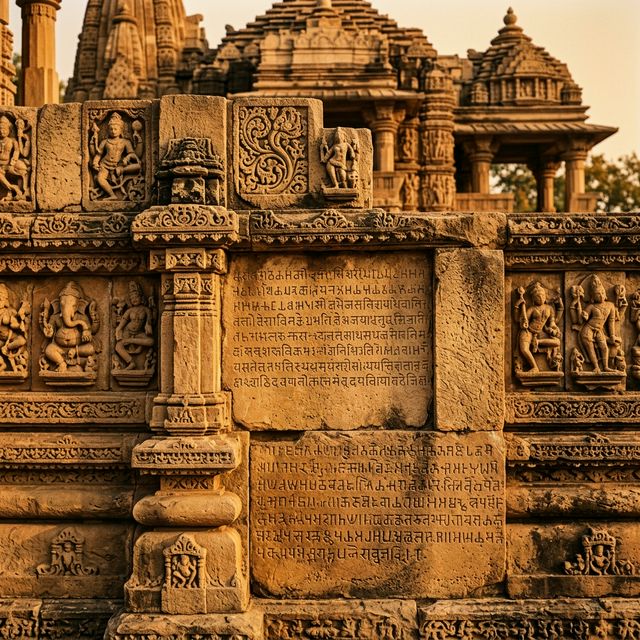
The Rewa stone inscription of Vijayasimha is a public stone copy of a copper-plate charter belonging to the Kalacuri dynasty of Tripuri dating to 12th century CE. Discovered in 1936 by Dr. N.P. Chakravarti, this Sanskrit language epigraph is incised in the Nāgarī script.
The text opens with an invocation for success and hails the decree from the capital Tripuri. It details the imperial titles of the devout Maheśvara worshipper Vijayasimha, sovereign of Trikalinga and ruler over the lords of horses, elephants, and men, who meditates on the feet of Vāmadeva. Issued in the presence of the queen, prince, and state officials, including mahāpradhāna ṭhakkura Kīki, arthalekhin ṭhakkura Keśava, sāndhivigrahika Lakhaṇa, mahāmantrin Haripāla, mahāmāṇḍalika Malayasimha, and rājaguru Vimalasiva, the charter registers the grant of Dhoṭṭavāḍa village in the Reva pattala. The gift transfers comprehensive rights, including fertile lands, trees, pastures, and fiscal cesses on visena and pravanis, though the beneficiary name is lost.
1. siddhiḥ | svasti śrīmattripurītaḥ paramabhaṭṭārakamahārājā-
2. dhirājaparameśvaraśrīvāmadevapādānudhyātaparama-
3. bhaṭṭārakamahārājādhirājaparameśvaraparamamāheśva-
4. ratrikaliṅgādhipatinijabhujopārjitāśvapatigaja-
5. patinarapatirājatrayādhipatya śrīmadvijayasimha-
6. devacaraṇāḥ adyeha śrīmahārājñī śrīmahākumāra śrīma-
7. hāpradhāna ṭhakkurakīki arthalekhiṭhakkura-
8. śrīkeśava sāndhivigrahikaḥ | śrīlakhaṇa śrīmahāpratī-
9. hāra śrīmahāmam triharipāla ………………….śrīmahā-
10. maṇḍalika śrīmalayasimha mahādhi………….
11. …………………………. pākalita …………. rā ………………
12. pāla rāṇaka śrīmadrājaguru śrīvimalaśiva ………….
13. sa revāpattalāyām ghoṭṭavāḍam nāma ………………..
14. …………………… karaviseṇādāya bhūmijāṅgalaḥ sāmrama-
15. dhūka gopracāra tṛṇodbhidādisakala……………..
16. kāmatamavāḍapravaṇikarasarvvādāya sahitaḥ……..
17. drasita ca predatta iti || samvat 96x ………………………. ma-
18. hīdata candājva mantri śrīmalaya……………..
19. śrīrevā ………………….. ||
Lines 1 to 5
Success! Hail! From the famous Tripurī, the paramabhaṭṭāraka, mahārājādhirāja, and parameśvara, the illustrious Vijayasimhadeva, the devout worshipper of Maheśvara, the lord of Trikaliṅga, who by (the might of) his arm has attained suzerainty over the three kings, namely, the lord of horses, the lord of elephants, and the lord of men, and who meditates on the feet of the paramabhaṭṭāraka, mahārājādhirāja, and parameśvara, the illustrious Vāmadeva, commands as follows:
Lines 6 to 16
Today here, in the presence of, the illustrious mahārājñī, the illustrious mahākumāra, the illustrious mahāpradhāna, ṭhakkura Kīki, the arthalekhin, the illustrious ṭhakkura Keśava, the sāndhivigrahika, the illustrious Lakhaṇa, the illustrious mahāpratihāra, the illustrious mahāmantrin Haripāla ……. the illustrious mahāmāṇḍalika Malayasiṃha, ……., the koṭṭapāla Rāṇaka, the illustrious rājaguru Vimalaśiva, ...:
We have granted the village named Dhoṭṭavāḍa, situated in the Revā pattalā, together with the cess on viseṇa, together with fertile and [other] lands, together with mango and mahuā trees, together with pasture-land, grass, etc., together with ….. kāmata, mavāḍa, the cess on the pravaṇis, and all other taxes to …….
Lines 17 to 19
In the year 96x …… the illustrious mantrin Malaya …… the famous Reevā …….
| Dynasty: | Kalacuri |
| Ruler: | Vijayasimha |
| Date: | c. 13th century CE |
| Donor: | Vijayasimhadeva |
| Language: | Sanskrit |
| Script: | Nāgarī |
| Religion: | Vedic |
| Nature of grant: | Land donation |
| Purpose: | To give permanent public visibility to a sovereign village donation made by the king |
| Provenance of inscription: | Rewa, Madhya Pradesh |
| Type of Inscription: | Stone Inscription |
