
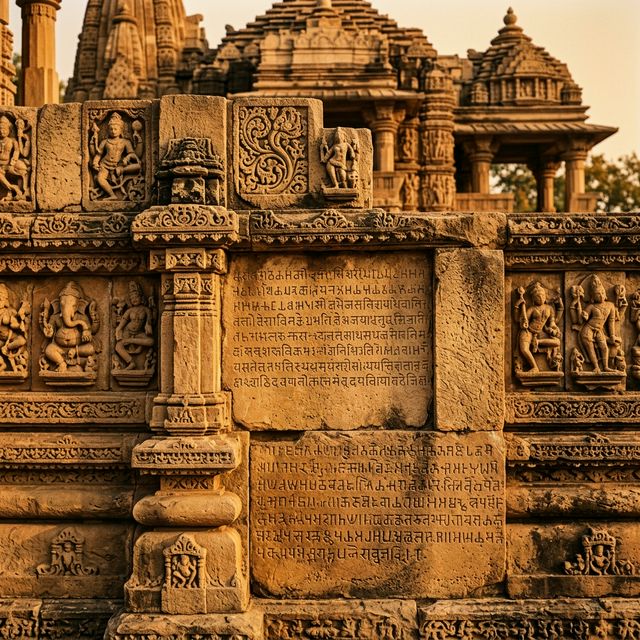
This stone inscription of Karṇadeva was found at the Secretary office at Rewa, Madhya Pradesh. Dated to Māgha śuddha 10, Kalacuri 812 which corresponds to Thursday, 4th January 1061 CE, the record is composed in Sanskrit language by Vijhūka and engraved in the Nāgarī script.
The inscription opens with an invocation to Śiva, followed by a genealogical account tracing the Kalacuri rulers from Kokalladeva II and Gāṅgeyadeva to Karṇadeva. It focuses on the military and religious deeds of Karṇa's subordinate, Vappulla, the son of Vigraharāja. Vappulla engaged in the battle of horses and defeated the forces of Trilocana (a Gurjara Pratihāra king) at the Yellow Mountain. To commemorate his achievements, Vappulla erected a five-shrined Śiva temple under the name Vappuleśvara in Kādambarī village, establishing a liṅga, a Śrīvatsa shrine, Lakshmī-Nārāyaṇa shrine and an orchard. His wife, Nayanāvalī, commissioned an image of Umā-Maheśvara. The record concludes with the date and salutations to Vāsudeva and Gaṇapati.
 Editor's Comment:
1. ……………………… | ……………………………….. sadānādyaddṛṣṭvāpi svavedyam sumatiṣu munayopīśate nopadeṣṭum | traikālyajñā
2. ……………………………………….taḥ sakalasukṛtinām svastaye vastadastu || 1 || prāleyācalasāgarāntaradharānkṛtvā balādyobalān || kārāgāra-
3. …………………………..|.................... prameya caritātkokalladevādabhūttasmādvāridhivāritāvanipatiḥ śrīkarṇṇadevobhavat || 2 || yo mitrasam-
4. ………………………………suḥ | āsannasarvvavilayaḥ kṣitibhṛdvarāṇāmatyuccamastakakṛtātmapadapratiṣṭhaḥ || 3 || dharmmajñāṇanakhaḥ purāṇacaraṇaḥ
5. …………………………saṭābhāsuraḥ | vedavyāttamukhaḥ sunītinayano homasphuratkesaro jīyādvaḥ kalikuñjarajvarakaraḥ śrīkarṇṇa-
6. ………. || 4 || ……………………………………. satā praśāsati mahīm cedīndracūḍāmaṇau | tatpādāmbujapūjane sthiramatirvappullanāmā kṛtī tatpūrvvānprathitānapitribhuvane jitvā
7. ……………. || 5 || ……………………….. vallakṣmyā lakṣitalakṣaṇaḥ kṣititale lakṣekṣyaikanāmābhavat | tasmādvijjalarāṇakorigahanaproddāmadāvāna-
8. laḥ…………………………….|| 6 || tasyānujo nijaguṇārjitasādhuśavdo vīro babhūva bhuvi vigraharājanāmā | yenāhave nihatavairivilāsinībhiḥ smṛ-
9. ………………….|| 7 || ………………………. jau viśrāmapātramabhavacca sa vīralakṣmyāḥ | vappullaketi ca kṛtam nijanāma pitrā yaḥ pūrvvavīrasamatāmanaya-
10. ……………|| 8 || ………………………… dvayam āruhyoru tataḥ svayam samucitānsandarśayañceṣṭitān | loke ghoṭakavigraheti vi-
11. ………………………………. su candre tataḥ || 9 || yaḥ pītaparvvatatale samare dhṛtāsirjjitvā ttrilocanabalam tulitārjjunaśrīḥ | āvastako-
12. …………………………………..|| 10 || sa kṣitimalaṅkariṣṇuḥ śaśīva guṇakiraṇanirmmalogrāme | kādambaryabhidhāne akārayacchaṅkarāyatanam || 11 ||
13. ………………………………….. ptam munibhiryathoktavidhinā liṅgam pratiṣṭhāpitam | yatprārambhadinādanu pratidinam śrīḥ putrapautrānugā jātā cam–
14. ………………………………….|| 12 || ………….. kṣaṇaḥ śivakṛte śrīvatsanāmā kṛtaḥ | pārśve devakulīcatuṣṭayayutastāsu kramāddevatāḥ | aisānyām
15. ……………………………………………….. lakṣmīssanārāyaṇā || 13 || tasyānekaśatāmrām bahuvidhaviṭapām ca vāṭikām purataḥ | saja-
16. la………………………………………………………………… || 14 || …………………………….sāntaḥ pure sasutabhṛtyayute prasannaḥ | bhūyācca kalpāntamanalpapūjaḥ śrīvappuleśvara iti prathitaḥ śivo-
17. tra || 15 || ………………………………………….| ……………………ṣahitā || 16 || yadyatra karmmaṇi śivāya nivedyamāne lagnam bhavetkvacana kiñcana kāñcanam me | puṇyena tena ja-
18. ……………………………………………………………. || 17 || …………………………. -sya pañcāyatanam śivasya | tasminhṛṣīkeśasutena bhaktyā vijhūkanāmnā racitā praśastiḥ || 18 ||
19. ………………………………………………………………………………………… viprāṇām || 19 || tasya ca patnī pravarā nāmnā nayanāvalīti vikhyātā | sākārayanmanojñām somām māheśvarīm pratimām || 20 ||
20. śrīparamabhaṭṭārakamahārājādhirājaparameśvaraśrī vāmadevapādānudhyāta samvatsare 812 śrīmatkarṇṇaprakāśa vyavaharaṇayā navamasamvatsare māghasudi 10 gurau
21. ………………………………………………………………………………lekhitā praśastiḥ || kalpasthāyinī bhavatu | maṅgalam mahāśrīḥ || 0 ||
22. om namo bhagavate vāsudevāya | om namo gaṇapataye ||
23. om namaḥ |
Om! Adoration to Śiva
Verse 1
May that form of Śiva, which is an object of their knowledge, even the sages who know what happens in the three times, i.e., in the past, present, and future, are unable to describe, though they have seen it, to (persons of) good minds …………………. of all virtuous persons, lead to your well-being.
Verse 2
There was (born) from Kokalladeva (II) of incomprehensible actions, [Gāṅgeyadeva] who, having with his might rendered powerless the lords of the earth extending from the snow-mountain to the ocean, [threw them] into prison ……………………… From him was (born) the illustrious Karṇadeva, the lord of the earth surrounded by the ocean.
Verse 3
Who [made over] to his friends ……………..; (who was) the impending universal destruction; (and) who planted his foot on the extremely haughty heads of the foremost among kings.
Verse 4
May the king, [a lion in the form of] the illustrious Karṇa, be triumphant! He, whose nails are the knowledge of the sacred law; whose legs are the Purāṇas; who appears dreadful with his mane of ………………….; whose open mouth is the Vedas; whose eyes are good policy; whose shining hair is the sacrifice; (and) who causes fever to the elephant that is the Kali age.
Verse 5
While (Karṇa), the foremost (lit., crest-jewel) of the kings of Chedi, is ruling the earth, the wise (man) named Vappulla, who is firmly attached to the worship of his lotus-like feet, having subdued those who had previously attained fame in the three worlds, …………………….
Verse 6
……………………. was born; (he) whose good qualities were marked by the goddess of fortune, (and) whose name alone was noteworthy on the surface of the earth. From him (was born) Vijjalarāṇaka, the raging wild fire to the forests which were his enemies.
Verse 7
His younger brother Vigraharāja, a warrior, who earned praise by his excellences, was (born) on the earth; the wives of the enemies killed by whom, having remembered……………
Verse 8
In battle he became the resting place of the goddess of heroism, (he) who made his name Vappullaka, given to him by his father, equal (in fame) to (those of) the heroes of old……….
Verse 9
Having mounted the two mighty ………….. and exhibiting deeds worthy of a god ……………………. [fought the battle known] as the battle of horses……….
Verse 10
He, sword in hand, having defeated at the foot of the Yellow Mountain the army of Trilocana, equaled the glory of Arjuna who overpowered the might of the three-eyed god Śiva ……………………
Verse 11
Gracing the earth like the moon, he, being stainless with his excellences, as the moon is with her rays, caused a temple of Śaṅkara to be constructed in the village called Kādambarī.
Verse 12
[Where] (this) liṅga was installed by sages according to the rite laid down (in the sacred texts); since the day of whose installation the goddess of fortune has day after day attended the sons and grandsons………………….
Verse 13
[In the temple] …………………. was installed (the image?) named Śrīvatsa, being surrounded by four small shrines; in them (were installed) the (following) deities in order, on the north-eastern (side) ………………. (and) Lakṣmī together with Nārāyaṇa.
Verse 14
In front of it (i.e., the temple) [he planted] a garden containing hundreds of mango trees and various (other) kinds of trees …………. with a well full of water.
Verse 15
May Śiva, who is known as the holy Vappuleśvara, receive (here) abundant worship to the end of the world and be gracious to Vappulla together with the inmates of his inner apartment, his sons and servants.
Verse 16
………………….. together with ……………
Verse 17
By the religious merit which I may have acquired by what gold of mine has been spent on this work which is dedicated to Śiva…………..
Verse 18
He built a five-shrined temple of Śiva. In it the son of Hṛṣīkeśa named Vijhūka has, with devotion, composed this praśasti.
Verse 19
…………………………….. of the Brāhmaṇas ………………
Verse 20
His distinguished wife is known by the name of Nayanāvalī. She caused a beautiful image of Maheśvara together with Umā to be made.
Lines 20 to 23
This praśasti was caused to be written ……………… on Thursday, the 10th (lunar) day of the bright fortnight of Māgha in the year 812, in the ninth year of administration rendered glorious by the illustrious Karṇa, who meditates on the feet of the paramabhaṭṭāraka, mahārājādhirāja, parameśvara, the illustrious Vāmadeva. May it last to the end of the world! May there be bliss and great prosperity! Om! Obeisance to the divine Vāsudeva! Om! Obeisance to Gaṇapati. Om! Obeisance!
| Dynasty: | Kalacuri |
| Ruler: | Karṇa |
| Date: | 4th January 1061 CE, Thursday (Māgha śuddha 10, varṣa 812; Regnal Year 9) |
| Place: | Secretary office, Rewa, Madhya Pradesh |
| Donor: | Vappullaka under the authority of Karṇadeva |
| Language: | Sanskrit |
| Script: | Nāgarī |
| Religion: | Śaivism, Vaiṣṇavism, and Śaktism |
| Deities: | Vappulēśvara i.e., Śiva; Śrīvatsa i.e., Viṣṇu; Lakshmī-Nārāyaṇa; Umā-Mahēśvara |
| Nature of grant: | Euology, Religious endowment |
| Purpose: | To record the eulogy of the Kalcuri rulers and the construction of temples for Śiva, Viṣṇu, Lakshmī-Nārāyaṇa, and Umā-Mahēśvara image, along with an orchard |
| Type of Inscription: | Stone Inscription |
| Source: |
Bibliography & Research
- Banerji, R. D. (1931). Appendix C: New Inscriptions. In The Haihayas Of Tripuri And Their Monuments (117-142, here pp 130-133). Archaeological Survey Of India.
- Mirashi, V. V. (Ed.). (1955). Corpus Inscriptionum Indicarum Inscriptions of the Kalachuri Chedi Era. In (Vol. Vol 4 (Part 1), lxvii-cviii and 278-284. Archaeological Survey of India.
- Spooner, B. (Ed.). (1924). Progress report of the A.S.I. (Western Circle Archaeology) 1921-22, p 118-119. Archaeological Survey of India.
