
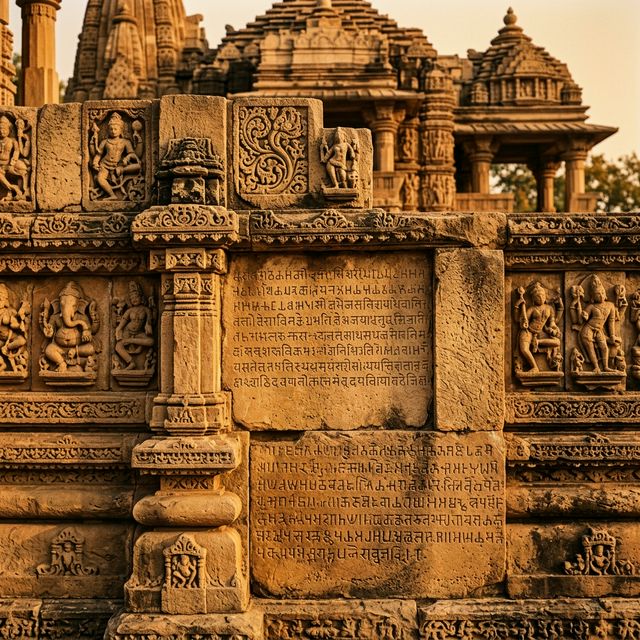
The Khairha plates of Yaśaḥkarṇa, consisting of two copper-plates, have been dated to Phālguna śuddha 14, Kalacuri year 823. The text is composed in Sanskrit using the Nāgarǐ script. The attached bell-shaped seal displays a figure of Lakṣmī flanked by elephants, a couchant Nandi bull at the base, and carries the legend Śrīmad Yaśaḥkarṇadevaḥ.
The inscription details the lunar lineage of the Kalacuri rulers from legendary ancestors down to Gāṅgeyadeva and Karṇadeva, who constructed the Karṇameru temple at Banaras and married the Hūṇa princess Āvalladevī. Their son Yaśaḥkarṇa, crowned by his father, defeated the Andhra king and worshipped Bhīmeśvara near the Godavari. The document records the royal donation of Deulā-Pañchela village, located in the Devagrāma subdivision within the Vāsudeva district. This land grant was executed on a saṅkrānti to a Ṛgvedic brāhmaṇa named Gaṅgādharaśarman, the grandson of Sīā and son of Chhītapai, belonging to the Kāṇva gotra.
First Plate
1. om namo brahmaṇeḥ || jayati jalajanābhastasya nābhīsarojam jayati jayati tasmājjātavānabjasūtiḥ | atha jayati sa tasyāpatyamatristadakṣṇastadanu jayati janma prā-
2. ptavānabdhibandhuḥ || 1 || atha bodhanamādirājaputram gṛhajāmātaramabjabāndhavasya | tanayam janayāmbabhūva rājā gaganābhogataḍāgarājahamsaḥ || 2 || putram purūravasa-
3. maurasamāpa sūnurdevasya saptajalarāśirasāyanasya | āsīdananyasamabhāgyaśatopabhogyā yasyorvvaśī ca sukalatramihorvarā ca || 3 || atrānvaye
4. kilaśatādhikasaptimedhayūpoparuddhayamunoktaviviktakīrttiḥ | saptābdhiratnaraśa nābharaṇā bhirāmaviśvam bharāśubharato bharato babhūva || 4 || helāgṛhī-
5. tapunaruktasamasāstro gotre jayatyadhikamasya sa kārtta vīryaḥ | atraiva haihayanṛpānvayapūrvvapumsi rājeti nāmaśaśalakṣmaṇi cakṣame yaḥ || 5 || sa himāca-
6. la iva kalacurivamsa masūta kṣamābhṛtām bharttā | muktāmaṇibhirivāmalavṛttaiḥ pūtam mahīpatibhiḥ || 6 || tatrānvaye nayavatām pravaronṛpendraḥ paurandarīmiva purīm
7. tripurīm punānaḥ | āsīnmadhandhagajādhirājanirmāthi kesariyuvā yuvarājadevaḥ || 7 || simhāsane nṛpatisimhamamuṣya sūnumārūrupannavanibhartura mātyamukhyāḥ |
8. kokallamarṇṇavacatuṣṭayavīcisam ghasam ghaṭṭaruddhacaturaṅgacamūpracāram || 8 || induprabhām nindati hāraguccham jugupsate candanamākṣipantī | yatra prabhau dūrataram prayāte viyoginīva prati-
9. bhāti kīrttiḥ || 9 || marakatamaṇipaṭṭaprauḍhavakṣāḥ smitākṣo nagaraparidhadairdhya laṅghayandordvayena | śirasikuliśapāto vairiṇām vīralakṣmīpatirabhavadapatyam yasya gāṅge-
10. yadevaḥ || 10 || sa vīrasimhāsanamauliratnam sa vikramāditya iti prasiddhaḥ | yasmādakasmādapayānamicchannakuntalaḥ kuntalatām babhāra || 11 || prāpteprayāgavaṭa mūlaniveśa bandhau
11. sārddham śatena gṛhiṇībhiramutra mukktim | putro.asya khaḍgadalitārikarīndrakumbhamuktāphalaiḥ smakakubhorccati karṇṇadevaḥ || 12 || kanakaśikharavelladvaijayantīsamīra-
12. glapitagaganakhelatkhe carīcakrakhedaḥ | kimaparamiha kāśyām yasya dugdhābdhivīcīvalayabahalakīrtteḥ kīrttanam karṇṇa meruḥ || 13 || agyam dhāma śreyaso vedavidyāva-
13. llīkandaḥ svaḥ sravantyāḥ kirīṭam | brahmastambo yena karṇṇāvatīti pratyaṣṭhāpi kṣmātalabrahmalokaḥ || 14 || cajani kalacurīṇām svāminā tena hūṇānvayajalanidhilakṣmyām śrīmadā-
14. valladevyām | śaśabhṛdudayaśaṅkākṣubdhadugdhābdhi velāsahacaritayaśaḥ śrīḥ śrīyadśaḥ karṇṇadevaḥ || 15 || candrārkkadīpavati parvvatarājapūrṇṇakumbhāvabhāsini mahābdhi catuṣkamadhye |
15. cakre purohitapuraskṛtipūtakarmmādharmātmano.asya hi pitaiva mahābhiṣekam || 16 || na khalaśalabhagoṣṭhīpakṣapātasya pātram na khalu kaluṣacaryākajjalodgārakāraḥ |
16. kalayati kalināmanyudgamam yastriyāmātamasi jayati jambūdvīparatna pradīpaḥ || 17 || cintāmaṇiklṛptaśuktiyugmakroḍe syādyadi kāmadhenudugdham | dṛsyeta dṛśostadāsya
17. tuḥ sādṛśyaṃ dhavalāruṇekṣaṇasya || 18 || yaḥ kakupkuñjarā lānastambha sabrahmacāriṇaḥ | kṣmopānteṣu jayastambhānudastambhayaduccakaiḥ || 19 || yo brahmaṇām pāṇiṣu pañcaṣāṇi dā-
18. tā nidhatte payasām pṛṣanti | taireva tṛṣṇā mavadhūyate ca ratnākarepi prathayantyavajñām || 20 || mahībharttā mahādānaistaistulāpuruṣādibhiḥ | garimṇā meruratyartham kṛ-
19. tārthayati yorthinaḥ || 21 || svarggarājagajadantarucīni kṣīranīranidhiśaṅkhaśucīni | śārṅgitalpaphaṇikañcukabhāmsi sphītatām dadhati yasya ya-
20. śāmsi || 22 || andhrādhīśamarandhradorvvilasitam svacchandamucchindatā yenābhyarccyata bhūribhiḥ sa bhagavānbhīmeśvaro bhūṣaṇaiḥ | yasyābhyarṇṇagatā pra-
21. nṛtya laharībhrūvalligodāvarī | gāyatyunmadahaṃsanādamadhuraiḥ srotaḥ svaraiḥ saptabhiḥ || 23 || kurvvanmahīm brāhmaṇasādarikṣatraniba–
Second Plate
22. rhaṇaḥ | sārddham paraśurāmeṇa yaḥ spardhāmadhirohati || 24 || sa ca paramabhaṭṭārakamahārājādhirājaparameśvaraparamamāheśvaraśrīvā-
23. madevapādānudhyātaparamabhaṭṭārakamahārājādhi-rājaparameśvaraparamamāheśvaratrikaliṅgādhipatinijabhu-
24. jopārjjitāśva patigajapatinarapatirājatrayādhipatyaḥ śrīmadyaśaḥ karṇṇadevaḥ || śrīmahādevī | mahārājaputraḥ
25. mahāmantrī | mahāmātyaḥ | mahāsāmantaḥ | mahāpurohitaḥ | mahāpratīhāraḥ | mahākṣapaṭalikaḥ | mahāpramātā ma-
26. hāśvasādhanikaḥ | mahābhāṇḍāṅgārikaḥ | mahādhyakṣaḥ | etānanyāmśca pradāsyamānagrāmanivāsijanapadāmścāhūya yathārham sammānayati bo-
27. dhayati samājñāpayati | viditametadastu bhavatām yathā samvat 823 phālgunamāsiśukalpakṣe caturddaśyām ravau saṅkrāntau vāsudevo–
28. ddeśe devagrāmapattalāyām deulāpañcelagrāmaḥ svasīmāparyantaḥ caturāghāṭaviśuddhaḥ | sajalasthalaḥ sāmramadhūkaḥ | sagarttoṣaraḥ | sa-
29. nirgamapraveśaḥ | salavaṇākaraḥ | sagopracāraḥ | sajāṅgalānūpaḥ | vṛkṣārāmodbhedodyāna tṛṇādisahitaḥ | kāṇvasgotrāya āplavana–
30. jāmadagnitrīpravarāya bahvṛcaśākhine sīāpautrāya cchītapaiputrāya gaṅgādharaśarmmaṇe brāhmaṇāya mātāpitrorātmanaśca puṇya-
31. yaśobhivṛddhaye grāmoyamasmābhiḥ śāsanatvena sampradattaḥ | atra cābhyarthanā dāturbhavati | sarvvānetānbhāvinaḥ | pārthivendrānbhūyo
32. bhūyo yācate rāmabhadraḥ | sāmānyoyam dharmmaseturnṛpāṇām kāle kāle pālanīyo bhavadbhiḥ || 25 || bahubhirvvasudhā bhuktā rājabhiḥ saga-
33. rādibhiḥ | yasya yasya yadābhūmistasya tasya tadāphalam || 26 || suvarṇṇamekam gāmekām bhūmerapyekamaṅgulam | harannarakamāpnoti yāvadābhūtasam–
34. plavam || 27 || taḍāgānām sahasreṇa aśvamedhaśatena ca | gavām koṭipradānena bhūmiharttā na śudhyati || 28 || svadattām paradattām vāyohareta vasundha-
35. rām | sa viṣṭhāyām kṛmirbhūtvā pitṛbhiḥ saha majjati || 29 || phālakṛṣṭām mahīm dadyātsabījām sasyaśālinīm | yāvatsūryakṛtā lokāstāva-
36. tsvargge mahīyate || 30 || ṣaṣṭim varṣasahasrāṇi svargge vasati bhūmidaḥ | ācchettā cānumantā ca tānyeva narake vaset || 31 || vārihīneṣvaraṇyeśuṣkakoṭara-
37. vāsinaḥ | kṛṣṇasarppāstu jāyante brahmadevasvahāriṇaḥ || 32 || anyāyena hṛtā bhṛmiranyāyena tu hāritā | harato hārayataśca dahatyāsaptamam kulam || 33 || a-
38. smatkulakramagatāḥ samudāharanti anyaiśca dānamidamabhyupamodanīyam | lakṣmīścalā salilabudbudavaddharāyām dānam phalam paramataḥ pratipā-
39. lanīyam || 34 || prajāhitārttham sthitayaḥ praṇītā dharmmeṣu vidvān pratipālayeta | yo lobhamohāddharate durātmā so.andho vrajeddurggatimāśu kaṣṭām || 35 ||
40. yānīha dattāni purā narendrairdānāni dharmmārthayaśaskarāṇi | nirmmālyavāntipramitāni tāni ko nāma sādhuḥ punarādadīta || 36 || bhūmim yaḥ prati-
41. gṛhṇāti yaśca bhṛmim prayacchati | ubhau tau puṇyakarmmāṇau niyatam svarggagāminau || 37 || śaṅkho bhadrāsanam chatram varāśvā varavāraṇāḥ | bhūmidānasya ci-
42. hnāni phalametatpurandara || 38 || asminvamśe parikṣīṇe yaḥ kaścinnṛpatirbhavet | tasyāham hastalagnosmi śāsanam na vyatikramet || 39 || vātābhra-
43. vibhramamidam vasudhādhipatyamāpātamātramadhuro viṣayopabhogaḥ | prāṇāstṛṇāgrasamabindusamā narāṇām dharmmaḥ sakhā paramaho
44. paralokayāne || 40 || dharmmalekhiśrīvācchūkena likhitamiti || maṅgalam mahāśrīḥ ||
Om! Adoration to Brahman!
Verse 1
Glorious is the lotus-navelled (god), glorious is the lotus which sprang from his navel and glorious is the (god) Brahmā born from (that) lotus! Glorious again is his offspring Atri, and glorious is the friend of the ocean who had his birth from his i.e., Atri’s eye.
Verse 2
Now the king, who is the swan in the expanse of heaven, begat Bodhana (i.e., Budha), the son of that primeval king, who became a son-in-law in the house of the friend of lotuses.
Verse 3
The son of the god (moon), who is the elixir of the seven oceans, obtained as a legitimate son Purūravas, who had here as his faithful wife Urvaśī to be enjoyed only by hundreds of matchless blessings, and also the earth.
Verse 4
In this family verily was born Bharata, whose pure fame is proclaimed by the Yamunā, hemmed in by the posts of more than a hundred horse-sacrifices performed by him; who was devoted to securing the well-being of the earth made beautiful by the jewelled girdle of the seven oceans.
Verse 5
Exceedingly glorious in his family is that Kārtavīrya who wielded with ease all weapons, superfluous though they were in his case, and who allowed the title of king only to the Moon, the progenitor of the family of these Haihaya princes.
Verse 6
As the Himālaya, the lord of mountains, produces a bamboo, which is rendered bright by stainless and round pearls, so did that lord of princes beget the Kalacuri family, which is purified by kings of spotless conduct.
Verse 7
In that family was a king, the foremost among those who are eminent for political wisdom, who purified Tripurī as Indra does his city, Yuvarājadeva (II), who destroyed the lords of princes blinded by arrogance as a young lion kills the leading scent elephants infuriated by rut.
Verse 8
The chief ministers of the lord of the earth placed on the throne his son Kokalla (II), a lion-like prince, the advance of whose four-membered army was checked only by its encountering the multitude of waves of the four oceans.
Verse 9
That lord having gone far away, his fame appears like a woman separated from her husband; for throwing away the white sandal paste, she derides moon-light and detests pearl necklaces.
Verse 10
His offspring was Gāṅgeyadeva, a thunderbolt falling on the heads of his enemies, the lord of the fortune of heroes, whose chest was broad like an emerald tablet, and who, having smiling eyes, surpassed with both his arms the length of a city-bolt.
Verse 11
He was the crest-jewel of heroic princes; he became famous by the title of Vikramāditya; wishing suddenly to run away from whom the lord of Kuntala ceased to wield his spear.
Verse 12
When, fond of residing at the foot of the holy banyan tree at Prayāga, he attained salvation there together with his hundred wives, his son Karṇadeva worshipped the quarters with the offerings of the pearls from the frontal globes of the best of enemies’ elephants cleft by his sword.
Verse 13
What more need we say about him than that here at Kāśī, the temple Karṇameru proclaims his great fame, which is like the circle of waves of the milk-ocean (the temple which is so high that) it lessens the fatigue of multitudes of celestial damsels playing in the sky, with the breezes of the flags waving from its golden spires.
Verse 14
He established a settlement of Brāhmaṇas called Karṇāvatī, the foremost abode of bliss, the root of the creeper of Vedic scholarship, the crown of the heavenly river and the world of Brahmā on the surface of the earth.
Verse 15
That lord of Kalacuris begot on the illustrious Āvalladevī, the goddess of fortune produced from the ocean of the Hūṇa family, the illustrious Yaśaḥkarṇadeva, the splendour of whose fame is the companion of the waves of the milk-ocean, that surge up mistaking it for the rise of the moon.
Verse 16
Of this pious prince the father, whose actions were pure, being guided by his family priest, performed himself the great coronation ceremony in the quadrangle (surrounded) by the great oceans, which had the sun and the moon as lamps and which was rendered resplendent by the lord of mountains as by a full jar.
Verse 17
Glorious is he, who like a jewel-lamp of the Jambūdvīpa shines in the Kali age, as (the jewel-lamp shines) in the darkness of the night; who is not influenced by partiality for the assemblies of wicked men, as a jewel-lamp is not filled by the wings of night-moths, and does not display evil conduct as a jewel-lamp does not give out lamp-black.
Verse 18
If the milk of the cow of plenty were put in two shells made of the wish-fulfilling gem, then there would be seen a likeness with the white and red eyes of this liberal king.
Verse 19
He set up high pillars of victory near the confines of the earth, as companions of the posts to which the elephants of the quarters are tied.
Verse 20
This liberal (king) pours five or six drops of water on the hands of Brāhmaṇas. Even with these, they satisfy their desire for wealth, and afterwards show their contempt for the ocean which is the mine of jewels.
Verse 21
Occupying a high position like Meru, this ruler of the earth exceedingly gratifies the suppliants by his great gifts such as the tulā-puruṣa.
Verse 22
Bright as the tusks of the elephants of the lord of heaven, white like the conches of the milky ocean, and resplendent like the slough of the serpent which forms the couch of Viṣṇu, his fame has attained abundance.
Verse 23
Extirpating with ease the lord of Andhra, the graceful movements of whose arms were flawless, he worshipped with the offerings of many ornaments the holy Bhīmeśvara near whom the Godāvarī, with her dancing eye-brows of waves, sings his glory with the seven notes of her streams sweet with the cries of the intoxicated swans.
Verse 24
Extirpating the hostile Kṣatriyas and bestowing the earth on Brāhmaṇas, he is (as it were) vying with Paraśurāma.
Lines 22 to 44
And he, the paramabhaṭṭāraka, mahārājādhirāja. and parameśvara, the illustrious Yaśaḥkarṇadeva, the devout worshipper of Maheśvara, the lord of Trikaliṅga, who has attained by his arm sovereignty over three kings, namely, the lord of horses, the lord of elephants, and the lord of men, who meditates on the feet of the paramabhaṭṭāraka, mahārājādhirāja, and parameśvara, the illustrious Vāmadeva, having called together the illustrious mahādevī, the mahārājaputra, the mahāmantrin, the mahāmātya, the mahāśāmanta, the mahāpurohita, the mahāpratīhāra, the mahākṣapaṭalika, the mahāpramātri, the mahāśvasādhanika, the mahābhāṇḍāgārika, and the mahādhyakṣa, these and other officials and also the inhabitants of the village which is to be granted, duly honours, informs and commands them (as follows):
“Be it known to you that on the occasion of the saṅkrānti, on Sunday, the fourteenth tithi of the bright fortnight of Phālguna in the year 823, we have given as a grant for the increase of the religious merit and fame of our mother and father and of ourself, this village Deulā-Pañcela, situated in the pattalā of Devagrāma in the uddeśa district of Vāsudeva, to the extent of its limits, with its four boundaries well-determined, together with land and water, together with mango and madhūka trees, together with its pits and barren land, together with (the right of) egress and ingress, together with mines of salt, together with pasture-lands, together with arid and marshy lands, together with the groves of trees, the gardens of plants, grass and so forth, to the Brāhmaṇa Gaṅgādharaśarman, the son of Chītapaī and grandson of Śivā, who belongs to the Kāṇva gotra and the Bahvṛca (Ṛgveda) śākhā, and has the three pravaras Āpnavāna, Aurva and Jāmadagnya.”
In this matter, this is the prayer of the donor,
(Here follow sixteen benedictive and imprecatory verses.)
This charter has been written by the illustrious Vācchūka, the writer of religious documents.
May there be bliss and great prosperity!
| Dynasty: | Kalacuri |
| Ruler: | Yaśaḥkarṇa |
| Date: | 22nd February 1076 CE or alternatively 24th February 1073 CE (Phālguna śuddha 14, varṣa 823) |
| Place: | Khairha, Shahdol, Madhya Pradesh |
| Donor: | Yaśaḥkarṇa |
| Donee: | Gaṅgādhara |
| Language: | Sanskrit |
| Script: | Nāgarī |
| Occasion: | Saṅkrānti |
| Religion: | Vedic |
| Nature of grant: | Religious endowment |
| Purpose: | To record a donation of a village to a brāhmaṇa for increasing the religious merit and fame of the king and his parents |
| Provenance of inscription: | Khairha, Shahdol, Madhya Pradesh |
| Type of Inscription: | Copperplate grant |
| Source: |
Bibliography & Research
- Hiralal, R. B. (1913). No 24. Khairha Plates of Yashakarnadeva [Kalachuri] Samvat 823. Epigraphia Indica, XII, 205-217.
- Mirashi, V. V. (Ed.). (1955). Corpus Inscriptionum Indicarum Inscriptions of the Kalachuri Chedi Era. In (Vol. Vol 4 (Part 1), lxvii-cviii and 289-299. Archaeological Survey of India.

The inscription provides an insightful look into the 11th century Kalacuri administrative apparatus by listing the high-ranking officials summoned to witness the charter such as the mahāsāmanta, mahāpurōhita, mahāpratīhāra, mahākshapaṭalika, mahāpramātṛi and others.