
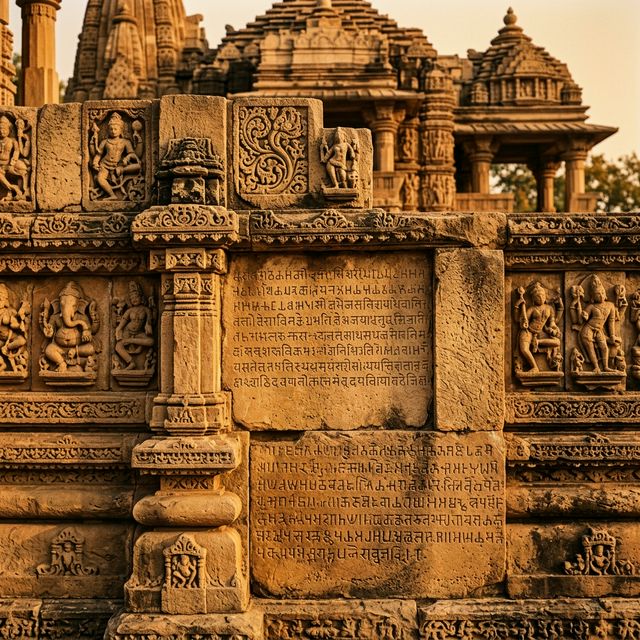
Discovered in 1938 by N.P. Chakravarti near Gopalpur in Madhya Pradesh, this tenth-century CE Sanskrit rock inscription belongs to the reign of the Kalachuri sovereign Yuvarājadeva I. The three-line prose record is engraved in the Nāgarī script on a rock face behind a Śeṣaśāyī image near Bandhogarh.
The inscription opens with the sacred syllable Om and registers the dedicatory patronage of a religious sculpture. Although portions of the text are highly effaced, the surviving fragments indicate that the accompanying figure, tentatively identified as Haladhara, was caused to be carved by the official Gollāka. The record establishes his lineage by identifying him as the son of Bhānu and defines his political status as the amātya, or minister, serving the Kalacuri ruler Yuvarājadeva I.
1. om śrī yuvarājadevāmātyasyaśrībhānu-
2. sūnoḥ śrīgollākasya…………………
3. ………………nāmnohala……………….
Om! [This figure of Haladhara is] of (i.e., is caused to be carved by) the illustrious Gollāka, [named] ……………………., the son of the illustrious Bhānu, who is a minister of the illustrious Yuvarājadeva (I).
| Dynasty: | Kalacuri |
| Ruler: | Yuvarājadeva |
| Date: | c. 10th century CE |
| Place: | Gopalpur, Madhya Pradesh |
| Donor: | Gollāka |
| Language: | Sanskrit |
| Script: | Nāgarī |
| Religion: | Vaiṣṇavism |
| Deities: | Haladhara i.e. Paraśurāma |
| Nature of grant: | Religious endownment |
| Purpose: | To officially credit and record the patronage of sculpture |
| Provenance of inscription: | Gopalpur, Madhya Pradesh |
| Type of Inscription: | Stone Inscription |
| Source: |
