
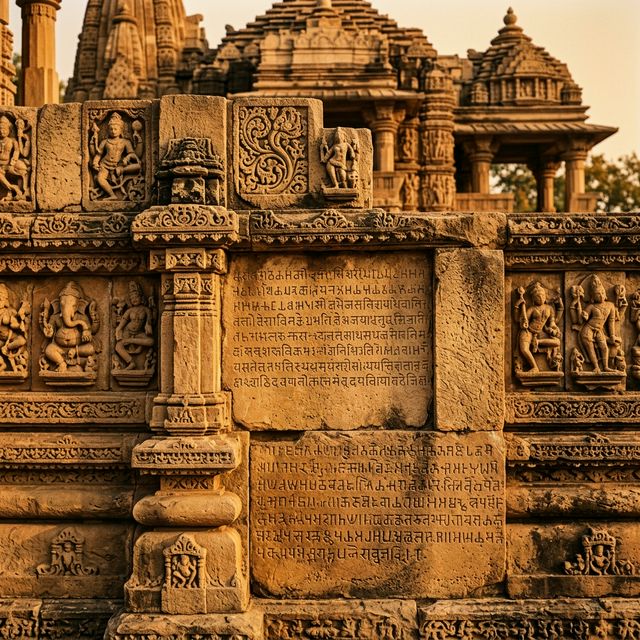
This four-line inscription was reported from the Gauri-Shankar temple at Bhedaghat in Jabalpur, Madhya Pradesh. The record composed in Sanskrit language and incised in Nāgarī characters was first noticed by T. Bloch and R. D. Banerji.
The text records a formal act of religious devotion performed jointly by three prominent members of the Kalacuri royal family. It documents the collective, perpetual obeisance of the queen mother (mahārājñī) Gosaladevī, her son the reigning sovereign mahārāja Vijayasiṁhadeva, and the crown prince or heir-apparent (mahākumāra) Ajayasimhadeva. These three royal figures offer their continuous salutations directed specifically toward the enshrined deity of the temple complex. The text indicates that the deity is addressed by the epithet Bhagnakhidra, signifying the here being a destroyer of diseases. This collective adoration was rendered by the royalty to secure their overall welfare.
1. mahārājñī śrīmadgosaladevī śrīmahārā-
2. jaśrīmadvijayasimhadeva mahākumāra–
3. ajayasimhadeva ete bhagnakhidrāya hitāya
4. nityam praṇamati ||
The Mahārājñī the illustrious Gosaladevī, the glorious mahārāja, the illustrious Vijayasimhadeva, the mahākumāra Ajayasimhadeva, these constantly bow to the destroyer of diseases for (their) welfare.
| Dynasty: | Kalacuri |
| Ruler: | Vijayasimha |
| Date: | c. 12th century CE |
| Place: | Gauri Shankar Temple, Bedaghat, Madhya Pradesh |
| Donor: | Mahārājñī Gosaladevī, mahārāja Vijayasimhadeva, and mahākumāra Ajayasimhadeva |
| Language: | Sanskrit |
| Script: | Nāgarī |
| Religion: | Shaivism |
| Nature of grant: | Religious endownment |
| Purpose: | To record the permanent, daily obeisance of the royal family to the enshrined deity |
| Provenance of inscription: | Gauri Shankar Temple, Bedaghat, Madhya Pradesh |
| Type of Inscription: | Stone Inscription |
| Source: |
Bibliography & Research
- Banerji, R. D. (1931). Appendix C: New Inscriptions. In The Haihayas Of Tripuri And Their Monuments (117-142, here p 142). Archaeological Survey Of India.
- Marshall, J. (1910). Annual Report Of The Archaeological Survey Of India 1908-09 (Vol. IX), pp. 87-88.
- Mirashi, V. V. (Ed.). (1955). Corpus Inscriptionum Indicarum Inscriptions of the Kalachuri Chedi Era. In (Vol. Vol 4 (Part 1), lxvii-cviii and 363-364. Archaeological Survey of India.
