
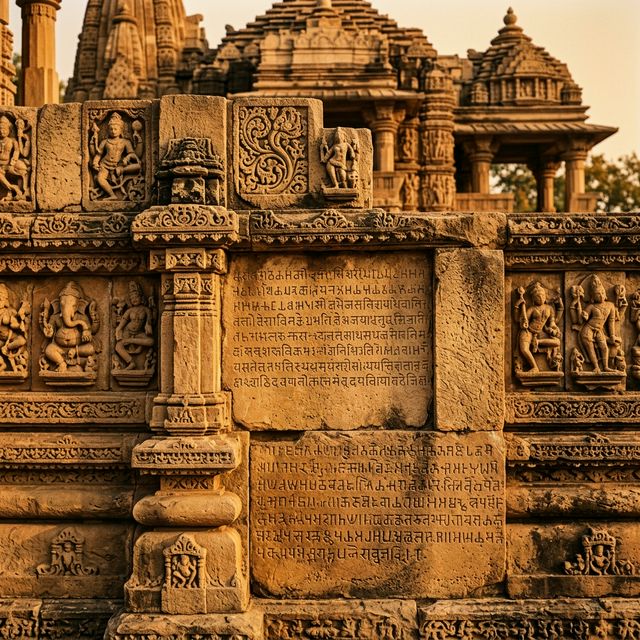
Discovered in Nasik, the copper-plate charter of the Cālukya ruler Dharāśraya-Jayasimha dates to the Kalacuri year 436 (685 CE). The dual-plate inscription is composed in Sanskrit utilising the Brāhmī script. The record documents Dharāśraya-Jayasimha's military campaigns and his patronage of a Śaiva ascetic. The charter features a circular seal bearing the legend Śrī-Dharāśraya.
Opening with an invocation to the Varāha incarnation of Viṣṇu, the text traces the Cālukya lineage from Kīrtivarman I to Pulakeśivallabha II, noting his victory over Harṣavardhana. It then introduces Dharāśraya-Jayasimhavarman, detailing his decisive military triumph over the army of Vajjaḍa between the Mahi and Narmada rivers. The record highlights his devotion to a Śaiva ascetic who authored the Sanskrit play Harapārvatīya. The administrative purpose is the donation of Ḍhoṇḍhaka village in the Nasikya viṣaya to Trivikrama, a brāhmaṇa Vājasaneya of the Bharadvāja gotra. Issued on the vernal equinox to sustain traditional Vedic sacrifices, the charter concludes with standard imprecatory verses, chronological dating, and the details of the scribe.
First Plate
1. siddham | jayatyāviṣkṛtam viṣṇorvvārāham kṣobhitārṇṇavam | dakṣiṇonnatadamṣṭrāgraviśrā-
2. ntabhuvanam vapuḥ || 1 || śrīmatām sakalabhuvanasaṃstūyamanamāna vyasagotrāṇām
3. hārītīputrāṇām saptalokamātṛbhissaptamātṛbhirabhivarddhitānām kārttike-
4. yaparirakṣaṇaprāptakalyāṇaparamparāṇām bhagavannārāyaṇaprasādasamāsā-
5. ditavārāhalāmchanekṣaṇakṣaṇavaśīkṛtāśeṣamahībhṛtāmcalikyānām kulamalaṅka-
6. riṣṇoraśvamedhāvabhṛthasnānapavitrīkṛtagātrasya pṛthivīvallabhamahārājādhirā-
7. japarameśvaraśrīkīrttivarmmarājasya priyātmajauttarāpathādhipatiśrīharṣavarddhanaparā-
8. jayopalabdhaparameśvarāparanāmadheyaḥ satyāśraya śrīpulakeśivallabhamahārājasta-
9. tsutonekacāturddantayuddhalabdhavijayo mahīnarmmadāntarāladhavalaphalaśilīmu-
10. khajālavijitavinihatavajjaḍa samastasainyo harapārvvatīyanāṭakakaraṇavi-
11. khyātakavi…… śivabhaṭṭārakabhikṣaverccanamudrā vidhānamasṛṇitakarata-
12. lāñjaliḥ paramabrahmaṇyo mātāpitṛśrīmadanivāritapādānuddhyāto dharā-
13. śrayaśrījayasimhavarmmarājaḥ sarvvāneva viṣayapatigrāmakūṭa-
14. mahattarādhikārikādīnsamanudarśayati | viditamastu vo yathāsmābhirnnā si-
15. kyaviṣaye ḍhoṇḍhakagrāmaḥ sodraṅgaḥ soparivāraḥ pūrvvāghāṭanavi-
Second Plate
16. śuddhaḥ ācandrārkkārṇṇavakṣitisthitisamakālīnaḥ putrapautrānvayopa-
17. bhogyaḥ balicarulatuvaiśvadevāgnihotrakriyotsarpaṇāya mātāpitrorā-
18. tmanaśca puṇyayaśobhivṛddhaye nāsikyavāstavya vājasaneyabharadvājasa-
19. gotrāya pṛītiśarmmaputratrivikramāya caitramāsaśuddhadaśamyām viṣuve udaka-
20. pūrvvam pratipāditaḥ | yatosmadvamśyairanyairvvāgāminṛpatibhirayamasmaddāyo-
21. numantavyapālayitavyaśca | yo vājñānatimirapaṭalā vṛtamatirācchindyādā-
22. cchidyamānam vānumodeta sa pañcabhirmahāpātakaissamyuktassyāditi | uktam
23. ca bhagavatā vedavyāsena vyāsena || ṣaṣṭim varṣa sahasrāṇi svargge modati bhū-
24. midaḥ | ācchettā cānumantā ca tānye va narake vaset || 2 || vindhyāṭavīṣvatoyāsu
25. śuṣkakoṭaravāsinaḥ | kṛṣṇāhayo hi jāyante bhūmidāyam haranti ye || 3 || ba-
26. hubhirvvasudhā bhuktā rājabhissagarādibhiḥ | yasya yasya yadā bhūmista-
27. sya tasya tadā phalam || 4 || pūrvadattām dvijātibhyo yatnādrakṣa yudhiṣṭhira | mahīm mahima-
28. tām śreṣṭha dānācchreyonupālanam || 5 || sam 400 30 6 cai śu 10 || likhitamidam nā-
29. gabhaṭa bhogika putrane iti ||
Seal
śrī-dharāśrayaḥ |
Success!
Verse 1
Victorious is Viṣṇu’s manifested boar form, which agitated the ocean and which had the world resting on the tip of its projecting right tusk!
Lines 2 to 8
(There was) the mahārāja Satyāśraya, the illustrious Pulakeśivallabha (II), who obtained the other title of parameśvara by vanquishing the illustrious Harṣavardhana, the lord of Uttarāpatha; who was the dear son of the pṛthivīvallabha, mahārājādhirāja, parameśvara, the illustrious Kīrtivarmarāja, who had his body sanctified by the avabhṛtha (bath) in an Aśvamedha sacrifice; who adorned the family of the illustrious Calikyas who are of the Mānavya gotra, which is being praised by the whole world; who are the sons (i.e., descendants) of Hārītī; who were brought up by the seven mothers who are the mothers of the seven worlds; who have obtained continuous prosperity through the protection of Kārttikeya; who have all kings submitting to them the moment they see the boar-emblem which was obtained by the grace of the divine (god) Nārāyaṇa.
Lines 9 to 13
His son, Dharāśraya, the illustrious Jayasimhavarmarāja, who meditates on the feet of (his) mother, father and the illustrious Anivārita; (who is) very pious; who has obtained victory in several battles with four-membered armies; who defeated and exterminated with (his) bright-tipped arrows the whole army of Vajjaḍa in the country between the Mahī and the Narmadā; the palms of whose folded hands were softened by performing the mudrās for the worship of the religious mendicant bhaṭṭāraka Śiva, a poet who has attained celebrity by his composition of the play Harapārvatīya, addresses all heads of the viṣayas (districts), the headman of the village, mahattaras, officials and others (as follows):
Lines 14 and 19
Be it known to you that for the increase of the religious merit and fame of (our) mother and father and ourself, we have granted, on the occasion of the Viṣuva (vernal equinox) on the tenth (tithi) of the bright fortnight of Caitra, by previously pouring a libation of water, the village Ḍhoṇḍhaka in the Nāsikya viṣaya, together with the udraṅga and (other) appurtenances, which has clear previously determined boundaries; which is to continue as long as the moon, the sun, the ocean and the earth would endure; which is to be enjoyed by a succession of sons and sons’ sons, to Trivikrama, the son of Prītiśarman of the Bharadvāja gotra and Vājasaneya śākhā, who is a resident of Nāsikya, for the performance of the religious rites of bali, caru, vaiśvadeva (and) agnihotra.
Lines 20 to 22
Wherefore, future kings, whether born in our family or others, should consent to and preserve this our gift. Whoever, with his mind shrouded by the veil of the darkness of ignorance, would confiscate it or allow it to be confiscated, shall incur the five great sins!
Lines 22 to 27
And it has been said by the holy Vyāsa, the redactor of the Vedas:
(Here follow four benedictive and imprecatory verses.)
Lines 28 and 29
The year 400 (and) 30 (and) 6, (the month) Caitra, the bright (fortnight), (the lunar day) 10. Written by Māna (?), the son of the bhogika Nāgabhaṭa.
Seal
The illustrious Dharāśraya.
| Dynasty: | Cālukya |
| Ruler: | Dharāśraya-Jayasimha |
| Date: | 20 March 685 CE (Caitra, śuddha 10, varṣa 436) |
| Donor: | Dharāśraya-Jayasimha |
| Donee: | Brāhmaṇa Trivikrama |
| Language: | Sanskrit |
| Script: | Brāhmī |
| Occasion: | "Viṣuva i.e. Vernal Equinox |
| Religion: | Vedic |
| Nature of grant: | Land donation |
| Purpose: | To perform the religious rites including bali, caru, vaiśvadeva, and agnihotra |
| Provenance of inscription: | Nashik, Maharashtra |
| Type of Inscription: | Copperplate grant |
| Source: |
Bibliography & Research
Khare, G. S. (1930). Nasik Plates of Dharāśraya-Jayasimha. Sources of Medieval History of the Deccan, I, 8.
- Mirashi, V. V. (Ed.). (1955). Corpus Inscriptionum Indicarum Inscriptions of the Kalachuri Chedi Era. In (Vol. Vol 4 (Part 1), lix-lxvi and 127-131. Archaeological Survey of India.
Rao Saheb, G. S. Nasik Plates of Dharāśraya-Jayasimha. Bhārata Itihsa Samśodhaka Maṇḍaḷa
