
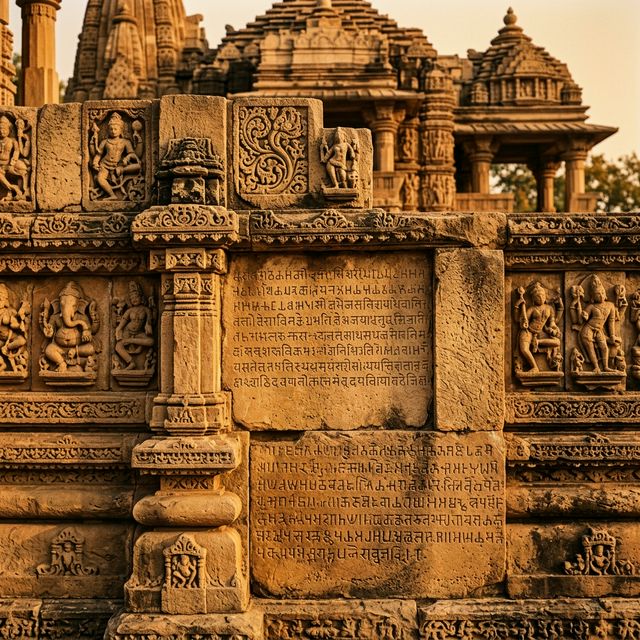
The Kanheri copper-plate inscription of the Traikūṭakas was discovered in 1839 by Dr. James Bird, at Kanheri caves near Mumbai. The single copper plate, originally interred alongside two small urns containing ashes and minor relics, is incised with nine lines of Sanskrit text utilising the Brāhmī script. Dating to the year 245 of the Kalacuri era, corresponding to 494-495 CE, the epigraph provides critical archaeological evidence regarding Buddhist patronage and the chronological expanse of Traikūṭaka suzerainty. Though the original plate was subsequently lost, its text was preserved through an eye-copy and lithograph.
The inscription formally records the construction of a stone and brick caitya within the Great Monastery of Kṛṣṇagiri (modern Kanheri, Mumbai) during the augmenting sovereignty of the Traikūṭakas. The donor, Buddharuci, is identified as a resident of the Kāṇaka village in the Sindhu district and the son of Buddhaśrī and Puṣyavarman. A devoted follower of the Śākyamuni Buddha and the monastic community, Buddharuci dedicated this memorial structure to Śāradvatīputra, the Buddha's foremost disciple, intending it to last as long as the celestial bodies such as the Meru mountain exist. The text invokes the blessings of various deities, yakṣas, and semi-divine beings, including Vajrapāṇi and Pañcika, upon the pious gift. It concludes with a poetic verse wishing eternal fame for the donor and a brief concluding notation, potentially identifying the interred relic as a canine tooth (dāḍhā).
 Editor's Comment:
1. namassarvvajñāya || trikūṭakānām pravarddhamānarājye samvatsareśatadvaye pañcacatvārim śaduttare kṛṣṇagirimahāvihāre
2. sindhu viṣayāntarggatagrāma kāṇaka vāstavyaḥ suprabhāyāḥ buddhaśriyā puṣyavarmmaṇaśca putro daśabalabali-
3. no bhagavataśśākyamunessamyaksambuddhasya taddharmmaśrāvakāryya bhikṣoḥ caraṇaparicaraṇakuśalo buddharuciri –
4. dam tasyaiva paramamuneragryaśrāvakasyāryyaśāradvatīputrasya caityam ghaṭitapāṣāṇeṣṭakābhirāca-
5. ndrārkkārṇṇavakṣitisthitisamakālīnam pratiṣṭhāpitavāmstadasya devayakṣasiddhavidyādharagaṇamāṇibhadrapū-
6. rṇṇabhadrapañcikāryyavajrapāṇivāṅkaṇakādaya svasti diśantvapi ca | yāvadvīcī sahasrapracalitamakarā-
7. ghūrṇṇitāvartatoyaḥ kṣīrodaḥ kṣīratoyo bṛhadupalacitakarkkaśo vāpi meruḥ | yāvadvāyānti nadya-
8. ssuvimalasalilāssāgaram toyavatyaḥ tāvatkīrtti sthireyam bhajatu śubhakarī satsutam puṣyanāmnaḥ || 1 ||
9. dāḍhā |
Lines 1 to 4
Obeisance to the Omniscient (Buddha)! In the augmenting kingdom of the Traikūṭakas, in the year two hundred increased by forty-five, in the great monastery at Kṛṣṇagiri, Buddharuci, a resident of the village Kāṇaka included in the Sindhu district (viṣaya), the son of the glorious Buddhaśrī and Puṣyavarman, skillful in serving the feet of the holy Śākya sage who was mighty by the possession of the ten powers and attained complete enlightenment, and of the venerable monk who heard his law, has erected this caitya with dressed stones and bricks to last as long as the moon, the sun, the oceans, and the earth will endure, which is dedicated to the venerable Śāradvatīputra, the chief disciple of the same great sage i.e., Buddha.
Line 5
Therefore may gods, yakṣas, siddhas, vidyādharas, gaṇas, Māṇibhadras, Pūrṇabhadra, Pañcika, the venerable Vajrapāṇi, Vāṅkaṇaka, and others bless it!
Lines 6 to 8
Moreover, as long as the milky ocean, the waters of the whirlpools of which are whirled by the alligators tossed about by thousands of its waves, is an ocean of milk, as long as the rugged Meru is piled with huge rocks, as long as rivers of very clear water flow with their water into the ocean, even so long may this lasting and auspicious fame resort to the excellent son of him who is named Puṣya!
Line 9
A canine tooth
Glossary
| Dynasty: | Traikūṭaka |
| Date: | 5th century CE. |
| Donor: | Buddharuci |
| Donee: | The venerable Śāradvatīputra |
| Language: | Sanskrit |
| Script: | Brāhmī |
| Religion: | Buddhism |
| Nature of grant: | Religious endownment |
| Purpose: | To enshrine a relic of the venerable Śāradvatīputra (chief disciple of Buddha) |
| Provenance of inscription: | Caves of Kanheri, Mumbai, Maharashtra |
| Type of Inscription: | Copperplate grant |
| Source: |
Bibliography & Research
- Bird, J. (1841). Opening of the Topes of the caves of Kanari, near Bombay, and the Relics found in them. Journal Of The Asiatic Society Of Bengal, X, 94-97.
- Burgess, J., & Indraji, P. B. (1881). Inscriptions from the Cave-temples of Western India. Archaeological Survey of India, pp 57-60.
- Gokhale, Shobhana. (1991). Kanheri Inscriptions. Deccan College Post-Graduate & Research Institute, pp 59-62.
- Mirashi, V. V. (Ed.). (1955). Corpus Inscriptionum Indicarum Inscriptions of the Kalachuri Chedi Era. In (Vol. Vol 4 (Part 1), xliv-li and 29-32. Archaeological Survey of India.
