
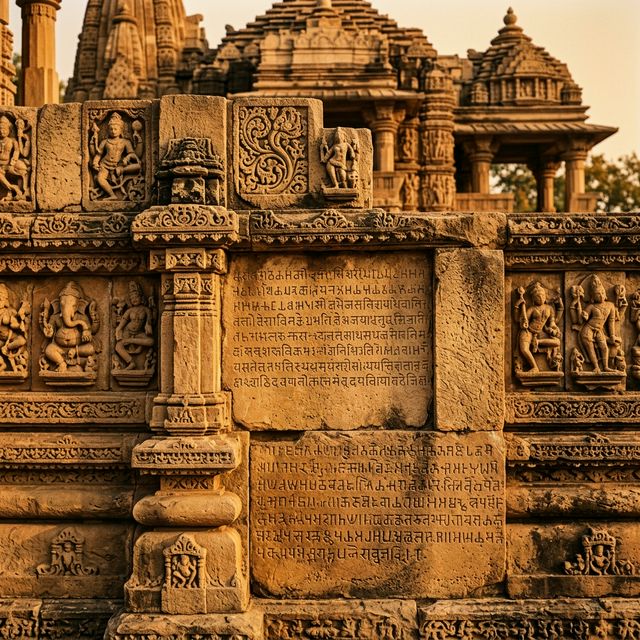
Discovered in the village of Jugal in the Belagavi district, Karnataka, this epigraph is a fragmentary record. Despite its incomplete state, the record is identified with the first half of the twelfth century CE based on the palaeographical peculiarities of Old Kannada script. A Sanskrit preamble for the dynastic genealogy beginning with a typical invocation to Śiva before tracing the lineage from the ancestor Jīmūtavāhana to Gaṇḍarāditya, followed by a Kannada prose section. The exact intent of the inscription cannot be definitively proven, as the relevant portions have been lost.
1. ……………………| ………………………………………………………… rasthaḷasthitabhujaṅgahāro haraḥ || āsīdvidyādharaḥ pūrvvaṃ nā-
2. mnā jīmūtavāhanaḥ | parārthaṃ jīvitaṃ yena garuḍasya niveditam || śilāhārākhyavaṃśoyaṃ tagareśvarabhūbhṛtām | tadvaṃśe jatigo nāma jāto bhūbhṛcchikhāmaṇiḥ || svasti śrījatigakṣitīśatanayo nāyimmanāmā nṛ-
3. paḥ putrastasya ca candrarāṭ pṛthuyaśāstasyāpi sūnuḥ kila | sañjāto jatigo jagajjananutaḥ śrīmāṃśca tannandano goṅkallobhuvi bhūmipālatilakastasyāpyabhūdagrajaḥ || gūhaleśotha tadbhrātā kīrttirājonujosya ca | candrādityastatastasya cakre rājyama-
4. kaṇṭakam || śrīmadgoṅkalabhūmipālatanayaḥ śrīmārasiṃho nṛpastatsūnurnṛpamaulilālitatapadaśrīgūhalākhyo nṛpaḥ | tadbhrātā bhuvi bhojadevanṛpativairībhapañcānanaścakre rājyamakhaṇḍitaṃ pṛthuyaśā laṅkeśatulyaḥ kila || tasyānujo dha-
5. rmmadharo dharitryāṃ dadhāra varṇānakhilānsvadharme | dhairyāgradhuryo dhanado dhanānāṃ śrīgaṇḍarāditya iti prasiddhaḥ || tulāpuruṣadānādiṣoḍaśakratukārakaḥ | śaucagāṅgeyakīrtyaikanilayaḥ svaguṇairbhuvi || svasti | samadhigatapañcamahāśabdamahāmaṇḍaleśvaraṃ |
6. tagarapuravarādhīśvaraśrīśilāhāranarendrajīmūtavānahānvaya- prasūtasuvarṇagaruḍadhvajamaruvaṅkasarpa ayyanasiṃhorimaṇḍaḷikabhairavavidviṣṭagajakaṇṭhīrava iḍuvarādityaṃ rūpanārāyaṇaṃ…………
(The record may have commenced with the usual ‘Success! Hail! Obeisance to Śiva!’)
Verse 1
May Hara, who has a garland of a serpent on his breast…………………
Verse 2
Formerly, there was a Vidyādhara, Jīmūtavāhana by name, who offered his life to Garuḍa for the sake of others.
Verse 3
This is a family of the lords of Tagara, known as Śilāhāra. In that family was born the crest-jewel of kings, Jatiga I by name.
Verse 4
Hail! There was a son of king Jatiga I, Nāyimma by name. His son was Candrarāja, of great fame. To him, again, was born a son named Jatiga II, praised by the people of the world. To him was born the eldest son, the illustrious Goṅkalla, the foremost (lit. the forehead-mark) of the kings on the earth.
Verse 5
Thereafter, there was his brother Gūhaleśa I; his younger brother was Kīrtirāja; thereafter, Candrāditya made his kingdom free from all troublesome persons.
Verse 6
Then there was the illustrious Mārasiṃha, son of the illustrious king Goṅkala. His son was the illustrious Gūhala II by name, whose feet were fondled by the crowns of other kings. His brother was king Bhojadeva I, a lion to the elephants that were his foes in this world. He, of great fame, ruled uninterruptedly like the lord of Laṅkā.
Verse 7
His younger brother is known as the illustrious Gaṇḍarāditya, who is the protector of religion, who makes all castes observe their religious duties, who is the foremost among the most courageous, and the bestower of wealth.
Verse 8
He has performed the sixteen vows such as the Tulāpuruṣa gift, and by his merits he is the sole abode of the fame of Gāṅgeya (Bhīṣma) in respect of morally pure conduct.
Line 5
Hail! The illustrious king Gaṇḍarāditya, who has obtained the five mahāśabdas, and who is adorned with all royal titles such as ‘the lord of Tagara, the best of towns,’ ‘a scion of the Śilāhāra family,’ ‘he who is born in the family of Jīmūtavāhana,’ ‘he who has the golden eagle for his emblem,’ ‘a serpent to the hostile army,’ ‘a lion-like son of his father,’ ‘a veritable Bhairava to the hostile feudatories,’ ‘a lion to the elephants in the form of his enemies,’ ‘the Sun among archers,’ ‘Nārāyaṇa in respect of a handsome form’ ……………
(The subsequent portion of the record is broken away and lost.)
| Dynasty: | Śilāhāra |
| Ruler: | Gaṇḍarāditya |
| Language: | Kannada and Sanskrit |
| Script: | Kannada |
| Provenance of inscription: | Panchayat Office, Jugul, Belgaum |
| Type of Inscription: | Stone inscription |
| Source: |
