
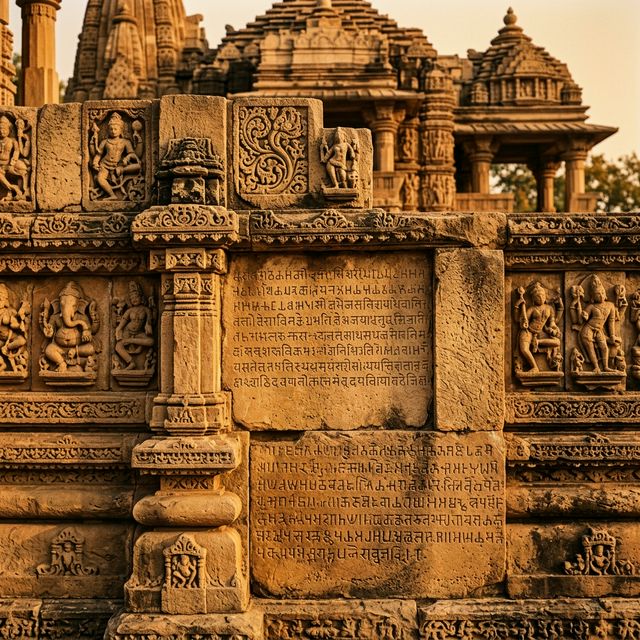
The stone inscription was identified on a girder of the Ambarnath (also known as Ambernath) temple near Kalyan Thane district, Maharashtra presents an epigraphic record from the reign of the Śilāhāra ruler Mummuṇirāja (referred to as Māṃvāṇirāja). Engraved in the Nāgarī script and composed in irregular Sanskrit prose, the text dates to the Śaka 982 (1060 CE).
The charter formally records the completion of the Ambernath temple, an architectural project initiated by the predecessor, mahāmaṇḍaleśvara Chhittarāja. Issued on the ninth day of the bright fortnight of Śrāvaṇa in Śaka 982, the record acknowledges the sovereign authority of Mummuṇirāja and enumerates the hierarchical administration managing the kingdom, listing high officials including Bimbapaiya and Nāgaṇaiya. It explicitly credits the finalisation of the temple construction to a coalition of royal preceptors, specifically mahārājaguru Nābhāta and junior rājaguru Vilaṇḍaśivabhaṭṭa, along with Tāsivarājala, the vassal commander.
 Editor's Comment:
1. śakasaṃvata 982 śrāvaṇa śuddha 9 śukre samadhigatāśeṣapañcamahāśabda mahāmaṇḍaleśvarādhipatiripudaityadalanadāmodara-
2. śaraṇāgatavajrapajaretyādisamastarājāvalivirājamānamahāmaṇḍaleśvara śrīmāmvāṇirājadevavijayarājye etatsamastarājyacintābhāra-
3. samudvahanamahāmātyaśrīviṃvapaiyastathā mahāpradhānaśrīnāgaṇaiyastathā lekhasāndhivigrahikaśrīvakavaiyastathā mahāsāndhivigrahikaśrījoga-
4. laiyastathā bhāṇḍāgāraprathamasthepāḍhisenamāhādevaiyastathā dvitīyasthema bhāilaiyādipradhānaśrīkaraṇādhiṣṭhitakalyāṇavijayarājye vardhamāne śrī-
5. mahārājagurunā bhātalaghurājaguruśrīvilaṃṇḍaśivabhaṭṭa ṣakāṇapaivayakamahāsāmaṃtaśrītāsivarājalaiḥ kārāpakaiḥ bhūtvā śrīambaranāthadevaku-
6. lā … … … … bhagalasamuddharitapāṭapalyāṃ mahāmaṇḍaleśvaraśrīmacchittarājadevasya bhavanaṃ saṃpāditam |
Line 1
In the Śaka year 982, on Friday, the 9th tithi of the bright fortnight of Śrāvaṇa during the victorious reign of the illustrious mahāmaṇḍaleśvara, Māṃvāṇirājadeva, who has obtained the five mahāśabdas, who is appearing glorious with all royal titles such as the lord of the mahāmaṇḍaleśvaras,’ ‘veritable Dāmodara in the destruction of the demons that are his enemies’, ‘an adamantine cage for the protection of those that seek his refuge’ and so forth-
Lines 2 to 3
During the augmenting, beneficial and victorious reign of that king; while the mahāmātya, the illustrious Bimbapaiya, the mahāpradhāna, the illustrious Nāgaṇaiya, the lekha-sāndhivigrahika, the illustrious Vakavaiya, the mahāsāndhivigrahika, illustrious Jogalaiya, the Senior bhāṇḍāgārasthepāḍhisena, the illustrious Mahādevaiya, the Junior bhāṇḍāgārasena Bhāilaiya, and others who are in charge of the śrīkaraṇa (administration), are bearing the burden of the cares of his entire kingdom.
Lines 4 to 6
The illustrious Mahārājaguru Nābhāṭa, the junior rājaguru Vilaṇḍaśivabhaṭṭa the Śhakāṇa Paivayaka, the mahāsāmanta, the illustrious Tāsivarājala, having undertaken the work of construction, have completed this temple of the mahāmaṇḍaleśvara, the illustrious Chittarājadeva known as the temple of Ambaranātha in Pāṭapallī governed by Bhagala.
| Dynasty: | Śilāhāra |
| Ruler: | Māṃvāṇirāja |
| Date: | 27th July 1061 CE (Śrāvaṇa śuddha 9, Śaka 982) |
| Place: | Ambarnath Temple, Thane, Maharashtra |
| Language: | Sanskrit |
| Script: | Nāgarī |
| Religion: | Shaivism |
| Deities: | Śiva |
| Nature of grant: | Administrative order |
| Purpose: | To record the completion of the Ambaranātha temple |
| Provenance of inscription: | Ambarnath Temple, Thane, Maharashtra |
| Type of Inscription: | Stone inscription |
| Source: |
Bibliography & Research
- Barnett, L. D. (1916). No. 28 Inscriptions At Narendra. Epigraphia Indica, XIII, 298-326, here p 310.
- Daji, B. (1867–1870). Ambarnāth Temple inscription of Māṃvāṇirāja: Śaka 982 (eye-copy and translation). Journal of the Bombay Branch of the Royal Asiatic Society, IX, 219-222 (Old Series).
- Mirashi, V. V. (Ed.). (1977). Corpus Inscriptionum Indicarum, Vol. VI: Inscriptions of the Śilāhāras. Archaeological Survey of India, pp xiv-xv and 110-113.
- Ramkrishnan, S. (Ed.). (2001) Chapter VI: Later Cālukyas and Kalachuris of Kalyaṇa. In History and Culture of the Indian People: The Struggle for Empire (5th ed., Vol. V, p. 171). Bharatiya Vidya Bhavan.
- Ritti, S., & Shelke, G. C. (1968). Inscriptions of the Cālukyas of Kalyaṇa: Someśvara I. In Inscriptions from the Nanded District (pp. 5-11). Sharda Bhuvan Education Society.
- Soddhala. (1920). Udayāsundarikathā (E. Krishnamacharya, Ed.). The Gujarati Printing Press, p. 12.
