
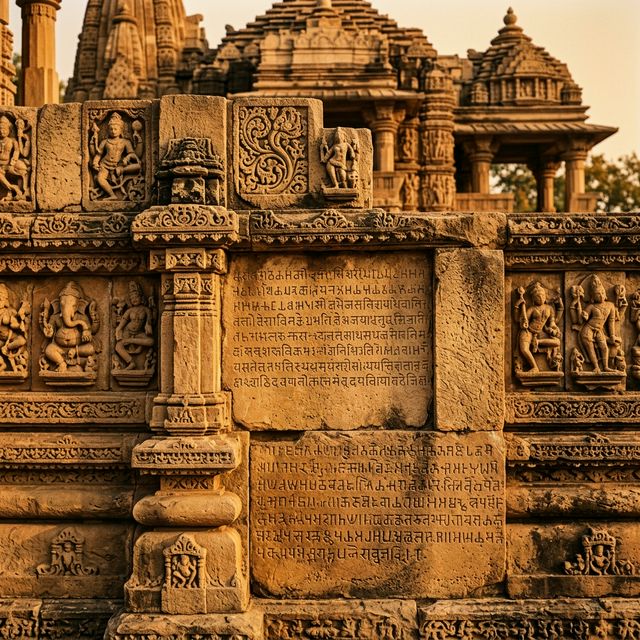
The Old Kannada language epigraph reported from Honnur, Kolhapur district, Maharashtra, is incised on the abhiṣeka stand of a standing tīrthaṅkara Pārśvanātha idol. Engraved in three lines of Old Kannada script, it documents royal patronage for Jainism.
The inscription registers a joint royal endowment by mahāmaṇḍaleśvara Ballāḷadeva and Gaṇḍarādityadeva who donated two hundred kammas of land along with a house spanning six cubits for the purpose of providing food and shelter to the ascetics living at the basadi. This temple was commissioned by Bamagāvuṇḍa. He is identified as a lay disciple of Rātrimatikanti, who belonged to the Punnāgavṛkṣamūlagaṇa, a monastic subdivision of the broader Mūlasaṅgha.
 Editor's Comment:
1. siddham | svasti | śrīmūlasaṅghada punnāgavṛkṣamūlagaṇada rātrimatikantiyara guḍḍaṃ bamagābuṇḍaṃ mā-
2. ḍisida vasadige śrīmanmahāmaṇḍaleśvaraṃ vallāladevanuṃ gaṇḍarādityadevanumāhāradānake biṭṭakammabi-
3. nnūrakkamārugayi mane… …|
Success! Hail! The illustrious mahāmaṇḍaleśvara Ballāladeva and Gaṇḍarādityadeva have donated two hundred kammas and a house of six cubits … … … … for the purpose of providing food to the ascetics of the basadi (temple) constructed by Bamagāvuṇḍa, the guḍḍa (disciple) of Rātrimatikanti of the Punnāgavṛikṣamūlagaṇa belonging to the illustrious Mūlasaṅgha.
| Dynasty: | Śilāhāra |
| Ruler: | Ballāla |
| Place: | Honnur |
| Donor: | Ballāladeva and Gaṇḍarāditya |
| Donee: | Ascetics of the Mūlasaṅgha, Punnāgavṛkṣamūlagaṇa |
| Language: | Kannada |
| Script: | Kannada |
| Deities: | Pārśvanātha |
| Nature of grant: | Religious endowment |
| Purpose: | To provide food for ascetics of the basadi built by Bamagāvuṇḍa |
| Provenance of inscription: | Honnur, Kolhapur, Maharshtra |
| Type of Inscription: | Stone inscription |
| Source: |
