
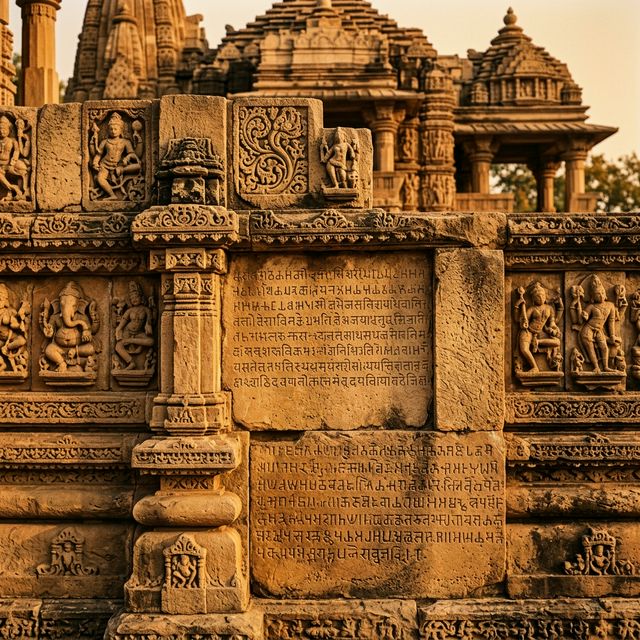
The Bagh cave copper-plate inscription, discovered in the debris of Cave 2 at Bagh in Madhya Pradesh, is an administrative charter issued by mahārāja Subandhu. Engraved on a single unsealed plate with the royal sign-manual in the left margin, the Sanskrit record is written in the Brāhmī script featuring distinct nail-headed characters. While a broken corner obscures the exact chronological year, retaining only the month Śrāvaṇa, paleographic and historical correlation with Subandhu's Barwani grant places the epigraph in the early fifth century CE.
Issued from the capital city of Māhiṣmatī (modern Maheshwar, Madhya Pradesh), mahārāja Subandhu directs this mandate to state officials and local residents within the Dāsilakapallī subdivision. The edict registers the donation of a village as a tax-exempt agrahāra, inclusive of udraṅga and uparikara taxes, governed by the maxim of waste land. This religious endowment was established to support the Kalāyana monastery, originally constructed by Dattaṭaka. The granted revenues are specifically allocated for the worship of Buddha with perfumes and flowers, the maintenance of an alms-house, structural repairs to the monastery, and the provision of essential supplies, clothing, food, beds, and medicine, for the resident community of venerable monks arriving from all four directions.
 Editor's Comment:
1. siddham | svasti | māhiṣmatīnagarānmahārājasubandhukuśalī dāsilakapallīpa–
2. thake ……………… grakāṃsthānalakadityodgrāhakāyuktakaviniyuktaka–
3. cāṭabhaṭagoṣṭhikagamāgamikadūtapreṣaṇikādīngrāmaprativā-
4. sinaśca samājñāpayati | viditamastu vaḥ yathaiṣa grāmo mayā dattaṭa–
5. kakāritakalāyanavihāre mātāpitrorātmanaśca puṇyāpyāyanārtthamācandrā–
6. rkkārṇṇavagrahanakṣatrakṣitisthitisamakālīno bhagavate buddhāya gandhadhūpa–
7. mālyabalisatropayojyo bhagnasphuṭitasamska raṇārtthamāryyabhikṣusaṅghasya
8. cāturddiśābhyāgatakasya cīvarapiṇḍapātaglānapratyayaśeyyāsanabhai–
9. ṣajyahetorāgrahārassodraṅgassoparikaro bhūmicchidranyāyenāgrahāro
10. atisṛṣṭa iti viditvādyadivasādārabhyāsmadīyairanya viṣayapatibhiśca…..
11. prītyāsmatprītyā ca bhikṣavo bhuñjanto na vyāseddhavyāḥ | ṣaṣṭivarṣasahasrāṇi
12. svargge modati bhūmidaḥ | ācchattā cānumantā ca tānyeva narake vaset || svaya- mājñā | ……
13. śrāvaṇa ……………
(In the margin) mahārājasubandhoḥ |
Line 1 to 3
Om! Hail! From the city of Māhushmatī, mahārāja Subandhu, being in good health, issues the following order to sthānalakas, collectors of the royal cess (dityodgrāhakas), āyuktakas, viniyuktakas, cāṭas, bhaṭas, members of the managing committee (gosṛhikas), officers looking after egress and ingress passports (gamāgamikas), dūtapreṣaṇikas, and others, as well as villagers at ….. in the pathaka of Dāsilakapallī.
Line 4 to 9
Be it known to you that for the increase of the religious merit of my parents and myself, this village has been granted by me together with udraṅga and uparikara, as an agrahāra according to the maxim of waste land, in order that it may be used for defraying the expenses of perfume, frankincense, flowers and offerings as well as for maintaining an alms-house, for repairing broken and rent portions of the vihāra and for providing the community of venerable monks coming from all the four quarters, with clothing, food, nursing of the sick, beds, seats as well as medicine in the monastery called Kalāyana (the Abode of Art) caused to be constructed by Dattāṭaka, as long as the moon, the sun, the oceans, planets, constellations and the earth would endure.
Line 10 to 11
Having known this, our officers and rulers of other countries should not cause obstruction out of their love for religion and regard for us, while the monks of this vihāra are enjoying the village.
(Here occurs a benedictive and imprecatory verse.)
Line 12
My own command ………………………. In the month of Śrāvaṇa …...
(In the margin) Of the mahārāja Subandhu.
| Dynasty: | Māhiṣmatī |
| Ruler: | Subandhu |
| Date: | 5th century CE. |
| Donor: | Subandhu |
| Donee: | Holy Saṅgha of Bagh |
| Language: | Sanskrit |
| Script: | Brāhmī |
| Religion: | Buddhism |
| Nature of grant: | Land donation |
| Purpose: | To provide materials for Buddha's worship, maintain an alms-house, repair the Kalāyana vihāra, supply necessities to monks, and increase the donor's religious merit |
| Provenance of inscription: | Bagh Cave 2, Maheshwar, Madhya Pradesh |
| Type of Inscription: | Copperplate grant |
| Source: |
Bibliography & Research
- Annual Report of the Archaeological department Gwalior State (1928-29). (1941). Archaeological Survey of India.
Mirahi, V. V. (1945) The Age of Bāgh Caves. Indian Historical Quarterly, XXI, 79.
- Mirashi, V. V. (Ed.). (1955). Corpus Inscriptionum Indicarum Inscriptions of the Kalachuri Chedi Era. In (Vol. Vol 4 (Part 1), xliv-li and 19-21. Archaeological Survey of India.
