
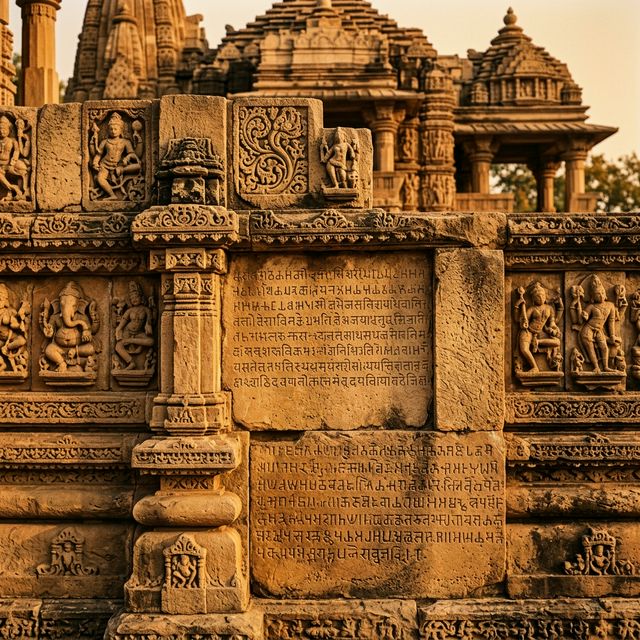
This inscription, situated in the Basavanna temple at Shedbal, Belagavi district, Karnataka, belongs to the reign of the Śilāhāra mahāmaṇḍaleśvara Vijayāditya, who governed from his headquarters at Valavaḍa. The record is written in a combination of Old Kannada and Sanskrit language, utilising the Old Kannada script. Although the slab is damaged by cracks and effaced characters, the date is clearly identifiable as Sunday, March 1 1153 CE, falling within the Śrīmukha cyclic year of the Śaka 1075.
The translation reveals a collaborative grant involving local officials and merchant guilds. The goldsmith Nāgoja and Reva gāvuṇḍa, with the formal agreement of the guilds and governments (mūliga and eṇṭṭuhiṭṭu), assigned specific tax revenues to a local basadi and a temple. These revenues included the periodical taxes (davaṇāya) and a specialised levy on cloth sold by traders during marriage celebrations, calculated at a fixed rate. Reva gāvuṇḍa was tasked with the fair distribution of these funds between both the establishments.
 Editor's Comment:
1. siddham svasti | samadhigatapañcamahāśabdamahāma-
2. ṇḍaleśvaratagarapuravarādhīśvaraṃ śrīśilā-
3. hāranarendra jīmūtavāhanānvaya-
4. prasūta suvarṇṇagaruḍadhvaja vīramakaradhvaja ma-
5. ruvaṅkasarpa rūpakaṅdarppa iḍuvarādi-
6. tya śaucagāṅgeya ayyanasiṅgha sāhaso-.
7. ttuṅga vairībhakaṇṭhīrava mahālakṣmīdevīlabdhavarapra-
8. sāda samastanāmāvalīsahita śrīmanmahā
9. maṇḍaleśvara vijayādityadevarasaru valabā-
10. ḍadanelevīḍanalu sukhasaṅkathāvino-
11. dadiṃ rājyaṃ geyyuttamiralu śakavarṣa 1075 śrīmu-
12. khasaṃvatsara caitra śuddha 5 ādityavāradandu se-
13. ṇiga kottaligaluṃ akkasāle nāgojaṃ hoṅge vīsa
14. dalekkadiṃ koṭṭadavaṇāyamanā kottaligalmāḍisi-
15. davasadidevālyakke mūliga eṇṭṭu hiṭṭu śāsanaṅga-
16. lariye akkasāle nāgojanuṃ revagāvuṇḍaruṃ
17. samastakottiligaṃ dhārāpūrvvakaṃ māḍikoṭṭadavaṇāyaṃ
18. hoṅge vīsaṃ lekkadāyama revagāvuṇḍaṃ kottalimukhya-
19. māgetti vasadigaṃ degulakkaṃ samānavāgipa-
20. ccukuḍḍuvudu mattaṃ keriyolu harehoyda
21. maduvege cinnakariyamaduvege hāga
22. seṇiga sīrege vilasavikkida sīrege hoṅge vī-
23. sa lekkadiṃ tiruvudu teruvanḍakramadiṃ paccu
24. kuḍuvudu || svadattāṃ paradattāṃ vā yo hare-
25. ta vasundharām | ṣaṣṭiṃ varṣasahaśrāṇi viṣṭhāyāṃ
26. jāyate kṛmiḥ ||
Line 1-11
Success! Hail!
While the illustrious mahāmaṇḍaleśvara Vijayādityadevarasa—with a string of epithets such as ‘he who has obtained the five mahāśabdas, the mahāmaṇḍaleśvara, the lord of Tagara, the best of cities,’ ‘the scion of the illustrious Śilāhāra family,’ ‘born in the lineage of Jīmūtavāhana,’ ‘he who has the banner of the golden Garuḍa,’ ‘he who is cupid among heroes,’ ‘a serpent to the enemy forces,’ ‘a cupid in appearance,’ ‘the sun among archers,’ ‘Bhīṣma in purity,’ ‘the lion-like son of his father,’ ‘lofty in adventure,’ ‘a lion to the enemy elephants,’ ‘he who has obtained the boon of the Goddess Mahālakṣmī’—is ruling over the kingdom, in the enjoyment of pleasant conversations, from the headquarters of Valavāḍa—
Lines 11-12
In the Śaka year 1075, in the cyclic year Śrīmukha, Caitra, bright fortnight, 5 on Sunday—
Lines 12-20
the goldsmith Nāgoja and Reva-gāvuṇḍa have entrusted to all the assemblies, with the pouring of water, with the knowledge of the mūliga and eṇṭṭuhiṭṭu (guilds and the governments) the davaṇ-āya (i.e. income from fixed periodical taxation), at the rate of one visa per honnu, granted by the assemblies of traders’ guilds and the goldsmith Nāgoja, to the basadi and the temple built by the assemblies; this davaṇ-āya income at the rate of one visa per honnu, should be equally distributed to the basadi and the temple by Revagāvuṇḍa, led by the assemblies.
Lines 20-24
Again, for each marriage, celebrated with the beating of drums in the street, and the marriage celebrated in the Cinna-keri, a tax of one hāga in money for each cloth of (i.e. sold by) the traders’ guilds, and for each cloth ……….. a tax at the rate of one visa per honnu should be remitted. This revenue should be properly shared by the basadi and the temple.
(This is followed by the usual imprecatory verse.)
| Dynasty: | Śilāhāra |
| Ruler: | Vijayāditya |
| Date: | 1st March 1153 CE (Cyclic year Śrīmukha, Sunday, Caitra śukla 5 Śaka 1075) |
| Place: | Basavaṇṇā temple, Śeḍbāl (Belagavi) |
| Donee: | Shedbal, Belagavi |
| Language: | Sanskrit and Kannada |
| Nature of grant: | Religious endowment |
| Purpose: | To earmark revenues for Jaina basadi and local temple |
| Provenance of inscription: | Shedbal, Belagavi, Karnataka |
| Type of Inscription: | Stone inscription |
| Source: |
