
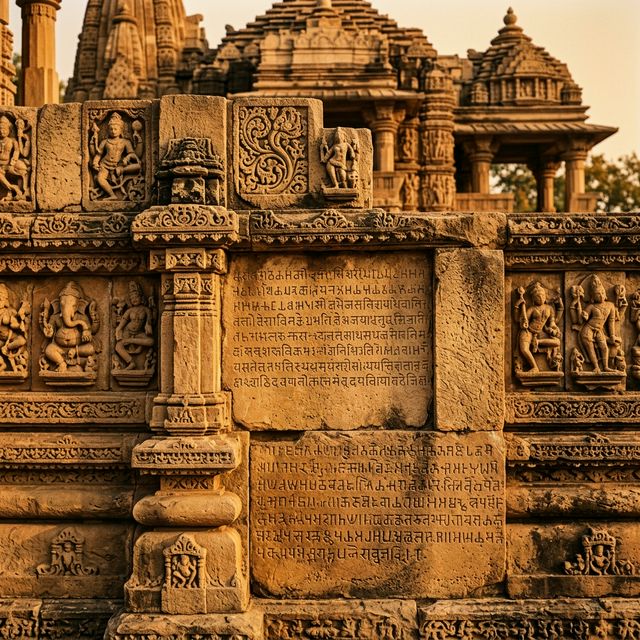
The Berlin Museum copper plate grant, edited by Ernst Waldschmidt in 1936, consists of three plates secured by a seal featuring Garuḍa. Issued in Śaka 956 (1034 CE) by the Śilāhāra ruler Chittarāja, the record employs the Nāgarī alphabet and Sanskrit prose and verse. While the original find-spot remains unknown, the inscription is palaeographically consistent with other Śilāhāra records, notably the Bhandup plates, sharing the same scribe, the treasury officer Joupaiya, nephew of the poet Nāgalaiya. The grant follows a standard Śilāhāra genealogy from Kapardin I to Chittarāja.
The inscription records the donation of the field Abhinavadevachchhebhā in Kunde village, Māhirahāra district, to the Śaiva ascetic Jñānaśiva after having offered arghya to the Sun and having worshipped lord Śiva. As a disciple of Vāḍācārya of the Western Āmnāya (paścimāmnāya), Jñānaśiva received the gift to maintain the Bhāiyapeśvara temple that provides for the food and clothing of the resident ascetics, worship articles including sandal paste, incense sticks, flowers, along with the structural repairs, and singing, music and dancing. It was issued on the fourteenth tithi of the bright fortnight of an intercalary Caitra, corresponding to 5th April 1034 CE, and stipulates that the land remain exempt from taxes and entry by royal officials, concluding with the imprecatory verses.
 Editor's Comment:
First Plate
1. siddham | jayaścābhyudayaśca | labhate sarvvakāryeṣu pūjayā gaṇanā yakaḥ | vighnaṃ nighnansa vaḥ pāyā-
2. dapāyādgaṇanāyakaḥ || sa vaḥ pātu śivo nityaṃ yanmaulau bhāti jāhnavī | sumeruśi-
3. kharodgacchadacchacandrakalopamā || jīmūtaketutanayo niyataṃ dayālurjjīmūta-
4. vāhana iti trijagatprasiddhaḥ | dehaṃ nijaṃ tṛṇamivākalayanparārtthe yo rakṣati sma
5. garuḍātkhalu śaṅkhacaḍam || tasyānvaye nikhilabhūpatimaulibhūtaratnadyuticchuritani-
6. rmmalapādapīṭhaḥ | śrīsāhasāṅka iva sāhasikaḥ kaparddī sīlāravaṃśa tilako nṛpatirbbabhūva ||
7. tasmādabhūcca tanayaḥ pulaśaktināmā sīmāsamaḥ suragurūditarājanīteḥ | nirjjitya saṃṅga-
8. rasukhekhilavairivarggaṃ niṣkaṇṭakaṃ jagati rājyamakāri yena || tatopi samabhūtsuto nṛ-
9. paśirovibhūṣāmaṇiḥ śitaḥ sṛṇirivāparorikariṇāṃ kaparddī laghuḥ | yadīyaya-
10. śasā jagatyatiśa yena śuklīkṛte na bhāti suravāraṇo na ca śaśī na dugdhāmbu dhiḥ || ta-
11. smādapyabhavadvibhūtipadavīpātraṃ pavitrīkṛtāśeṣakṣmāvalayo mahīpatilakaḥ śrīvappu-
12. vannaḥ sutaḥ | saṅgrāmāṅgaṇaraṅgiṇāsilatayā lūnaikadantā haṭhātsarvve yena vināyakā vira-
13. citā vidveṣiṇāṃ dantinaḥ || tasmājjātastanūjo rajanikara ivānanditāśeṣalokaḥ ślā-
14. ghyaḥ śrījhañjharājo divasakara iva dhvastaniḥ śeṣadoṣaḥ | śaṃbhoryo dvādaśāpi vyara-
15. cayadacirātkīrttanāni svanāmnā sopānānīva manye praṇatatanṛbhṛtāṃ svarggamārgodyatānām ||
16. bhrātā tatra tatastatojjvalayaśorāśiprakāśīkṛtāśeṣakṣmāvalayo balī balavatāṃ śrī-
17. goggirājobhavat | cāpākarṣaṇakarmmaṇi pravaṇatāṃ yasmingate bhūpatau bhīṣmadro-
18. ṇapṛthāsutaprabhṛtayaścitte camatkāritāḥ || tasmādvismayakārihāricari-
Second Plate: First Side
19. taprakhyātakīrttiḥ sutaḥ śrīmānvajjadevabhūpatirabhūdbhacakracūḍāmaṇiḥ | dorddaṇḍaika-
20. balasya yasya sahasā saṅgrāmaraṅgāṅgaṇe rājyaśrīḥ svayametya vakṣasi ratiṃ cakre murāre-
21. riva || jayanta iva vṛtrāreḥ purāreriva ṣaṇmukhaḥ | tataḥ śrīmānabhūtputraḥ saccaritroparā-
22. jitaḥ || śrīmānabhūttadanu vajjaḍadevanāmā bhūpālamastakamaṇistanayo nayajñaḥ | adyāpi yasya
23. caritāni janāḥ samastāḥ romāñcakañcukitagātralatā stuvanti || tadbhrātātha tatorikesarinṛpo
24. jātaḥ satāṃ sammato dṛptārātikulācalaikadalane daṃbholilīlāṃ dadhat | gatvā śaiśava eva sai-
25. nyasahito dṛṣṭvā ca someśvaraṃ tasyāgre piturājñayā jagadalaṃ yaḥ kīlayitvāgataḥ || tadbhrātṛjo va-
26. jjaḍadevasūnuḥ śrīcchintarājo nṛpatirbbabhūva | śīlāravaṃśaḥ śiśunāpi yena nītaḥ parāmunnati-
27. munnatena || atha svakīyapuṇyodadyāt samadhigatapañcamahāśabdamahāsāmantādhipatitagara-
28. puraparameśvaraśilāhāranarendrajīmūtavāhanānvayaprasūtasuvarṇṇa garuḍadhvajābhimānama-
29. hodadhityāgajagajjhampiśaraṇāgatavajrapañjaraprabhṛti- samastarājāvalīsamalaṅkṛtamahāma-
30. ṇḍaleśva raśrīcchintarājadeve nijabhujopārjjitānekamaṇḍalasametāṃ purīpramukhacaturddaśa-
31. grāmaśatīsamanvitāṃ samastakoṅkaṇabhuvaṃ samanuśāsati tasyaitadrājyacintābhāraṃ samudvahati ma-
32. hāmātyaśrīnāgaṇaiye tathā mahāsāndhivigrahikaśrīnā-upaiye satyetasminkāle prava-
33. rttamāne sa ca mahāmaṇḍaleśva raśrīcchintarājadevaḥ sarvvāneva svasambadhyamānakānanyā-
34. napi samāgāmirājaputramantripurohitāmātyapradhānāpradhānanaiyogikān tathā rāṣṭrapativi-
35. ṣayapatinagarapatigrāmapatiniyuktāniyuktarājapuruṣajanapadān tathā haṃyamananaga-
36. rapauratrivarggaprabhṛtīṃśca praṇatipūjāsatkārasamādeśaiḥ sandiśatyastu vaḥ saṃviditaṃ yathā ||
37. calā vibhūtiḥ kṣaṇabhaṅgi yauvanaṃ | kṛtāntadantāntaravartti jīvitam | tathā cāntarllīnajarārākṣa-
SecondPlate:: Second Side
38. sīprārabdha grāsaṃ yauvanaṃ svarggavāsānnarakapātasamamiṣṭa- samāgamaviyogaduḥkhaṃ asāraḥ saṃsāraḥ sahajaja-
39. rāmaraṇasādhāraṇaṃ śarīraṃ pavanacalitakamalinīdalagatajalalavataralatare dhanāyuṣī iti matvā dṛ-
40. ḍhataraviraktibuddhyā saṅgṛhṇiyācca dānaphalam || kṛtatretādvāpareṣu tapotyartthaṃ praśasyate munayo-
41. trānuśaṃsanti dānamekaṃ kalau yuge || na tathā saphalā vidyā na tathā saphalaṃ tapaḥ | yathātra munayaḥ prā-
42. hurddānamekaṃ kalau yuge || tathā coktaṃ bhagavatā vyāsena || agnerapatyaṃ prathamaṃ suvarṇṇaṃ bhūrvvairṣṇavī sū-
43. ryasutāśca gāvaḥ | lokatrayaṃ tena bhaveddhi datta yaḥ kāñcanaṃ gāñca mahīṃ ca dadyāt || bhūmidānaṃ supātre-
44. ṣu sutīrtheṣu suparvvasu | agādhāpārasaṃsārasāgarottāraṇaṃ bhavet || iti dharmmādharmmavicāracāru-
45. cirantanamunivacanānyavadhārya mātāpitrorātmanaśca śreyortthinā mayā śakanṛpakālātītasaṃvatsaraśateṣu
46. navasu ṣaṭpañcāśadadhikeṣu bhāvasaṃvatsarāntarggata dvitīyacaitraśuddhacaturddaśyāṃ yatrāṅkatopi saṃvat 956 caitraśuddha 14
47. sañjātacaitrikāparvvaṇi sutīrtthe snātvā gaganaikacakracūḍāmaṇaye trailokyacakṣuṣe kamalinīkā-
48. mukāya bhagavate savitre nānāvidha kusumaślāghyamarghya ndattvā sakalasurāsuragurutrailokyasvāmi-
49. naṃ bhagavantamumāpatimabhyarcya asmadanumatyā viṣayībhā-iyapena viracitāya māhirahāravi-
50. ṣayānta pātikundegrāmīyottaradigbhāge viracitaśrībhā-iyapeśvaradevāyatane nivā-
51. sināṃ tapodhanānāṃ grāsācchādanārtthaṃ gandhapuṣpadhūpandīpanaivedyatāmbu lagītavādyanṛtyādi-
52. devabhogakaraṇāya khaṇḍasphuṭitasamuddharaṇārtthañca māhirahāraṣaṭṣaṣṭi viṣayānta pātiku-
53. ndegrāmāntarvvartti-abhinavadevacchebhākṣetraṃ yasya cāghāṭanāni | pūrvvataḥ kunbhivaṭīkṣetraṃ kolihirakaśca ||
54. paścimataḥ govaṇimaryādayā || dakṣiṇataḥ khanālāsakṣama bhūtaṭākamaryādayā || uttarataḥ
55. vijñānīcolimaryādayā | evaṃ caturāghāṭanopalakṣitaḥ svasīmāparyantaḥ satṛṇakāṣṭhadako-
56. petaḥ samastotpattisaṃyuktaḥ pūrvvadattadevadāyabrahmadāyavarjjaḥ anāde-
57. śyaḥ anāsedhyaḥ acāṭabhaṭapraveśyaḥ kṛtahastodakātisarggeṇa paścimāmnāyavini-
Third Plate
58. rggataśrīvāḍācāryaśiṣyajñānaśivabhaṭṭārakāṇāṃ namasyavṛttyā paramayā bhaktyā pratipā-
59. ditaḥ | tadeteṣāmanyeṣāmapi gotrīyādhikārikāṇāṃ tapodhanānāṃ bhuñjatāṃ bhojayatāṃ vā
60. kṛṣatāṃ karṣayatāṃ vā na kenāpi paripanthanā karaṇīyā || yata uktaṃ mahāmunibhiḥ |
61. bahubhirvvasudhā bhuktā rājabhiḥ sagarādibhiḥ | yasya yasya yadā bhūmistasya tasya tadā phalam || sadyo-
62. dānaṃ nirāyāsaṃ sāyāsaṃ dīrghapālanam | ata evarṣayaḥ prāhurddānācchreyonupālanam || dattvā bhū-
63. mi bhāvinaḥ pārtthivendrānbhūyo bhūyo yācate rāmabhadraḥ | sāmānyoyaṃ dharmmaseturnnṛpāṇāṃ
64. kāle kāle pālanīyo bhavadbhiḥ || iti cirantanamunivacanānyavadhārya sarvvairapi samā-
65. gāmibhirbhū pālairasmadvaṃśajaiḥ pālanadharmmaphalalobha eva karaṇīyaḥ | na punastallopa-
66. pāpakalaṅkāgresareṇa kenāpi bhavitavyam || yastvevamabhyartthitopi lobhādajñānatimira-
67. paṭalāvṛtamatirācchindyādācchidyamānamanumodeta vā sa pañcabhirapi pātakairupapātakai-
68. śca liptau rauravamahārauravāndhatāmisrādinarakāṃści ramanubhaviṣyati | tathā coktaṃ bhagavatā
69. vyāsena || svadattāṃ paradattāṃ vā yo hareta vasundharām | sa viṣṭhāyāṃ kṛmirbhūtvā kṛmibhiḥ saha pacyate || ya-
70. thā caitadevaṃ tathā śāsanadātā lekhakahastena svamatamāropayati yathā mataṃ mama mahāmaṇḍaleśva-
71. raśrīcchintarājadevasya mahāmaṇḍaleśva raśrīmadvajjaḍadevarājasūnoryadatra śāsane li-
72. khitam || likhitaṃ caitanmayā śrīmadrājānujñayā bhāṇḍāgārasenajo-upaiyena
73. bhāṇḍāgārasenamahākaviśrīnāgalaiyabhrātṛsūnunā | yathā conākṣaramadhikākṣaraṃ vā ta-
74. tsarvvaṃ pramāṇamiti || śrīrastu || śrīrbhavatu || maṅgalañcāstu || maṅgalaṃ mahāśrīḥ ||
Success! May there be victory and prosperity!
Verse 1
May that Gaṇanāyaka (i.e. Gaṇapati) protect you from calamity—he who destroys obstacles and who, by means of worship, receives attention in all undertakings!
Verse 2
May that Śiva always protect you—he on whose head the Gaṅgā shines like the bright crescent of the moon as it rises over the peak of Sumeru!
Verse 3
Jīmūtavāhana, the ever compassionate son of Jīmūtaketu, is well-known in the three worlds—who, valuing his own body as not better than a straw, saved, indeed, Śaṇkhacūḍa from Garuḍa.
Verse 4
In his family was born king Kapardin I, the ornament of the Śīlāra race, who was adventurous like the illustrious Sāhasāṅka (i.e.Vikramāditya) and whose stainless footstool was covered with the splendour of fresh jewels on the heads of all kings.
Verse 5
From him sprang his son, Pulaśakti by name, who represented the limit of political wisdom taught by Bṛhaspati, the preceptor of gods, who, having vanquished all enemies in the forefront of the battlefield, ruled over the world, free from trouble.
Verse 6
From him again sprang his son, the younger Kaparadin (i.e., Kapardin II), the crest-jewel of kings, who was as it were a sharp goad to the elephants in the form of his enemies; the world being exceedingly whitened by his fame, neither the heavenly elephant (Airāvata) nor the moon nor the milk-ocean could be distinguished.
Verse 7
From him again sprang his son, the illustrious Vappuvanna, the worthy abode of prosperity, an ornament of royalty, who sanctified the whole circle of the earth. Having one of their tusks forcibly cut off by the creeper-like sword of him who was delighted to fight on the field of battle, all the elephants of the enemies were turned into Vināyakas i.e. they become Gajānana, who has only one tusk.
Verse 8
From him sprang his praiseworthy son, the illustrious Jhañjha, who delighted all people even as the moon does, and who destroyed all blemishes even as the sun dispels all darkness; who erected twelve temples of Śiva, named after himself, which served, as it were, as steps to pious people, ready to repair to the path of heaven.
Verse 9
Then there rose his brother, the illustrious Goggirāja, who having a mass of brilliant fame, brightened the entire circle of the earth, and who mighty among the mighty; when that king bent down in the act of drawing the string of his bow, Bhīṣma, Droṇa, the son of Pṛthu i.e. Arjuna, and others felt surprised in their minds.
Verse 10
From him sprang a son named the illustrious Vajjaḍadeva I, famed for his astounding and attractive deeds, the crest-jewel of the circle of the earth. Royal Fortune, approaching him, all of a sudden and of her own accord, on the battlefield, felt delighted while sporting on the bosom of him whose strength lay solely in his own arm, as it does on that of Murāri.
Verse 11
To him was born an illustrious and virtuous son named Aparājita as Jayanta was to Indra and as the six-faced Kārttikeya was to Śiva.
Verse 12
Then there was his son, Vajjaḍadeva by name, proficient in political wisdom, the crest-jewel of all kings. Even now all people extol his deeds, with their creeper-like limbs clad in the robes of horripilation.
Verse 13
Then was born his brother, king Arikesarin, who was honoured by wise people and who had the grace of the thunderbolt in destroying the principal mountains which were his arrogant foes. Even in his childhood he marched with his army and having seen God Someśvara, he made an offering of the whole world to him by the command of his father and then returned to his country.
Verse 14
Next his nephew, the illustrious Chittarāja, became king; the great prince, who, though a child, raised the Śīlāra race to high eminence.
Line 27
Now, while the mahāmaṇḍaleśvara, the illustrious Chintarājadeva—who, by his merit, has obtained the right to the five mahāśabdas and who is adorned with all royal titles such as mahāsāmantādhipati, ‘the lord of the city of Tagara,’ ‘a king of the Śilāhāra family,’ ‘a scion of the family of Jīmūtavāhana,’ ‘he who has the ensign of the golden Garuḍa,’ ‘he who is a born Vidyādhara,’ ‘he who is an ocean of pride,’ ‘he who has surpassed the world in liberality,’ ‘he who is an adamantine cage to suppliants’ and so forth—is ruling over the whole Koṅkaṇa country, consisting of fourteen hundred villages headed by Purī, together with several maṇḍalas conquered by his arm, and while his mahāmātya, the illustrious Nāgaṇaiya, and his mahāsandhivigrahika, the illustrious Nāupaiya are shouldering the burden of the cares of his government,—at this time the mahāmaṇḍaleśvara, the illustrious Chintarājadeva addresses, with salutation, worship and respect, all assembled princes, counsellors, the family priest, the ministers, the principal and subordinate officers, whether connected with him or not, as well as the heads of the rāṣṭras, viṣayas, towns, villages, officials and non-officials, government servants and village-people, and also artisans, guilds and the three classes of townsmen, and others as follows:-
“Be it known to you that realising that prosperity is unsteady, youth is momentary, and life lies in the jaws of death, and that youth is being devoured by the demoness in the form of old age, who is hidden inside the body, that the pangs of separation after union with one’s dear ones are like those caused by falling into a hell after dwelling in heaven, that the body is subject to old age and death natural in this world, and that wealth and life are fickle like drops of water on a lotus leaf tossed by wind, one should accumulate the reward of a religious gift by firm non-attachment.
Having considered the sayings of ancient sages which are delightful owing to their distinguishing between what is righteous and what is not, such as the following: -
Verse 15
In the Kṛta, Treta and Dvāpara Ages penance is highly praised. The sages say the charity alone is the one meritorious thing in the Kali Age.
Verse 16
Learning does not yield that reward nor does penance give it as charity alone does, the sages say, in the Kali Age.
And it has been declared by the holy Vyāsa: -
Verse 17
Gold was the first-born of Fire; the Earth sprang from Viṣṇu, and the cows are the offsprings of the Sun. He who gives gold, land and cows gains the religious merit of giving the three worlds of these gods.
Verse 18
A gift of land made to worthy recipients at holy places and on holy occasions would be the means of crossing the unfathomable and boundless ocean of worldly existence.
And being desirous of acquiring the spiritual welfare of My parents and Myself, I—having bathed at an excellent tīrtha on the holy day in Caitra, viz., the fourteenth tithi of the bright fortnight of the second Caitra of the cyclic year Bhava after nine hundred years inscreased by fifty-six of the Śaka King had passed—in figures, the year 956, the bright fortnight of Caitra, the 14th tithi—and having offered an arghya, beautiful with flowers of various kinds, to the divine Sun, the sole crest-jewel of the sky, and the lover of the lotus plant, and having worshipped the divine Śiva, the lord of the three worlds and the guru of all gods and demons—have given, as a gift free from taxes, and with great devotion and with the pouring out of water, to the holy Jñānaśiva, a disciple of the holy Vāḍācārya, who belongs to the Western Āmnāya, for providing food and clothing to the ascetics dwelling in the temple of the holy Bhāiyapeśvara, constructed by Bhāiyapa, the head of the viṣaya in the northern part of the village Kunde situated in the viṣaya (district) of Māhirahāra for providing all materials for the worship of the god such as sandal paste, flowers, incense, lights, offerings, tāmbūla, and singing, music and dancing, and also for the repairs of what would be broken and damaged—the field known as Abhinavadevacchebhā situated in the village of Kunde included in the viṣaya of sixty-six villages called Māhirahāra, the boundaries of which are—on the east, the field known as Kumbhivaṭī and Kolihīraka; on the west, the boundary of the village Govaṇi; on the south, the boundary of the tank in Khanālāsakaśama; on the north, the boundary of the village Vijñānicoli—the field with its four boundaries thus determined, extending to its own limits, together with all its produce, together with grass, wood and water, but excluding the gifts previously made to gods and Brāhmaṇas, not to be assigned, not to be attached, and not to be entered by the cāṭas and bhaṭas.
Therefore, none should cause any obstruction while these ascetics or others of their clan, who are entitled to it, are enjoying it or are allowing others to enjoy it, are cultivating it or allowing others to cultivate it.
Line 60
For it has been said by great sages-
(Here occur three benedictory and imprecatory verses.)
Line 64
Having known these sayings of ancient sages, all future kings, born in our family, should aspire only for religious merit accruing from the protection of this grant. He who, on the other hand, though thus entreated, will confiscate it or allow it to be confiscated, with his mind clouded by the darkness of ignorance as a result of greed, will incur all the five sins together with minor sins and will experience for a long time the pangs of hells such as Raurava, Mahāraurava and Andhatāmiśra.
And this has been declared by the holy Vyāsa: -
(Here follows an imprecatory verse.)
Line 70
And as it is, the giver of the charter records his approval by the hand of the scribe. “What is written in this charter has been approved by me, the mahāmaḍaleśvara, the illustrious Chitarājadeva, the son of the mahāmaṇḍaleśvara, the illustrious Vajjaḍarājadeva.”
And this has been written by me, the Treasury Officer, the illustrious Joupaiya, the nephew of the Treasury Officer, the great poet, the illustrious Nāgalaiya.
Whatever is written here—in deficient or redundant syllables—all that is authoritative. May there be prosperity! May there be happiness! May there be happiness and great prosperity!
| Dynasty: | Śilāhāra |
| Ruler: | Chittarāja |
| Date: | 5th April 1034 CE (Caitra śukla 14, Śaka 956) |
| Place: | Berlin Museum, Germany |
| Donee: | Śaiva ascetic Jñānaśiva |
| Language: | Sankrit |
| Deities: | Bhaiyāpeśvara i.e. Śiva |
| Nature of grant: | Land donation |
| Purpose: | Provision of food, clothing, and other necessities for ascetics at Bhāiyapeśvara temple and supporting worship at the temple |
| Type of Inscription: | Copperplate grant |
| Source: |
Bibliography & Research
- Altekar, A. S. (1936). The Śilāhāras of Western India. In: Bhandakar (Ed.). Indian Culture, 2, pp 393-434, here pp 409-410.
- Barnett, L. D. (1915-16). Bankapur Inscription of the time of Somesvara I and the Kadamba Harikersarin, Saka 977. In Dasia (Ed.) Epigraphia Indica, XIII, pp 168-176.
- Bühler, G. (1876). Bhandup plates of Chittarāja: Śaka year 948. The Indian Antiquary, 5, 276–281. Bombay: Education Society’s Press.
- Fleet, J. F. (1913–1914). Bhandup plates of Chittarajadeva, Śaka 948 (A.D. 1026). In Epigraphia Indica (Vol. XII, pp. 250–268). Archaeological Survey of India.
- Mirashi, V. V. (Ed.). (1977). Corpus Inscriptionum Indicarum, Vol. VI: Inscriptions of the Śilāhāras. Archaeological Survey of India, pp xiii-xiv and 64-71.
- Waldschmidt, E. (1936). Berlin Museum Plates of Chittarāja: Śaka year 956. Zeitschrift der Deutschen Morgenländischen Gesellschaft, 90, 265-297. Wiesbaden: Harrassowitz.
