
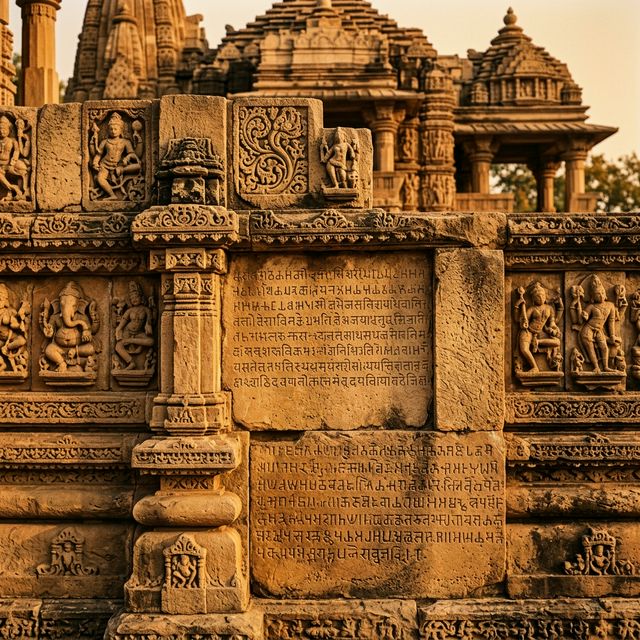
Recovered from a blacksmith in Thane, Maharashtra, this set of three copper plates documents a land grant issued by the Śilāhāra ruler Aparāditya I in the Śaka 1049 (1127 CE). Inscribed in the Nāgarī script and composed in a blend of Sanskrit prose and verse, the charter preserves the genealogical continuity of the North Konkan Śilāhāras up to Aparāditya I.
The central object of the inscription is the royal donation of the Vadavali village in the Karakūṭa viṣaya and a specific uncultivated field in the Mora village within the Vareṭikā viṣaya by the mahāmaṇḍaleśvara Aparāditya I after offering arghya to the Sun and having worshipped lord Śiva. The recipient was Trivikrama, a brāhmaṇa priest of the Vārṣeyagaṇa gotra and Vāji-Mādhyandina śākhā. Executed on the sacred Kārttikī paurṇimā, the grant was intended to support the donee's performance of the six traditional religious duties and the pañchamahāyajñas. This charter concludes with a standardised sequence of benedictory and imprecatory verses.
 Editor's Comment:
First Plate
1. siddham | namo vināyakāya || labhate sarva kāryeṣu pūjayā gaṇanāyakaḥ | vighnān nighnansa vaḥ pāyādapāyā-
2. dgaṇanāyakaḥ || sa vaḥ pātu śivo nityaṃ yanmaulau bhāti jāhnavī | sumeruśikharodgacchadacchacandrakalo-
3. pamā || jīmūtaketutanayo niyataṃ dayālurjjīmūtavāhana iti trijagatprasiddhaḥ | dehaṃ nijaṃ tṛṇami-
4. vākalayanparārthe yo rakṣati sma garuḍātkhalu śaṅkhacūḍam || tasyānvaye nikhilabhūpatimaulinū-
5. tnaratnadyuticchuritanirmalapādapīṭhaḥ | śrīsāhasāṅka iva sāhasikaḥ kapardī śīlāravaṃśatilako
6. nṛpatirbabhūva || tasmādabhūcca tanayaḥ pulaśaktināmā sīmāsamaḥ suragurūditarājanīteḥ | nirji-
7. tya sangaramukhe.akhilavairivarggaṃ niṣkaṇṭakaṃ jagati rājyamakāri yena || tataśca samabhūtsuto nṛpa-
8. śirovibhūṣāmaṇiḥ śitaḥ śṛṇirivāparo.arikariṇāṃ kaparddī laghuḥ | yadīyayaśasā jagatyati-
9. śayena śuklīkṛte na bhāti suravāraṇo na ca śaśī na dugdhāṃbudhiḥ || tasmādapyabhavadvibhūtipadavīpātraṃ
10. pavitrīkṛtāśeṣakṣmāvalayo mahīpatilakaḥ śrīvappuvannaḥ sutaḥ | saṅgrāmāṅgaṇaraṅgiṇā.asilata-
11. yā lūnaikadantā haṭhātsarve yena vināyakā viracitā vidveṣiṇāṃ dantinaḥ || tasmājjātastanūjo ra-
12. janikara ivānanditāśeṣalokaḥ ślāghyaḥ śrījhañjharājo divasakara iva dhvastaniḥ śeṣadoṣaḥ |
13. śaṃbhoryo dvādaśāpi vyaracayadacirātkīrttanāni svanāmnā sopānānīva manye praṇatatanubhṛtāṃ sva-
14. rggamārggodyatānām || bhrātā tasya tatastatojjvalayaśorāśiḥ prakāśīkṛtāśeṣakṣmāvalayo balī bala-
15. vatāṃ śrīgoggirājo.abhavat | cāpākarṣaṇakarmaṇi praguṇatāṃ yasmingate bhūṣatau bhīṣmadroṇapṛ-
16. thāsutaprabhṛtayaḥ sarve camatkāritāḥ || tasmādvismayakārihāricaritaprakhyātakīrttiḥ sutaḥ śrī-
17. mānvajjaḍadevabhūpatirabhūdbhacakracūḍāmaṇiḥ | dorddaṇḍaikabalasya yasya sahasā saṅgrāmaraṅgāṅgaṇe rājyaśrīḥ ||
18. svayameva vakṣasi ratiṃ cakre murāreriva || jayanta iva vṛtrāreḥ purāreriva ṣaṇmukhaḥ | tataḥ śrīmānabhū-
19. tputraḥ satpratāpo.aparājitaḥ || śaraṇāgatasāmantā aparepi hi jagati rakṣitā yena | sa jayati
20. yathārthanāmā śaraṇāgatavajrapañjaro devaḥ || śrīmānabhūttadanu vajjaḍadevanāmā bhūpālama-
21. stakamaṇistanayo nayajñaḥ | adyāpi yasya caritāni janāḥsamastā romāñcakañcukitagātra-
Second Plate : First Side
22. latā stuvanti || tadbhrātātha tato.arikesarinṛpojātaḥ satāṃ sammato dṛptārātikulācalaikadalane daṃbho-
23. lilīlāṃ dadhat | gatvā śaiśava eva sainyasahito dṛṣṭvā ca someśvaraṃ tasyāgre piturājñayā jagadalaṃ yaḥ
24. kīlayitvāgataḥ || tadbhrātṛjo vajjaḍadevasūnuḥ śrīcchittarājo nṛpatirbabhūva | śīlāravaṃśaḥ śiśunāpi
25. yena nītaḥ parāmunnatimunnatena || dṛptārātiṣukopakāladahanaḥ saubhāgyanārāyaṇo vārastrīṣu tatonujaḥ
26. samabhavannāgārjunaḥ kṣmāpatiḥ | yasyā.amānuṣamūrjitaṃ bhujabalaṃ dūrānniśamya dviṣāṃ nidrātīva raṇāṅgaṇavyasa-
27. ninī dorddaṇḍakaṇḍūlatā || tadanu tadanujanmā mūrttimānmīnaketuḥ kṣataripuvibhavobhūnmummuṇikṣoṇipāla-
28. ḥ | vivṛtadhanuṣi yasminvājinīrājanānte balabhidapi balīyān vārṣikaṃ cāpamaujjhat || tasmin nṛpe pravarakī-
29. rtiśarīrabhāji nāgārjunasya tanayo nayacakravarttī | bhūpobhavatparamadharmmaviśuddhadehaḥ śīlāragotranṛ-
30. paratnamanantapālaḥ || śrīnāgārjunarājasūnutanayo jitvā tato bhūtalaṃ sa śrīmānaparājitākhyanṛpatiḥ pātuṃ
31. samartho.abhavat | puṇyairullasitaṃ śriyā vikasitaṃ tejobhirujjṛṃbhitaṃ śauryeṇoditamucchritaṃ gugaṇairyasmi-
32. nmahīṃ śāsati || āsītkopyasuro jagaddalayituṃ cchittukkanāmāntakastasyaivaṃ ca samastameva militaṃ sāmanta-
33. cakraṃ tataḥ | dhvaste dharmadhane gateṣu guruṣu kliṣṭe vibhāsaṃśrayeśīrṇṇe jīrṇṇapuraprajāparijane naṣṭe ca rāṣṭroda-
34. ye || ekaścaikaturaṅgamaśca bhujayordvaṃdvaṃ ca khaḍgaśca taṃ drāgdṛṣṭvā kaṭhine raṇe sarabhasaṃ tatsammukhaṃ dhāvitaḥ | nāyo-
35. ddhuṃ na palāyituṃ kimapi vā jñātaṃ ca tena sphuṭaṃ saṅgrāmaṃ parihṛtya yasya ca bhiyā mlecchāśraye saṃsthitaḥ || dhairyaudārya-
36. vivekavikramanidhirggāṃ bhīryamudrāṃbudhiḥ saubhāgyaikanidhiḥ prasiddhavilasatsaṅgītavidyāvadhiḥ | śastrāṇāṃ
37. saguṇārjunapratinidhirjīyātsahasraṃ samāḥ sa śrīmānaparājito niravadhiḥ śauryeṇa satsannidhiḥ || a-
38. tha svakīyapuṇyodayāt samadhigatapañcamahāśabda mahāsāmantādhipatitagarapuraparameśvaraśīlāranarendra-
39. jīmūtavāhanānvayaprasūtasuvarṇṇagaruḍadhvaja- abhimānamahodadhityāgajagajjhaṃ parāyapitāmahaśaraṇāgata-
40. vajrapañjaretyādinikhilarājāvalīsamalaṅkṛtamahāmaṇḍaleśva raśrīmadaparādityadevakalyāṇavijayarājye
41. nijabhujopārjitānekamaṇḍalasametapurīpramukhacaturddaśagrāma- śatīsamanvitasamastakoṅkaṇabhuvaṃ samanu-
42. śāsati tatraitatprasādādavāptasamastarājyacintābhāraṃ samudvahati mahāmātyaśrīlakṣmaṇanāyakaḥ mahāsāndhi-
43. vigrahika śri ………….. śrīkaraṇabhāṇḍāgāre prathamacchepāṭīmahāpradhānaśrīlakṣmaṇaiyaprabhustathā dvitīyacche-
Second Plate : Second Side
44. pāṭīpradhānaśrīcchitamaiyaprabhu ityādiśrīkaraṇe satyetasminkāle pravarttamāne sati mahāmaṇḍa-
45. leśvaraśrīmadaparādityadevarājaḥ sarvāneva svasaṃvadhyamānakānanyānapi samāgāmirājaputramantri-
46. purohitāmātyapradhānāpradhānaniyogikāṃstathā rāṣṭrapativiṣayapatinagarapatigrāmapatiniyu-
47. ktāniyuktarājapuruṣajanapadāṃstathā hañjamananagarapauratrivarggaprabhṛtīṃśca praṇatipūjāsatkārasa-
48. mādeśaiḥ sandiśatyastu vaḥ saṃviditaṃ yathā calā vibhūtiḥ kṣaṇabhaṅgi yauvanaṃ kṛtāntadantāntaravarti jīvitam |
49. tathāpyavajñā paralokasādhane nṛṇāmaho vismayakāri ceṣṭitam || tathā coktaṃ bhagavatā vyāsena || samāga-
50. māḥ sāpagamāḥ sarvvamutpādi bhaṅguram | kāyaḥ sannihitāpāyaḥ saṃpadaḥ padamāpadām || mānuṣye kadalīstambhe
51. niḥ sāre sāramārggaṇam | karoti yaḥ sa saṃmūḍho jalabudbudasaṃnibhe || atidānaṃ tu sarveṣāṃ bhūmidānami-
52. hocyate | acalā hyakṣayā bhūmiḥ sarvānkāmānprayacchati || agniṣṭomādibhirya jñairiṣṭvā vipuladakṣiṇaiḥ | na
53. tatphalamavāpnoti yaddattvā vasudhāṃ nṛpa || iti dharmādharmavicāracaturacirantanamunivacanānyavadhārya
54. mātāpitrorātmanaśca śreyorthinā mayā mahāmaṇḍaleśvaraśrīmadaparādityadevena śakanṛpakālātī-
55. tasaṃvatsaraśateṣu daśasvekonapañcāśadabhyadhikeṣu plavaṅgasaṃ vatsarāntargatakārttikaśuddhapañcadaṃśyāṃ śukre ya-
56. trāṅkatopi śakasaṃvat 1049 kārttikaśuddha 15 śukre sañjātakārttikyāṃ suparvaṇi mahātīrthe snātvā
57. gaganaikacakracūḍāmaṇaye kamalinīkāmukāya | bhagavate savitre nānāvidhakusumaślāghyamarghyaṃ
58. dattvā sakalasurāsuragurutrailokyasvāminaṃ bhagavantamumāpatiṃ yajanayājanā.adhyayanādhyā-
59. panādiṣaṭkarmaniratāya kratukriyākāṇḍaśauṇḍāya paramabrāhmaṇāya tadyathā vārṣeyagaṇa gotrāya vāji-
60. mādhyandinaśākhine anantāgnihotrisutāya trivikramayājñikāya yajanayājanādhyayanādiṣaṭka-
61. rmakaraṇāya balicarukavaiśvadevāgnihotrakratukriyādinirmāṇāya āgatābhyāgatasaṃvāhanārthaṃ svapari-
62. vārapoṣaṇārthaṃ ca karakūṭaviṣayāntaḥ pātī vaḍavalīgrāmo gṛhadrumadrammetyādisamastarājabhogyasa-
63. hitaḥ || asya cāghaṭanāni | pūrvvato rājamārgaḥ vāḍaṇimaryādā ca | dakṣiṇato nehākṣetraṃ gāḍimā-
64. rggaśca | paścimato ghorapaḍanadī tathā śrīsaṅgameśvaro devaḥ | uttarato movvalī nadī tathā
65. khajjanam | vareṭikāviṣaye moragrāmāntarvarttī ṣaravāvakaśca | asya cāghāṭanāni | pūrvvato de-
Third Plate
66. vakṣetrasīmā dakṣiṇato rājīmaryādā | paścimato gopracārāvadhiḥ uttaratastaḍāgāghāṭaḥ | evaṃ
67. caturāghāṭanopalakṣitau svasīmāparyantau satṛṇakāṣṭhodakopetau aparādhadaṇḍasahitau sa-
68. mastotpattisaṃyuktau acāṭabhaṭa praveśyau karaṇopanīyaśuklavyatiriktau pūrvadattadevadāya-
69. brahmadāyavarjaṃ tathodakātisarggeṇa namasyavṛttyā paramayā bhaktyā pratipāditāviti | tadasya sānvayabaṃ-
70. dhorbhuñjato bhojayato vā na kenāpi paripathitā karaṇīyā | yata uktameva mahāmunibhiḥ | bahubhi-
71. rvasudhā bhuktā rājabhiḥ sagarādibhiḥ | yasya yasya yadā bhūmistasya tasya tadā phalam || yānīha dattāni purā na-
72. redrairdānāni dharmārthayaśaskarāṇi | nirmālyavānta pratimāni tāni ko nāma sādhuḥ punarādadīta ||
73. dattvā bhūmiṃ bhāvinaḥ pārthivedrānbhūyo bhūyo yācate rāmabhadraḥ | sāmānyoyaṃ dharmaseturnṛpāṇāṃ kāle
74. kāle pālanīyo bhavadbhiḥ || iti dharmādharmavicāracaturacirantanamunivacanānyavadhārya sarvaira-
75. pi samāgāmibhirasmadvaṃśajairanyairvā bhūpālaiḥ pālanadharmaphalalobha eva karaṇīyaḥ | na punastallo-
76. panapāpakalaṅkāgresareṇa na kenāpi bhavitavyam | yastvevamabhyarthitopi lobhādajñānatimipaṭalā-
77. vṛtamatirācchinyādācchidyamānamanumodeta vā pañcabhirapi pātakairupapātakaiśca liptau raurava-
78. mahārauravāndhatāmisrādinarakāṃściramanubhaviṣyati | yathoktaṃ bhagavatā vyāsena | svadattāṃ para-
79. dattāṃ vā yo hareta vasundharām | sa viṣṭhāyāṃ kṛmirbhūtvā saha pacyate || vidhyāṭavīṣvatoyāsu
80. śuṣkakoṭaravāsinaḥ | mahāhayo hi jāyate bhūmidānaṃ haranti ye || yathā caitadevaṃ tathā śāsana-
81. dātā lekhakahastena svamatamāropayati | mataṃ mama mahāmaṇḍaleśvaraśrīmadaparādityadevasya
82. mahāmaṇḍaleśvaraśrīmadanantadevarājasūnoryadatra likhitam | likhitaṃ caitanmayā śrīma-
83. drājānujñayā || bhāṇḍāgāre prathamacchepāṭīmahāpradhānaśrīlakṣmaṇaiyena | yadatronākṣaramadhi-
84. kākṣaraṃ vā tatsarvaṃ pramāṇamiti || maṅgalaṃ mahāśrīḥ ||
Om! Obeisance to Vināyaka!
Verse 1
May that Gaṇanāyaka (i.e. Gaṇapati) protect you from calamity—he who destroys obstacles and who, by means of worship, receives attention in all undertakings!
Verse 2
May that Śiva always protect you—he on whose head the Gaṅgā shines like the bright crescent of the moon as it rises over the peak of Sumeru!
Verse 3
Jīmūtavāhana, the ever compassionate son of Jīmūtaketu, is well-known in the three worlds—who, valuing his own body as not better than a straw, saved, indeed, Śaṅkhacūḍa from Garuḍa.
Verse 4
In his family was born king Kapardin I, the ornament of the Śīlāra race, who was adventurous like the illustrious Sāhasāṅka (i.e.Vikramāditya) and whose stainless foot-stool was covered with the splendour of fresh jewels on the heads of all kings.
Verse 5
From him sprang his son, Pulaśakti by name, who represented the limit of political wisdom taught by Bṛhaspati, the preceptor of gods; who, having vanquished all enemies in the forefront of the battlefield, ruled over the world, free from trouble.
Verse 6
From him again sprang his son, the younger Kaparadin (i.e., Kapardin II), the crest-jewel of kings, who was as it were a sharp goad to the elephants in the form of his enemies; the world being exceedingly whitened by his fame, neither the heavenly elephant (Airāvata) nor the moon nor the milk-ocean could be distinguished.
Verse 7
From him again sprang his son, the illustrious Vappuvanna, the worthy abode of prosperity, an ornament of royalty, who sanctified the whole circle of the earth. Having one of their tusks forcibly cut off by the creeper-like sword of him who was delighted to fight on the field of battle, all the elephants of the enemies were turned into Vināyakas i.e. they become Gajānana, who has only one tusk.
Verse 8
From him sprang his praiseworthy son, the illustrious Jhañjha, who delighted all people even as the moon does, and who destroyed all blemishes even as the sun dispels all darkness; who erected twelve temples of Śiva, named after himself, which served, as it were, as steps to pious people, ready to repair to the path of heaven.
Verse 9
Then there rose his brother, the illustrious Goggirāja, who having a mass of brilliant fame, brightened the entire circle of the earth, and who mighty among the mighty; when that king bent down in the act of drawing the string of his bow, Bhīṣma, Droṇa, the son of Pṛthā (i.e. Arjuna) and others felt surprised in their minds.
Verse 10
From him sprang a son named the illustrious Vajjaḍadeva I, famed for his astounding and attractive deeds, the crest-jewel of the circle of the earth. Royal Fortune, approaching him, all of a sudden and of her own accord, on the battle-field, felt delighted while sporting on the bosom of him whose strength lay solely in his own arm, as it does on that of Murāri.
Verse 11
To him was born an illustrious and virtuous son named Aparājita as Jayanta was to Indra and as the six-faced Kārttikeya was to Śiva.
Verse 12
Victorious is that king, who protected even the feudatories of other kings when they sought refuge with him, and who rightly obtained the title of "the adamantine cage giving protection to those who seek it.”
Verse 13
From him was born the son named Vajjaḍadeva II, who was conversant with political wisdom and was a veritable crest-jewel of kings,—whose deeds all people even now praise, with their creeper-like bodies having clothes of horripilation.
Verse 14
Then there was born his brother, king Arikesarin, who had the grace of the thunderbolt in destroying the principal mountains in the form of arrogant foes; who, even when he was a boy, went with an army to Someśvara and having seen that god, came back after offering him the whole world by the order of his father.
Verse 15
Thereafter his brother’s son the illustrious Chittarāja became king, who, noble as he was, raised his Śīlāra family to great eminence, though he was then only in his boyhood.
Verse 16
Thereafter, his younger brother Nāgārjuna became king—he who, resembling Nārāyaṇa in regard to the good fortune of courtesans, was, by his anger, the fire of destruction to his arrogant foes. Having heard from afar about the superhuman power of his arms, the itching of the strong arms of his enemies, fond of fighting on the battlefield, goes to sleep as it were.
Verse 17
Thereafter, his younger brother Mummuṇi, cupid incarnate, who destroyed the prosperity of the foes killed by him, became king. When he raised his bow at the end of the waving of lights before his horses (at the commencement of his march for digvijaya, even the mighty Indra gave up his own bow (i.e. the rain-bow).
Verse 18
He—who drove out those violent and vile Yavana soldiers of Muna, who, having become powerful, had devastated this Koṅkaṇa country, harassing gods and Brāhmaṇas, by means the torrents of water in the form of the sharp edge of his sword, when there was trouble in the kingdom owing to hostile kinsmen—inscribed his fame on the disc of the moon, as he helped the head of his family.
Verse 19
Thereafter, the illustrious king, Aparājita by name, the son’s son of the illustrious Nāgārjuna, having conquered the world, became capable of protecting it. While he is ruling over the earth, religious merit is shining, fortune is blooming, majestic lustre is expanding, valour is rising, and good qualities are being highly valued—
Verse 20
There was a demon, the destroyer Chittukka, who was born to devastate the world. All the feudatories gathered around him. When the wealth of religious merit was destroyed, the elders perished, refugees were harassed, all townsmen and their servants were ruined, and all prosperity of the kingdom came to an end—
Verse 21
He (Aparāditya), seeing that situation, rushed suddenly to the fierce battle single-handed, with only one horse which he rode, his arms and his sword to help him. The enemy did not know whether to fight or to run away. Ultimately, being afraid of him, he sought refuge with the Mlecchas.
Verse 22
May that illustrious Aparājita—the treasure of courage, generosity, discrimination and valour, the ocean learning, a second Arjuna in regard to the skilful use of arms, of limitless valour and a rich store of wealth to good people—live for a thousand years!
Line 37-52
Now, in the beneficial and victorious reign of the mahāmaṇḍaleśvara, the illustrious Aparādityadeva—who, by his religious merit, has obtained the right to the five mahāśabdas, and who is adorned with all royal titles such as mahāsāmantādhipati, ‘the ord of the city of Tagara’, ‘a king of the Sīlāra family of Jīmūtavāhana’, ‘he who has the ensign of the Golden Garuḍa’, ‘he who is the ocean of pride’, ‘he who has surpassed the world in liberality’, ‘the god Brāhmā among kings’, ‘an adamantine cage for such as seek his refuge’ and so forth—while he is governing the whole Koṅkaṇa country consisting of fourteen hundred villages headed by Purī, and while his government consisting of the mahāmātya, the illustrious Lakṣmaṇanāyaka, the mahāsāndhivigrahika, the senior treasury officer of the prosperous government treasury, the mahāpradhāna, the illustrious Lakṣmaṇaiyaprabhu, and the junior treasury officer, the pradhāna, the illustrious Chittamaiyaprabhu and so forth, is bearing the burden of the cares of administration,—at this time the mahāmaṇḍaleśvara, the illustrious Aparādityadevarāja, addresses, with salutation, honour and respect, all assembled princes, counsellors, the family-priest, the principal and subordinate officers, and also the heads of rāṣṭras, viṣayas, towns and villages, and also artisans, guilds and the three classes of townsmen as follows:-
“Be it known to you that though realising that prosperity is unsteady, youth is momentary, and life lies in the jaws of Death, men are indifferent to the acquisition of the other world. Oh! How astonishing is this action of men!
And it has been said by the holy Vyāsa :-
‘Gold was the first-born of Fire, land sprang from Viṣṇu, and the cows are the off-springs of the Sun. He who gives gold, land and a cow gains the religious merit of giving the three worlds.’
Line 53-68
And having pondered over such sayings of ancient sages clever in discriminating between what is righteous and what is not, and being desirous of acquiring the spiritual welfare of My parents and Myself, I, the mahāmaṇḍaleśvara, the illustrious Aparādityadeva—having bathed at a great tīrtha on the holy Kārttikī on Friday, the fifteenth tithi of the bright fortnight of Kārttika in the cyclic year Plavaṅga, when ten hundred years increased by forty-nine of the era of the Śaka king had passed—in figures, śaka saṃvat 1049, Kārttika śuddhā 15, Friday—and having offered an arghya, beautiful with various flowers, to the divine Sun, the sole crest-jewel of the sky, the lover of the lotus-plant, and having worshipped Siva, the lord of the three worlds and the guru of all gods and demons—have given—by pouring water with great devotion, to the sacrificing priest Trivikrama, the son of the agnihotrin Ananta of the Vārṣeyagaṇa gotra and the Vāji-Mādhyanadina śākhā, who is a distinguished Brāhmaṇa engaged in the performance of the six duties such as sacrificing for oneself and others, studying and teaching of the sacred texts and so forth, and who is proficient in the performance of sacrificial rites, for the observance of his six duties such as sacrificing for oneself and others, studying and teaching of the sacred texts and so forth, for the performance of bali, caru, vaiśvadeva, agnihotra and such other rites, and for the maintenance of his family—the village Vaḍavalī situated in the viṣaya of Karakuṭa, together with the houses, trees and water and other royal prerogatives and with exemption from taxes, the boundaries of which are as follows:- on the east, the royal road and the boundary of the village Vāḍaṇi; on the south, the filed of nehā and the way to the village Gāḍi; on the west, the river Ghorapaḍa and the temple of the holy god Saṅgameśvara; on the north, the river Movvalī and a salty field; and also an uncultivated field in the village Mora situated in the viṣaya of Vareṭikā, the boundaries of which are as follows:- on the east, the boundary of a field donated to a god; on the south, the boundary of the village Rājī; on the west, the boundary of the pasture-land; and on the north, the boundary of the tank—the village and the field, with the boundaries thus defined, extending to their proper limits, together with grass, wood and water therein, together with the right to levy fines, together with all their produce, which are not to be entered by cāṭas and bhaṭas and subject to the payment of the cess fixed by the government and excluding the gifts previously made to gods and Brāhmaṇas.
Line 69
Therefore, none should cause any obstruction while he with his descendants and relatives is enjoying them or allowing others to enjoy them. For, it has been said by great sages:-
(Here follow three verses stating the importance of preserving gifts.)
Line 74-78
Having known such sayings of old sages clever in distinguishing between what is righteous and what is not, all future princes, whether born in our family or others, should covet only the religious merit accruing from the preservation of the religious gift. None should incur the disgrace and sin of confiscating it. He who, on the other, though thus entreated, will confiscate it or allow it to be confiscated, with his mind clouded by the darkness of ignorance as a result of greed, will incur the five great sins and minor sins, and will suffer, for a long time, the pangs of hells such as Raurava, Mahāraurava and Andhatāmisra.
And this has been declared by the holy Vyāsa:-
(Here follow two benedictory and imprecatory verses.)
Line 80-84
And as it is, the donor of the charter records his approval by the hand of the scribe: “What is written here has been approved by me, the mahāmaṇḍaleśvara, the illustrious Aparādityadeva, the son of the mahāmaṇḍaleśvara, the illustrious king Anantadeva. And this has been written with the king’s permission by me, the mahāpradhāna, the illustrious Lakṣamanaiya, who is the senior treasury officer. Whatever is written here in deficient or redundant syllables, all that is authoritative.
May there be happiness and great prosperity!
| Dynasty: | Śilāhāra |
| Ruler: | Aparāditya I |
| Date: | 22nd October 1127 (Kārttika śuddha 15, Śaka 1049) |
| Place: | Chhatrapati Shivaji Maharaj Vastu Sanghralaya, Mumbai |
| Donee: | Brāhmaṇa Trivikrama |
| Language: | Sanskrit |
| Nature of grant: | Land donation |
| Purpose: | To support performance of vaiśvadeva, bali, caru, agnihotra and Vedic sacrifices |
| Provenance of inscription: | Vadavli, Thane, Maharashtra |
| Type of Inscription: | Copperplate grant |
| Source: |
Bibliography & Research
- Altekar, A. S. (1936). The Śilāhāras of Western India. In: Bhandakar (Ed.). Indian Culture, 2, pp 393-434, here pp 411-415.
- Barnett, L. D. (1916). No. 28 Inscriptions At Narendra. Epigraphia Indica, XIII, 298-326, here p 316 and 323.
- Dikshit, M. G. (1953). Panjim Plates of Jayakeshi (I) Saka 981. Indica: The Indian Historical Research Institute Silver Jubilee Commemoration Volume, 89-94.
- Fleet, J. F. (1867-70). Some further inscriptions relating to Kadamba Kings of Goa. Journal of the Bombay Branch of the Royal Asiatic Society, IX, 262-313.
- Kalhana. (1892). The Rajataranjini (Durgaprasad, Ed.; Vol. Vol I). Government Central Book Deposit.
- Mirashi, V. V. (Ed.). (1977). Corpus Inscriptionum Indicarum, Vol. VI: Inscriptions of the Śilāhāras. Archaeological Survey of India, pp xvii-xviii and 120-127, 133-142, and 270, line 7.
