
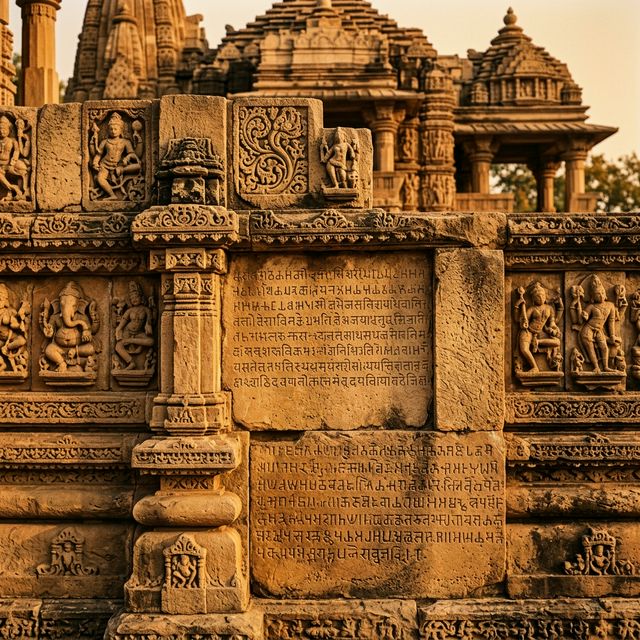
This epigraph, discovered in the vicinity of Thane, is engraved on a stone slab featuring a triangular top carved with a kalaśa resting upon a liṅga. Written in the Nāgarī alphabet and Sanskrit language, the record is attributed to the reign of the Śilāhāra ruler Aparāditya II.
The inscription records a pious act by the mahāmātya Lakshmaṇanāyaka, who performed ceremonial ablutions in the ocean and offered worship to Umāpati i.e., Śiva. To secure spiritual merit, he granted a specific part of revenue, four drammas from a garden in Sthānakīyapaṭṭana (modern Thane) and twenty-four drammas from a rice field to the deity Somanātha in Saurashtra, Gujarat. These funds were earmarked for worship during five specific festivals: Caitrika, Pavitrika, Śivarātri, Dakṣiṇāyana, and Uttarāyaṇa. The record concludes with a reference to Cāhaḍadeva, likely the recipient or trustee of the endowment on behalf of the temple.
 Editor's Comment:
1. siddham | saṃvat 1107 viśvāvasusaṃvatsare caitra śuddha 15 ravau dine
2. adyeha śrīmadaparādityadevarājye | saurāṣṭrīyaśrīso-
3. manāthadevāya pūjāsatkārārthaṃ mahāmātyaśrīlakṣmaṇa-
4. nāyakena paramodadhisutīrthe snātvā gaganaikacakracūḍā-
5. maṇaye kamalinīkāmukāya bhagavate savitre nānāvidha-
6. kusumaślāghyamarghyaṃ dattvā sakalasurāsuragurutrailokyasvā-
7. minaṃ bhagavantamumāpatimabhyarcyaḥ || bhāskaranāyakaputreṇa śrī-
8. lakṣmaṇanāyakena ātmaśreyorthaṃ śrīdevavādhidevasya śrī-
9. sthānakīyapaṭṭanavāṭikāmadhye dānavidhau dātavyabhāga-
10. dramma 4 dattyavadhau upari samagratāṇḍulahali kṣetrandāma 24
11. deyāve | sulagne pūjāpañcaparvasu | caitrika pavitrika | śi-
12. varātri dakṣiṇāyana uttarāyaṇa | svasti śrīcāhaḍadevāya |
Success! In the year 1107, the cyclic year being Viśvāvasu, on Sunday, the 15th tithi of the bright fortnight of Caitra—on this day here during the reign of the illustrious Aparādityadeva II, the mahāmātya, the illustrious Lakṣamaṇanāyaka, son of Bhāskaranāyaka, having bathed in the excellent tīrtha of the great ocean, having offered arghya beautiful with various kinds of flowers to the divine Sun, the lover of the lotus-plant, and having worshipped the divine husband of Umā (i.e. Śiva), the lord of the three worlds and the father of all gods and demons, has, for the worship of the divine Somanāthadeva in Saurāṣṭra, and for his own spiritual welfare, donated a share of 4 drammas out of the proceeds of an orchard in Sthānakīya-pāṭṭana on each occasion of a gift, and in addition, 24 drammas out of the produce of the whole rice-field.
The gifts are to be made on the following five holy occasions of worship, viz. Caitrika, Pavitrika, Śivarātri, Dakṣiṇāyana and Uttarāyaṇa.
Hail! To the illustrious Cāhaḍadeva.
Glossary
Arghya – Ritual offering of water, flowers, etc., made to deities.
Caitrika – Festival held on the full-moon day of Caitra.
Dakṣiṇāyana – The sun’s southern course; ritual occasion of worship.
Dramma – Silver coin, used here as a unit of donation.
Mahāmātya – High-ranking minister in the royal administration.
Pavitrika – Festival involving the renewal of the sacred thread and rituals of purification.
Kṣetra – Agricultural land whose produce was also part of the donation.
Śivarātri – Major Śaiva festival, one of the occasions for making gifts.
Somanāthadeva – Famous temple deity at Somanātha in Saurāṣṭra, recipient of the donation.
Sthānakīya-pāṭṭana – Commercial centre (modern Thane) where the orchard was situated.
Uttarāyaṇa – The sun’s northern course; auspicious ritual occasion.
| Dynasty: | Śilāhāra |
| Ruler: | Aparāditya II |
| Date: | 17th March 1185 CE (Cyclic year Viśvāvasu, Caitra śukla 15, Sunday, full moon day, Śaka 1107) |
| Place: | Sthānakīya-paṭṭana (Sthānaka i.e. modern Thane, Maharashtra) |
| Language: | Sanskrit |
| Deities: | Śiva |
| Nature of grant: | Religious endowment |
| Purpose: | For worship and rituals of Somanāthadeva at Saurashtra and for donor’s own spiritual welfare |
| Provenance of inscription: | Thane, Maharashtra |
| Type of Inscription: | Stone Inscription |
| Source: |
Bibliography & Research
- Altekar, A. S. (1936). The Śilāhāras of Western India. In: Bhandakar (Ed.). Indian Culture, 2, pp 393-434, here pp 416.
- Konow, S. (1916). Talegaon Plates of Krishna Raja I Saka 690. Epigraphia Indica, XIII, 275-282, here p 277.
- Mirashi, V. V. (Ed.). (1977). Corpus Inscriptionum Indicarum, Vol. VI: Inscriptions of the Śilāhāras. Archaeological Survey of India, pp xix-xx and 158-161.
