
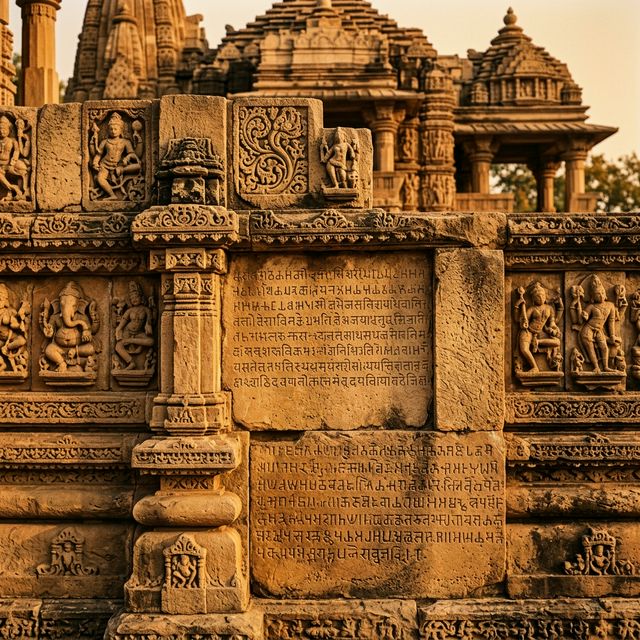
Discovered in 1956 near the district office in Thane, this set of five copper plates records an extensive land endowment by the Śilāhāra ruler Mummuṇirāja. Inscribed in the Nāgarī script and composed in formal Sanskrit, the charter provides a comprehensive genealogy of the Śilāhāra dynasty from the mythical Jimūtavāhana to Mummuṇirāja. The document is notable for its excellent preservation and the administrative precision of its drafting by the treasury officer Joupaiya.
The charter records the grant of several villages in the Vareṭikā district and numerous fields across the Abhyantara ṣaṭṣaṣṭi and Śūrpāraka ṣaṭṣaṣṭi districts, after offering arghya to the Sun and having worshipped lord Śiva. The recipients of the grant consisted of fourteen learned brāhmaṇas hailing from Karahāṭaka (modern Karhad), Karṇāṭa, Madhyadeśa (Central India) and Purī. The donation was made for the for the spiritual merit of Queen Padmai and to support the livelihood of the donees The endowment specifies revenues in drammas, house taxes, and kumāragadyāṇas.
 Editor's Comment:
1. siddham | jayaścābhyudayaśca | labhate sarvvakāryeṣu pūjayā gaṇanāyakaḥ | vighnaṃ nighnansa vaḥ pāyādapāyād gaṇa-
2. nāyakaḥ || sa vaḥ pātu śivo nityaṃ yanmaulau bhāti jāhnavī | sumeruśikharodgacchadacchacandrakalopa-
3. mā || jīmūtaketutanayo niyataṃ dayālurjjīmūtavāhana iti trijagatprasiddhaḥ | dehaṃ nijaṃ tṛṇami-
4. vākalayanparārthe yo rakṣati sma garuḍātkhalu śaṅkhacūḍam || tasyānvaye nikhilabhūpatimaulinūtnara-
5. ntadyuticchuritanirmmalapādapīṭhaḥ | śrīsāhasāṅka iva sāhasikaḥ kaparddī sīlāravaṃśatilako nṛpa-
6. tirbbabhūva || tasmādabhūcca tanayaḥ pulaśaktināmā sīmāsamaḥ suragurūditarājanīteḥ | nirjjitya saṅgaramu-
7. khekhilavairivarggaṃ niṣkanṭakaṃ jagati rājyamakāri yena || tatopi samabhūtsuto nṛpaśirovibhūṣāmaṇiḥ
8. śitaḥ śṛṇirivāparorikariṇāṃ kaparddī laghuḥ | yadīyayaśasā jagatyatiśayena śuklīkṛte na bhāti su-
9. ravāraṇo na ca śaśī na dugdhāmbudhiḥ || tasmādapyabhavadvibhūtipadavīpātraṃ pavitrīkṛtāśeṣakṣmāvalayo ma-
10. hīpatilakaḥ śrīvappuvannaḥ sutaḥ | saṅgrāmāṅgaṇaraṅgiṇāsilatayā lūnaikadantāḥ haṭhātsarvve yena vi-
11. nāyakā viracitā vidveṣiṇāṃ dantinaḥ || tasmājjātastanūjo rajanikara ivānanditāśeṣalokaḥ
12. ślāghyaḥ śrījhañjharājo divasakara iva dhvastaniḥ śeṣadoṣaḥ | śaṃbhoryo dvādaśāpi vyaracayadacirātkī-
13. rttanāni svanāmnā sopānānīva manye praṇatatanubhṛtāṃ svarggamārggodyatānām || bhrātā tatra tatastatojjvalaya-
14. śorāśiprakāśīkṛtāśeṣakṣmāvalayo balī balavatāṃ śrīgoggirājobhavat | cāpākarṣaṇakarmmaṇi
15. pravaṇatāṃ yasmingate bhūpatau bhīṣmadroṇapṛthāsutaprabhṛtayaścitte camatkāritāḥ || tasmādvidmayakārihāri-
16. caritaprakhyātakīrtteḥ sutaḥ śrīmānvajjaḍadevabhūpatirabhūdbha- cakracūḍāmaṇiḥ | dorddaṇḍaikabalasya yasya sa-
17. hasā saṅgrāmaraṅgāṅgaṇe rājyaśrīḥ svayametya vakṣasi ratiṃ cakre murāreriva || jayanta iva vṛtrāreḥ purā-
18. reriva ṣaṇmukhaḥ | tataḥ śrīmānabhūtputraḥ saccaritroparājitaḥ || karṇṇastyāgena yaḥ sākṣātsatyena ca yu-
19. dhiṣṭhiraḥ | pratāpāddīptimārttaṇḍaḥ kāladaṇḍaśca yo dviṣām || śaraṇāgatasāmantā aparepi hi jagati rakṣi-
20. tā yena | sa jayati yathārtthanāmā śaraṇāgatavajrapañjaro devaḥ || yena svāgatamāgatāya vihitaṃ go-
21. mmāya nānāvidhaṃ yenaivaiyapadevanāmni calitaṃ rājyaṃ sthiraṃ kāritam | bhillammāmmaṇamambuva-
22. kṣitibhujāṃ dattaṃ ca yenābhayaṃ tasya śrīvirudaṅka rāmanṛpateranyatkimāvarṇṇyate || śrīmānabhū-
23. ttadanu vajjaḍadevanāmā bhūpālamastakamaṇistanayo nayajñaḥ | adyāpi yasya caritāni
Second Plate : First Side
24. janāḥ samastā romāñcakacukitagātralatā stuvanti || tadbhrātātha tatorikesarinṛpo jātaḥ sa-
25. tāṃ sammato dṛptārātikulācalaikadalane daṃbholilīlāṃ dadhat | gatvā śaiśava eva sainyasahi-
26. to dṛṣṭvā ca someśvaraṃ tasyāgre piturājñayā jagadalaṃ yaḥ kīlayitvāgataḥ || tadbhrātṛjo vajjaḍadeva-
27. sūnuḥ śrīcchittarājo nṛpatirbbabhūva | sīlāravaṃśaḥ śiśunāpi yena nītaḥ parāmunnatimunnatena ||
28. lambālakāni kucakuṃbhataṭopakaṇṭhaprabhraṣṭahāralatikāni nirañjanāni | utkhātatīkṣṇakaravālavidā-
29. ritasya yontaḥ purāṇi paripaṃthijanasya cakre || hatārinārīnetrāṃbhassekasaṃvarddhanādiva | brahmāṇḍamaṇḍa-
30. paṃ yasya kīrttivallyatirohati || dṛptārātiṣu kopakāladahanaḥ saubhāgyanārāyaṇo vārastrīṣu tatonuja-
31. ssamabhavannārgārjunaḥ kṣmāpatiḥ | yasyāmānuṣamūrjjitaṃ bhujabalaṃ durānniśamya dviṣāṃ nidrātīva raṇāṃgaṇavyasani-
32. nī dorddaṇḍakaṇḍūlatā || yadasamaśivirāntarmmattagandhe- bhadānaprasaradanilaśuṣyatsrotaso diggajendrāḥ | a-
33. rinagaranidāhoddāmadigvyāpidhūmaprasarabhayanimīlallocanānyunmiṣanti || tadanu tadanujanmā mūrttimā-
34. nmīnaketuḥ kṣataripuvibhavobhūnmummuṇiḥ kṣoṇipālaḥ | vidhṛtadhanuṣi yasminvājinīrājanānte bala-
35. bhidapi balīyānvārṣikaṃ cāpamaujjhat || atha svakīyapuṇyodayātsamadhigatapañcamahāśabda mahāsāma-
36. ntādhipatitagarapuraparamesvaraśilāhāranarendra- jīmūtavāhanānvayaprasūtasuvarṇṇagaruḍadhvajapaści-
37. masamudrādhipatityāgajagajjhampasīlāramārttaṇḍarāja- mārttaṇḍaḍamarameghaḍambaramuṇḍamālālaṃkṛtavasumatīsva-
38. yaṃvaraśaraṇāgatavajrapañjaraprabhṛtisamastarājāvalī- virājitamahāmaṇḍaleśvaraśrīmanmummuṇidevarājo nijabhujo-
39. pārjjitānekamaṇḍalasametāṃ purīpramukhacaturdaśagrāmaśatī samanvitasamastakoṅkaṇabhuvaṃ samanuśāsati
40. tathaitadrājyacintābhāramudvahati mahāmātyaśrījo-upaiye tathā mahāsāndhivigrahikaśrīviṭhapaiye satye-
41. tasminkāle pravarttamāne sa ca mahāmaṇḍaleśvaraśrīmanmuṇidevarājaḥ sarvvāneva svasaṃbadhyamāna-
42. kānanyānapi samāgāmirājaputramantripurohitāmātyapradhānāpradhānanai yogikāṃstathā rā-
43. ṣṭrapatinagarapativiṣayapatigrāmapatiniyuktāniyukta- rājapuruṣajanapadāṃstathā haṃyamana-
44. nagarapauratrivarggaprabhṛtīṃśca praṇatipūjāsatkārasamādeśaiḥ sandiśatyastu vaḥ saṃviditaṃ yathā ||
45. calā vibhūtiḥ kṣaṇabhaṅgi yauvanaṃ kṛtāntadantāntaravartti jīvitam | tathāpyavajñā paralokasādha-
46. ne nṛṇāmaho vismayakāri ceṣṭitam || tathāntarllīnajarārākṣasīprārabdha grāsaṃ yauvanaṃ
Second Plate : Second Side
47. svarggavāsānnarakapātasamamiṣṭasamāgamaviyogaduḥkhaṃ kadalīgarbbhavadasāraḥ saṃsāraḥ | sahajajarāma-
48. raṇasādhāraṇakaṃ śarīraṃ pavanacalitakamalinīdalagatajalalavataralatare dhanāyuṣī iti matvā
49. dṛḍhataraviraktibuddhyā saṅgṛhṇīyāt svadānaphalam || kṛtatretādvāpareṣu tapotyartthaṃ praśasyate | muna-
50. yotra tu śaṃsanti dānamekaṃ kalau yuge || na tathā saphalā vidyā na tathā saphalaṃ tapaḥ | yathātra munayaḥ
51. prāhurddānamekaṃ kalau yuge || tathā coktaṃ bhagavatā vyāsena | agnerapatyaṃ prathamaṃ suvarṇṇaṃ bhūrvvaiṣṇavī
52. sūryasutāśca gāvaḥ | lokatrayaṃ yena bhavetpradattaṃ yaḥ kāñcanaṃ gāṃ ca mahīṃ ca dadyāt || āsphoṭayanti pita-
53. raḥ pravalganti pitāmahāḥ | bhūmidosmatkulejātaḥ sa naḥ santārayiṣyati || dhavalānyātapatrāṇi dantina-
54. śca madoddhatāḥ | bhūmidānasya puṣpāṇi phalaṃ svarggaḥ purandara || iti dharmmādharmmavicāracaturacirantanamu-
55. nivacanānyavadhārya svakīyapaṭṭamahārājñīśrīpadmairājñyāḥ śreyortthaṃ mayā śakanṛpakālātītasa-
56. ṃvatsaraśateṣu navasu saptatyadhikeṣu sarvvadhārisaṃvatsarāntarggata- phālgunaśuddhapañcadaśyāṃ yatrāṅkatopi
57. saṃvat 970 phālguna śuddha 15 sañjātasomagrahaṇaparvvaṇi sutīrtthe snātvā gaganaika-
58. cakracūḍāmaṇaye kamalinīkāmukāya bhagavate savitre nānāvidhakusumaślāghyamarghyaṃ dattvā
59. sakalasurāsuragurutrailokyasvāminaṃ bhagavantamumāpatimabhyarccya yajanayājanādhyayanādhyā-
60. panādiṣaṭkarmmaniratebhyaḥ kratukriyākāṇḍaśauṇḍebhyaḥ parama brahmabhyo mahābrāhmaṇebhyo yatrā-
61. dau karahāṭavinirggatajāmadagnya vatsagotrajaṃ bahvṛcaśākhi mahābrāhmaṇa śrīnārāyaṇapaṇḍitaṃ ma-
62. hābrāhmaṇaśrītikkapaiyopādhyāyasutaṃ tathaicaitadbhrātṛrāmba paṇḍitaṃ tathaitadbhrātṛlakṣmīdharapaṇḍitaṃ
63. karahāṭavinirggata……………….gotrajaṃ bahvṛcaśākhi karṇṇāṭakeśavabhaṭṭopādhyāyaṃ…………………sutaṃ
64. karahāṭavinirggatajāmadagnya vatsagotrajaṃ bahvṛcaśākhi gopatipaṇḍitaṃ śrīrāmbapaṇḍitasutaṃ
65. karahāṭavinirggatajāmadagnya vatsagotrajaṃ bahvṛśākhi dhāreśvarabhaṭṭaṃ mādhavabhaṭṭasutaṃ karahāṭa-
66. vinirggatagārgyagotrajaṃ bahvṛcaśākhi govarddhanabhaṭṭasutaṃ nārāyaṇabhaṭṭaṃ karahāṭa-
67. vinirggataṃ kapigotrajaṃ bahvṛcaśākhi cakrapāṇibhaṭṭaṃ droṇabhaṭṭasutaṃ kara-
68. hāṭavinirggataṃ ātreyagotrajaṃ bahvṛcaśākhi dāṃ-upaiyasutaṃ mādhavajyotirvidaṃ
69. karahāṭavinirggataṃ ātreyagotrajaṃ bahvṛcaśākhi vāmbadevabhaṭṭaṃ risiyapabhaṭṭasutaṃ
Third Plate : First Side
70. karahāṭavinirggataṃ kāśyapagotrajaṃ bahvṛcaśākhi vāvalaiyaṃ dāṃ-upaiyasutaṃ karahā-
71. ṭavinirggatabhāradvājagotrajaṃ bahvṛcaśākhi divākaraiyaṃ siddhapaiyasutaṃ karahā-
72. ṭavinirggataṃ kāśyapagotrajaṃ bahvṛcaśākhi janārddanabhaṭṭaṃ vevvalaṣaḍaṅgavitsutaṃ ||
73. karahāṭavinirggatamātreyagotrajaṃ bahvṛcaśākhi vāmbaṇaṃ tīkapaiyasutaṃ prabhṛti caturddaśa-
74. bhyo yajanayājanādhyayanādhyāpanādiṣaṭkarmmaraṇāya balicaruvaiśvadevāgnihotrakratukri-
75. yādyupasarppaṇārtthaṃ svaparigrahapoṣaṇārtthaṃ ca prāglikhitaśrīnārāyaṇapaṇḍita tathā divākarai-
76. yābhyāṃ vaṇṭakadvayaṃ dvayamitarebhyo vaṇṭakaikaṃ vidhāya vareṭikāviṣayānta pāti ekasālagrāmo
77. yatra siddhāyātpalāṇḍasamaṃ pañcacatvāriśaddrammādhikāni drammāṇāṃ catvāri śatānyaṅkatopi dra 445 ya-
78. sya cāghāṭanāni | pūrvvata ūlasanadī sīmā | dakṣiṇataḥ pavahānadī | paścimataḥ siyalipārśve go-
79. mārggaḥ | uttaratośvatthavṛkṣastathā gomārggaśca || tathaitadgrāmīyagṛhadrammāstathā kumāragadiyāṇaka-
80. śca || tathaitadviṣayānta pātibhūtabaligrāmo yatra siddhāyātpalāṇḍasamaṃ trayoviṃśadadhikaṃ dramma-
81. śatadvayamaṅkatopi dra 223 yasya cāghāṭanāni | pūrvvato virakaḥ | dakṣiṇataḥ parvvataḥ |
82. paścimataḥ parvvata eva | uttarato viraka eva | tathaitadgrāmīyagṛhadrammāstathā kumāragaddi-
83. yaṇakaśca ||cha|| tathaitadviṣayānta pātivaḍavalīgrāmo yatra siddhāyātpalāṇḍasamaṃ ekona-
84. saptatyadhikaṃ drammaśatadvayamaṅkatopi dra 269 yasya cāghāṭanāni | pūrvvatośvatthavṛkṣastathā
85. piṃparivṛkṣaśca | dakṣiṇataḥ uccādevīsatkoḍoṅgarikā | paścimato virakaḥ | uttarataḥ pava-
86. hānadī || tathaitadgrāmīyagṛhadrammāstathā kumāragaddiyaṇakaśca ||cha|| tathaitadviṣayānta
87. pāti āsalagrāmo yatra siddhāyātpalāṇḍasamamaṣṭacatvāriṃśadadhikāni drammāṇāṃ pañ-
88. caśatānyaṅkatopi dra 548 yasya cāghāṭanāni | pūrvvato vaḍavalīgrāmamadhye vira-
89. kaḥ || dakṣiṇato viraka eva | paścimato bṛhatparvvataḥ uttarato vikarāgrāmasīmāyāṃ
90. virakaḥ || tathaitadgrāmīyagṛhadrammāstathā kumāragaddiyaṇakaśca ||cha|| tathaitadviṣayā-
91. nta pāti ……….grāmāntarvvartti ghaṇṭeśvarakṣetraṃ yatra siddhāyātpalāṇḍātsamutpadyamāna-aṣṭacatvāriṃ-
Third Plate : Second Side
92. śaddrammā yatrāṅkatopi dra 48 yasya cāghāṭanāni | pūrvvata ekasālagrāmamadhye gomārgga-
93. ḥ | dakṣiṇataḥ pavahā nadī | paścimataḥ śrīnāgeśvaradevasatkapiṃparikākṣetraṃ tathā rāja-
94. mārggaśca uttarato gomārggaḥ || tathaitatkṣetrīyagṛhadrammāstathā kumāragaddiyaṇakaśca
95. ||cha|| tathaitadviṣayānta pāti brāhmaṇamadhupaṇḍitabhujyamāna- umbaravallīgrāmīyā-
96. ruhaṇātpañcāśaddrammā yatrāṅkatopi hastadramma dra 50 || cha || cha ||
97. tathā vareṭikāviṣayabāhyaṃ vāvailakabrāhmaṇebhyo yatrādau | madhyadeśavinirgga-
98. tāya gārgyagotrāya vahvṛcaśākhine mahābrāhmaṇadaddapaiyāya mahābrāhmaṇabrahma-
99. nāyakasutāya abhyantaraṣaṭṣaṣṭi viṣayānta pātimūlandagrāmāntarvvarttikoṭṭhāra-
100. veḍhīkṣetraṃ yatra siddhāyādviṃśatidrammāstathaitadgrāmamānena palāṇḍādvrīhīṇāṃ sārddha-
101. mūṭakaiśca | yatrāṅkatopi samutpadyamāna dra 20 vrīhimūḍā 1 || yasya cā-
102. ghāṭanāni || pūrvvataḥ khairoṇḍhākṣetraṃ | dakṣiṇato baṭukeśavasatkavāvakaḥ
103. | paścimato vaulathaibhaṭṭārikāsatkakusumbī kṣetraṃ || uttarato vipratikkambai yasa-
104. tkakṣetraṃ || tathaitatkṣetrapratibaddhagṛhadrammāścaitasmā eva ||cha|| tathā karahāṭa-
105. vinirggatāya vāsiṣṭhagotrāya bahvṛcaśākhine brāhmaṇavāpyaiyāya brāhmaṇadhālanaṣa-
106. ḍaṅgavitsutāya abhyantaraṣaṭṣaṣṭi viṣayānta pātivoriyalāgrāmantarvvarttivāḍakṣetraṃ
107. yatra siddhāyāt ṣaṭtriṃ śaddrammāstathaitadgrāmamānena palāṇḍādvrīhīṇāṃ pādonacatvāro mūṭakā-
108. śca | yatrāṅkatopi dra 36 vrīhimūḍā 3 || yasya cāghāṭanāni | pūrvvataḥ khānuvaḍā-
109. kṣetrasatka-ūkāsastathā ābhiṭṭhāvṛkṣaśca | dakṣiṇato vira-ikā | paścimataḥ
110. … … … grāmapratibaddhakā.ḍhevalīpallikā | uttarataḥ vipradā-upaiyasa-
111. tkavāvakaḥ || tathātratyīyanihurakṣetraṃ yatra siddhāyādaṣṭādaśa drammāsta-
Fourth Plate : First Side
112. thaitadgrāmamānena palāṇḍādvrīhīṇāṃ daśakūṭapādhikaḥ sārdhamūṭakaikaśca | yatrāṅkatopi dra 18
113. vrīhi mūḍā 1 || ku 10 | yasya cādhāṭanāni | pūrvvato gomārggaḥ paścimato
114. gopracāraḥ | uttarataściṃcāvṛkṣaḥ || tathā.atratyīyavaulapoṇḍhākṣetraṃ | yatra siddhāyānnava drammā-
115. stathā grāmamānena palāṇḍādvrīhīṇāṃ pañcakuṭaponaḥ mūṭakaikaśca | yatrāṅkatopi dra 9 vrīhi-
116. khaṇḍikā 3 kuḍava 15 | yasya cāghaṭanāni pūrvvato viṣṇunārāyaṇadevasatkavāvakaḥ | dakṣiṇaḥ-
117. to nihurakṣetraṃ | paścimataḥ kuṭumbikapāṃbu vasatkārāmakaḥ | uttarataḥ khānūvalakṣetra || tathaitatkṣetra-
118. trayapratibaddhagṛhagṛhadrammāścaitasmā eva ||cha|| tathā karahāṭavinirggatāya kāśyapagotrāya bahvṛca-
119. śākhine brāhmaṇadāṃ-upaiyāya brāhmaṇarisiyapaiyasutāya śūparikaṣaṭṣarṣṭi viṣayānta pāti bṛhadaḍa-
120. ṇikagrāmāntarvvarttipoṇḍhākṣetradvayaṃ | yasya cāghāṭanāni | pūrvvata aiśānīṃ diśamārabhyāgneyīṃ diśaṃ
121. yāvadaśvatthavṛkṣastathā nyagrodhavṛkṣastathā cicāvṛkṣasaṃyuktośvatthavṛkṣastathā khadiravṛkṣastathā ūṣaraṃ ca |
122. dakṣiṇato vāṅkaḍikṣetraṃ tathā siṅghaladvīpakṣetraṃ ca | paścimataḥ pāṣāṇaśṛṃkhalikā tathā nikhātapā-
123. ṣāṇāśca | uttarato madhukṣetraṃ || tathā.atratyī yatoraṇīkṣetradvayaṃ | yasya cāghaṭanāni || pūrvvato nāṇevā-
124. pakṣetraṃ veḍevāpakṣetraṃ ca | dakṣiṇato rājamārggaḥ | paścimataḥ pūrvvabhaktyā pānīyaprapātaḥ | uttara-
125. to bhābhoṇṭhākṣetraṃ || evaṃ kṣetracatuṣṭayasiddhāyāddvāviśati- drammādhikaṃ drammaikaśataṃ tathaitadgrāmamāne-
126. na palāṇḍādvrīhīṇāṃ sārddhamūṭakacatuṣṭayaṃ ca | yatrāṅkatopi dra 122 vrīhi mūḍā 4 || tathaitadgrāmama-
127. dhye gṛhacatuṣṭayaṃ tathaitatkṣetracatuṣṭayapratibaddhagṛhadrammāśca || tathaitadviṣayānta pāti laghu-aḍaṇikāntarvartimānikṣetraṃ | yasya cā-
128. ghāṭanāni || pūrvvato vārasaundakṣetraṃ | dakṣiṇato jambūvaṭīkṣetraṃ | paścimataḥ khaṇḍivalīgrāmaḥ | uttarataḥ kha-
129. ṇḍivalīgrāma eva tathā pūrvvabhuktiśca || tathaitatkṣetrapratibaddhamadhūkakṣetraṃ | yasya cāghāṭanāni pūrvvataḥ coli-
130. kṣetraṃ | dakṣiṇato vendarīkacchaḥ | paścimato vendarīkaccha eva | uttarato laghuvāhalikā || tathaitadgrāmānta-
131. vvartti-utteśravākṣetraṃ | yasya cāghāṭanāni | pūrvvataḥ ṣṭeṃbhaṃ | dakṣiṇato gomārggaḥ | paścimato gomārggaḥ |
132. uttarato bandhaḥ || evaṃ kṣetratrayasiddhāyātpaṃcāśaddrammā yatrāṅkatopi dra 50 tathaitadgrāmamadhye gṛhaikaṃ
133. ca || tathaitadviṣayānta pāti khānuvaḍāgrāmāntarvvarttikusumbholikṣetraṃ | yasya cāghāṭanāni |
134. pūrvvato madhuvṛkṣaḥ | dakṣiṇato rājakīyakusumbholikṣetraṃ | paścimataḥ kṣāranadī khajjanaṃ | uttarato
135. vaṭavṛkṣastathāpūrvvabhuktiśca || tathā.atratyīṃyapiṃpalavāpakṣetraṃ | yasya cāghāṭanāni | pūrvvato vaṭavṛkṣaḥ | dakṣi-
Fourth Plate : Second Side
136. ṇataḥ kusumbholikṣetraṃ | paścimato rājakīyakusumbholikṣetraṃ | uttarataḥ pūrvabhuktipānīyaprapātastathā doṅga-
137. rikā ca || tathā.atratyīyacaṇevaṭīkṣetraṃ | yasya cāghāṭanāni | pūrvvato gomārggaḥ dakṣiṇato gomārgga eva |
138. paścimataḥ kṣāranadī khajjanaṃ uttarataḥ kusumbholikṣetraṃ | tathaitatkṣetrapratibaddhovakāsaśca | yasya cāghāṭanāni |
139. pūrvvata āgaraveḍhīkṣetraṃ | dakṣiṇataḥ arddhapādakṣetraṃ tathā carikā ca | paścimatastaṭākapālī | uttaratastalāvaṭīkṣe-
140. traṃ || evaṃ kṣetracatuṣṭayasiddhāyādaśītidrammā yatrānkatopi dra 80 | tathaitadgrāmamadhye gṛhatrayaṃ ca || cha || cha ||
141. tathā karahāṭavinirgatāya kāśyapagotrāya bahvṛcaśākhine brāhmaṇanāgadevaiyāya brāhmaṇarisiyapaiyasutāya śu-
142. rppārakaṣaṭṣaṣṭiviṣayānta pāti peḍhālagrāmāntarvvarttithāpaḍakṣetradvayaṃ tathā sāliyapakṣetradvayamubhayaṃ kṣetraca-
143. tuṣṭayaṃ | yasya cāghāṭanāni | pūrvvato bhambanīvāhakṣetraṃ | dakṣiṇatastṛtīyarājakīyathāpaḍakṣetraṃ | paścimatasta-
144. ḍāgapālī | uttarato de-iyalākṣetraṃ | tathaitadgrāmāntarvvarttijalūvoṇḍhākṣetraṃ | yasya cāghāṭanāni pūrvatasta-
145. khālāsatkavāvakaḥ | dakṣiṇatastaḍāgikā | paścimataḥ koñcauroṇḍākṣetraṃ | uttarataḥ khānakṣetraṃ | evaṃ kṣetrapañcaka-
146. siddhāyāddrammāṇāṃ śatamekaṃ yatrāṅkatopi dra 100 | tathaitatkṣetrapratibaddhagṛhadrammāśca || cha || tathā kara-
147. hāṭavinirggatāya jāmadagnyavatsagotrāya bahvṛcaśākhine brāhmaṇagovindaiyāya brāhmaṇamahīdharaiyasutāya śūparika-
148. ṣaṣṭṣaṣṭi viṣayānta pāti peḍhālagrāmāntarvartti de-iyalākṣetraṃ | yasya cāghāṭanāni | pūrvvato rājakīyade-iyalākṣetraṃ | dakṣiṇataḥ
149. sāliyapakṣetraṃ | paścimato de-iyalākṣetrakokkāsaḥ || uttarataḥ khojjavādalakṣetraṃ || tathaitadgrāmāntarvvarttika-
150. vaḍocchikṣetraṃ tathā kaṇīkṣetraṃ ca | yayoścāghāṭanāni | pūrvvataḥ parvvatikāsatkadantacchidaḥ | dakṣiṇato rājamārgaḥ
151. | paścimato doṅgarikā | uttaratastaḍāgikā || evaṃ kṣetratrayasiddhāyāddrammāṇāṃ śatamekaṃ | yatrāṅkatopi dra 100
152. tathaitkṣetratrayapratibaddhagṛhadrammāśca ||cha|| tathā purī vinirggatāya bhāradvājagotrāya gobhila śārikne brā-
153. hmaṇanannapaiyāya brāhmaṇamadhuvalaiyasutāya śūrppārakaṣaṣṭṣaṣṭi viṣayānta pāti peḍhālagrāmāntarvvarttikhānūkṣetra-
154. dvayaṃ | yasya cāghāṭanāni | pūrvvato gomārggaḥ | dakṣiṇato jalūvoṇḍhākṣetraṃ tathā koñcauroṇḍhākṣetraṃ ca | paścimalaśākhineta-
155. staḍāgaṃ | uttarato rājakīyokkāsaḥ || evaṃ kṣetradvaya siddhāyāddrammāṇāṃ śataikaṃ yatrāṅkatopi dra 100 ta-
156. thaitatkṣetradvayapratibaddhagṛhadrammāśca ||cha|| tathā karahāṭavinirggatāya kāśyapagotrāya bahvṛcaśākhine brā-
157. hmaṇalokapaiyāya brāhmaṇavāvaṇaiyasutāya śūrppārakaṣaṭṣaṣṭi viṣayānta pāti peḍhālagrāmāntarvvarttimājhila-
158. vāvākṣetraṃ | yasya cāghāṭanāni | pūrvvato jogeśvarabhaṭṭasatkavāvakaḥ | dakṣiṇataḥ kadamba vṛkṣaḥ paści-
159. mato jogeśvarabhaṭṭasatkavāvakaḥ | uttarato madhuvṛkṣaḥ || tathaitatkṣetrapratibaddhapradeśaikaḥ |
160. yasya cāghāṭanāni | pūrvvato jogeśvarabhaṭṭasatkavāvakaḥ | dakṣiṇato brahmadāyakṣetraṃ | paścimato-
Fifth Plate
161. śvatthavṛkṣaḥ | uttarataściñcacāvṛkṣaḥ || tathaitadgrāmāntarvvarti ādhavā-ilākṣetraṃ | yasya cāghāṭanāni | pūrvva-
162. to brahmadāyakṣetraṃ | dakṣiṇataḥ parvvataḥ | paścimataḥ parvvata eva | uttarataścaṇeveḍhīkṣetraṃ || tathaita-
163. dviṣayānta pāti vīrāragrāmapratibaddha- uppalapallikāntarvvarttikacchakṣetraṃ | yasya cāghāṭanāni | pūrvvato rā-
164. jakīyatatkhaṇḍakacchakṣetraṃ | dakṣiṇato nātyunnatavaralīsatkapānīyaprapātaḥ | paścimato madhuvṛkṣaḥ u-
165. ttarataḥ parvvatasatkapānīyaprapātaḥ | evaṃ kṣetratrayasiddhāyāddrammāṇāṃ śataikaṃ | yatrāṅkatopi dra 100 | tathaitkṣe-
166. tratrayapratibaddhagṛhadrammāśca ||cha|| evaṃ caturāghāṭanopalakṣitā grāmāstathā vāvakāśca savṛkṣamālākulāḥ
167. svasīmāparyantāḥ satṛṇakāṣṭhodakopetāḥ pūrvvapradattadevadāyabrahmadāyavarjjā acāṭabhaṭapraveśyā a-
168. nāsedhyāḥ prāglikhitakrameṇa samutpadyamānadravyotpattisaṃyuktāstathā likhita vāvailadadāṃ-upaiyasatkala-
169. ghu-aḍaṇikā tathā khānuvaḍā ubhayagrāmadvayīyakṣetrāṇāṃ satkaśulkamuktivarjjaṃ śrīsthānake samāyātasiddhāyapa-
170. lāṇḍagṛhadrammādipadakīyakallivanamānena taṇḍulakusaikādaśasatkaśulka muktisahitā udakātisargge-
171. ṇa namasyavṛttyā paramayā bhaktyā pratipāditāḥ || tadateṣāṃ sānvayabaṃdhūnāmapi bhuṃjatāṃ bhojayatāṃ kṛṣatāṃ ka-
172. yatāṃ vā na kenāpi paripanthanā karaṇīiyā || yata uktameva purātanamahāmunibhiḥ | bahubhirvvasudhā bhu-
173. ktā rājabhiḥ sagarādibhiḥ | yasya yasya yadā bhūmistasya tasya tadā phalam || sadyodānaṃ nirāyāsaṃ sāyā-
174. saṃ dīrghapālanam | ata evarṣaya prāhurddānācchreyonupālanam || dattvā bhūmiṃ bhāvinaḥ pārtthivendrān bhūyo bhūyo
175. yācate rāmabhadraḥ | sāmānyoyaṃ dharmmaseturnnṛpāṇāṃ kāle kāle pālanīyo bhavadbhiḥ || iti munivacanānya-
176. vadhārya samāgāmibhibhūpālairasmadvaṃśajairanyairvvā pālanadharmmaphalalobha eva karaṇīyaḥ | na punastallo pa-
177. napāpakalaṅkāgresareṇa kenāpi bhavitavyam || yastvevamabhyartthitopi lobhādajñānatimirapaṭalāvṛtamati-
178. rācchindyādācchidyamānamanumodeta vā sa pañcabhirmmahāpātakairupapātakaiśca lipto rauravamahārauravā-
179. ndhatāmisrādinarakāṃściramanubhaviṣyati | tathā coktaṃ bhagavatā vyāsena | svadattāṃ paradattāṃ vā yo ha-
180. reta vasundhrarām | sa viṣṭhāyāṃ kṛmirbhūtvā kṛmibhiḥ saha pacyate || ityapi ||
bhūyobhyarthanā | madvaṃśajāḥ para-
181. mahīpativaṃśajā vā pāpādapetamanaso bhuvi bhāvibhūpāḥ | ye pālayanti mama dharmmamimaṃ samagraṃ teṣāṃ mayā vira-
182. citoñjalirepa mūrddhni || cha || yathā caitadevaṃ tathā śāsanadātā lekhakahastena svamatamāropayati | ya-
183. thā mataṃ mama | mahāmaṇḍaleśvaraśrīmanmummuṇirājadevasya | mahāmaṇḍaleśvaraśrīmadvajjaḍadevarāja-
184. sūnoryadatra śāsane likhitam || likhitaṃ caitanmayā śrīmadrājānujñayā bhāṇḍāgārasenapradhāna-
185. śrījo-upaiyena bhāṇḍāgārasenamahākavi śrīnāgalaiyabhrātṛsūnunā | yadatronākṣaramadhikākṣara-
186. ṃ vā tatsarvvaṃ pramāṇamiti || cha || cha || śrīrbhavatu svāminaḥ || cha || śivamastu || cha ||
Success! May there be victory and prosperity!
Verse 1
May that Gaṇanāyaka (i.e. Gaṇapati) protect you from calamity—he who destroys obstacles and who, by means of worship, receives attention in all undertakings!
Verse 2
May that Śiva always protect you—he on whose head the Gaṅgā shines like the bright crescent of the moon as it rises over the peak of Sumeru!
Verse 3
Jīmūtavāhana, the ever compassionate son of Jīmūtaketu, is well-known in the three worlds—who, valuing his own body as not better than a straw, saved, indeed, Śaṅkhacūḍa from Garuḍa.
Verse 4
In his family was born king Kapardin I, the ornament of the Śīlāra race, who was adventurous like the illustrious Sāhasāṅka (i.e.Vikramāditya) and whose stainless foot-stool was covered with the splendour of fresh jewels on the heads of all kings.
Verse 5
From him sprang his son, Pulaśakti by name, who represented the limit of political wisdom taught by Bṛhaspati, the preceptor of gods; who, having vanquished all enemies in the forefront of the battlefield, ruled over the world, free from trouble.
Verse 6
From him again sprang his son, the younger Kaparadin (i.e., Kapardin II), the crest-jewel of kings, who was as it were a sharp goad to the elephants in the form of his enemies; the world being exceedingly whitened by his fame, neither the heavenly elephant (Airāvata) nor the moon nor the milk-ocean could be distinguished.
Verse 7
From him again sprang his son, the illustrious Vappuvanna, the worthy abode of prosperity, an ornament of royalty, who sanctified the whole circle of the earth. Having one of their tusks forcibly cut off by the creeper-like sword of him who was delighted to fight on the field of battle, all the elephants of the enemies were turned into Vināyakas i.e. they become Gajānana, who has only one tusk.
Verse 8
From him sprang his praiseworthy son, the illustrious Jhañjha, who delighted all people even as the moon does, and who destroyed all blemishes even as the sun dispels all darkness; who erected twelve temples of Śiva, named after himself, which served, as it were, as steps to pious people, ready to repair to the path of heaven.
Verse 9
Then there rose his brother, the illustrious Goggirāja, who having a mass of brilliant fame, brightened the entire circle of the earth, and who mighty among the mighty; when that king bent down in the act of drawing the string of his bow, Bhīṣma, Droṇa, the son of Pṛthā (i.e. Arjuna) and others felt surprised in their minds.
Verse 10
From him sprang a son named the illustrious Vajjaḍadeva I, famed for his astounding and attractive deeds, the crest-jewel of the circle of the earth. Royal Fortune, approaching him, all of a sudden and of her own accord, on the battle-field, felt delighted while sporting on the bosom of him whose strength lay solely in his own arm, as it does on that of Murāri.
Verse 11
To him was born an illustrious and virtuous son named Aparājita as Jayanta was to Indra and as the six-faced Kārttikeya was to Śiva.
Verse 12
He was Karṇa himself in respect of liberality, Yudhiṣṭhira in that of truthfulness, the refulgent Sun in that of valour, and was the rod of the god of death to his enemies.
Verse 13
Victorious is that king, who protected even the feudatories of other kings when they sought refuge with him, and who rightly obtained the title of "the adamantine cage giving protection to those who seek it.”
Verse 14
What else can be described of him who welcomed in various ways Gomma, who resorted to him for protection, who caused to be made firm the infirm rule of Aiyapadeva, who gave protection to Bhillama, Ammaṇa and Mambuva, and who was thus veritable Rāma among title-holders.
Verse 15
From him was born the son named Vajjaḍadeva II, who was conversant with political wisdom and was a veritable crest-jewel of kings,—whose deeds all people even now praise, with their creeper-like bodies having clothes of horripilation.
Verse 16
Then there was born his brother, king Arikesarin, who had the grace of the thunderbolt in destroying the principal mountains in the form of arrogant foes; who, even when he was a boy, went with an army to Someśvara and having seen that god, came back after offering him the whole world by the order of his father.
Verse 17
Thereafter his brother’s son the illustrious Chittarāja became king, who, noble as he was, raised his Śīlāra family to great eminence, though he was then only in his boyhood.
Verse 18
He caused the ladies in the harems of his enemies slain by his sharp sword drawn out of its scabbard to have dangling unbraided hair, to discard necklaces from their pitcher-like breasts and to have eyes without collyrium applied to them.
Verse 19
The creeper of his fame rises above the bower of the Brāhmāṇḍa as if because it is made to grow with the sprinkling of water in the form of tears from the eyes of the wives of the enemies slain by him.
Verse 20
Thereafter, his younger brother Nāgārjuna became king—he who, resembling Nārāyaṇa in regard to the good fortune of courtesans, was, by his anger, the fire of destruction to his arrogant foes. Having heard from afar about the superhuman power of his arms, the itching of the strong arms of his enemies, fond of fighting on the battlefield, goes to sleep as it were.
Verse 21
The quarter-elephants, the streams of whose ichor have dried up by the breezes blowing over the rutting juice of the intoxicated scent-elephants in his unique camp, open their eyes after a long time—the eyes which were closed for fear of the great masses of smoke spreading from the burning of his enemies’ cities and enveloping all quarters.
Verse 22
Thereafter, his younger brother Mummuṇi, cupid incarnate, who destroyed the prosperity of the foes killed by him, became king. When he raised his bow at the end of the waving of lights before his horses at the commencement of his march for digvijaya, even the mighty Indra gave up his own bow (i.e. the rain-bow).
Line 35-53
Now while the mahāmaṇḍaleśvara, the illustrious Mummuṇidevarāja who, by his spiritual merit, has obtained the five mahāśabdas, and who is adorned with all royal titles such as mahāsāmantādhipati, ‘the lord of the city of Tagara’, ‘a king of the Śīlāhāra family’, ‘a scion of the family of Jīmūtavāhana’, ‘he who has the ensign of the golden Garuḍa’, ‘the lord of the Western Ocean’, ‘he who has surpassed the world in liberality’, ‘the Sun of the Śīlāras’, ‘a mass of clouds obscuring in battle the sun-like hostile kings’, ‘the self-chosen husband of the Earth adorned with the heads of foes slain by him’, ‘an adamantine cage for such as seek refuge with him’ and so forth—is ruling over the whole Koṅkaṇa country comprising fourteen hundred villages headed by Purī together with many other maṇḍalas won by the power of his arms, and while his mahāmātya, the illustrious Joupaiya and his mahāsāndhivigrahika, the illustrious Viṭhapaiya are bearing the burden of the cares of his government—at this time the mahāmaṇḍaleśvara, the illustrious Mummuṇidevarāja addresses, with saluation, honour, respect and orders, all assembled princes counsellers the family priest the amātyas the principal and subordinate officers, as well as the heads of rāṣṭras, towns, viṣayas and villages, royal servants whether formally appointed or not, rural people and also the artisans, guilds and the three classes of citizens and so forth, as follows:-
“Be it known to you that though prosperity is unsteady, youth is momentary and life lies in the jaws of Death, the people are indifferent in regard to the acquisition of the other world. Oh! How astonishing is this action of theirs!
Realising that youth is being devoured by the demoness in the form of old age, who is hidden inside the body, that the pangs of separation after union with one’s dear ones are like those caused by falling into a hell after dwelling in heaven, that worldly existence is worthless like the interior of a plantain tree, that the body is subject to old age and death natural in this world, and that wealth and life are fickle like drops of water on a lotus-leaf tossed by wind, one should accumulate the spiritual reward for his gift with firm non-attachment.
Having pondered over the sayings of ancient sages, who are clever in discriminating between what is righteous and what is not, such as the following:- ‘Gold was the first-born of Fire, land sprang from Viṣṇu, and the cows are the off-springs of the Sun. He who gives gold, land and a cow gains the religious merit of giving the three worlds.’
Line 54-165
Having thought over these sayings of great sages, adept in discriminating between dharma and adharma and having bathed at the excellent tīrtha on the holy occasion of a lunar eclipse on the fifteenth tithi of the bright fortnight of Phālguna in the cyclic year Sarvadhārin, when nine hundred years increased by seventy have passed by the era of the Śaka King in figures, the year 970, Phālguna, the bright fortnight, 15—and having offered an arghya beautiful with flowers of various kinds, to the divine Sun, the sole crest-jewel of the sky and the lover of the lotus plant, and having worshipped the divine Śiva, the lord of the three worlds and the guru of all gods and demons, I have given, for the spiritual welfare of my crowned queen Padmai, with great devotion, with the puring out of water as a gift free from all taxes, of the following learned and eminent Brāhmaṇas, who are devoted to the performance of their six duties such as sacrificing for themselves and for others, studying and teaching of the sacred texts, and who are proficient in the performance of sacrificial rites, namely, the learned Brāhmaṇa, the illustrious Nārāyaṇa Paṇḍita, the son of the learned Brāhmaṇa, the illustrious Tikkapaiya Upādhyāya, of the Jāmadagnya-Vatsa gotra and the Ṛgveda śākhā, who has emigrated from Karahāṭa; and his brother Rāmba Paṇḍita and also his brother Lakṣmīdhara Paṇḍita; Keśavabhaṭṭa Upādhyāya, the son of… …who hails from Karṇāṭa, of… … gotra and the Ṛgveda śākhā, who has emigrated from Karahāṭa; Gopati Paṇḍita, the son of the illustrious Rāmba Paṇḍita, of the Jāmadagnya-Vatsa gotra and the Ṛgveda śākhā, who has emigrated from Karahāṭa; Dhāreśvara bhaṭṭa, the son of Mādhava bhaṭṭa, of the Jāmadagnya-Vatsa gotra and the Ṛgveda śākhā, who has emigrated from Karahāṭa; Nārāyaṇa bhaṭṭa, the son of Govaradhana bhaṭṭa, of the Gārgya gotra and the Ṛgveda śākhā, who has emigrated from Karahāṭa; Cakrapāṇi bhaṭṭa, the son of Droṇa bhaṭṭa, of the Kapi gotra and the Ṛgveda śākhā, who has emigrated from Karahāṭa, the astrologer Mādhava, the son of Dāmupaiya, of the Ātreya gotra and the Ṛgveda śākhā, who has emigrated from Karahāṭa; Deva bhaṭṭa, the son of Risiyappa bhaṭṭa, of the Ātreya gotra and the Ṛgveda śākhā, who has emigrated from Karahāṭa; Vāvalaiya, the son of Dāmupaiya, of the Kaśyapa gotra and the Ṛgveda śākhā, who has emigrated from Karahāṭa; Divākaraiya, the son of Siddhapaiya, of the Bhāradvāja gotra and the Ṛgveda śākhā, who has emigrated from Karahāṭa; Janārdana bhaṭṭa, the son of Vevvala, who has mastered the six Vedāṇgas, of the Kaśyapa gotra and the Ṛgveda śākhā, who has emigrated from Karahāṭa; Vāmbaṇa, the son of Tīkapaiya, of the Ātreya gotra and the Ṛgveda śākhā, who has emigrated from Karahāta, and others—
To these fourteen Brāhmaṇa for the performance of their six religious duties such as sacrificing for themselves and for others studying and teaching of the sacred texts for the performance of the religious rites such as bali, caru, vaiśvadeva, agnihotra and so forth, and for the maintenance of their families, in the following manner, viz. two shares each to the illustrious Nārāyaṇa Paṇḍita and Divākaraiya Paṇḍita and one share each to others—four hundred drammas increased by forty-five—in figures, dramma 445—out of the produce of food-grains from the village Eekāsāla situated in the Vareṭikā viṣaya, the boundaries of which are as follow:- on the east, the river Ūlasa; on the south, the river Pavahā; on the west, the cow-path near the hamlet Siyali; on the north, an Aśvattha tree and a cow-path—and also the house-cess in drammas in this village and a kumāragadyāṇaka per house—and also two hundred drammas increased by twenty-three—in figures, dramma 223—out the produce of food-grains from the village Bhūtavali situated in this viṣaya, the boundaries of which are as follows: on the east, a viraka; on the south, a hill ; on the west, also a hill; on the north, another viraka; and also the house-cess in drammas and a kumāragadyāṇaka—and also two hundred drammas increased by sixty-nine, in figures dramma 269, out of the produce of food-grains from the village Vaḍavalī situated in this viṣaya, the boundaries of which are as follows:- on the east, an Aśvattha tree and a Pimparī tree; on the south, a hill containing the temple of Ucchādevi; on the west, a viraka; on the north, the river Pavahā; and also the house-cess in drammas and a kumāragadyāṇaka; and also five hundred drammas increased by forty-eight—in figures, dramma 548—out of the produce of the food-grains from the village Āsala situated in this viṣaya, the boundaries of which are as follow:- on the east, a viraka in the village Vaḍavalī; on the south, also a viraka; on the west, a large mountain; on the north, a viraka on the boundary of the village and a kumāragadyāṇaka; and forty-eight drammas—in figures, dramma 48—out of the produce in food-grains from the field of Ghaṇṭeśvara in the village… … ṣituated in this viṣaya, the boundaries of which are as follows:- on the east, a cow-path in the village Eekasāla; on the south, the river Pavahā; on the west, the field of Pimparikā belonging to the god, the holy Nāgeśvara, and also a royal road; on the north, a cow-path; and also the house-cess in drammas of this field and a kumāragadyāṇaka—and fifty drammas—in figures, dramma 50—out of the revenue of a field in the village Umbaravalī, which is owned by the Brāhmaṇa Madhu Paṇḍita—
And to the Vāvailaka Brāhmaṇas of places outside the viṣaya of Vareṭikā, viz., first to the learned Brāhmaṇa Daddapaiya, the son of the learned Brāhmaṇa Brāhmaṇaiya, of the Gārgya gotra and the Ṛgveda śākhā, who has emigrated from Madhyadeśa, twenty drammas out of the revenue of the Koṭṭharaveḍhī field in the village Mūlanda situated in the Abhyantara-ṣaṭśaśṭi viṣaya together with one and a half mūṭaka measure from the produce of rice grains according to the measure in use in this village—in figures, dramma 20—out of the revenue and 1½ mūḍā of rice—the boundaries of which village are as follows:- on the east, the Khairoṇḍhā field; on the south, the field owned by Baṭu (Brāhmaṇa) Keśava; on the west, the Kusumbī field owned by the goddess Vaulathai; on the north, the field owned by the Brāhmaṇa Tikkambaiya—and also the drammas of the houses connected with this field to be paid to the same done—and to the Brāhmaṇa Vapyaiya, the son of the Brāhmaṇa Dhālana, who has mastered the six Vedāṇgas, of the Vāsiṣṭha gotra and the Ṛgveda śākhā, who has emigrated from Karahāṭa—thirty-six drammas out of the revenue of the Vāḍa field in the village Voriyalā, situated in the Abhyantaraṣaṭṣaṣṭi viṣaya, together with four mūṭakas, less by a quarter, of rice out of the produce of the same field—in figures, dramma 36 and rice-mūḍas 3 ¾ —the boundaries of which are as follows:- on the east, waste land of a field in the village Khānuvaḍā and also an Ābhiṭṭhā-tree; on the south, a virakā; on the west the hamlet Kāḍhevalī attached to the village… …; on the north, the vāvaka (field) of the Brāhmaṇa Daupaiya; and also eighteen drammas out of the revenue of the Nihura field in this village and one and a half mūṭaka together with ten kūṭapas of rice according to the measure in use in this village out of the produce in rice-grain of the field, in figures, dramma 18 and rice 1½ mūḍās and 10 kūṭapas—the boundaries of which (field) are as follows:- on the east, the village Māne; on the south, a cow-path; on the west, a pasture-ground; on the north, a tamarind tree; and also nine drammas from the revenue of the Vaulapoṇḍhā field of this village together with one mūṭaka of rice less by five kūṭapas, in figures, dramma 9, khaṇḍikās 3 and kuḍavas 15; the boundaries of which (field) are as follows:- on the east, a field belonging to the god Viṣṇu-Nārāyaṇa; on the south, a Nihura field; on the west, the orchard of the householder Pāmbuva; on the north, a Khānūvala field; together with the drammas levied as a house-cess in respect of these fields to be paid to this very Brāhmaṇa;—
And to the Brāhmaṇa Dāmupaiya, the son of the Brāhmaṇa Risiyapaiya, of the Kaśyapa gotra and the Ṛgveda śākhā, who has emigrated from Karahāṭa, one hundred and twenty-two drammas from the revenue of the four fields named below together with four mūṭakas of rice out of the produce of food-grains therefrom by the measure in use in this village, in figure, drammas 122. and rice mūḍās 4; and also four houses in this village and also drammas levied as house-cess in respect of these four fields, (viz.) two Poṇḍhā fields in the village Bṛhad-Aḍaṇikā (Large Aḍaṇikā) situated in the Śūrapārakaṣaṭṣaṣṭi viṣaya, the boundaries of which, are as follow:- from the north-east to the south-east, an Aśvattha tree, a Nyagrodha tree and an Aśvattha tree combined with a tamarind tree, and also a Khadira tree and waste land; on the south, a Vāṃkaḍi field and the Siṇghaladvīpa field; on the west, a boundary of stones and also stones fixed in the ground; on the north, a Madhu field; and also two Tooraṇi fields of this village, the boundaries of which are as follow:- on the east, a Nāṇevāpa field, and a Veḍevāpa field; on the south, a royal road; on the west, a waterfall already in use; on the north, a Bhābhoṇḍhā field; and fifty drammas out of the revenue of three fields mentioned below in figures, dramma 50, together with one house in this village—the fields, namely the Māni field in the village Laghu-Aḍaṇikā (Small Aḍaṇikā) situated in this viṣaya, the boundaries of which are as follows:- on the west, Vārasaunda field; on the south, a Jambūvaṭī field; on the west, the village Khaṇḍivalī; on the north, the same Khaṇḍivalī village and a previously occupied field; and also a Madhukacca field connected with the aftermentioned field, the boundaries of which are as follows:- on the east, the Coli field; on the south, the Vendarī marsh; on the west, the same Vendarī marsh; on the north, a small stream; and also an Utteśravā field in this village, the boundaries of which are as follows:- on the east, a ṭembha (low mound) ; on the south, a cow-path; on the west, a cow-path; and on the north, a dam; and also eighty drammas, in figures, dramma 80, out of the revenue from the following four fields together with three houses in this village—the fields, viz. the Kusumbholi field in the Khānuvaḍā village situated in this viṣaya, the boundaries of which are as follows:- on the east, a Madhu tree; on the south, a Kusumbholi field belonging to the Government; on the west, a salty stream and salty land; on the north, a Banyan tree and also land previously occupied; and also the Pimpalavāpa field of this village, the boundaries of which are as follows:- on the west, a Banyan tree; on the south, a Kusumbholi field; on the west, a Kusumbholi field belonging to Government; on the north, the previously owned waterfall and a small hill; and the Caṇevaṭī field in this village, the boundaries of which are as follows:- on the east, a cow-path; on the south also a cow-path on the west, a salty river and salty land; on the north, the Kusumbholi field and also the Ukkāsa of the said field, the boundaries of which are as follows:- on the east, an Āgarveḍhī field; on the south, an Ardhapāda field and a carikā (a small ditch); on the west , the dam of the tank and on the north, a Talāvaṭī field;—
And to the Brāhmaṇa Nāgadevaiya, the son of the Brāhmaṇa Risiyapaiya, of the Kāśyapa gotra and Ṛgveda śākhā, who was emigrated from Karahāṭa, one hundred drammas out of the revenue from the five fields named below, in figures, dramma 100, and also the drammas revied as a house-cess on the houses in these fields, namely two Thāpaḍa fields and two Sāliyapa fields—numbeing thus four fields—in the village Peḍhāla situated in the Sūrpāraka-Ṣaṭṣaṣṭi viṣaya, the boundaries of which are as follows:- on the east, a Bhambanīvāha field; on the south, the third Thāpaḍa field belonging to the Government; on the west, the dam of the tank; on the north, a Deiyalā field; and also the Jalūvoṇḍhā field in this village, the boundaries of which are as follows:- on the east, a field belonging to Takhālā; on the south, a small tank; on the west, a Koṇvaruroṇḍhā field; on the north a Khānu field; and to the Brāhmaṇa Govindaiya, the son of the Brāhmaṇa Mahīdharaiya, of the Jāmadagnya-Vatsa gotra and the Ṛgveda śākhā, who has emigrated from Karahāṭa, one hundred drammas—in figures, dramma 100, out of the revenue from the three fields (named below) and also the drammas levied as a house-cess on the houses in these three fields viz. a Deiyalā field in the village Peḍhāla situated in the Sūrpāraka-Ṣaṭṣaṣṭi viṣaya, the boundaries of which are as follows:- on the east a Deiyalā field belonging to the Government; on the south a Sāliyapa field; on the west, an Ukkāsa connected with the Deiyalā field; on the north, a field belonging to Khojja (Khojā) Vādala and also the Kavaḍocchi field and the Kaṇī field in this very village, the boundaries of which are as follows:- on the east, the Dantacchida of a hillock; on the south, a royal road; on the west, a hillock; on the north, a small tank; and to the Brāhmaṇa Nannapaiya, the son of the Brāhaṇa Madhuvalaiya, of the Bhāradvāja gotra and the Gobhila śākhā, who has emigrated from Purī, one hundred drammas, in figures, dramma 100, out of the revenue of the two fields (named below) and the drammas levied as house-cess on the houses in those fields, viz two Khānu fields in the village Peḍhāla situated in the Śūrpāraka-Ṣaṭṣaṣṭi viṣaya, the boundaries of which are as follows:- on the east, a cow-path; on the south, a Jalūvoṇḍhā field and a Koṇvaroṇḍhā field; on the west, a tank and on the north, an ukkāsa belonging to the Government; and to the Brāhmaṇa Lokapaiya, the son of the Brāhmaṇa Vāvaṇaiya, of the Kaśyapa gotra and the Ṛgveda śākhā, who has emigrated from Karahāṭa, one hundred drammas, in figures, dramma 100, from the revenue of the three fields (named below) and also the drammas levied as a house-cess on the houses in those fields, viz. the Mājhilavāvā field in the Peḍhāla village situated in the Śūrpāraka-Ṣaṭṣaṣṭi viṣaya, the boundaries of which are as follows:- on the east, a field belonging to Jogeśvarabhaṭṭa; on the south, a Kadamba tree; on the west, a field belonging to Jogeśvarabhaṭṭa; on the north, a Madhu tree; and also a piece of land connected with this field, the boundaries of which are as follows:- on the east, a fleld belonging to Jogeśvarabhaṭṭa, on the south, a field donated to a Brāhmaṇa; on the west, an Aśvattha tree; on the north, a tamarind tree; and also an Ādhāvailā field in this village, the boundaries of which are as follows:- on the east, a field donated to a Brāhmaṇa; on the south, a mountain; on the west, also a mountain, on the north, a Caṇeveḍhī field; and also a Kaccha field in the hamlet of Uppalapallikā connected with the village Vīrāra situated in this viṣaya, the boundaries of which are as follows: - on the east, a part of Kaccha field belonging to the Government; on the south, a water-fall of the village Varalī, which is not very high; on the west, a Madhu tree; on the north, a water-fall from a mountain.
Line 166-170
The villages and fields—with their four boundaries thus determined, extending to their limits, together with clusters of trees, together with grass, wood and water in them, but exclusive of gifts to gods and Brāhmaṇas made previously, which are not to be entered by cāṭas and bhaṭas, which are not to be assigned and not to be attached, together with the proceeds in cash as stated before and in the case of the villages Laghu Aḍaṇikā and Khānuvaḍā, belonging to the Vāvailaka Brāhmaṇa Dāmupaiya, the fields in them being exempt from the payment of revenue on eleven kusas of rice by the Kallivana measure on their produce in food-grains brought for sale to the prosperous capital Sthānaka and from payment of the cess in drammas on the houses in the two villages—have been donated as exempt from all taxes with great devotion and with the pouring out of water.
Line 171-173
Therefore, none should cause any obstruction while these Brāhmaṇas together with their descendants and relatives are enjoying or allowing others to enjoy and while they are cultivating or allowing others to cultivate these fields.
For, it has been already said by the ancient sages:-
(Here follow two verses regarding the religious merit of gifts.)
Line 175-180
Having known these savings of the sages, future kings, whether born in our family or others, should covet only the religious merit accruing from the protection of religious gifts. They should not be notorious in incurring the disgrace and sin of confiscating them. He who, on the other hand, though thus entreated, will confiscate them or allow them to be confiscated with his mind clouded by the darkness of ignorance as a result of greed, will incur the five great sins together with the minor sins and will experience for a long time the the pangs of hells such as Raurava, Mahāraurava and Andhatāmisra.
And this has been declared by the holy Vyāsa:
(Here follow two benedictory and imprecatory verses.)
Line 182
And as it is, the giver of the charter records his approval by the hand of the scribe. “What is written in this charter has been approved by me, the mahāmaṇḍaleśvara, the illustrious Mummuṇirājadeva, the son of the mahāmaṇḍaleśvara the illustrious Vajjaḍadevarāja. “
And this has been written by me. The treasury officer and Minister, the illustrious Joupaiya, the nephew of the treasury officer, the great poet, the illustrious Nāgalaiya.
Whatever is written here in deficient or redundant letters—all that is authoritative.
May there be prosperity of our Lord! May there be well-being!
| Dynasty: | Śilāhāra |
| Ruler: | Mummuṇirāja |
| Date: | 20th February 1048 CE (Phālguna śukla 15, Śaka 970) |
| Place: | Chhatrapati Shivaji Maharaj Vastu Sanghralaya, Mumbai |
| Donee: | A group of fourteen Brāhmaṇas of Ṛgveda śākhā |
| Language: | Sanskrit |
| Nature of grant: | Land donation, Monetary donation |
| Purpose: | For the spiritual welfare of Queen Padmai; to support Brāhmaṇas in their six religious duties |
| Provenance of inscription: | Thane, Maharashtra |
| Type of Inscription: | Copperplate grant |
| Source: |
Bibliography & Research
- Barnett, L. D. (1916). No. 28 Inscriptions At Narendra. Epigraphia Indica, XIII, 298-326, here p 310.
- Mirashi, V. V. (1970). Thane plates of Mummuṇirāja, dated Śaka 970. Epigraphia Indica, XXXVIII, 145–165. Archaeological Survey of India.
- Mirashi, V. V. (Ed.). (1977). Corpus Inscriptionum Indicarum, Vol. VI: Inscriptions of the Śilāhāras. Archaeological Survey of India, pp xv and 82–98.
- Ramkrishnan, S. (Ed.). (2001) Chapter VI: Later Cālukyas and Kalachuris of Kalyaṇa. In History and Culture of the Indian People: The Struggle for Empire (5th ed., Vol. V, p. 171). Bharatiya Vidya Bhavan.
- Ritti, S., & Shelke, G. C. (1968). Inscriptions of the Cālukyas of Kalyaṇa: Someśvara I. In Inscriptions from the Nanded District (pp. 5-11). Sharda Bhuvan Education Society.
- Soddhala. (1920). Udayāsundarikathā (E. Krishnamacharya, Ed.). The Gujarati Printing Press, p. 12.
