
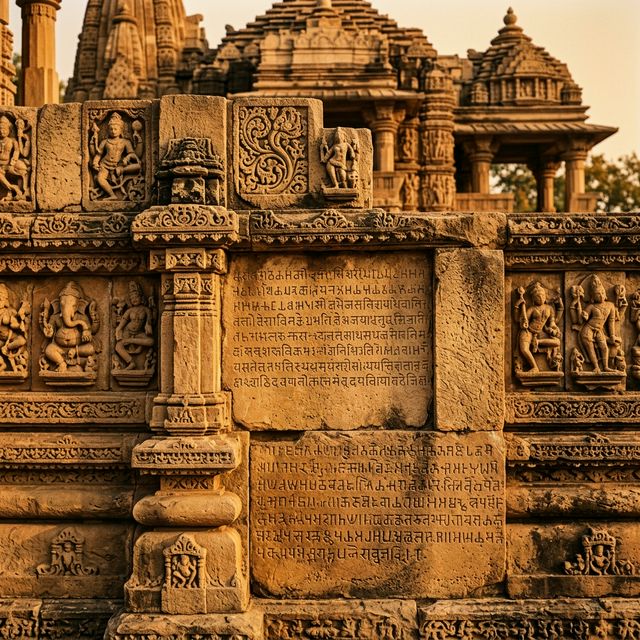
Discovered at Ranvad, Raigad district, this stone epigraph belongs to the reign of the Śilāhāra king Someśvara. The stone slab features the sun, moon, and a double kalaśa. The record employs Sanskrit and Marathi languages along with the Nāgarī script.
Dated to Śaka 1181 (1259 CE), the charter documents a royal land grant made by King Someśvara to two brāhmaṇa brothers, Dāmodarabhaṭṭa and Vāsudevabhaṭṭa. The ritual transfer, executed on Meṣa saṅkrānti, involved the offering of two coconuts and the traditional pouring of water over the recipients' hands. The endowment included three agricultural properties: a common field situated in Khaṇḍapalāsthāna within the village of Uran-Paḍivase, the entire yield derived from Deulekhaṇḍa and the field.
1. siddham | svasti | śrīḥ adyeha samastarājāvalīsamalaṅkṛtamahārājādhi-
2. rājakoṅkaṇacakravartiśrīmatsomeśvaradevarāyakalyāṇavijayarājye
3. tathaitatprasādāvāptasamastamaṇḍalacintā bhāraṃ samudvahati mahāmātyaśrī-
4. jhaṃpaḍaprabhu mahāsāndhivigrahī taijaprabhu śrīkaraṇī dādaprabhu ityādiśrī-
5. karaṇabhāṇḍāgāre satyetasmin kāle pravarttamāne sati śakasaṃvat 1181 si-
6. ddhārthasaṃvatsare caitra va di 15 samayīṃ śrīdāmodarabhaṭṭa tathā bhrātara vāsu-
7. devabhaṭṭa ne-ūna 2 nāriyale deṇeṃ nimitteṃ śrīrā-uleṃ dāmodarabhaṭṭāñciyā
8. uraṇeṃpaḍivaseṅgrāmapatibaddhakhaṇḍapalāsthānicā | bhāga 1 de-ulekhaṇḍa-
9. samagra hyā vṛttī 3 sarvecāṃ vṛtticī nimitteṃ sūryaparve hastodakapū-
10. rvaka dāmodarabhaṭāñce-āṃ bhā-u-āṃ pratī bhā-u-āṃ pratī saṅkrāntīṃ dīnha-
11. lī-ā | maṅgalaṃ mahāśrīḥ ||
Success! Hail! May there be prosperity! This day, here, during the beneficial and victorious reign of the mahārājādhirāja and Koṅkaṇa-cakravartī, the illustrious Someśvaradeva, who is adorned with all royal titles, while the government consisting of the mahāmātya, the illustrious Jhampaḍaprabhu, the mahāsāndhivigrahī, the illustrious Taijaparbhu, and the śrīkaraṇī, the illustrious Dādaprabhu is bearing the burden of the cares of the administration of the whole maṇḍala entrusted to it by his (i.e. the King’s) favour—at such a time—in the śaka year 1181, the cyclic year being Siddhārtha, on the 15th tithi of the dark fortnight of Caitra—on this occasion the King, having invited the illustrious Dāmodarabhaṭṭa and his brother Vāsudevabhaṭṭa, has, by offering them two coconuts, donated, by pouring water on their hands, to Dāmodarabhaṭṭa and his brother on the Saṇkrānti sacred to the sun, as common fields, one in the Khaṇḍapalāsthāna included in the village Uraṇa-Paḍivase and all the produce of the Deulekhaṇḍa, the fields thus being three
| Dynasty: | Śilāhāra |
| Ruler: | Someśvara |
| Date: | 25th March 1259 CE (Caitra kṛṣṇa 15, Śaka 1181) |
| Place: | Uraṇa-Paḍivase village, fields at Khaṇḍapalāsthāna and Deulekhaṇḍa |
| Donee: | Brāhmaṇas Dāmodarabhaṭṭa and Vāsudevabhaṭṭa |
| Language: | Sanskrit and Marathi |
| Nature of grant: | Land donation |
| Purpose: | Granted for religious purposes on Sūrya-saṅkrānti observance |
| Provenance of inscription: | Ranwad, Raigad, Maharashtra |
| Type of Inscription: | Stone Inscription, Gadhegal or Ass-curse Inscription |
| Source: |
Bibliography & Research
- Altekar, A. S. (1936). The Śilāhāras of Western India. In: Bhandakar (Ed.). Indian Culture, 2, pp 393-434, here pp 417-418.
- Ganguly. D. C. (2001) Chapter VII: The Yādavas of Devgiri. In Ramkrishnan, S. (Ed.) History and Culture of the Indian People: The Struggle for Empire (5th ed., Vol. V, p 192). Bharatiya Vidya Bhavan.
- Mirashi, V. V. (Ed.). (1977). Corpus Inscriptionum Indicarum, Vol. VI: Inscriptions of the Śilāhāras. Archaeological Survey of India, pp xx and 175-177.
- Tripathi, S. (2006, April). Ships on Hero Stones from the West Coast of India. International Journal of Nautical Archaeology, 35(1), 88-96.
- Sankalia, H. D., & Upadhyaya, S. C. (1935–1936). Six Śilāhāra inscriptions of the Prince of Wales Museum. Epigraphia Indica, 23, 269-281, here 278-281.
