
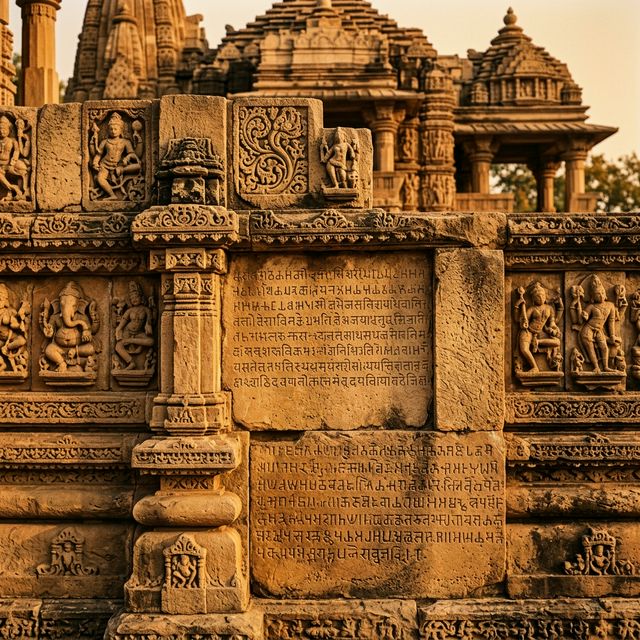
This inscription was discovered at Mahavali near Kurla and later moved to Parel. Belonging to the reign of the Śilāhāra sovereign Aparāditya II addressed as the “Great king of kings” (mahārājādhirāja) and the "Emperor of the Konkan" (koṅkaṇa-cakravartī). The record is composed in Sanskrit and Marathi languages, and engraved in the Nāgarī script. The stone slab features a maṅgala-kalaśa flanked by the sun and moon.
The king, having performed ritual ablutions on the full-moon day of Māgha in Śaka 1108 (1187 CE), granted twenty-four drammas from the revenue of an orchard in Māhavali to the deity Vaidyanātha of Darbhāvatī (modern Dabhoi, Gujarat). The orchard belongs to Anantapai, and the donation was made from its earmarked produce. The grant specifically exempts the property from subsidiary taxes and invokes the "spear of Vaidyanātha" against any who would obstruct the endowment. The record was drafted by the kāyastha scribe Cāliga Paṇḍita.
1. siddham || svasti | jayaścābhyudayaśca || śakasaṃvat 1108 parābhavasaṃva-
2. tsare || māghe māsi || adyeha samastarājāvalīvirājitamahā-
3. rājādhirājakoṅkaṇacakrarvartiśrīmadapādityadevakalyāṇa ||
4. vijayarājye tathaitatprasādāt samastarājyamaṇḍalacintābhāraṃ samu-
5. dvahati mahāmātyabhopāśrīvyomaśaṃbhu rājakule śrīkaraṇe bhāṇḍā-
6. gāre prathamasthepādī mahāsāndhivigrahika śrī-anantapai prabhu | dvitī-
7. yasthepādī śrī-amuka | ityādiśrīkaraṇe satyetasmin kāle prava-
8. rttamāne | mayā śrīmadaparādityadevena ātmanaḥ śreyorthinā sañjāta-
9. māghīparvvaṇi sutīrthe snātvā bhagavate kamalinīnāthāya arghyaṃ dattvā
10. bhagavantamumāpatimabhyarcya darbhavatīnāthaśrīvaidyanāthadevāya pañcopa-
11. cārapūjāsatkārārthaṃ ṣaṭṣaṣṭi pratibaddhamāhavaligrāmasyābhyantarava-
12. rtyanantapaiprabhusatkavāṭikāsiddhāyāt avāntarapravṛttādhika-
13. karasamastavimuktiṃ kṛtvā nimittasiddhāyāt caturviṃśatidrammāḥ
14. udakātisarggeṇa pradattāḥ | atrāṅkatopi dra 24 | tadetasyāḥ vā-
15. ṭikāyāḥ paripanthanā kenāpi na karaṇīyā || yaḥ kopi pā-
16. takabhāgī imaṃ dravyādilobhāt | nimittasiddhāyādadhikaṃ karaṃ
17. karoti sa pañcabhirapi pātakairupapātakaiśca parivṛto raura-
18. vamahārauravatāmisra andhatāmisra kuṃbhipākādinarakān cirama-
19. nubhaviṣyati | yataḥ svadattāṃ paradattāṃ vā yo hareta vasundharām | ṣaṣṭiṃ
20. vaṣasahasrāṇi viṣṭhāyāṃ jāyate kṛmiḥ || ārāmāṇāṃ saha-
21. sraiśca taḍāgānāṃ śatairapi | gavāṃ koṭipradānena bhūmipradānena
22. bhūmiharttā na śudhyati || atha ca jo koṇu huvi e śāsana lo-
23. pī teyā śrīvaidyanāthadevācī bhāla sakuṭuṃbi-āṃ paḍe || tehācī
24. māya gāḍhave jhavije ||cha|| likhitamidaṃ kāyasthānvayaprasūte-
25. na cāligapaṇḍitena ||
Line 1-13
Success! Hail! May there be victory and prosperity!
In the Śaka year 1108, in the month of Māgha, the cyclic year being Parābhava—this day here, during the beneficial and victorious reign of the mahārājādhirāja and Koṅkaṇa-cakravartī, the illustrious Aparādityadeva II, who is adorned with all royal titles, while the government consisting of the mahāmātya, the illustrious Bhopa Vyomaśaṃbhu, the senior treasury officer and mahāsāndhivigrahika, the illustrious Anantapaiprabhu, and the junior treasury officer, the illustrious Amuka, and others is, by his grace, bearing the burden of the cares of the whole administration,—at such a time—
I, the illustrious Aparādityadeva, desirous of my own spiritual welfare, having bathed on the full-moon tithi of Māgha, having offered arghya to the divine Sun, the lord of the lotus-plant, and having worshipped the divine lord of Umā (i.e. Śiva), have, for the worship with five offerings of the divine Vaidyanātha, the lord of Darbhāvatī, donated, with the pouring out of water, twenty-four drammas—in figures, 24 drammas—out of the ear-marked produce of the orchard belonging to Anantapaiprabhu, situated in the village, Mahāvali in clouded in the Ṣaṭṣaṣṭi viṣaya, after exempting it from all additional subsidiary taxes.
Line 14-20
So, none should cause any obstruction in this orchard. He, the sinful person, who, out of greed for wealth, levies additional taxes on the aforementioned ear-marked produce of the garden, will incur all the five sins together with minor sins, and will, for a long time, experience the miseries of the hells such as Raurava, Mahāraurava, Tāmisra, Andhatāmisra and Kumbhīpāka. For—
(Here follow two imprecatory verses.)
Line 22-25
Moreover, whoever will destroy this royal order, on him and his family will fall the spear of the god Vaidyanātha.
(Here follows the Ass-curse.)
This has been written by Cāliga Paṇḍita, born in a Kāyastha family.
Glossary
Arghya – A ritual offering (of water, flowers, etc.) made to a deity or honored guest.
Ārāma – Orchard or pleasure-garden; in this inscription, the source of revenue donated.
Cāṭas / Bhāṭas – Petty officials and soldiers whose entry into tax-free donated land is forbidden.
Darbhāvatī – Sacred locality mentioned as the site of the deity Vaidyanātha worshipped through this donation.
Dramma – A silver coin; in this grant, 24 drammas were donated from the orchard’s revenue.
Koṅkaṇa-cakravartin – Title of the Śilāhāra rulers, meaning “universal ruler of Koṅkaṇa.”
Mahāraurava, Raurava, Tāmisra, Andhatāmisra, Kumbhīpāka – Hell realms mentioned in the inscription as punishments for violators of the grant.
Mahāsāndhivigrahika – High administrative officer, usually in charge of foreign relations and treaties.
Pañcopacāra – Ritual worship using five traditional offerings: incense, lamp, flowers, food, and water.
Śāsana – Royal charter or grant.
Śrīkaraṇa – The royal secretariat; administrative office mentioned in the inscription.
Udakātisarga – The ritual act of pouring water to symbolise formal donation.
Vaidyanātha – Śiva, under the epithet “Lord of Physicians,” here worshipped at Darbhāvatī with the donation.
Viṣaya – An administrative division, roughly equivalent to a district.
| Dynasty: | Śilāhāra |
| Ruler: | Aparāditya II |
| Date: | 26th January 1187 CE (Māgha Pūrṇimā, cyclic year Parābhava, Śaka 1108) |
| Place: | Parel / Mahāvali |
| Language: | Sanskrit |
| Nature of grant: | Religious endowment |
| Purpose: | To fund five-offering worship of Śrī Vaidyanātha |
| Provenance of inscription: | Parel, Maharashtra |
| Type of Inscription: | Stone inscription |
| Source: |
