
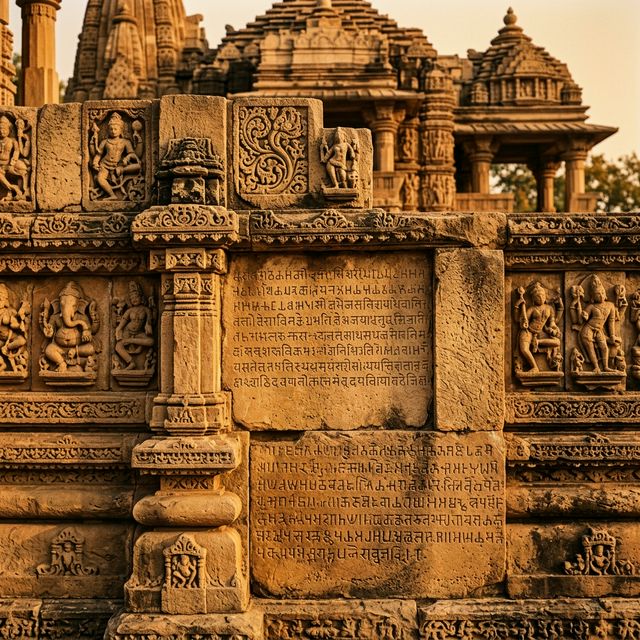
Discovered at Panhale (ancient Praṇālaka) in the Ratnagiri district, Maharashtra, this set of three copper plates documents a land grant executed by the Śilāhāra prince Vikramāditya during the reign of his father, Aparāditya I. The plates are held together by a ring featuring a distinctive royal seal, a seated Garuḍa with a human body facing forward. Engraved in Nāgarī characters, this Sanskrit inscription is dated to Śaka 1061 (1139 CE).
The inscription records the donation of the village Khairaḍī, situated in Panhale, to the brāhmaṇa scholar Rudrabhaṭṭopādhyāya. The donee, hailing from Varanasi, belonged to the Bhāradvāja gotra and Taittirīya śākhā. The grant was formally initiated by King Aparāditya I for the spiritual merit of his son Vikramāditya, following the ritual bath and worship of Śiva at Marut-kṣetra (modern Murud) during a lunar eclipse. Vikramāditya officially executed the donation for the spiritual welfare of his parents and himself. The grant transferred the village along with its areca-nut orchards, geographical assets, and rights to access the royal tax revenues.
First Plate
1. siddham | oṃ | labhate sarvvakāryeṣu pūjāyāṃ gaṇanāyakaḥ | vighnaṃ nighnan sa vaḥ pāyādapāyādgaṇanāyakaḥ || sa vaḥ pātu śivo nityaṃ yanmaulau bhāti jāhnavī |
2. sumeruśikharodgacchadacchacaṃdrakalopamā || jīmūtaketutanayo niyataṃ dayālurjīmūtavāhana iti trijagatprasiddhaḥ | dehaṃ nijaṃ tṛṇamivā-
3. kalayanparārthaṃ yo rakṣati sma garuḍātkhalu śaṅkhacūḍam || tasyānvaye nikhilabhūpatimolilagnaratnadyuticchuritanirmalapādapī-
4. ṭhaḥ | śrīsāhasāṅka iva sāhasikaḥ kapardī śīlāravaṃśatilako nṛpatirvabhūva || tasmādabhūcca tanayaḥ pulaśaktināmā sīmāsamaḥ sura-
5. gurūditarājanīteḥ | nirjitya saṅgaramukhekhilavairivarggaṃ niṣkaṇṭakaṃ jagati rājyamakāri yena || tataśca samabhūtsuto nṛpaśirovibhūṣāmaṇiḥ śitaḥ śṛṇi-
6. rivāparo.arikariṇāṃ kapardī laghuḥ | yadīyayaśasā jagatyatiśayena śuklīkṛte na bhāti suravāraṇo na ca śaśī na dugdhāmbudhiḥ || tasmādapya-
7. bhavadvibhūtipadavīpātraṃ pavintrīkṛtāśeṣakṣmāvalayo mahīpatilakaḥ śrīvappuvannaḥ sutaḥ | saṅgrāmāṅgaṇaragiṇā.asilatayā
8. lūnaikadantā haṭhātsarvve yena vināyakā viracitā vidveṣiṇāṃ dantinaḥ || tasmājjātastanūjo rajanikara ivānanditāśeṣalokaḥ ślā-
9. ghyaḥ śrījhañjharājo divasakara iva dhvastaniḥ śeṣadoṣaḥ | śaṃbhoryo dvādaśāpi vyaracayadacirātkīrttanāni svanāmnā sopānānī-
10. va manye praṇatatanubhṛtāṃ svarggamārggodyatānām || bhrātā tasya tatastvanūjjvalayaśorāśiḥ prakāśīkṛtāśeṣakṣmāvalayo balī valavatāṃ śrīgo-
11. ggi rājo.abhavat | cāpākarṣaṇakarmaṇi praguṇatāṃ tasmingate bhūpatau bhīṣmadroṇapṛthāsutaprabhṛtayaḥ sarvve camatkāritāḥ || tasmādvismayakāri-
12. hāricaritaprakhyātakīrttiḥ sutaḥ śrīmānvajjaḍadevabhūpatirabhūdbhacakracūḍāmaṇiḥ | dordaṇḍaikavalasya yasya sahasā saṅgrāmaraṅgāṅgaṇe rā-
13. jyaśrīḥ svayameva vakṣasi ratiṃ cakre.asurāreriva || jayanta iva vṛtrāreḥ purāreriva ṣaṇmukhaḥ | tataḥ śrīmānabhūtputraḥ satpratāpo.aparājitaḥ || ka-
14. rṇṇastyāgena yaḥ khyātaḥ satyena ca yudhiṣṭhiraḥ | pratāpāddīptimārttaṇḍaḥ kāladaḍaṃśca yo dviṣām || śaraṇāgatasāmantā aparepi hi jagati
15. rakṣitā yena | sa jayati yathārthanāmā śaraṇāgatavajrapañjaro devaḥ || śrīmānabhūttadanuvajjaḍadevanāmā bhūpālamastakamaṇistana-
16. yo nayajñaḥ | adyāpi yasya caritāni janāḥ samāstāromāñcakañcukitagātralatā stuvanti || tadbhrātātha tatorikesarinṛpo jātaḥ sa-
17. tāṃ sammato dṛptārātikulācalaikadalane daṃbholilīlāṃ dadhat | gatvā śaiśava eva sainyasahito dṛṣṭvā ca someśvaraṃ tasyāgre pitu-
18. rājñayā jagadalaṃ yaḥ kīlayitvāgataḥ || tadbhrātṛjo vajjaḍadevasūnuḥ śrīcchittarājo nṛpatirbabhūva | śīlāravaṃśaḥ śiśunāpi yena nītaḥ pa-
19. rāmunnatimunnatena || laṃvālakāni kucakuṃbhataṭopakaṇṭhaprabhraṣṭahāralatikāni nirañjanāni | utkhātatīkṣṇakaravālavidāritasya
20. yo.antaḥpurāṇi paripanthijanasya cakre || hatārinārīnetrāṃbhaḥ sekasaṃvarddhanādiva | brahmāṇḍamaṇḍapaṃ yasya kīrttivallyadhirohati || dṛptārāti-
21. ṣu kopakāladahanaḥ saubhāgyanārāyaṇo vārastrīṣu tato.anujaḥ samabhavannāgārjunaḥ kṣmāpatiḥ | yasyāmānuṣamūrjitaṃ bhujavalaṃ dūrānniśa-
22. mya dviṣāṃ nidrātīva raṇāṅgaṇavyasaninī dorḍaḍakaṇḍūlatā || tadanu tadanujanmā mūrttimānmīnakaituḥ kṣataripuvibhavo.abhūnmummu-
23. ṇiḥ kṣoṇipālaḥ | vidhṛtadhanuṣi yasminvājinīrājanānte valabhidapi valīyānvārṣikaṃ cāpamaujjhat || tasminnṛpe prava-
24. rakīrttiśarīrabhāji nāgārjunasya tanayo nayacakravarttī | bhūpo.abhavatparamadharmaviśuddhadehaḥ śīlāragotranṛparatnama-
25. nantapālaḥ || cintāmaṇau praṇayināṃ nayanābhirāme kāme kuraṅgakadṛśāṃ jagadekavīre | nirvairivairamavanīvalayaṃ vidhāya
Second Plate : First Side
26. dharmmeṇa pālayati tatra narendracandre || śrīnāgārjunarājasūnutanayo jitvā tato bhūtalaṃ sa śrīmānaparārkkadevanṛpa-
27. tiḥ pātuṃ samartho.abhavat | puṇyairullasitaṃ śriyā vikasitaṃ tejobhirujjṛbhitaṃ śauryeṇoditamutthitaṃ guṇagaṇai-
28. ryasminmahīṃ śāsati || śatrūnsaṃ harati śriyaṃ vitanute śauryaṃ samālaṃvate dhatte dhairyabharaṃ paraṃ raṇarasābhyāśe puro dhā-
29. vati | stokaṃ vā bahavo na vetti turagāruḍho dṛḍhaṃ prauḍhimānsāhāyyaṃ tadapekṣate na satataṃ kasyāpi tatrāntare || āsītkopyasu-
30. ro jagaddalayituṃ chuttuṅkanāmāṃdhakastattasyaiva samastameva militaṃ sāmantacakraṃ tataḥ | dhvaste dharmadhane gateṣu guruṣu kliṣṭe
31. viśiṣṭāśraye śīrṇṇa jīrṇṇapuraprajāparijane naṣṭe ca rāṣṭrodaye || ekaścaikaturaṅgamaśca bhujayordvaṃdvaṃ ca khaḍgaśca taṃ drākkṛṣṭvā kaṭhine raṇe
32. sarabhasaṃ tsaṃmukhaṃ dhāvitaḥ | no yuddhuṃ na palāyituṃ kimapi vā jñātaṃ ca tena sphuṭaṃ saṅgrāmaṃ parihṛtya yasya ca bhiyā mlecchāśraye saṃsthitaḥ ||
33. saṃtaḥ santi sukhena garjjati guṇigrāmaḥ pramāṇaṃ bhavatyetaddharmmavinirmitaṃ paricitātaṅkaṃ jagadvalgati | yena svenavalena hanta nihate ta-
34. sminripau tāḥ punarnandati priyaputravāndhavasuhṛtsaṃsarggasajjāḥ prajāḥ || soyaṃ puṇyamayaḥ samuddhṛtanayaḥ - - - -nayasyāśrayaḥ satpātrapratipa-
35. ttiramyasamayaḥ saṃbuddhaśuddhāśayaḥ | saṅgrāmāṅgaṇamadhyadurddhararayaḥ kāntākṛtapraśrayastadvaidagdhya vivekasāranicayaḥ sphurjjatpratāpoda-
36. yaḥ || yaḥ satyasya samāśrayaikabhavanaṃ yaṃ vīravṛttiḥ śritā dhairyaṃ yena dhṛtaṃ prajāḥ pratidinaṃ yasmai dadatyāśiṣaḥ | yasmātproddharatādvi-
37. lāsaviṣayastyāgaśca yasyorjito yatra śrīśca sarasvatī ca viśadā kīrttiśca lokottarā || tasyāpatyaṃ vikramādityadevaḥ satsva-
38. nyeṣvapyāpa rājyaṃ praṇāle | dugdhāṃbhodhe ratnajātepyathāsāveko jātaḥ kaustubhaḥ śrīsahāyaḥ || atha svakīyapuṇyoda-
39. yātsamadhigatapañcamahāśabda śrīvidyādharacakravarttitagarapuraparameśvara- śrīśilāhāranarendrajīmūtavāhanānvayaprasūta-
40. suvarṇṇagaruḍadhvajābhimānamahodadhityāga- jagajjhaṃpaparacakraprakaṃpajhaṃpaḍācāryarāyapitāmaha- paścimasamudrādhipa-
41. tiśaraṇāgatavajrapañjaretyādisamastarājāvalī- virājamānamahāmaṃḍaleśvarādhipatiśrīmadaparādityadeve rāja-
42. ti nijabhujopārjjitānekamaṇḍalasametapurīpramukhacaturdaśagrāma- śatīsamanvitasamastakoṅkaṇabhuvaṃ samanuśāsati
43. tathaitatprasādātsamastarājyacintābhāraṃ samudvahati mahāmātyaśrīkhetamaṭhakkure tathā praṇālakarājyabhāraṃ samudvaha-
44. ti mahāpradhānaśrīśaṅkaranāyake tathā mahāsāndhivigrahikaśrī……tathā śrīkaraṇabhāṃ ḍāgāre prathamacchepāṭīmahāpra-
45. dhānaśrīlakṣmaṇaiyaprabhau dvitīyacchepāṭīśrī . . . ityādi śrīkaraṇe satyetasminkāle pravartamāne sa ca mahāmaṃ-
46. ḍaleśvarādhipatiśrīmadaparādityadevarājaḥ sarvāneva svasaṃbadhyamānakānanyānapi samāgāmirājaputramantripuro-
47. hitāmātyapradhānāpradhānanaiyogikāṃstathā rāṣṭrapativiṣayapatinagarapatigrāmapatiniyuktāniyuktarājapu-
48. ruṣajanapadāṃstathā hañjamananagarapauratrivarggaprabhṛtīṃśca praṇatipūjāsatkārasamādeśaiḥ sandiśatyastu vaḥ saṃvidi-
49. taṃ yathā || calā vibhūtiḥ kṣaṇabhaṅgi yauvanaṃ kṛtāntadantāṃ taravartti jīvitam | tathāpyavajñā paralokasādhane nṛṇāmaho
50. vismayakāri ceṣṭitam || tathā coktaṃ bhagavatā vyāsena || samāgamāḥ sāpagamāḥ sarvamutpādi bhaṅguram | kāyaḥ saṃnihitā-
51. pāyaḥ | saṃpadaḥ padamāpadām || ucchvāsāvadhayaḥ prāṇāḥ | sa cocchvāsaḥ samīraṇaḥ | samīraṇāccalaṃ nāsti | yajjīvati
Second Plate : Second Side
52. tadadbhutam || dānaṃ vittādutaṃ vācaḥ kīrtidharmau tathāyuṣaḥ paropakaraṇaṃ kāyādasārātsāramuddharet || atidānaṃ
53. tu sarvveṣāṃ bhūmidānamihocyate | acalā hyakṣayā bhūmiḥ sarvvānkāmānprayacchati || bhūmidaḥ svarggamāruhya śāśvatīredha-
54. te samāḥ | punaśca janma saṃprāpya bhavedbhūmipatirdhruvam || yatkicitkurute pāpaṃ puruṣo vṛttikarśitaḥ | api gocarmamātre-
55. ṇa bhūmidānena śudhyati || āsphoṭayanti pitaraḥ pravalganti pitāmahāḥ | bhūmidosmatkule jātaḥ sosmānsantarayiṣya-
56. ti || tathā cāntarlīnajarārākṣasīprāravdhagrāsaṃ yauvanaṃ svarggavāsānnarakapātasamamiṣṭasamāgamaviyogaduḥkhaṃ kada-
57. līgarbhavadasāraḥ saṃsāraḥ sahajajarāmaraṇasādhāraṇaṃ śarīraṃ pavanacalitakamalinīdalagatajalalavataralata-
58. re dhanāyuṣī iti matvā dṛḍhataraviraktibuddhyā saṃgṛhṇīyāt dānaphalam | na tathā saphalā vidyā na tathā saphalaṃ tapaḥ |
59. yathātra munayaḥ prāhurdānamekaṃ kalau yuge || agnerapatyaṃ prathamaṃ suvarṇṇaṃ bhūrvaiṣṇavī sūryasutāśca gāvaḥ | lokāstraya-
60. stena bhavanti dattā yaḥ kāñcanaṃ gāṃ ca mahīṃ ca dadyāt || sarvveṣāmeva dānānāmekajanmānugaṃ phalam | hāṭakakṣitigau-
61. rīṇāṃ saptajanmānugaṃ phalam || iti dharmādharmavicāracaturacirantanamunivacanānyavadhārya sakalarājaguṇa-
62. gaṇālaṅkṛtasvatanayakumāraśrīvikramādityadevaśreyase mahāmaṇḍaleśvararādhipatiśrīmadaparādityadevena
63. śakanṛpakālātītasaṃvatsaraśateṣu daśasu ekaṣaṣṭyadhikeṣu yatrāṅkatopi śakasaṃvat 1061
64. siddhārthasaṃvatsarāntargatāśvayujaśuddhapañcadaśyāṃ some mahāsomaparvaṇi cūḍāmaṇau sarvagrahcūḍāmaṇisomahāparvaṇi marutkṣe-
65. trāntarvartini paścimasamudre snātvā somāya sugandhikusumaślāghyamarghyaṃ dattvā sakalabhuvanādhipatiṃ marudī-
66. śvaramumāpatiṃ kuṅkumacandanasurabhikusumairabhyarcya yajanayājanādiṣaṭkarmaniratāya kratukriyākāṃ-
67. ḍaśauṇḍāya parabrahmavide paramabrāhmaṇāya śrīmadvārāṇasīnivāsine gaṇgāvalokanāvagāhanapāna-
68. pavitrīkṛtaśarīramānasāya āṇgirasabārhaspatyabhāradvājagotrāya taittirīyakaśākhine śrīrudra-
69. bhaṭṭopādhyāyāya somayājikeśavadvivedibhaṭṭopādhyāyaputrāya vidyādhābhaṭṭopādhyāyapautrāya ṣa-
70. ṭkakarmakaraṇārthaṃ balicarukavaiśvadevāgnihotrakratukriyādinirmāṇāya upāgatābhyāgatāti-
71. thisaṃvāhanārthaṃ svaparivārapoṣaṇāya ca praṇālakaviṣayāntaḥ pātikhairaḍīgrāmaḥ pūgadrumā-
72. rāmasahitaḥ gṛhadrammadrudrametyādi samastarājabhogyasamanvito dāpitaḥ | śrīvikramādi-
73. tyadevena ca matimatā paramabhaktena mātāpitrorātmanaśca śreyase dattaḥ | ya-
Third Plate
74. sya cāghāṭanāni || pūrvataḥ karajāṇigrāmasīmā | tathā kelanadītīre kelavṛkṣo maryādā |
75. dakṣiṇataḥ tālasuragrāmasīmā | tathā nirjharanikaṭe kadaṃbavṛkṣo maryādā | paścimata-
76. ḥ | haḍavattharasīmāyāṃ nadī maryādā | uttarataḥ ucchupagrāmasīmā | tathā nadīke-
77. takīnikaṭe taḍāgaḥ maryādā | evaṃ caturāghāṭanopalakṣitaḥ sīmāparyataḥ
78. satṛṇakāṣṭhodakopetaḥ sadaṇḍaḥ samastotpattisaṃyuktaḥ | pūrvvadattadevadāyabrahmadāyavarjjitaḥ a-
79. cāṭabhaṭa praveśaḥ udakātisarggeṇa bhaktyā namasyavṛttyā śāsanena pratipāditaḥ || tadeteṣāṃ sānvayabaṃdhūnāṃ bhuñ-
80. jatāṃ bhojayatāṃ vā na kenāpi paripanthanā karaṇīyā || yata uktaṃ mahāmunibhiḥ || bahubhirvasudhā bhu-
81. ktā rājabhiḥ sagarādibhiḥ | yasya yasya yadā bhūmistasya tasya tadā phalam || sadyodānaṃ nirāyāsaṃ sā-
82. yāsaṃ dīrghapālanam | ata evarṣayaḥ prāhudānācchreyonupālanam || yānīha dattāni purā narendrairdānāni dharmā-
83. rthayaśaskarāṇi nirmālyavāntapratimāni tāni ko nāma sādhuḥ punaradadīta || dattvā bhūmi bhāvinaḥ pārthiven-
84. drān bhūyo bhūyo yācate rāmabhadraḥ | sāmānyoyaṃ dharmaseturnṛpāṇāṃ kāle kāle pālanīyo bhavadbhiḥ || iti dharmādharma-
85. vicāracaturacirantanamunivacanānyavadhārya sarvvairapi samāgāmibhirasmadvaṃśajairanyairvvā bhūpālaiḥ pālanadharma-
86. phalalobha eva karaṇīyaḥ | na punastallopanapāpakalaṅkāgresareṇa kenāpi bhavitavyam | yastvevamabhyarthitopi lo-
87. bhādajñānatimirapaṭalāvṛtamatirācchindyāyat | ācchidyamānamanumodeta vā sa pañcabhirapi pātakairupapātakaiśca
88. liptau rauravamahārauravāndhatāmisrā dinarakāṃściramanubhaviṣyati | yathovataṃ bhagavatā vyāsena | svadattāṃ
89. paradattāṃ vā yo hareta vasundharām | sa viṣṭhāyāṃ kṛmirbhūtvāṃ pitṛbhiḥ saha pacyate || vidhyāṭavīṣvatoyāsu śuṣkakoṭara-
90. vāsinaḥ | kṛṣṇasarppā hi jāyante bhūmidānaṃ haranti ye || yathā caitadevaṃ tathā śāsanadātā lekhakahastena sva-
91. matamāropayati tadyathā mataṃ mama mahāmaṇḍaleśvarādhipatiśrīmadvikramādityadevasya śrīmadaparāditya-
92. devasūnoryadatra śāsane likhitam || likhitaṃ caitanmayā rājaniyuktena sāndhivigrahikānumatyā
93. vipralakṣmīdharapaṇḍitena śrīnāgasvāmipaṇḍitasutena | yadatronākṣaramadhikākṣaraṃ vā tātsa-
94. rvva pramāṇamiti ||ḍha|| maṅgalaṃ mahāśrīrbhavatu ||ṭha||
Verse 1
May that Gaṇanāyaka (i.e. Gaṇapati) protect you from calamity—he who destroys obstacles and who, by means of worship, receives attention in all undertakings!
Verse 2
May that Śiva always protect you—he on whose head the Gaṅgā shines like the bright crescent of the moon as it rises over the peak of Sumeru!
Verse 3
Jīmūtavāhana, the ever compassionate son of Jīmūtaketu, is well-known in the three worlds—who, valuing his own body as not better than a straw, saved, indeed, Śaṇkhacūḍa from Garuḍa.
Verse 4
In his family was born king Kapardin I, the ornament of the Śīlāra race, who was adventurous like the illustrious Sāhasāṅka (i.e.Vikramāditya) and whose stainless foot-stool was covered with the splendour of fresh jewels on the heads of all kings.
Verse 5
From him sprang his son, Pulaśakti by name, who represented the limit of political wisdom taught by Bṛhaspati the preceptor of gods; who, having vanquished all enemies in the forefront of the battlefield, ruled over the world, free from trouble.
Verse 6
From him again sprang his son, the younger Kaparadin (i.e., Kapardin II), the crest-jewel of kings, who was as it were a sharp goad to the elephants in the form of his enemies; the world being exceedingly whitened by his fame, neither the heavenly elephant (Airāvata) nor the moon nor the milk-ocean could be distinguished.
Verse 7
From him again sprang his son, the illustrious Vappuvanna, the worthy abode of prosperity, an ornament of royalty, who sanctified the whole circle of the earth. Having one of their tusks forcibly cut off by the creeper-like sword of him who was delighted to fight on the field of battle, all the elephants of the enemies were turned into Vināyakas i.e. they become Gajānana, who has only one tusk.
Verse 8
From him sprang his praiseworthy son, the illustrious Jhañjha, who delighted all people even as the moon does, and who destroyed all blemishes even as the sun dispels all darkness; who erected twelve temples of Śiva, named after himself, which served, as it were, as steps to pious people, ready to repair to the path of heaven.
Verse 9
Then there rose his brother, the illustrious Goggirāja, who having a mass of brilliant fame, brightened the entire circle of the earth, and who mighty among the mighty; when that king bent down in the act of drawing the string of his bow, Bhīṣma, Droṇa, the son of Pṛthā (i.e. Arjuna) and others felt surprised in their minds.
Verse 10
From him sprang a son named the illustrious Vajjaḍadeva I, famed for his astounding and attractive deeds, the crest-jewel of the circle of the earth. Royal Fortune, approaching him, all of a sudden and of her own accord, on the battle-field, felt delighted while sporting on the bosom of him whose strength lay solely in his own arm, as it does on that of Murāri.
Verse 11
To him was born an illustrious and virtuous son named Aparājita as Jayanta was to Indra and as the six-faced Kārttikeya was to Śiva.
Verse 12
He was Karṇa himself in respect of liberality, Yudhiṣṭhira in that of truthfulness, the refulgent Sun in that of valour, and was the rod of the god of death to his enemies.
Verse 13
Victorious is that king, who protected even the feudatories of other kings when they sought refuge with him, and who rightly obtained the title of "the adamantine cage giving protection to those who seek it.”
Verse 14
From him was born the son named Vajjaḍadeva II, who was conversant with political wisdom and was a veritable crest-jewel of kings,—whose deeds all people even now praise, with their creeper-like bodies having clothes of horripilation.
Verse 15
Then there was born his brother, king Arikesarin, who had the grace of the thunderbolt in destroying the principal mountains in the form of arrogant foes; who, even when he was a boy, went with an army to Someśvara and having seen that god, came back after offering him the whole world by the order of his father.
Verse 16
Thereafter his brother’s son the illustrious Chittarāja became king, who, noble as he was, raised his Śīlāra family to great eminence, though he was then only in his boyhood.
Verse 17
He caused the ladies in the harems of his enemies slain by his sharp sword drawn out of its scabbard to have dangling unbraided hair, to discard necklaces from their pitcher-like breasts and to have eyes without collyrium applied to them.
Verse 18
The creeper of his fame rises above the bower of the Brāhmāṇḍa as if because it is made to grow with the sprinkling of water in the form of tears from the eyes of the wives of the enemies slain by him.
Verse 19
Thereafter, his younger brother Nāgārjuna became king—he who, resembling Nārāyaṇa in regard to the good fortune of courtesans, was, by his anger, the fire of destruction to his arrogant foes. Having heard from afar about the superhuman power of his arms, the itching of the strong arms of his enemies, fond of fighting on the battlefield, goes to sleep as it were.
Verse 20
Thereafter, his younger brother Mummuṇi, cupid incarnate, who destroyed the prosperity of the foes killed by him, became king. When he raised his bow at the end of the waving of lights before his horses at the commencement of his march for digvijaya, even the mighty Indra gave up his own bow (i.e. the rain-bow).
Verse 21
He—who drove out those violent and vile Yavana soldiers of Muna, who, having become powerful, had devastated this Koṅkaṇa country, harassing gods and Brāhmaṇas, by means the torrents of water in the form of the sharp edge of his sword, when there was trouble in the kingdom owing to hostile kinsmen—inscribed his fame on the disc of the moon, as he helped the head of his family.
Verse 22
While the moon-like chief among kings in righteously governing the earth, having freed it from hostile warriors, he who is like the wish-fulfilling jewel to suppliants, a veritable lovely god of love to deer-eyed women and a unique warrior in the world.
Verse 23
Thereafter, the illustrious king, Aparājita by name, the son’s son of the illustrious Nāgārjuna, having conquered the world, became capable of protecting it. While he is ruling over the earth, religious merit is shining, fortune is blooming, majestic lustre is expanding, valour is rising, and good qualities are being highly valued—
Verse 24
He exterminates the enemies, augments his royal fortune, resorts to valour, assumes extraordinary courage and rushes to the forefront in martial spirit. Very bold as he is, he, when mounted on his horse, does not care whether the enemies are few or many, and does not expect anybody's assistance in the course of fighting.
Verse 25
There was a demon, the destroyer Chittukka, who was born to devastate the world. All the feudatories gathered around him. When the wealth of religious merit was destroyed, the elders perished, refugees were harassed, all townsmen and their servants were ruined, and all prosperity of the kingdom came to an end—
Verse 26
He (Aparāditya), seeing that situation, rushed suddenly to the fierce battle single-handed, with only one horse which he rode, his arms and his sword to help him. The enemy did not know whether to fight or to run away. Ultimately, being afraid of him, he sought refuge with the Mlecchas.
Verse 27
Now, when the enemy has been exterminated by him by his might, good people are living happily, the meritorious are hilarious, the laws laid down by him have become authoritative, the whole world, which had experienced anguish, is dancing for joy, and the subjects are delighted in the company of their sons, relatives and friends.
Verse 28
Here is that king who has amassed religious merit, who has raised the revel of diplomacy, who has recourse to justice in governing the kingdom, who spends his time splendidly in bestowing gifts on worthy recipients, who has an intelligent and pure mind, whose vehemence is irresistible on the battle-field, who treats ladies courteously, who has cleverness and discrimination in plenty, and whose rising prowess is spreading all round;
Verse 29
Who is the sole resort of truthfulness, whom heroic spirit clings to, who is very courageous, and to whom people give their blessings every day; who takes delight in all pleasures; whose liberality is noble; and in whom dwell together the goddesses of Fortune and Learning and also extraordinary bright Glory.
Verse 30
His offspring, Vikramādityadeva obtained the kingdom of Praṇāla, though there were other sons of his father, became the companion of Śrī (the goddess of fortune), when she was churned out of the ocean.
Line 38
Now, while the mahāmaṇḍaleśvarādhipati, the illustrious Aparādityadeva- who, by his religious merit, has obtained the five mahāśabdas and who is adorned with all royal titles such as ‘the emperor of the Vidyādhara race’, ‘the lord of the town of Tagara’ ‘a king of the Śilāhāra family’, ‘a scion of the race of Jīmūtavāhana’, ‘he who has an ensign of the golden garuḍa’, ‘he who is an ocean of pride’, ‘he who has surpassed the world in liberality’, ‘he who is foremost among heroes’, ‘he who causes the hostile army to tremble’, ‘he who is the god Brahmā among kings’, ‘the lord of the Western Ocean’, ‘an adamantine cage for such as seek refuge with him’ and so forth—is shining and ruling over the entire Koṅkaṇa country consisting of fourteen hundred villages headed by Purī, and while the mahāmātya, the illustrious Kheṭama Ṭhakkura is bearing the burden of the cares of the whole administration made over by his grace and while the mahāpradhāna the illustrious Śaṇkara Nāyaka is bearing the burden of the administration of the country of Praṇālaka, and while the government is managed by the sāndhivigrahika, the illustrious…, the senior government treasury officer, the mahāpradhāna, the illustrious Lakṣmaṇaiyaprabhu, and the junior government treasury officer, the illustrious…, at such a time the mahāmaṇḍaleśvarādhipati, the illustrious King Aparādityadeva I addresses, with salutation, honour, respect and command, all assembled princes, counsellors, the family priest, the amātyas, the principal and subordinate officers as well as the heads of rāṣṭras, viṣayas, towns and villages, royal servants, whether formally appointed or not, and villagers as follows :-
Be it known to you-
Verse 31
Prosperity is unstable, youth is momentary, and life lies in the jaws of death. And still, people are indifferent to the acquisition of the other world. Oh! How astonishing is this action of theirs!
And it has been said by the holy Vyāsa-
Verse 32
Unions are followed by separations. All that is produced is transitory. The body is subject to death, and prosperity is attended by adversity.
Verse 33
Life continues only so long as breathing continues, and that breathing consists of air. Nothing is more agile than air. So it is a wonder that man lives!
Verse 34
One should extract substance from what is worthless, viz. gifts from wealth, truth from speech, fame and religious merit from life, and benevolence to others from the body.
Verse 35
A gift of land is said to be the best gift; for land, being firm and indestructible, fulfils all desires.
Verse 36
A giver of land. Having gone up to heaven, prospers for ever. And being born again, he will surely become a king!
Verse 37
Whatever sin a man distressed for his livelihood may commit, he will be absolved of it by a gift of land equal in measurement to a cow’s hide.
Verse 38
The manes cry out and the grandfathers leap about saying, “There has been born in our family a giver of land. He will save us!”
Line 56
Having realized that youth is being devoured by the demoness in the form of dld age, that pangs of separation after union with one’s dear ones are like those caused by falling into a hell after dwelling in heaven, that worldly existence is as insubstantial as the interior of a plantain tree, that the body is subject to old age and death natural in this world, and that wealth and life are extremely fickle like drops of water on a lotus leaf tossed by wind, one should accumulate the rewards of religious gifts by very firm non-attachment.
(Here occur three verses about the importance of a gift of land.)
Line 61
Having pondered over such sayings of ancient sages which are delightful owing to their distinguishing between what is righteous and what is not, the mahāmaṇḍaleśvarādhipati, the illustrious Aparādityadeva, having bathed in the Western Ocean at the holy place of Marut on the occasion of an eclipse of the moon, the crest-jewel of all planets, on Monday, the fifteenth tithi of the bright fortnight of Āśvayuja (Āśvina) in the cyclic year Siddhārtha in the year on thousand increased by sixty by the era of the śaka King—in figures, the śaka year 1071— and having made an offering delightful with fragrant flowers of the Moon, and having worshipped the god Marud-Īśvara, the lord of all worlds, with saffron powder, sandal paste and fragrant flowers—has, for the spiritual well-being of his son, the illustrious prince Vikramāditya, caused to be given the village Khairaḍī comprised in the viṣaya of Praṇālaka together with orchards of areca-nut trees and together with all royal priviledges such as the dramma cess on houses and trees included in it to the learned Brāhmaṇa, the illustrious Rudrabhaṭṭopādhyāya, son of Keśava Dvivedi Bhaṭṭopādhyāya, who had performed a Soma sacrifice, and grandson, of Vidyādharabhaṭṭopādhyāya, who belongs to the Bhāradvāja gotra with the pravaras Āṇgirasa, Bārhaspatya and Bhāradvāja, and to the Taittirīya śākhā, who is always engaged in the performance of the six religious duties of sacrificing for oneself and for others, and so forth; who has acquired knowledge of the higher Brahman, who lives at the holy town of Vārāṇasī and has his body sanctified by seeing, bathing in and drinking the water of the Gaṅgā, for the purpose of the observance of the six religious duties, for the performance of bali, caru, vaiśvadeva, agnihotra and so forth, for the reception of guests that may come, and for the maintenance of his family and it has been donated by the wise and illustrious Vikramāditya, who is very devoted to his parents for the spiritual welfare of his parents and himself.
The boundaries of the donated village are as follows:- On the east, the boundary of the village Karajāṇi and also that indicated by the Kela tree on the bank of the Kela river; on the south, the boundary of the village Tālasura and the Kadamba tree a stream which will serve as the boundary, on the west, the boundary of the river near the boundary-line of the village Haḍavatthara; on the north, the boundary of the village Ucchupa and also the tank near the river Ketakī—The village with these four boundaries extending to its limit, together with grass, wood and water, together with the proceeds of the fines, together with all produce thereof, but exclusive of the gifts previously made to gods and Brāhmaṇas, which in not to be entered by the cāṭas and bhaṭas, has been donated by a charter with devotion as gift free from taxes.
So, none should cause any obstacle while he, with the relatives of the family, is enjoying it or allowing others to enjoy it. Since it has been said by great sages:-
(Here occur four verses about the importance of preserving gifts.)
Line 84
Having thought over these sayings of ancient sages clever in discriminating between what is righteous and what is not, all future rulers whether of our family or others, should aspire only for acquiring the reward of religious merit for the protection of this gift, and none should be notorious in incurring the disgrace of sin consequent on its confiscation. He who, though thus entreated, with his mind clouded by the mass of the darkness of ignorance, confiscates it or allows it to be confiscated through greed, will incur all the five major sins as well as minor sins and will experience pangs in the Raurava, Mahāraurava and Andhatāmisra hells. As it has been said by the holy Vyāsa:-
(Here occur two imprecatory verses.)
Line 90
As it is, the giver of the charter records his approval by the hand of the scribe as follows :- “What is written in this charter has been approved by Me, the mahāmaṇḍaleśvara, the illustrious Vikramādityadeva.”
And this has been written by me, who have been appointed by the King, viz. the Brāhmaṇa Lakṣmīdhara Paṇḍita, son of the illustrious Paṇḍita Nāgasvāmin, with the consent of the Sāndhivigrahika. Whatever is written here—in deficient or redundant letters—all that is authoritative. May there be happiness and great prosperity!
| Dynasty: | Śilāhāra |
| Ruler: | Vikramāditya |
| Date: | 9th October 1139 (Āśvina śuddha 15, Śaka 1061) |
| Donee: | Brāhmaṇa Rudrabhaṭṭopādhyāya |
| Language: | Sanskrit |
| Nature of grant: | Land donation |
| Purpose: | To support the six Vedic duties, receiving guests, and maintaining the donee’s household |
| Provenance of inscription: | Panhale, Ratnagiri, Maharashtra |
| Type of Inscription: | Copperplate grant |
| Source: |
