
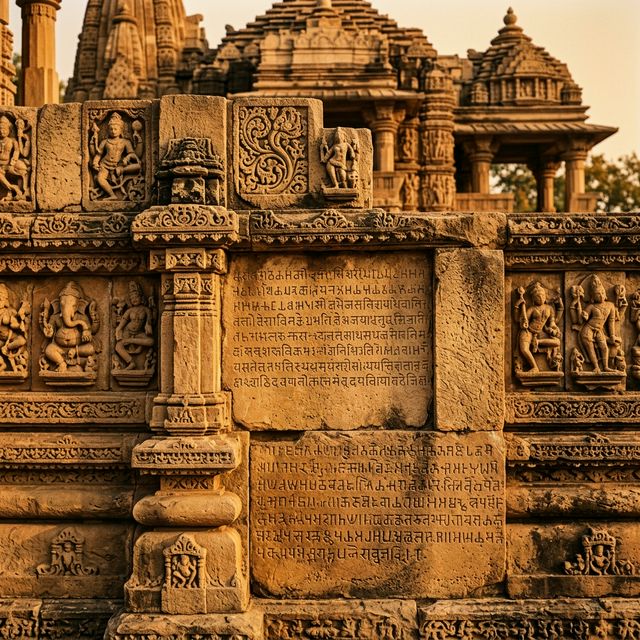
Originally discovered in Nandui, Thane district, Maharashtra, it is currently housed in the Chhatrapati Shivaji Maharaj Vastu Sangrahalaya (formerly Prince of Wales Museum). This trap-slab stone inscription documents a religious endowment by the North Konkan Śilāhāra king Aparāditya II. Composed in Sanskrit prose using Nāgarī characters, the record is dated to Thursday, 6th November, 1197 CE. The stone is topped with symbolic sculptures of the sun, moon, and a seated ascetic, while the base features the customary "ass-curse" to protect the grant from violation.
The record mentions the donation of the village of Sātulī (modern Sativali) to a priest named Vedāṅgaraśika on the 10th tithi of the dark fortnight of Kārttika, Tuesday, Śaka 1113. The grant, made with the ritual pouring of water, transferred full rights to the village's resources, including grass, wood, and water, to the ascetic. The charter was issued under the authority of bureaucracy, specifically mentioning a prime minister, a chief of Secretariat, and four distinct treasury officers. The recipient was associated with the shrine of Someśvara and belonged to the Pāśupata sect of Śaivism.
 Editor's Comment:
1. siddham | svasti | jayaścābhyudayaśca | śakanṛpakālātītasaṃvatsareṣu navatyadhike-
2. ṣvekādaśaśateṣu yatrāṅkatopi śakasaṃvat 1119 pravarttamāneṣu kārttika vadi 10 gurau
3. asyāṃ saṃvatsaramāsapakṣadivasapūrvvāyāṃ tithau adyeha samadhigatapañcamahāśadamahā-
4. sāmantādhipatitagarapuraparameśvara śrīselahāranarendrajīmūtavāhanānvaya prasūtasuvarṇṇagaruḍa-
5. dhvajābhimānamahodadhityāgajagajjhañpajhañpaḍācāryaniḥśaṅkalaṅkeśvara …mahājibhūmimārtaṃ-
6. ḍa ……… paścimasamudrādhipatiśaraṇāgatavajjrapañjaretyādisama-
7. starājāvalivirājitamahārajādhirājakoṅkaṇacakravartti śrīmadaparādityadevakalyāṇa-
8. vijayarājye | tathaitatprasādāvāptasamastarājamaṇḍalacitābhāraṃ samudvahati | mahāmātyaśrī-
9. amuka nāyakaśrīkaraṇasāhāmalla prathamachepāṭī dvitīyachepāṭī tṛtīya-
10. chepāṭī caturthachepāṭī ityādiśrīkaraṇe satyetasmin kāle pravarttamāne sātu-
11. līgrāmaśāsanaṃ samabhilikhyate yathā śrījoghunāyakaprabhu brāmānāyaka śrī-
12. …………nāyaka ……… satṛṇakāṣṭhodakopetaṃ pūrvadattadevadā-
13. yavivarjitaṃ kṣetraṃ ……… śrīsomeśvaradevapādābhiyājakaśrīvedāṅgarāśikā-
14. ya udakātisargeṇa pradattam | bahubhirvvasudhā bhuvatā rājabhiḥ sagarādibhiḥ | yasya ya-
15. sya yadā bhūmistasya tasya tadā phalam || lupyati lopāyati vā | tasya mātaraṃ garddabho
16. ja ………… | yadatra ūnākṣaramadhikākṣaraṃ vā tatsarvaṃ pramāṇamiti | maṅgalaṃ mahāśrīḥ || cha cha ||
Line 1-3
Success! Hail! May there be victory and prosperity!
In the years eleven hundred increased by nineteen which have passed by the era of the śaka king—in figures, the Śaka year 1119—on Thursday, the 10th tithi of the dark fortnight of Kārttika—on this tithi of the year, month, fortnight, and week-day as stated before, today, here—
Line 3-10
During the beneficial and victorious reign of the mahārājādhirāja, Koṅkaṇa-cakravartī, illustrious Aparāditya II, who is adorned with all royal titles such as ‘he who has acquired the right to the five mahāśabdas,’ the mahāsāmantādhipati, ‘the lord of the city of Tagara,’ ‘the illustrious Śilāhāra King,’ ‘he who is born in the race of Jīmūtavāhana,’ ‘he who has the Golden Eagle as his ensign,’ ‘he who is the great ocean of pride,’ the jhampaḍācārya, ‘he who has surpassed the whole world by his charity,’ ‘the undaunted Lord of Laṅkā, ‘the Sun on the great battle-field’ …… ‘the Lord of the Western Ocean,’ ‘the adamantine cage for those who seek his protection’ and so forth—and while his mahāmātya, the illustrious Amukanāyaka, the illustrious Sāhāmalla of the Secretariat, the First Chepāṭī, the Second Chepāṭī, the Third Chepāṭī and the Fourth Chepāṭī are bearing the burden of the cares of administering the whole kingdom obtained by his grace-
Line 10-14
The royal charter is being recorded in respect of the village Sātuli as follows –
The aforementioned village, inclusive of its grass, wood and water, but exclusive of the previously made grants to gods, has been donated with the pouring out of water to the holy Vedāṅgarāśika, the priest of the feet of the god Someśvara, in the presence of the illustrious Joghunāyaka, Brāmānāyaka, ………nāyaka…………
(Here follow a benedictory verse and then the usual ass-curse in respect of those who would violate the grant or would cause it to be violated.)
Line 16
Whatever is recorded here in deficient or redundant letters—all that is authoritative.
May there be happiness and great prosperity!
| Dynasty: | Śilāhāra |
| Ruler: | Aparāditya II |
| Date: | 6th November 1197 CE (Kārttika kṛṣṇa 10, Thursday, Śaka 1119) |
| Place: | Chhatrapati Shivaji Maharaj Museum, Mumbai |
| Donee: | Vedāṅgarāśika, priest of Someśvara |
| Language: | Sanskrit |
| Nature of grant: | Land donation |
| Purpose: | To record the gift of village Sātuli to Pāśupata ascetic |
| Provenance of inscription: | Nandui, later shifted |
| Type of Inscription: | Stone inscription, Gadhegal or Ass curse Inscription |
| Source: |
Bibliography & Research
- Altekar, A. S. (1936). The Śilāhāras of Western India. In: Bhandakar (Ed.). Indian Culture, 2, pp 393-434, here pp 416.
- Konow, S. (1916). Talegaon Plates of Krishna Raja I Saka 690. Epigraphia Indica, XIII, 275-282, here p 277.
- Mirashi, V. V. (Ed.). (1977). Corpus Inscriptionum Indicarum, Vol. VI: Inscriptions of the Śilāhāras. Archaeological Survey of India, pp xix-xx and 156-158.
