
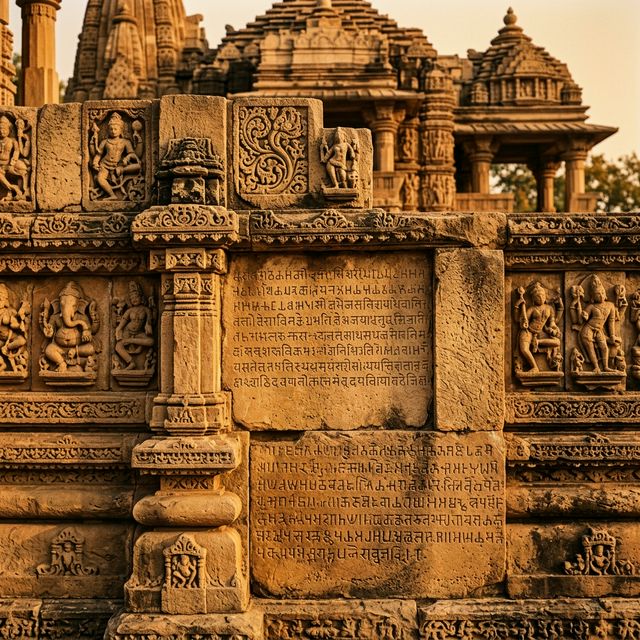
Discovered as a slab built into the gateway of the Miraj Fort, Sangli district, Maharashtra, this Old-Kannada script and language record topped with a triangular pediment featuring a liṅga, a squatting Nandi, and the sun and moon. The inscription is now preserved in the Town Hall of Kolhāpur.
The record refers to the reign of mahāmaṇḍaleśvara Vijayāditya, governing from his permanent capital at Vaḷavāḍa. It mentions two separate dates and records two distinct sets of donations to the Mādhaveśvara temple at Seḍambāḷ (modern Shedbal). The first donation from perpetual dues of their trade turnover to the god Mādhaveśvara was made by Vīra-Baṇañja trading corporation in Śaka 1065 (1142 CE). The grant was inclusive of the contributions from the town's craft guilds, who provided both cash and specialised products to ensure the temple's daily service and the celebration of major festivals like Caitra and Dīpāvali.
The secondary donation, recorded in Śaka 1066 (1144 CE), was an endowment issued by the high-ranking officers of King Vijayāditya, Bhāyipayya nāyaka, and Mallapayya nāyaka. The grant involved the diversion of government revenues and trade taxes from Miraj to support the Mādhaveśvara temple and provide food for the resident ascetics. The endowment was ritualised through the washing of the feet (pādapūjā) of the temple priest, Sovarāśi Siddhāntideva belonging to the Pāśupata sect.
 Editor's Comment:
1. siddham | svasti | samastabhuvanavikhyātapañcaśatavīraśāsanalabdhānekagaṇā-
2. laṅkṛta satyaśaucācāracārucaritranayavinayavijñāna vīrabaṇañjadharmmapra-
3. tipālanaviśuddha guḍḍadhvajavirājitānūnasāhasettuṅga kīrtyaganāligita nija-
4. bhujavijayalakṣmīnivāsavakṣaḥsthala bhuvanaparākramonnata vāsudevakha-
5. ṇḍaḷīmūḷabhadravaṃśodbhavaruṃ dvātriṃśadveḷāvuramumaṣṭādaśapaṭṭaṇamummaru-
6. vattanālku ghaṭikāsthānamuṃ nānādeśābhyantaradeṇṭu nāḍa padinaruvaru gava-
7. regaruṃ gātrigaruṃ seṭṭiyaruṃ seṭṭiguttaruṃ baccaruṃ baḷegāraruṃ gandhigaruṃ gāvuṇḍaruṃ gāvuṇḍa-
8. svāmigaḷuṃmarasugaluṃmarasumavakaḷuṃ maṅkaruṃ maṅkamare varuṃ birudaruṃ bīravaṇigaruṃ bārikaruṃ bā-
9. rikajanahastaruṃ sāsiradeḷnūru gavaregaḷuṃmahicchatravinirggataruṃmayyābaḷepurapara-
10. meśvararuṃ śrībhagavatīdevīlabdhavaraprasādādyanekanāmāṅkamāḷāvirājitarumappa
11. śrīmadaynūrvvarsvāmigaluṃ samastabhatluṅkdiṇḍahastaruṃ mummuridaṇḍamuṃ mu-
12. khyavāgiyeḷvattercchāsirada prabhu pṛthviseṭṭi miriñjeya boppaṇayyarājaśreṣṭhi ma-
13. hāvaḍḍavyavahāri vesapayyaseṭṭiyaruṃ samayasamuddharaṇa sovaṇaseṭṭi-
14. yaruṃ bāgeya mūliga civakacavuṇḍaseṭṭiyuṃ doṇikoḍa mammuridaṇḍa da……….
15. vaseṭṭiyuṃ jayasiṅgada toḷakaleya siriyamaseṭṭiyuṃ nāḍa perggaḍe hemmaseṭṭiyuṃ
16. kūṇḍiliya seṭṭigutta mallaseṭṭiyuṃ kuvara lavakaseṭṭiyuṃ nigaḷada ketiseṭṭiyuṃ seḍaṃ-
17. bāḷa bondalabbeya sūraseṭṭiyuṃ āketaseṭṭiyuṃ cavuḍaseṭṭi alliya kauppaseṭṭi……
18. ya hollaseṭṭi piriyuguvārada taḷa siriguppeya taḷa juguḷakoppada taḷa ….
19. geya taḷa yintu samastataḷamukhyavāgi seḍaṃbāḷalu mahānāḍāgi neradu śaka-
20. varṣa 1065 neya dundubhisaṃvatsarada bhādrapadaśuddha 6 śukravāradandu seḍaṃbāla
21. mahāprabhu mādirājayyaṃ māḍisida śrīmādhaveśvaradevaraṅgabhogakke āyūra-
22. lu śukravārada santeyaṃ māḍi viṭṭāyamentendoḍe mārida aḍakeya java-
23. ḷakkaḍakeyirppattu hasuṃbegaḍake hanneraḍu katteya herigirppattaydu ko……
24. ettina javaḷamaṃ biricidalliyaḍakeyayvattu mārugoṇḍavaralli hoṅgeyaḍakeyi-
25. ppattu heriṅge ele nūraivattu eṇṇeya koḍavake solasaveraḍu tuppada koḍavake soḷasa-
26. veraḍu bhaṇḍigoḍakke eṇṇe mānavondu dhānyavarggavake koṇana heriṅge mānavāru
27. ettina heriṅge baḷḷavondu katteya herige mānaveraḍu hasaravake mānavondalu
28. saṭṭugavondu voṭṭiliṅge koḷagavondu hattiya hasaradalli devara soḍariṅge batti-
29. ge saṇḍagevatti vondu | seṭṭiguttaṃ tanna biṭṭāyamentendoḍe hasuṃbeyanivaku-
30. vallī haseya javaḷi gandharabaṭṭalu ondu goṇṭu vicāraṅgeydavaralli mudrāpaṇaṃ hoṅ-
31. ge hāgamarana bhaṇḍi māridalli meludakkondu bhaṇḍiyalu mārida dhānyavarggakke ko-
32. ḷagavondu | cayitrada parvvakke puravarggada prajegaḷu mithunakke biṭṭa hāga-
33. voṃdu dīpāvaḷiya parvvadalu beḷaguva soḍareṇṇege ūroḷagaṇa seṇigaru
34. tamma manegaḷige maneyalondu hāgavondu biṭṭa hāgavondu kuṃvārara hasara-
35. kke maḍake vondu akkasāle vammojahaḷḷadiṃ mūḍa hoṅge haṇavina pārikhā-
36. yadoḷage devargge viṭṭa aḍuvondu saṃmmagāraralli arudiṅgaḷige kuḍuva pāda-
37. rakṣe toḍondu medaralli santege kuḍuva moranu vondu mādegaralli arudiṅgaliṃ –
38. ge kuḍuva mili vondu | yintī śāsanamaryyādeyaṃ kiḍisidātaṃ gaṅgeprayāgevā-
39. raṇāśikurukṣetradalu sāyira kapileyaṃ konda mahāpātakamaneydu-
40. va ādityatīrtthagaḷalli tanna piriya maganaṃ kondu avana kapāladaluṇḍa ma-
41. hādoṣamaneyduva || svasti śrīmanmahāmaṇḍaleśvaraṃ
42. vijayādityadevarasaru balavāḍada nelebīḍinalu sukhasaṅkathāvi-
43. nodadiṃ rājyaṃ geyvuttamiralu tatpādapadmopajīvigaḷappa mahāpradhā-
44. naṃ suṅkaverggaḍe bhāyipayyanāyakaru miriñjenāḍa kreṇikāraṃ mā-
45. ḷapayyanāyakarantirvvaru seḍamvāla prabhu sāmantaṃ mādirājayyaṃ
46. gaḷu māḍisida śrīmādhaveśvaradevaraṅgabhogakkalliya tapodhanarāhāradānakkaṃ śakava-
47. rṣa 1066 neya rudhirodvārisaṃvatsarada māghabahula 14 vaḍḍavāradandu śivarātri-
48. ya parvvanimittavāgiyā devara maṭhadācāryya śrīmatusovarāśisiddhāntidevara kā-
49. laṃ karcci dhārāpūrvvakaṃ māḍi koṭṭa suṅkamentendoḍā seḍaṃvāla mundaṇa haḷḷadiṃ mūḍa pura-
50. varggavoḷagāgi kaṭṭidaṅgaḍigaḷgaṃ telligaru pasarigaru bhattahaṭṭigaṃ vokkaludere pa-
51. rihāra mattaṃ santeya boḷagaṇa koḍadaṇṇeyeleya herugaḷa pomma kiru-
52. kuḷa dhānyavarggagaḷa moṭṭeya suṅkavolagāgi arddhādāna alli antaravaṭṭadiṃ tīvi-
53. da ettina aḍakeya heriṅge melaḍake nūrayvattu āṭhāṇānta-
54. radalu naḍava suṅkigaru sauvarṇṇakke tiṅgaliṅge vondu beleyaṃ kuḍuvarīntī
55. dharmmamaṃ sadharmmadi pratipāḷisidargge gaṅgevāraṇāsikurukṣetradalu sā-
56. sira kavileya koḍuṃ kolagumaṃ ponnalu kaṭṭisi sāsirvva brāhmaṇa-
57. rige koṭṭa phalamakku mattamidanaḷidaṅge gaṅgāyamunegaleraḍara
58. saṅgamadoḷagaṇṇyapuṇṇyavaratīrthasthānaṅgaḷoḷiḷda tapodhanara gobrāhma-
59. ṇaranalidanintidanalida ||
Line 1-18
Success! Hail! Pṛthvīseṭṭi, the Chief of the Seventy-thousand country; Boppaṇayya of Miriñje; the royal merchant; the great trader Vesapayyaseṭṭi; Sovaṇaseṭṭi, the restorer of the conventional usages; Cikka Cavuṇḍasetti, the Mūliga of Bāge; Da……vaseṭṭi of Doṇikoḍa, who bears the Mummuri-staff; Jayasiṅga Siriyamaseṭṭi of Tolakale; Hemseṭṭi, the chief of the province; Mallaseṭṭi, the chief of the Seṭṭis of Kuṇḍili; Kuvara Lakkaseṭṭi; Nigalada Ketiseṭṭi; Sūraseṭṭi, Āketaseṭṭi and Chavuṇdaseṭṭi, sons of Bondalabbe of Seḍambāl; Koppaseṭṭi of the same place and Hollaseṭṭi of ……………… who are the foremost among the Five-hundred Svāmīs, all the bearers of the Bhalluṅki-staffs and all the bearers of the Mummuri-staffs, who are resplendent with a series of numerous titles such as ‘adorned with numerous virtues obtained by their observance of the edicts of the Five-hundred Heroes famous in the whole world, who are virtuous by truthfulness, pure conduct, pleasing behaviour, policy, courtesy and knowledge as well as by their observance of the Vīra-Baṇañja Code, resplendent with their banner with the device of a hill, exalted with abundant adventurous spirit, embraced by the lady Fame, whose breast is resorted to by the Goddess of Victory obtained by their own arms, who have become eminent in the whole world by their valour, who are born in the race of Vāsudeva, Khaṇḍalī and Mūlabhadra, who are residents of thirty-two coastal towns, eighteen cities and sixty-four ghaṭikā-sthānas, the sixteen Gavaregas, the Gātrigas, the Seṭṭis the Seṭṭi-guttas, the baccas, the bangle-sellers, the scent-merchants, the heads of districts and the chiefs among them, ‘the kings,’ ‘the princes,’ the maṅkas, the maṅka-marevas, the title-holders, the heroic merchants, the Bārikas and the fellows of the Bārikas, the thousand and seven hundred Gavares—all these belonging to the eight provinces included in the various countries—who hail from Abhicchatra and who are lords of the town of Ayyāvale, and who have obtained the gracious boon of the divine Bhagavatī—
Line 18-22
These—having assembled at Seḍambāl as the General Body of the Country, representing all the districts, namely, the districts of Piriyugavāra, the district of Siriguppe, the district of Jugulakoppa and and district of ……………… holding the Friday market in that town on Friday, the 6th tithi of the bright fortnight of Bhādrapada in the Śaka year 1065, the cyclic year being Dundubhi—granted the following dues for the offerings in worship of the divine Mādhaveśvara, whose temple has been constructed by Mādirājayya, the Mahāprabhu of Seḍambāl:-
Line 22-29
Twenty nuts on a half-load of areca-nuts sold in the market; twelve nuts on a shoulder-bag; twenty-five nuts on an ass-load; fifty areca-nuts on a bullock’s half-load; twenty areca-nuts per gold coin (hoṅga) from purchasers; a hundred and fifty betel-leaves on each load; two solasa on a pitcher of oil; two solasa on a pitcher of clarified butter; one maund of oil on each cart-load; six maunds on each buffalo-load of various kinds of grains; one balla on a bullock-load of them; two maunds on each ass-load of them; one ladleful on each maund in a hasara and one kolaga on a large quantity (oṭṭil); one saṇḍage of wicks for the god’s lamp on each hasara of cotton.
Line 29-32
The Seṭṭiguttas on their part donated the following dues: one bed-cloth and a bowl for sandal paste on laying down each shoulder-bag of merchandise; a hāga (coin) on each hoṅga (gold coin) for those who examine stamped paṇas; one stick of superior quality on each sale of araṇabhaṇḍī (best cart); one kolaga on the sale of a cart-load of various grains.
Lines 32-38
One hāga (coin) shall be given by the people of the town on each marriage for the festival in Caitra; one hāga (coin) per house shall be given by the members of the guilds of the town for oil required for the lamps lighted in the festival of Dipāvali; one pot shall be given on each shop of the potters; one aḍḍa shall be paid to the god by the goldsmiths as the assay-fee of each hoṅga (gold coin); one pair of slippers shall be given by shoe-makers every six months; one moru shall be given by the basket-makers at each fair; one strap shall be given by the cobblers for every six months.
Lines 38-41
He who will infringe this arrangement shall incur the great sin of killing a thousand cows on the bank of the Gaṅgā, at Prayāga, Vārāṇasī and Kurukṣetra. He shall incur the great sin of killing his own eldest son at the holy places sacred to Āditya (the Sun) and eating from his skull.
Lines 41-43
Hail! While the illustrious Mahāmaṇḍaleśvara Vijayādityadeva is reigning from the permanent camp at Valavāḍa, being engaged in pleasant conversation—
Lines 43-49
Bhāyipayya Nāyaka, the Mahāpradhān and Controller of customs, and Mālapayya Nāyaka, the Superintendent of markets of the district of Miriñje, who are dependent on his lotus-like feet, have donated the following dues for the offerings in worship of the God Mādhaveśvara, whose temple has been constructed by the Sāmanta Mādirājayya, the Prabhu of Seḍambāl, and for the provision of food to the ascetics of that place, on Thursday, the 10th tithi of the dark fortnight of Māgha, on the occasion of the festival of Śivarātri, after washing the feet of Sovarāśi Siddhāntideva, the priest of the monastery of that god, and after pouring out water—
Line 49-54
For the shops built within the town east of the rivulet flowing on the east of Seḍambāl, the oil-men and the shopkeepers shall give in the paddy-market, excluding the house-tax, a pitcher of oil, a pomma on loads of betel-leaves, and the miscellaneous dues, and half the dues inclusive of the tolls on bags of various kinds of grains, and one hundred and fifty superior areca-nuts on each bullock-load of the nuts tightly filled; the toll-collectors on duty in the revenue office shall give every month one eighth on each gold coin.
(Here follow a benedictory and an imprecatory passage about the preservation and the infringement of the gift respectively.)
| Dynasty: | Śilāhāra |
| Ruler: | Vijayāditya |
| Date: | 28th August 1142 (Cyclic year Dundubhi, Friday, Bhadrapada śukla 6, Śaka 1065) and 20th January 1144 CE (Cyclic year Rudhirodgarin, Thursday, Māgha kṛṣṇa 14, Śaka 1066) |
| Place: | Town Hall, Kolhapur |
| Language: | Kannada |
| Nature of grant: | Monetary donation |
| Purpose: | Support and maintenance of temple of Mādhaveśvara |
| Provenance of inscription: | Miraj Fort, Sangli, Maharashtra |
| Type of Inscription: | Stone inscription |
| Source: |
