
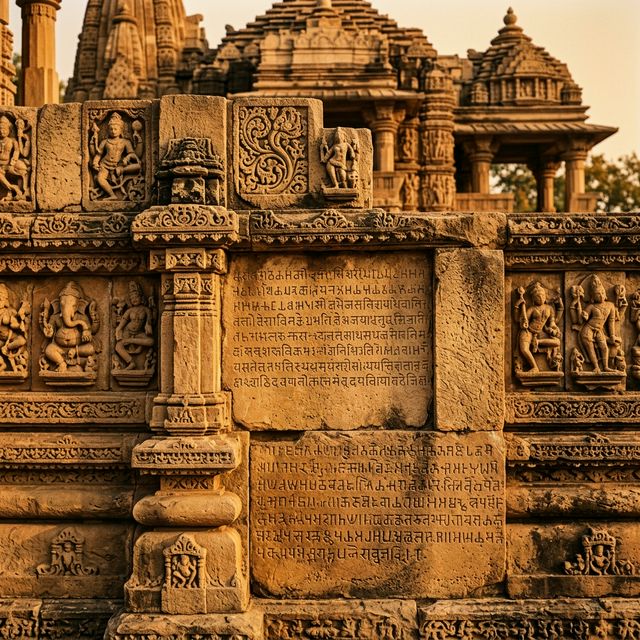
This copper-plate grant is preserved through a transcript provided by the Gurjara family of Vedic brāhmaṇas. Issued from the Panhāḷa fort (modern Panhale) on 18th December, 1191 CE, during a solar eclipse, the record mentions the genealogy of the Kolhapur Śilāhāra rulers. The epigraph is composed in Sanskrit prose and verse and engraved using Nāgarī characters.
The epigraph details the grant of thirty nivartanas of land in the village of Kuṭāpura, situated in the Konkan region between the Māchala hill (modern Muchakundi river) and the Marīcha hill near Rajapur. The recipient, Govinda Bhaṭṭavardhana, was a learned brāhmaṇa of the Gurjara family who was appointed as the state's dharmādhikārin. In addition to the land, the king granted him a silver niṣka from every village in the designated territory. The inscription outlines the heavy responsibilities of this office, which included the oversight of sacrificial rites, astrology, paurāṇic recitations, the adjudication of lawsuits, and the scrutiny of the religion of the region.
 Editor's Comment:
jayatyāviṣkṛtaṃ viṣṇorvārāhaṃ kṣobhitārṇavam |
dakṣiṇonnatadaṃṣṭrāgraviśrāntabhuvanaṃ vapuḥ ||
āsīdvidyādharaḥ pūrvaṃ nāmnā jīmūtavāhanaḥ |
parārthaṃ jīvitaṃ yena garuḍāya niveditam ||
śilāhārākhyavaṃśoyaṃ tagareśvarabhūbhṛtām |
tadvaṃśe jatigo rājājani bhūbhṛcchikhāmaṇiḥ ||
svasti śrījatigakṣitīśatanayo nāyimmanāmā nṛpaḥ
putrastasya ca candrarāṭ pṛthuyaśāstasyāpi sūnuḥ kila |
sañjāto jatigo jagajjananutaḥ śrīmāṃśca tannandano
goṅkallo bhuvi bhūmipālatanayaḥ śrīmārasiṃhonṛpaḥ ||
tatsūnurnṛpamaulilālitapadaḥ śrīgūvalākhyo nṛpaḥ
tadbhrātā bhuvi bhojarājanṛpatirvairībhapañcānana-
ścakre rājyamakaṇṭakaṃ pṛthuyaśā laṅkeśatulyaṃ kila ||
tasyānujāto viditapratāpo ballāladevaḥ kṣitipaḥ sadaiva |
śrīkāminīśo vinatā.avanīśo dikprāntarūḍhaḥ prathitapratāpaḥ ||
tasyānujo dharmadharo dharitryāṃ dadhāra varṇanikhilān svadharme |
dharmāgradhuryo dhanado.adhanānāṃ śrīgaṇḍarāditya iti prasiddhaḥ ||
dīnānāthadaridraduḥkhavikalavyākīrṇanānāvidha-
prāṇitrāṇaparāyaṇaḥ pratidinaṃ guptākhyadānena yaḥ |
yaḥ kṛṣṇājinadhenubhūmyubhayatomukhyādidānapradaḥ
śaśvadbrahmamatipravīṇahṛdayo bhūdevakalpadrumaḥ ||
tulāpuruṣadānādiṣoḍaśakratukārakaḥ |
śauryagāṅgeyakīrtyekanilayaḥ svaguṇairbhuvi ||
tannandanaḥ prabalamaṇḍalikadvipendra-
pañcānanojani jagattritayaikavīraḥ |
pratyarthipārthivalalāṭataṭasthapāda-
pīṭhāspadojjvalayaśā vijayārkadevaḥ ||
dānāya draviṇārjanaṃ janaparitrāṇāya vīravrataṃ
satyāya priyabhāṣaṇaṃ haripadadhyānāya cetaḥsthitiḥ |
saṃpattiḥ sumanovipadvihataye yasya prakāmaṃ kaviḥ
kaḥ śaktaḥ pravivicya tasya vijayādityasya vaktuṃ guṇān ||
yena sthānakamaṇḍale tadadhipā bhraṣṭāḥ punaḥ sthāpitā
govāyāṃ parinaṣṭabhūmipatayaḥ susthāpitāstejasā |
yatsakhyena ca cakravartipadavībhāvāya yo bijjaṇaḥ
sobhūcchrī vijayāṅkadevanṛpatirvairībhapañcānanaḥ ||
tannandanaḥ sakaladiktaṭavartikīrti-
rbhrūbhaṅgamātracapalāyitavairivargaḥ |
viśvaṃbharābharadhurīṇabhujaḥ sadaiva
vibhrājate nṛpavaro bhuvi bhojadevaḥ ||
saṅgrāmāṅgaṇabhairavaḥ kṣitibhujāṃ saṃhārabherīravaḥ
kīrtyākrāntajagattrayastanubhṛtāṃ nirdhūtatāpatrayaḥ |
śrīratnāpriyanandanaḥ parijanānandaikasaṅkrandanaḥ
prāptāśeṣamahītalaḥ sa jayati śrībhojaratnācalaḥ ||
svasti | śrīsamadhigatapañcamahāśabdamahāmaṇḍaleśvara tagarapuravarādhīśvarajagajjanamanurāgasāgara pravardhanaśaraccandra śrīśilāhāranarendravidvajjanamanorathaphalaprada pārijātajīmūtavāhanānvayaprasūtavirodhidharādhīśavaṃśagahana dahanadhūmadhvajasuvarṇagaruḍadhvajarimadavadi bhadāraṇotkaṇṭhakaṇṭhīravamaṇḍalīkabhairavavidviṣṭa maṇḍalīkapannagavainateyaśaucagāṅgeyayuvati janamanaḥsaṃmohanābhinavakandarpamarudaṅkasarpasarvakṣatriyaśikhāmaṇi śrīvijayādityadevanṛpasiṃhasāhasottuṅgārinṛpatirājyasamākarṣaṇamantrasiddhiśanivārasiddhisakalaśāstrarāvāraparāyaṇarūpanārāyaṇasakalajagatī jayapatākāpavanavighaṭitārātisena giridurgalaṅghanoddhata dharādhīśakulaśikharikuliśārimadāṅkuśavīralakṣmīlatā pralaṃvanabhujadaṇḍamaṇḍalikajavadaṇḍalikanaranārasihamaṇḍalika veśyābhujaṅgabalavadaricaturaṅgasaṅghaṭṭavairigharaṭṭa arasāsavādi madanamaheśvara pratāpalaṅkeśvaramaṇḍalikagaṇḍapeṇḍāra ekāṅgavīraśaraṇāyātabhūbhṛnnivaharakṣaṇasamudraparabalavilaya kālāgnirudrasugītakṛticāturyaharṣitaśivāntaraṅga praśastavastukavitāprasaṅgavividharmanirmāṇanitya pramoda śrīmahālakṣmīdevīlabdhavaraprasādādisamastarājāvalīvirājita śrīmanmahāmaṇḍaleśvaraśrībhojadevo girinilayapadmanāladurge sukhasaṅkathāvinodena rājyaṃ kurvāṇaḥ śakavarṣeṣu satrayodaśaśatādhikasahasreṣu gateṣu 1113 vartamānavirodhakṛtsaṃvatsare mārgasīrṣamāsi amāvāsyāyāṃ tithau saumyavāsare sūryoparāge dhārāpūrvakam udadhitaṭavartikoṅkaṇadeśe kāśyapāvasāranaidhruvetitripravaropetanai dhruvagotrotpannagurjarasamupābhidhānagovinda bhaṭṭavardhanahaste |
iṣṭāpūrtavrataṃ prāyaścittaṃ jyotiṣameva ca |
purāṇaṃ prāḍvivākatvaṃ rāṣṭradharmanirīkṣaṇam |
aṣṭadharmasya tattvajño nṛpeṇādhikṛtaśca yaḥ |
dharmādhikārī vipreśo brahmadaṇḍaprabhurhi saḥ ||
ityevaṅkṛtasīmāṃ tatra mañcālagiriprasūtāpagā samudragāminī tadyāmye mārīcagiriprasūtāpagā samudragāminī gaṅgāntaḥ sahyapādasindhupādasidhuvartimadhyadeśaṃ tannirvāhopayogidharmaśāstre saṅgrahārthaṃ rājapurohitasaṃnidhau kutāpuragrāme triṃśannivartanaparimāṇā bhūmiḥ pratigṛhaṃ rajataniṣkaṃ ca rājakīyānāmanaṅguliprakṣepaṇīyaṃ prādāt |
ācandrārkamahīdharānvayabhṛtāṃ ā brahmaṇaḥ śāsanādyupmannaidhru vagotragurjarabhuvāṃ bhūdeva pūjyātmanām |
ācārādiṣu deśamānyapadavī varvati lokottarā kaścillaṅghayitu ca tāṃ paridṛḍhībhūyādvidhistaṃ dahet ||
śrutismṛtipurāṇānāṃ dharmaśāstrārthakovide |
pārthivo yāti nirayamakurvandharmapālanam ||
dharmaśāstrārthakuśalaṃ purāṇasya ca cintakam |
dharmādhikāriṇaṃ kuryādrājā dadyāddhanaṃ bahu ||
apradīpā yathā rātriranādityaṃ yathā nabhaḥ |
tathā.asāṃvatsaro rājā bhramatyandha ivādhvani ||
dharmaśāstraṃ puraskṛtya prāḍvivākamate sthitaḥ |
samāhitamatiḥ paśyedvyavahārānanu kramāt ||
vasudhā bahubhirdattā rājabhiḥ sagarādibhiḥ |
yasya yasya yadā bhūmistasya tasya tadā phalam ||
upayogipadārthānāmanyeṣāmapi labdhaye |
grāmaṃ vā vipulāṃ bhūmi yo dadyācchraddhayānvitaḥ ||
svadattāṃ paradattāṃ vā yo harecca vasundharām |
ṣaṣṭivarṣasahasrāṇi viṣṭhāyāṃ jāyate kṛmiḥ ||
ṣaṣṭivarṣasahasrāṇi svarge tiṣṭhati bhūmidaḥ |
ācchettā cānumaṃtā ca tānyeva narake vaset ||
atidānaṃ ca sarveṣāṃ bhūmidānamihocyate |
acalā hyakṣayā būmiḥ sarvān kāmān prayacchati ||
suvarṇaṃ rajataṃ vāpi maṇimuktāphalāni ca |
sarvametanmahāprājño dadāti vasudhāṃ dadat ||
bharturniḥ śreyase yuktāḥ saṅgrāmābhimukhe hatāḥ |
tāṃ gatiṃ prāpnuvantīha bhūmidā yadavāpnuyuḥ ||
patantyaśruṇi rudatāṃ dīnānāmavasīdatāṃ |
brāhmaṇānāṃ hṛte kṣetre hanti traipuruṣaṃ kulam ||
madvaṃśajāḥ paramahīpativaṃśajā vā |
pāpādapetamanaso bhuvi bhūmipālāḥ |
ye pālayanti mama dharmamimaṃ samagram |
teṣāṃ mayā viracitoñjalireṣa mūrdhni ||
sāmānyoyaṃ dharmaseturnṛpāṇāṃ |
kāle kāle pālanīyo mahadbhiḥ |
sarvānetān bhāvinaḥ pārthivendrān |
bhūyo bhūyo yācate rāmabhadraḥ ||
śrīḥ || śrīḥ ||
Hail! May there be prosperity!
Verse 1
Victorious is Viṣṇu’s manifested Boar-form, which agitated the ocean and which had the earth resting on the tip of its uplifted right tusk.
Verse 2
Formerly, there was a Vidyādhara, Jīmūtavāhana by name, who offered his life to Garuḍa for the sake of others.
Verse 3
This is a family of the lords of Tagara, known as Śilāhāra. In that family was born the crest-jewel of kings, Jatiga I by name.
Verse 4
Hail! There was a son of king Jatiga I, Nāyimma by name. His son was Candrarāja, of great fame. To him, again, was born a son named Jatiga II, praised by the people of the world. To him was born the eldest son, the illustrious Goṅkalla, the foremost (lit. the forehead-mark) of the kings on the earth.
Verse 5
Thereafter, there was his brother Gūhaleśa I; his younger brother was Kīrtirāja; thereafter, Candrāditya made his kingdom free from all troublesome persons.
Verse 6
Then there was the illustrious Mārasiṃha, son of the illustrious king Goṅkala. His son was the illustrious Gūhala II by name, whose feet were fondled by the crowns of other kings. His brother was king Bhojadeva I, a lion to the elephants that were his foes in this world. He, of great fame, ruled uninterruptedly like the lord of Laṅkā.
Verse 7
His younger brother, King Ballāladeva, of renowned power, was like him. He, the Lord of the lady of royal fortune, to whom the kings of the earth submitted, always spread his well-known power in different directions.
Verse 8
His younger brother is known as the illustrious Gaṇḍarāditya, who is the protector of religion, who makes all castes observe their religious duties, who is the foremost among the most courageous, and the bestower of wealth.
Verse 9
He, by his anonymous gifts, is engaged day after day in giving protection by means of secret gifts to various beings distressed, helpless, poor, miserable, maimed and destitute. He bestows gifts such as those of the skins of the black antelopes, cows, land and parturient cows, his heart is always engaged in contemplation on Brahman, and he is a veritable wish-fulfilling tree to the Brāhmaṇas.
Verse 10
He has performed the sixteen vows such as the Tulāpuruṣa gift, and by his merits he is the sole abode of the fame of Gāṅgeya (Bhīṣma) in respect of morally pure conduct.
Verse 11
Then was born his son Vijayārkadeva, a lion to the lordly elephants that were his powerful feudatories, a unique warrior in the three worlds, whose bright fame was manifested by his foot-stool rubbed by the foreheads of the hostile princes.
Verse 12
His wealth was acquired for bestowing it in charity; he fulfilled his vow of heroism by protecting the people; his pleasing speech was in keeping with the truth; his mind was engaged in the contemplation of the feet of Hari (Viṣṇu); his wealth was spent in removing the adversity of good people. What poet is able to extol the merits of that Vijayāditya with proper discernment?
Verse 13
There was that illustrious king Vijayāditya, a lion to the elephants that were his enemies—who reinstated the deposed rulers in the Sthānaka maṇḍala and who, by his valour, re-established firmly in Govā the princes that had fled away; and by whose friendship the incomparable Vijjaṇa attained the position of suzerainty.
Verse 14
There shines on earth his son, the great king Bhojadeva II, whose fame has spread to the extremities of all directions, who has vanquished his numerous foes by a mere frown, and whose arm is foremost in bearing the burden of the earth.
Verse 15
May that illustrious Bhoja, a mountain of jewels, be victorious—he who is a veritable Bhairava on the battle-field, who is as it were the rumbling of a drum presaging the destruction of princes, who has enveloped the three worlds by his fame, who has removed the three kinds of sufferings from all creatures, who is the dear son of the illustrious Ratnā, who is the unique joyful shout of all servants as it were, and one who has acquired the whole earth.
Hail ! The illustrious mahāmaṇḍaleśvara Bhojadeva II—who is adorned with all royal titles such as the following—‘he who has obtained the five mahāśabdas,’ the mahāmaṇḍaleśvara, ‘the lord of Tagara, the best of towns,’ ‘the autumnal moon that makes the ocean of joy in the minds of the people of the world overflow,’ ‘a prince of the Śilāhāra family,’ ‘the pārijāta (wish-fulfilling) tree that fulfils the desires of learned men,’ ‘a scion of the family of Jīmūtavāhana,’ ‘the fire that consumes the thickets of bamboos in the form of the families of hostile kings,’ ‘he who has the ensign of the Golden Eagle,’ ‘the lion that is eager to maul the intoxicated elephants that are his foes,’ ‘a veritable Bhairava destroying feudatories,’ ‘a veritable Garuḍa to the serpents in the form of hostile feudatories,’ ‘Bhīṣma in respent to the hostile army,’ ‘the crest-jewel of the Kṣatriyas,’ ‘a lion, dear to his father, the illustrious Vijayāditya,’ ‘pre-eminent in respect of adventurous spirit,’ ‘he who has the successful incantations for attracting the royal fortune of hostile kings,’ ‘he who is successful even on Saturdays,’ ‘he who is adept in crossing the oceans of all śāstras,’ ‘the moon-like king who is eulogised by the people of the whole world; the sun among those that attack,’ ‘he who, by the breezes of his victorious banner, dispels the clouds in the form of the armies of the enemies,’ ‘he who has captured hill fortresses,’ ‘he who is as it were, a thunderbolt that demolishes the mountains in the form of arrogant kingly families,’ ‘a veritable goad to the elephant in the form of the Kali age,’ ‘he whose massive arm is resorted to by the creeper-like fortune of the warriors of Laṅkā,’ ‘the club of Yama for punishing the feudatories,’ ‘a veritable man-lion among the feudatories,’ ‘a paramour of the courtesans of his feudatories,’ ‘a veritable grinding stone crushing the arrays of the mighty four-membered armies of the enemies,’ ‘he who is a veritable Maheśvara to the god of love in the form of his enemies that were defying the royal order,’ ‘he who is the lord of Laṅkā in respect of valour,’ ‘an anklet (i.e. an ornament) in the form of a great feudatory,’ ‘a unique warrior,’ ‘he who is, as it were, the ocean that gives protection to the numerous mountains in the form of kings that seek refuge,’ ‘he who is the fiery Rudra in destroying the enemies forces,’ ‘he who delights the mind of God Śiva by his skill in composing excellent songs,’ ‘he who always feels delighted in creating various situations in poems on excellent subjects,’ and ‘he who has obtained the favour of a boon from the Goddess Mahālakṣmī’—governing his kingdom from the fort of Padmanāla situated on a hill, diverting his mind in pleasant conversation—has granted with the pouring out of water in the presence of the Royal Priest, land measuring thirty nivartanas together with a silver niṣka (coin) from every village in the following territory of the country of Koṅkaṇa situated along the sea-coast, viz. the country lying along the foot of the Sahya mountain and the shore of the sea between the river rising from the Mañcāla hill and joining the sea, and the Gaṅgā rising from the Mārīca hill and joining the sea south of it—which is not to be interfered with by any royal servant even with a finger—to Govinda Bhaṭṭavardhana, who has the surname of Gurjara, of the Naidhruva gotra with the three pravaras of Kāśyapa, Āvasāra and Naidhruva, who is conversant with the principles of the eight religious duties, viz. sacrificial rites and charitable works, expiatory rites, astrology, purāṇas, judicial work and scrutiny of the national religion, who has been authorised by the King as Dharmādhikārin, who is the foremost among the Brāhmaṇas and is invested with the authority to impose religious punishment—when one thousand Śaka years increased by one hundred and thirteen—in figures 1113—have elapsed, the cyclic year Virodhakṛit being current, on the occasion of a solar eclipse, on Monday, the new-moon lunar day of the month of Mārgaśīrṣa—for his maintenance and the performance of his duty according to the Dharmaśāstra.
Verse 16
You, a revered Brāhmaṇa of the Gurjara family and the Naidhruva gotra, are holding a position recognised throughout the whole country in respect of holy conduct and so forth as prescribed by the orders of rulers born in families of the Moon and the Sun and also by that of Brahmā. If any one resolves to violate it, Fate will ruin him!
Verse 17
The king who does not perform his duty towards him who is proficient in the Vedas, Smṛtis, Purāṇas and Dharmaśāstra goes to hell.
Verse 18
A king should appoint him who is adept in the interpretation of the Dharmaśāstras and reflects on the teaching of the Purāṇas as the Head of the Religious Establishment, and give him plenty of wealth.
Verse 19
Like the night devoid of lights and like the sky devoid of the Sun, the king who has no astrologer to advise him stumbles on his path like a blind man.
Verse 20
The king should scrutinise law-suits in their order, with his mind concentrated and in accordance with the Dharmaśāstra, following the advice of his Judge.
(Here follow ten benedictory and imprecatory verses of the usual type.)
May there be prosperity! May there be prosperity!
| Dynasty: | Śilāhāra |
| Ruler: | Bhoja II |
| Date: | 18th December 1191 CE (Cyclic year Virodhakṛta, Wednesday, Margaśirṣa amavasya, Śaka 1113) |
| Donee: | Govinda Bhaṭṭavardhana |
| Language: | Sanskrit |
| Nature of grant: | Land donation |
| Purpose: | To formalise the grant of religious and judicial privileges of the donee |
| Provenance of inscription: | Fort of Padmanāla (Panhala) |
| Type of Inscription: | Copperplate grant |
| Source: |
