
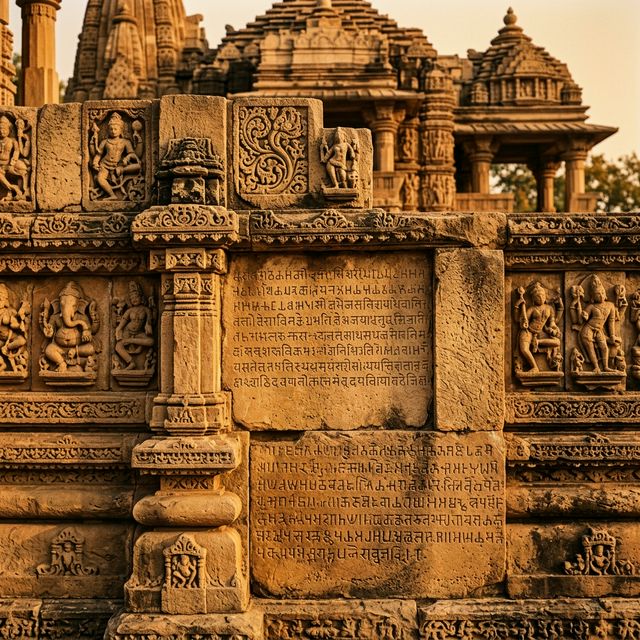
This Old Kannada epigraph is incised directly onto the wooden beams of the ceiling of the hall (maṇḍapa) within the shrine of Śeṣaśāyī, situated in the backyard of the great Mahālakṣmī temple complex at Kolhapur. The text is divided across five beams: eight lines are distributed on four alternate beams of the main octagonal ceiling support situated below a frieze of standing tīrthaṅkaras, while the final two lines are carved on a large outer beam. The language and the script used for this record is Old Kannada.
The inscription belongs to the reign of the Śilāhāra king Gaṇḍarāditya and serves primarily to record the construction of a grand temple (caityāgāra) dedicated to the Jaina tīrthaṅkara Ādinātha. The text reveals this as an impressive Jaina structure, described as having a tall pillar of honour (māna-stambha), gold-plated doors, and surrounding merchant and courtesan quarters. This temple was later appropriated and converted into the present Śeṣaśāyī shrine. The temple was commissioned by the prominent vassal Nimbadeva (Nimbarasa), a devout lay disciple of the ascetic Māghanandi muni of the Koṇḍakunda lineage.
 Editor's Comment:
First Beam
1. śrīyuvatīlatālālitakaḷpamahāmahijaṅge śaucagāṅgeyadharādhipaṅge khacarendrakulaprabhavaṅge rūpanārāyaṇadevabhūpatige gaṇḍaradevanṛpaṅge rūpanārāyaṇadevanādijinanādavemālkabhivāñcchitārtthamaṃ || manusūtraṃ nijasūtra-
2. vīmanasijākārannijākārameṃbinital suttalluṃbavaṃbaracaraprastutya jīmūtavāhanavaṃśaṃ nijavaṃśamendoḍe baḷikkīgaṇḍarādityadevana sanmārgada rūpinanvayadudāttakhyāti sāmānyave || śrīmanmahāmaṇḍaleśvaraṃ gaṇḍarādityadeva vijayībhava |
Second Beam
3. eḷemāviṃ vanavabjadiṃ tiḷigolaṃ māṇikyadiṃ maṇḍanāvaḷitārādhipaniṃ nabhaṃ śubhadavāgirppatirirddattu nirmmaḷavīgaḷ kuḷacandradevacaraṇāṃbhojātasevāviniścaḷasaiddhāntikamāghanandimuniyiṃ śrīkoṇḍakundānvayaṃ || paramajinaṃ dayvaṃ nākarasaṃ pati tanage tana-
4. yarudghayaśarbbhillarasaṃ niṃbarasaṃ kāvarasarenal caṃpakāṃvikepanārppolvar || āvarasiyaruṃ gaṇḍaradevana sati nākirājanātmajegarhaddevapadabhakte karṇṇādevige saridore samānavenādapare || barevarādityaṃ sukavi makaradhvajaṃ vācaka vācavya………
Third Beam
5. paranarapāḷabhuṃbhukabalaṃ kabaḷaṃ paridagdhavidviṣatpuramadedhūḷi sejjaramudāttayaśaṃ jayaḍiṇḍimaṃ manoharataravīralakṣmiye kareṇuvolāgire yogyamāytādhīśvaragṛhapaṭṭavarddhanake nāgaladeviya gandhavāraṇaṃ ||
6. biddiyo tereyo meṇmeysālavo nāḍaroḍagaraṃ pūṇkage kāduvittuviri duṃ ninnante satkirttigartthiganāgirppudu jīya vāppacalareṃ sāmantakedāra nākiga sāmantalalāma nākarasa sāmantendra nāgārjuna ||
Fourth Beam
7. sahāyanivane jagaddāridravidrāvaṇaṃ nile mātāḍuvane toḍaḷgeḍeguḍaṃ cāritrasaṃpannane | kalikālavakoregaṭṭidaṃ śuciye gaṅgāsūnu gaṃbhīrane gelevandaṃ jalarāśiyiṃ piriyarārssāmantaniṃbaṃvara || dhareyellaṃ jinanāthamandiramayaṃ taddeśavellaṃ jineśvararādi-
8. ---------- mayamudyadgrāmamellaṃ manoharasajjainamayaṃ parigrahamadellaṃ tatvasampatpadārtharasāveṣamayaṅgaḷāge negaldaṃ śrīniṃvadevottamaṃ || naṃbuge vineyajanadamanaṃbuge dānaṃ caturvvidhaṃ yatipatigalgimvāge negaḷe negaḷdaṃ kiṃ bahunā sakaḷaguṇakadaṃbaṃ niṃbaṃ ||
Fifth Beam : Outer Side
9. varavaiśyāvāṭadindirkkeladoḷeseva vārāṅganāgehadiṃ visataramānastaṃbhadiṃ māḍadineseva vitānapratānollasanmandiraṃ ceṃbonnoḷandaṃvaḍeda paḍigalindindranindāditīrttheśvaracaityāgāramaṃ māḍisidanasadaḷaṃ rañjisal niṃvadeva || sadamalakīrtti niṃvarasanārjjitapuṇyada puñjadantirirddadu jinamandiraṃ kalaśaviṭṭavīlirddadu hermmegatyapūrvvada kaladhauta-
10. ramyakaḷasaṃ paḍigiṃ paḍiyellaṃ noḍibeḍidargge varaṅguḍaḷneredu nindavu puttali nṛtyaśāleyoḷ || navamandāravitānaṃ bhuvanadoḷati sevyavendu śakraṃ vandādivamaṃ maredirddaṃ tāṇḍavamaṃ merevaṃ vitānakumudāgrimadoḷ || sarasani peṇbarijaṃ viṭṭu rūḍhivettiga barecarādityana kayveragina kaṇṭadoḷirddakṣarapadamaṃ paḍedu piriya siriyaṃ mereval ||
Verse 1
May the resonant utterance of the very name of Ādi-Jina, the very personification of Nārāyaṇadeva, fulfil the desires of the king Gāṇḍaradeva, who is like the great wish-fulfilling tree dallying with the creeper that is the damsel of wealth, who is like the virtuous Bhīṣma, who is born in the family of the Lord of the Vidyādharas, and who is a Nārāyaṇa in comeliness.
Verse 2
Seeing that the Law of Manu was his own law, the form of cupid his own form the family of Jīmūtavāhana, whose greatness was praised all over, his own family, could the lofty fame of the right path, personality and family of this Gaṇḍarādityadeva be ordinary?
Line 2
You, the illustrious Mahāmaṇḍaleśvara Gaṇḍarādityadeva, be victorious!
Verse 3
Even as a grove looks beautiful by a tender mango tree, a clear tank by a lotus, an ornament by a ruby, and the sky by the moon, so has the lineage of Koṃḍakunda now become purified by Māghanandi-Muni, who is unwavering in his attachment to the established religious truth by virtue of having served at the lotus feet of Kuḷacandradeva.
Verse 4
Who will stand comparison with Campakāmbike whose deity was the Supreme Jina, whose husband is Nākarasa, and whose sons are Bhillarasa, Nimbarasa and Kāvarasa of great fame.
Verse 5
Can any queen equal Karṇādevī, the wife of Gaṇḍaradeva, daughter of Nākirāja and devoted to the feet of Arhaddeva?
Line 5
Barevarāditya (lit. the sun among writers), a good poet, a cupid, among the reading and the readable ………………
Verse 6
The scent-elephant (i.e. the supporter) of Nāgaladevī, whose food is the magnificent army of the enemy kings, whose bed is the dusty soil of the burnt city of the enemy, whose great fame is his drum of victory—which elephant is the very personification of enchanting glorious valour—has become fit enough to be the royal elephant of his overlord.
Verse 7
……………… Well done by you Sir! in the matter of interest, taxation or loan on personal security. You have kept up the promise with the countrymen and thus you have become a suppliant for great fame, Oh! you, Nākirāja, the Lord of feudatories, Nākarasa great among feudatories, Nāgārjuna, Indra among feudatories.
Verse 8
…………… He indeed is the helper who puts to flight the poverty of the world, who is steadfast in his utterances, who gives no scope to untruth, who is endowed with good character, who has arrested the evil power of the Kali Age, who is pure, who has excelled the son of Gaṅgā (i.e. Bhīṣma) in purity and the ocean in sagacity. Who is greater than Sāmanta Nimba?
Verse 9
Thus flourished the excellent Nimbadeva, who has made the whole land full of the temples of Jinanātha, the entire country full of Jineśvara’s …………, the entire excellent village full of pleasingly good Jainas, the whole surrounding full of the pervasive influence of the words, meanings and essence of the Jaina tattva.
Verse 10
Why say more? Nimba, a store of all good qualities, is flourishing being liked by the modest people through his trustworthiness, and being a shelter to the ascetics through his fourfold gifts.
Verse 11
Nimbadeva has caused to be constructed by Indra this temple of Āditīrtheśvara, looking beautiful with extensive canopies and extraordinarily pleasing with excellent merchant’s quarters, with courtesans’ houses on both sides, with a large mānastambha, with a storeyed house, having doors which had acquired beauty through gold platings.
Verse 12
The Jinamandira is like the heap of the merit which Nimbadeva of pure fame has earned, its very unique and beautiful golden kalaśa is like the pinnacle of his greatness, and in the dance-hall, door to door, are numerous statues which stand as if to give boons to those who look and seek.
Verse 13
Thinking that this new and extensive mandāra tree (i.e. the temple) is most worshipworthy on earth, Śakra (i.e. Indra) has come down forgetting his paradise, and is dancing ostentatiously on the best and extensive kumuda.
Line 10
Casting off her feminine form, the goddess Sarasatī (i.e. Sarasvatī), who wants to reside now in the facile writing instrument in the hand of Barevarāditya (lit. the Sun among the writers), having obtained the letters and words from him, sends forth her great splendour.
| Dynasty: | Śilāhāra |
| Ruler: | Gaṇḍarāditya |
| Date: | c. 1200 CE |
| Place: | Sheshashayi Temple, Kolhapur, Maharashtra |
| Language: | Kannada |
| Deities: | Ādinātha, Mahālakṣmī |
| Nature of grant: | Religious endowment |
| Purpose: | To record the construction of the temple of ditīrtheśvara at Kolhāpur |
| Provenance of inscription: | Sheshashayi Temple, Kolhapur, Maharashtra |
| Type of Inscription: | Stone inscription |
| Source: |
