
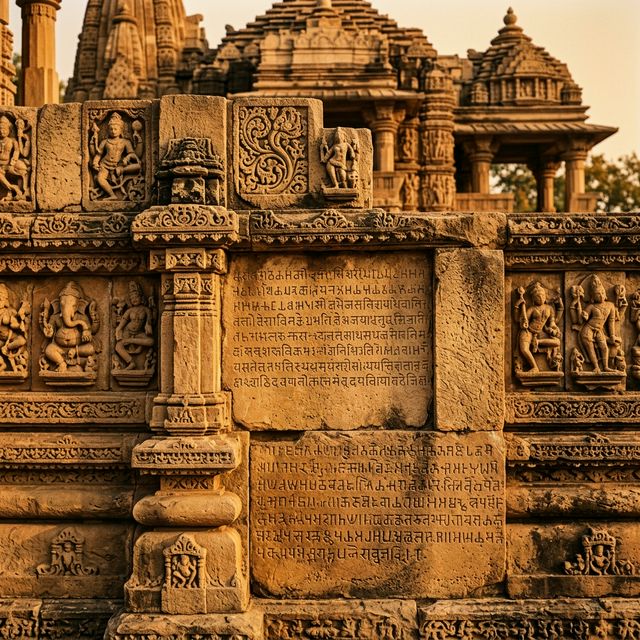
This inscription, engraved on a stone initially identified near the Śukravāra gate in Kolhapur, dates to the Śaka 1065 (1143 CE). Written primarily in Sanskrit using Old Kannada script, the record begins with an invocation to Jina and features Jaina iconography at its crest. It was issued during the reign of the Śilāhāra ruler Vijayāditya from his camp at Vaḷavāḍa. The text delineates a comprehensive genealogy of the Kolhapur Śilāhāra branch, listing all sons of Jatiga I and Mārasimha, providing a clear genealogical data.
The text documents a royal grant by Vijayāditya, endowed with extensive imperial titles, to support a Jaina temple dedicated to Pārśvanātha. Issued during a lunar eclipse, the endowment consisted of a field measuring one-quarter of a nivartana by the Kuṇḍi standard and a twelve-cubit dwelling in the village of Hāviṇa-Heṛilage within the Ājirage kholla. The temple was constructed by Vāsudeva, the betel-box carrier of sāmanta Kāmadeva and a disciple Māghanandisiddhāntadeva of the Mūla Saṅgha. The grant was entrusted to Māṇikyandipaṇḍitadeva by ritually washing his feet. The funds were distributed for the eightfold worship of the deity, structural maintenance, and the sustenance of resident ascetics.
 Editor's Comment:
1. śrīmatparamagaṃbhīrasyādvādāmoghalāñchanam | jīyāt trailokyanāthasya śāsanaṃ jinaśāsanam ||
2. svasti śrīrjayaścābhyudayaśca || jayatyamalanānārtthapratipattipradarśakam | arhata-
3. purudevasya śāsanaṃ mohaśāsanam || svasti | śrīśiḷāhāramahākṣatriyānvaye vitra-
4. stāśeṣaripupratatirjatigo nāma narendrobhūt | tasya sūnurgoṅkalo gūvalaḥ
5. kīrttirājaścandrādityaśceti catvāraḥ | tatra goṅkalabhūtalapatermmārasiho nāma nandanaḥ | tasya tanūjāḥ gūvalo
6. gaṅgadevaḥ vallāḷadevaḥ bhojadevaḥ gaṇḍarādityadevaśceti pañca | teṣu dhārmmikadharmmajasya vairikā-
7. ntāvaidhavyadīkṣāguroḥ sakaladarśanacakṣupaḥ śrīmadgaṇḍarādityadevasya priyatanayaḥ |
8. svasti samadhigatapañcamahāśabdamahāmaṇḍaleśvaraḥ | tagarapuravarādhīśvaraḥ | śrīśiḷā-
9. hāranarendraḥ nijaviḷāsavijitadevendraḥ jīmūtavāhanānvayaprasūtaḥ | śauryyavikhyātaḥ |
10. suvarṇṇagaruḍadhvajaḥ yuvatījanamakaradhvajaḥ nirddaḷitaripumaṇḍalikadarppaḥ | maruvaṅkasarppaḥ |
11. ayyanasiṅgaḥ | sakalaguṇatuṅgaḥ | ripumaṇḍalika bhairavaḥ | vidviṣṭagajakaṇṭhīravaḥ |
12. iḍuvarādityaḥ kaliyugavikramādityaḥ | rūpanārāyaṇaḥ | nītivijitacā-
13. rāyaṇaḥ | giridurggalaṅghanaḥ | vihitavirodhibandhanaḥ | śanivārasiddhiḥ | dharmmaikabuddhiḥ | mahā-
14. lakṣmīdevīlabdhavaraprasādaḥ | sahajakasturikāmodaḥ | evamādināmāvaḷī-
15. virājamānaśrīmadvijayādityadevaḥ | vaḷavāḍasthiraśivire sukhasaṅkathāvinodena rājyaṃ ku-
16. rvvāṇaḥ | śakavarṣeṣu pañcaṣaṣṭyuttarasahasrapramiteṣvatīteṣu pravartamānadun-
17. dubhisaṃvatsaramāghamāsapaurṇṇamāsyāṃ somavāre | somagrahaṇaparvvanimi-
18. ttamājiragekhollānugatahāvinaherilage grāme | sāmantakāmadevasya haḍapa-
19. vaḷena śrīmūlasaṅghadeśīyagaṇapustagacchādhipateḥ kṣullakapuraśrīrūpanārāyaṇaji-
20. nālayācāryyasya śrīmanmāghanandisiddhāntadevasya priyacchāttreṇa | sakalaguṇaratnapātreṇa |
21. jinapadapadmabhṛṅgeṇa | viprakulasamuttuṃgaraṅgeṇa | svīkṛtasadbhāvena | vāsudevena |
22. kāritāyāḥ vasateḥ śrīpārśvanāthadevasyāṣṭavidhārcanārtthaṃ | taccaityālayakhaṇḍa-
23. sphuṭitajīrṇṇoddhārārttha | tatratyayatīnāmāhāradānārttha ca | tatraiva grāme
24. kuṇḍidaṇḍena nivarttanacaturrthabhogapramitaṃ kṣetraṃ | dvādaśahastasammitaṃ gṛhaniveśanaṃ
25. ca | tanmāghanandisiddhāntadevaśiṣyāṇāṃ māṇikyanandipaṇḍitadevānāṃ | pādau prakṣālya dhārāpū-
26. rvvakaṃ sarvanamasyaṃ sarvvabādhāparihāramācandrārkkatāraṃ saśāsanaṃ dattavān ||
27. tadāgāmibhi | rasmadvaṃśyai | ranyaiśca | rājabhi | rātmasukhapuṇyayaśassantativṛddhimabhilipsubhiḥ | sva-
28. dattinirvviśeṣaṃ pratipādanīyamiti || śāntarasakke tāne neleyāda
29. jinaprabhu tanna daivamaśrāntaguṇakke tāne neleyāda taponidhi māghanandisaiddhātika-
30. yogi tanna guru | tannādhipaṃ vibhu kāmadevasāmantaniduttamatvamidu
31. puṇyamidunnati vāsudevana ||
Verse 1
May the teaching of the lord of the three worlds, taught by the Jinas, which has the infallible token of the extremely profound Syādvāda doctrine, be victorious!
Hail! May there be fortune, victory and prosperity!
Verse 2
Victorious is the teaching of the Arhat Purudeva, which removes delusion and shows faultless understanding of various things.
Line 3-26
Hail! In the great Kṣatriya family of the illustrious Śilāhāras, there was a king, Jatiga I by name, who harassed the whole multitude of his foes. His sons were four—viz. Goṅkala, Guvala, Kīrtirāja and Candrāditya. Of them, King Goṅkala had a son named Mārasiṃha, His sons were five, viz. Guvala, Gaṅgadeva Ballādeva, Bhojadeva and Gaṇḍarādityadeva, Out of them, the dear son of the illustrious Gaṇḍarādityadeva, who was a veritable pious Yudhiṣṭhira, who initiated the wives of his enemies in widowhood, and who had for his eyes all philosophical systems, is the illustrious Vijayādityadeva—who has obtained the five mahāśabdas and shines with such titles as mahāmaṇḍaleśvara, ‘the lord of Tagara, the best of towns,’ ‘the illustrious Śilāhāra king,’ ‘he who has surpassed the lord of gods by his dalliance,’ ‘he who is born in the race of Jīmūtavāhana,’ ‘he who is well known by his valour,’ ‘he who has the golden eagle for his ensign,’ ‘the god of love to young women,’ ‘he who has quelled the pride of the hostile feudatories,’ ‘a serpent to the hostile army,’ ‘a lion-like son of his father,’ ‘exalted among all by his good qualities,’ ‘a veritable Bhairava to the hostile feudatories,’ ‘a lion to the elephants that are his foes, the Sun among archers,’ ‘Vikramāditya of the Kali age,’ ‘Nārāyaṇa in respect of a handsome form,’ ‘he who has surpassed Cārāyaṇa in political wisdom,’ ‘he who has seized hill fortresses,’ ‘he who has thrown his opponents into captivity,’ ‘he who is successful even on Saturdays,’ ‘he who is devoted solely to religion,’ ‘he who has obtained a boon by the favour of the Goddess Mahālakṣmī,’ ‘he who has by nature the fragrance of musk’—while governing his kingdom, diverting his mind in pleasant conversation at the permanent camp at Valavāḍa, has donated together with a royal charter, when the Śaka years one thousand and sixty-five have expired and the cyclic year Dundubhi is current, on the holy occasion of a lunar eclipse, on Monday, the full-moon tithi of the month Māgha, a field measuring one fourth of a nivartana by the rod of Kuṇḍi and a house measuring twelve cubits in the village Hāviṇa-herilage situated in the kholla of Ājirage as a gift exempt from all taxes, free from all molestations, to be enjoyed as long as the moon, the sun and the stars endure, by pouring water after having washed the feet of Māṇikyandi-paṇḍitadeva, the disciple of Māghanandi-siddhāntadeva, for the eightfold worship of the holy Pārśvanātha, for the repairs of what may be broken and dilapidated of his temple, and for offering food to the ascetics living there, in the temple (vasati) constructed by Vāsudeva, the dear disciple of the holy Māghanandi-siddhāntadeva, the head of the Pustaka Gaccha of the Deśīyagaṇa of the Mūlasaṅgha, and the priest of the Jaina temple of Rūpanārāyaṇa at Kṣullakpura—Vāsudeva who is the betel-box carrier of the Sāmanta Kāmadeva, who is endowed with all jewel-like virtues, who is a bee on the lotuses in the form of the feet of the Jinas, who is a noble scion of a Brāhmaṇa family, and who has adopted righteousness.
Line 27
Therefore, future rulers, whether born in our family or others, who desire enhancement of their happiness, religious merit, fame and progeny, should protect this gift just as their own.
Line 28
The lord Jina, himself the abode of the sentiment of quietism, is his god the austere Māghanandin, the Saiddhāntika, the Yogin, himself the abode of the virtue of unweariedness, was his preceptor; the lord Kāmadeva, the Sāmanta, is his ruler or master—this is the excellence—this is the religious merit—this is the advancement of Vāsudeva!
| Dynasty: | Śilāhāra |
| Ruler: | Vijayāditya |
| Date: | 1st February 1143 CE (Cyclic year Dundubhi, Monday, Māgha śukla pūrṇimā Śaka 1065) |
| Place: | Jaina temple, Kolhapur |
| Language: | Sanskrit and Kannada |
| Deities: | Pārśvanātha |
| Nature of grant: | Religious endowment |
| Purpose: | To formalise the particulars of the grant made by the king and appeal to future kings for its preservation |
| Provenance of inscription: | Kolhapur, Maharashtra |
| Type of Inscription: | Stone inscription |
| Source: |
