
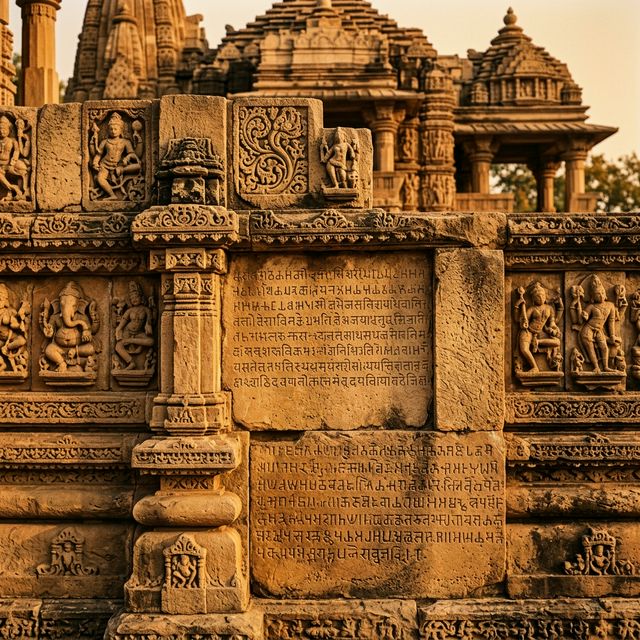
Located near the former Śukravāra gate of Kolhapur, this stone inscription is engraved on a slab situated to the right of the Jaina Tīrthaṅkara Pārśvanātha temple. The rounded pediment of the stone features a central relief of a seated Jina, flanked by worshippers, a pitcher, a cow with its calf, and the celestial symbols of the sun and moon. The text, including Old-Kannada language with a Sanskrit invocatory verse, is engraved in Old Kannada script.
Issued on Monday, the fifth tithi of the dark fortnight of Kārttika in the Śaka 1058 corresponding to 28th October 1135 CE, the charter belongs to the reign of the Śilāhāra ruler mahāmaṇḍaleśvara Gaṇḍarāditya. The inscription documents a complex commercial agreement orchestrated by the king's chief vassal (sāmanta-śiromaṇi), Nimbadevarasa. Nimbadevarasa, a devout Jaina and military commander who claimed victory over the subordinates of the Toṇḍai country, had constructed a Pārśvanātha temple at Kavaḍegoḷḷa. To provide for the temple's eight-fold worship, structural repairs, and the sustenance of its ascetics, a consortium of powerful merchant guilds agreed to levy specific taxes on commodities sold within the market.
 Editor's Comment:
1. siddham | śrīmatparamagaṃbhīrasyādvādāmoghalāñcchanam | jīyāttrailokyanāthasya śāsanaṃ jinaśāsanam || svasti | samadhigatapañcamahāśabdamahāma-
2. ṇḍaleśvaraṃ | tagarapuravarādhīśvaraṃ śrīśiḷāhāranarendraṃ | jīmūtavāhanānvayaprasūtaṃ | suvarṇṇagaruḍadhvajaṃ marevokkasarppaṃ | ayyana-
3. siṅgaṃ | ripumaṇḍalikabhairavaṃ | vidviṣṭagajakaṇṭhīravaṃ | iḍuvarādityaṃ | rūpanārāyaṇaṃ | kaliyugavikramādityaṃ | śanivārasiddhi giridu-
4. ggelaṅghanaṃ | śrīmahālakṣmīdevīlabdhavaraprasādādisamastarājāvaḷīvirājitarappa śrīmanmahāmaṇḍaleśvaraṃ gaṇḍarādityadevaru vaḷavāḍada ne-
5. levīḍinalsukhasaṅkathāvinodadi rājyaṃ geyyuttamire | tatpādapadmopajīvi samadhigatapañcamahāśabdamahāsāmantaṃ | vijayala-
6. kṣmīkāntaṃ | ripusāmantasīmantinīsīmantabhaṅgaṃ | vīravārāṅganāpriyabhujaṅgaṃ | vairisāmantameghavighaṭanasamīraṇaṃ | nāgaladeviya gandhavā-
7. raṇaṃ | vidviṣṭasāmantaviḷayakāḷaṃ | sāmantagaṇḍagopālaṃ | dāyādasāmantatārāsuravīrakumāraṃ | sāmantakedāraṃ | toṇḍasāmantapuṇḍarīka-
8. ṣaṇḍapracaṇḍamadavedaṇḍaṃ | gaṇḍarādityadevadakṣadakṣiṇabhujādaṇḍaṃ | yācakajanamanobhilaṣitacintāmaṇi | sāmantaśiromaṇi | jinacaraṇasarasiru-
9. hamadhukaraṃ samyaktvaratnākaranāhārābhayabhaiṣajyaśāstradānavinodaṃ | padmāvatīdevīlabdhavaraprasādaṃ | nāmādisamastapraśastisahitaṃ śrīmanmahā-
10. sāmantaṃ | nivadevarasaru | kavaḍegollada vaḷiya santeya mudgoḍeyalmādisida vasadiya pārśvanāthadevaraṣṭavidhārccanakkamā vasadiya jirṇṇodhārakka-
11. mallippa ṛṣiyarāhāradānakkaṃ | svasti | samastabhuvanavikhyātapañcaśatavīraśāsanalabdhānekaguṇagaṇālaṅkṛta sattyaśaucācāracārucaritrayavinaya-
12. vijñāna vīravalañjadharmmapratipālanaviśuddha guḍḍadhvajāvarājamānānūnasāhasottuṅga kīrttyaṅganāliṅgita nijabhujopārjitavijayalakṣmīnivāsavakṣaḥ sthalaruṃ
13. bhuvanaparākramonnata vāsudevakhaṇḍalīmūlabhadravaṃśodbhavaruṃ | bhagavatīlabdhaprasādaruṃ | tāvu kādi soladaruṃ | maruvakkamārigaluṃ | parastrīpara-
14. dhanavarjjitaruṃ catuḥṣaṣṭiklegalol pravīṇarappudariṃ | brahmanannaruṃ | cakramuḷḷudariṃ | nārāyaṇanannaruṃ | dṛṣṭiyoḷnoḍi kolvudariṃ | kāḷāgnirudranannaruṃ ko-
15. ndaranarasi kolvudariṃ | paraśurāmanannaruṃ | tuḷidu koṃlvudari madāndhagandhasindhuradannaruṃ | giridurggamaṃ marevokkaraṃ tegedu kolveḍeyoḷ siṃhadannaruṃ
16. pātāḷamaṃ pokkaraṃ kolveḍeyoḷ vāsugiyannaruṃ | ākāśadoḷirddaraṃ kolveḍeyoḷgarutmanannaruṃ | peṃpinal pṛthviyannaruṃ | bippinal kulagi-
17. riyannaruṃ | guppinalmahāsamudradannaruṃ | udyogadal rāmanannaruṃ | parākramadol pārtthanannaruṃ | śaucadol gāṅgeyanannaruṃ | sāhasadoḷ bhīmananna-
18. ruṃ | dharmmadal dharmmaputranannaruṃ | jñānadal sahadevanannaruṃ | bhogadalidranannaruṃ | tyāgadalkarṇṇanannaruṃ | tejadalādityanannaruṃ | ahicchatramenisuvayyavoḷepurapa-
19. rameśvararumappaynūrvvarsvāmigaḷuṃ gavareyaraṃ | gātriyaruṃ | seṭṭiyaruṃ | seṭṭiguttaruṃ | gāmaṇḍaruṃ | gāmaṇḍasvāmigaluṃ | vīra-
20. ruṃ | bīravaṇigaruṃ | kollāpurada vilpāṇa seṭṭiyuṃ | govindaseṭṭiyuṃ | komara aṇṇamayyanuṃ | miriñjeya vijjaseṭṭiyuṃ | boppise-
21. ṭṭiyuṃ | gaṇḍarādityadevara rājaśreṣṭhi vesapayyaseṭṭiyaruṃ | ā maṇḍaleśvarana bīḍina bammiseṭṭiyuṃ | kuṇḍipaṭṭaṇadādityagṛha-
22. da sāsanigaṃ heggaḍe rāvaseṭṭiyuṃ | caudhore boppiseṭṭiyuṃ | toraṃbageya prabhu kannapayyaseṭṭiyuṃ | mayisigeya kājagāraṃ caudho-
23. re goraviseṭṭiyuṃ | baḷeyavaṭṭanadaśāntiseṭṭiyuṃ | ayyavoḷeyanūrvvara siṅgaṃ hāliyaseṭṭiyuṃ | kavaḍegoḷḷada prabhu khapparayyanā-
24. diyāgi samastadeśaṃ neredu | śakavarṣada sāsiradayvatteṇṭeneya rākṣasasaṃvatsarada kārttikabahuḷa pañcamī somavāradandu śrīmūlasaṅgha-
25. deśīyagaṇapustakagacchada kollāpurada śrīrūpanārāyaṇavasadiyācāryyarappa śrīśrutakīrttitraividyadevara kālaṃ karcci | dhārāpū-
26. rvvakamāgi koṇṭṭāyamentendoḍe aḍake heriṅge ayvattu | javalavikarppattu | hasarakaydu | ele heriṅge nūruṃ | talevoregayvattu | hasarakirppa-
27. ttaydu | tuppameṇṇeyeṃvivu koḍakke sollage siddigegaravānaṃ saṅgaḍigormmānaṃ dūsigavasaravakammavakasālegaṃ hoṅge haṇaṃ | hatti maḷavega-
28. yvalaṃ bhaṇḍiya karuseya malavegeraḍu bīsige | javaḷakke palaṃ pattu | laṅkarokkalalli āru tiṅgaḷge maṇetivige maraviyeṃbivondakkuṃ | varṣṣakke maṃ-
29. cavondakkuṃ | allavarisinaṃ śuṇṭhi beḷḷuḷiḷa baje bhadramusteyaṃbivu modalāgi tūgi māruva bhapḍaṅgalge herigayvalaṃ javaḷakkippalaṃ hasa-
30. rakoppalaṃ jīrage meḷasu sāsaviyeṃbivu heriṅgommānaṃ javaḷavakaravanaṃ hasaravake sollage | uppu modalāgi hardineṇṭu dhānyaṃ –
31. galgaṃ bhaṇḍige kolagavondu heriṅge mānaveraḍu talevoregormmānaṃ vāḍu kāyeṃbivu bhaṇḍige hattu talevorege nālkakkuṃ | bhaṇḍige daṇḍige vondu
32. seveyaydu hūṭeyeraḍavarkaṃ daṇḍige vondu seveyeraḍu hūvina heḍaligege māle vondu kuṃbararalli hasarakke maḍake vondu || intīyā-
33. yamanaḷidātāṅge vāṇarāśikurukṣetrādigaḷoḷ pañcamahāpātakamaṃ māḍida phaḷamakuṃ ||
Success! May the noble teaching of Jina, the lord of the three worlds, which has the infallible mark of the extremely profound Syādvāda doctrine, be ever victorious!
Line 1-5
Hail! While the illustrious mahāmaṇḍaleśvara Gaṇḍarādityadeva—who is adorned with all royal titles such as ‘the mahāmaṇḍaleśvara’ ‘he who has obtained the five mahāśabdas,’ ‘the lord of Tagara, the best of cities,’ ‘the illustrious Śilāhāra King,’ ‘a scion of the family of Jīmūtavāhana,’ ‘he who has the banner with the device of
the golden Garuḍa,’ ‘a serpent to adversaries,’ ‘a lion to his father,’ ‘a veritable Bhairava who destroys the hostile feudatories,’ ‘a lion to the elephants in the form of his enemies,’ ‘the Sun of archers,’ ‘Nārāyaṇa in comeliness,’ ‘Vikramāditya of the Kali Age,’ ‘he who is successful even on Saturdays,’ ‘he who has captured mountain fastnesses,’ and ‘he who has obtained the gracious boon of the divine Mahālakṣmī’—is governing the kingdom from his permanent camp at Valavāḍa, being engaged in pleasant conversation—
Lines 5-11
For the worship, with eight offerings, of the divine Pārśvanātha in the temple constructed in the mudgoḍe of the market place in Kavaḍegolla by the illustrious mahāsāmanta Nimbadevarasa—who is dependent on his (i.e. Gaṇḍarāditya’s) lotus-like feet, and who has all the titles of honour such as ‘a mahāsāmanta who has obtained the five mahāśabdas,’ ‘beloved of the Goddess of Victory,’ ‘he who removes the parting line of the hair of the wives of hostile feudatories,’ ‘the beloved paramour of the courtesans of warriors,’ ‘the wind which disperses the clouds in the form of enemical feudatories,’ ‘the scent-elephant of Nāgaladevī,’ ‘the god of death causing the destruction of hostile feudatories,’ ‘a veritable Gopāla to chief feudatories,’ ‘a veritable heroic Kārttikeya to the demon Tāra (i.e. Tārakāsura) in the form of rival feudatories,’ ‘Kedāra (Śiva) to feudatories,’ ‘a furious rutting elephant to the clusters of lotuses that were the feudatories of the Toṇḍai country,’ ‘the vigilant long right arm of Gaṇḍarādityadeva,’ ‘the wish-fulfilling gem which satisfies the desires of suppliants,’ ‘the foremost among feudatories,’ ‘a bee on the lotuses of the feet of Jina,’ ‘a mine of the gem of righteousness,’ ‘he who delights in offering food, protection, medicine and scriptural knowledge to others’ and ‘he who has obtained the gracious boon of the divine Padmāvatī—and for the repairs of the temple as also for the supply of food to the ascetics residing there—
Line 11-24
Hail! They who are adorned by a multitude of numerous virtues obtained by following the religion of the Five-hundred Heroic Men renowned in the whole world; who are virtuous by reason of the maintenance of the code of the heroic Baṇañjas consisting of truthfulness, pure conduct, agreeable behaviour, political wisdom, courtesy and mercantile knowledge; who look splendid with their banner bearing the device of Guḍḍa hill, who are exalted with their unfaibing adventurous spirit; who are embraced by Lady Fame; whose breast is resorted to by the Goddess of Victory secured by their own arms; who are born in the race of Vāsudeva, Khaṇḍalī and Mūlabhaḍra; who are exalted by their valour in the whole world; who have obtained the gracious boon of Bhagavatī; who are invincible when they fight; who destroy their enemies; who abstain from the wives and property of others; who are like Brahmā in respect of proficiency of the sixty-four arts; like Nārāyaṇa in the possession of a cakra (discus, or association); like Rudra who is the Fire of World-destruction in slaying their opponents by their gaze; like Paraśurāma in seeking out and destroying slayers by their weapons; like a rut-blind scent-elephant in trampling underfoot and slaying their opponents; like a lion in seizing those that take shelter in mountain fastnesses; like the serpent Vāsukī in destroying those that enter the nether world; like Garuḍa in slaying those that fly in the sky; like the earth in greatness, like the chief mountains in weightiness (gravity); like the ocean in profundity; like Rāma in perservence; like Arjuna in valour; like Bhīṣma in purity of conduct; like Bhīma in adventurous spirit; like Yudhiṣṭhira in righteousness; like Sahadeva in scientific knowledge; like Indra in enjoyment; like Karṇa in charity; like the Sun in brilliance—they who are the lords of the city of Ayyavole also known as Ahicchatra, namely, the Five-hundred Svāmins, the Gavares, the Gātriyas, the Seṭṭis, the Seṭṭiguttas, the Gāmaṇḍas, the Gāmaṇḍa-svāmins, the heroic men, the heroic merchants, Bilpaṇaseṭṭi, and Govinda-seṭṭi of Kollāpura, Komara-annamayya, Bijja-seṭṭi and Boppi-seṭṭi of Miriñje, Vesapayya-seṭṭi, the royal merchant of Gaṇḍarāditya, Bammi-seṭṭi of the Maṇḍaleśvara’s (i.e. Nimbadevarasa’s) household Rāva-seṭṭi, who is the Government officer in charge of the temple of the Sun in Kuṇḍipaṭṭaṇa, Chaudhore Bappi-seṭṭi, Kannapaiya-seṭṭi, the Chief of Torambarage, Choudhore Goravi-seṭṭi, the Manager of Mayisige, Śānti-seṭṭi of Baleyavaṭṭaṇa, Hāliya-seṭṭi, the lion of the Five-hundred of Ayyavole, Khapparayya, the sheriff of Kovaḍegolla and others representing the whole country, having assembled-
Lines 24-26
On Monday, the fifth tithi of the dark fortnight of Kārttika in the cyclic year Rākṣasa and the thousand and fifty-eighth year of the Śaka era, having washed the feet of the holy Śrutakīrti Traividyadeva of the Pustaka Gaccha in the Deśīyagaṇa of the Mūlasaṅgha, who is the priest of the famous temple of Rūpanārāyaṇa in Kollāpura—have donated the following rates with the pouring out of water:-
Line 26-32
Areca-nuts fifty on a load, twenty on a half-load, five on a hasara; betel leaves, one hundred on a load, fifty on a head-load, twenty-five on a hasara; a sollage on each pitcher of clarified butter and oil, one half maund on each siddige, one maund on each sangaḍi; a paṇa on each honge (gold cloin) on articles sold in each cloth-merchant’s and gold-smith’s shop; five palas on each malave of cloth; two bīsige on each malave of karuse sold from carts, ten palas on each half-load; a stool, a tripod, and a maravi on each house of carpenters every six months, and one bedstead every year; in the case of goods sold by weight, five palas on each head-load, two palas on each half head-load and one pala on each hasara of green ginger, turmeric, dry ginger, garlic, baje and bhadramuste; one maund on each cart-load, a half maund on each halfload, a sollage on each hasara in the case of cumin, black pepper and mustard; one kolaga on each cart-load, two maunds on each load and one maund on each head-load in the case of salt and similar articles and eighteen kinds of grains; ten on each cart-load of dry and fresh fruits, and four on each head-load; one daṇḍige and five myrobolans on each cart-load; one daṇḍige and two myrobolans on each pair of hūṭes; one garland on each basket of flowers; one pot on each shop of potters.
Lines 32-33
(Here occurs an imprecatory formula of the usual type.)
| Dynasty: | Śilāhāra |
| Ruler: | Gaṇḍarāditya |
| Date: | 28th October 1135 CE (Cyclic year Rākṣasa, Kārtikka kṛṣṇa 5, Śaka 1058) |
| Place: | Beside Jaina temple near Shukravar gate, Kolhapur |
| Donee: | Vīra-Bananjā trade guild |
| Language: | Kannada and Sanskrit |
| Deities: | Pārśvanātha |
| Nature of grant: | Monetary donation |
| Purpose: | Maintenance of the Jaina temple of Pārśvanātha |
| Provenance of inscription: | Kolhapur, Maharashtra |
| Type of Inscription: | Stone inscription |
| Source: |
