
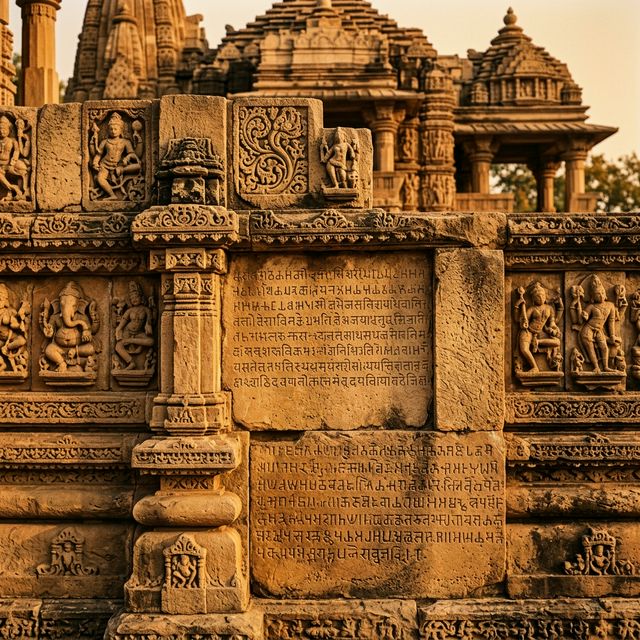
Found in the Mahālakṣmī temple enclosure, it is now kept in the Town Hall at Kolhāpur. This Nāgarī-script inscription, composed in Sanskrit language, belongs to the reign of Kolhapur Śilāhāra king Bhoja II (Vīra Bhojadeva) who was stationed at the fort of Praṇālaka (modern Panhale). This stela documents a series of three grants; one royal and two private grants made between Śaka 1112 and 1115 (from 1190 to 1194 CE).
In the first endowment, King Bhoja II granted a rice field (śālikhalla) and a house along with its courtyard in Kopparavāḍa village to two Sahavāsī and two Karhāḍe Brāhmaṇas for the maintenance of the Umā Maheśvara maṭha and for daily offerings to the goddess Mahālakṣmī. The second and third endowments were made by Kāliyaṇa nāyaka, son of Lokaṇa nāyaka, the constructor of the Umā Maheśvara maṭha. He donated lands in the Pauvā agrahāra for a charitable feeding house established by his mother, along with added acreage bought for providing food for students of a Vedic school. Editorial Comment: Providing evidence of female economic agency, the inscription mentions a charitable feeding house (sattra) established by the donor's mother and records the legal purchase of land from the granddaughter of a Sāmavedin brāhmaṇa.
 Editor's Comment:
1. svasti | śrīmanmahāmaṇḍaleśvaro vīrabhojadevaḥ pranālakadurggaśivire sukhasaṅkathāvinode-
2. na rājyaṃ kurvāṇaḥ śakanṛpakālādārabhya varṣeṣu dvādaśottaraśatādhikasahasreṣu nivṛtteṣu varttamānasā-
3. dhāraṇasaṃvatsarāntarggatapuṣyabahuladvādaśyāṃ bhaumavāre bhānoruttarāyaṇasaṅkramaṇaparvvaṇi nijarājyā-
4. bhivṛddhaye sahavāsilokaṇanāyakena kāritasya maṭhasya amṛteśvaramūrtyumāmaheśvaradevasya pañcopacā-
5. rapūjārthaṃ sahavāsibrāhmaṇabhojanārthaṃ śrīmahālakṣmīdevyāstrikālanaivedyaparicālanārthaṃ tanmaṭhakhaṇḍasphuṭi-
6. tajīrṇṇoddhārārthaṃ eḍenāḍāntarggatakopparavāḍagrāmasīmābhyantare pūrvvadigbhāge tīravāḍabīḍāt pannāledurggagāmi-
7. no mārggāt pūrvvataḥ karadakṣetraṃ tatpūrvvataḥ | kṣetrapāladevenopalakṣitāyāḥ riktataṭākapālyāḥ uttarataḥ
8. karañjamālāpaścimataḥ | desileyaceṇḍikeyavṛttikṣetrakarañjakṣetrayorddakṣiṇataḥ | evaṃ catuḥsīmābhyantare e-
9. ḍenāḍadaṇḍamānena vapyakānāṃ pañcāśadadhikaṃ pañcaśataṃ śālikhallakṣetraṃ tatprativaddhaṃ tadgrāmābhyantare dvādaśa-
10. hastapramāṇaṃ niveśanaṃ tatprativaddhaṃ khaḍavalakaṃ ca || etatsarvvaṃ tanmaṭhaniviṣṭasahavāsyādityabha-
11. ṭṭalakṣmīdharabhaṭṭakarahāṭakaprabhākaraghaisāsavāsiyaṇaghaisāsetyevaṃ niviṣṭabrāhmaṇacatuṣṭayahaste śā-
12. sanasahitaṃ dhārāpūrvvakaṃ sarvvanamasyaṃ sarvvabādhāparihāraṃ sarvvāyaviśuddhaṃ rājakīyānāmanaṅguliprekṣaṇīya-
13. mācandrārkkasthiraṃ dattavān || anyacca || śakanṛpakālādārabhya varṣeṣu caturddaśottaraśatādhikasahasreṣu nivṛtte-
14. ṣu varttamānaparidhāvisaṃvatsarāntarggatāśvinaśuddhapratipadi śukravāre tasyaiva sahavāsilokaṇanāya-
15. kasya putraḥ kāliyaṇanāyakaḥ svamātuḥ pomakauvāyāḥ sattre brāhmaṇabhojanārthaṃ tāluragekhollāntarggata a-
16. grahārapauvagrāmasīmābhyantare pūrvadigbhāge tadgrāmamahājanairddānakrayeṇa gṛhītaṃ khaddiyaṃ lakhumaṇaghai-
17. sāsasya vṛttimadhye uttamanivarttanamekaṃ kaniṣṭhanivarttanamekamevamarddhā vṛttiḥ tatprativaddhaṃ uttamagṛhasyārddhaṃ madhyamagṛ-
18. hamekaṃ tatprativaddhaṃ khaḍavalakaṃ etatsarvva tasgrāmamahājanahastāt dānakrayeṇa gṛhītvā pūrvvoktaniviṣṭabrāhmaṇacatu-
19. ṣṭayahaste dhārāpūrvvakaṃ sarvvabādhāparihāraṃ sarvvāyaviśuddhaṃ ācandrārkasthiraṃ dattavān || anyacca || pramādisaṃvatsarānta-
20. rggataphālgunaśuddhapañcamyāṃ śukravāre tasminneva agrahārapauva grāmasīmābhyantare pūrvvadigbhāge chandogasomeśvarabhaṭṭasya
21. dauhitryā māyiṅkauvāyāḥ vṛtteruttamabhūmeḥ nivarttanasyottarārddhaṃ sa eva kāliyaṇanāyakaḥ vedādhyayanakhoḍakā-
22. cchāttra bhojanārthaṃ tasyāḥ sakāśāddānakrayeṇa gṛhītvā pūrvvoktani viṣṭabrāhmaṇacatuṣṭayahaste dhārāpūrvvakaṃ sarvvavā-
23. dhāparihāraṃ sarvvāyaviśuddhamācandrārkkasthiraṃ dattavān || cha ||
Line 1-13
The illustrious mahāmaṇḍaleśvara Vīra-Bhojadeva, governing his kingdom from his camp in the fort of Pranālaka, his mind being diverted by pleasant conversation,—on the holy occasion of the Uttarāyaṇa Saṅkrānti of the sun, on Tuesday, the twelfth tithi of the dark fortnight of Puṣya (i.e. Pauṣa) of the cyclic year Sādhāraṇa, when a thousand years increased by one hundred and twelve had elapsed by the era of the Śaka king—has granted, together with a royal charter for the augmentation of his own kingdom, a śālikhalla (rice) field measuring 550 vapyakas by the rod of Eḍenāḍa together with a dwelling house connected therewith measuring twelve cubits, and the khaḍavalaka (courtyard) belonging to it in the same village, the field lying on the eastern side in the village Kopparavāḍa situated within the territorial division of Eḍenāḍa, east of the way from Tīravāḍabīḍa to the fort of Pannāle with the following four boundaries, viz. to the east of a tax-paying field, to the north of the dam of an empty tank marked by a field-deity, to the west of a karañja field and to the south of the vṛtti field and the karañja field belonging to Desileya and Ceṇḍikeya—by pouring water on the hands of the four Brāhmaṇas residing in the maṭha mentioned below, viz. the Sahavāsī Brāhmaṇas Ādityabhaṭṭa and Lakṣmīdharabhaṭṭa, and the Karahāṭaka Brāhmaṇas Prabhākara Ghaisāsa and Vāsiyaṇa Ghaisāsa, for the worship, with five offerings, of the god Umā-Maheśvara in the form of Amṛteśvara, established in the maṭha caused to be constructed by the Sahavāsī Brāhmaṇa Lokaṇa Nāyaka, for providing food to Sahavāsī Brāhmaṇas, for offering the naivedya three times a day to the Goddess Mahālakṣmī, and for the repairs of what may be broken or dilapidated of that maṭha, the gift being free from all taxes, free from all molestation, faultless in respect of all income and not to be interfered with by any royal servant even with a finger and lasting as long as the moon and the sun endure.
Line 13-19
Besides,—on Friday, the first tithi of the bright fortnight of Aśvina in the current cyclic year Paridhāvin, when a thousand years increased by one hundred and fourteen had elapsed by the era of the Śaka king, Kāliyaṇa Nāyaka, son of the same Sahavāsī Brāhmaṇa Lokaṇa Nāyaka, gave to the aforementioned four Brāhmaṇas—with the pouring out of water, as a gift free from all molestation, faultless in respect of all income and lasting as long as the moon and the sun endure—a half vṛtti consisting of one largest nivartana and one smallest nivartana, together with a half of a first-rate house and a middle-type house along with the khaḍavalaka (courtyard) connected therewith, within the limits of the agrahāra village Pauva situated in the Tāluragekholla which belonged to Lakhumaṇa-Ghaisāsa by purchasing it from the mahājanas who had purchased it for a gift from the previous owner (viz., Lakhumaṇa Ghaisāsa)—for the feeding of the Brāhmaṇas in the charitable feeding house established by the donor’s mother Pomakauvā.
Lines 19-23
Moreover—
On Friday, the fifth tithi of the bright fortnight of Phālguna in the cyclic year Pramādin, the same Kāliyaṇa Nāyaka, having purchased, from Māyiṃkauvā, the daughter’s daughter of Someśvarabhaṭṭa of the Chandoga (Sāmaveda), the northern half of a nivartana of the best land in her field on the eastern direction and within the limits of the same agrahāra village Pauva—donated it by pouring water on the hands of the aforementioned four Brahmaṇas as a gift free from all molestation, faultless in respect of all income, and lasting as long as the moon and the sun endure.
| Dynasty: | Śilāhāra |
| Ruler: | Bhoja II |
| Date: | 25th December 1190 CE (Śaka 1112) + further grants on 20th September 1191 CE (Śaka 1113) and 27th February 1194 CE (Śaka 1115) |
| Place: | Town Hall, Kolhapur |
| Donee: | Four Brāhmaṇas (first grant for the maṭha); later grants by Kāliyaṇa Nāyaka to religious/educational donees |
| Language: | Sanskrit |
| Deities: | Umā-Maheśvara |
| Nature of grant: | Land donation |
| Purpose: | To record grants by Bhoja II and Kāliyaṇa Nāyaka for religious and educational aims |
| Provenance of inscription: | Mahālakshmi temple complex, Kolhapur |
| Type of Inscription: | Stone inscription |
| Source: |
