
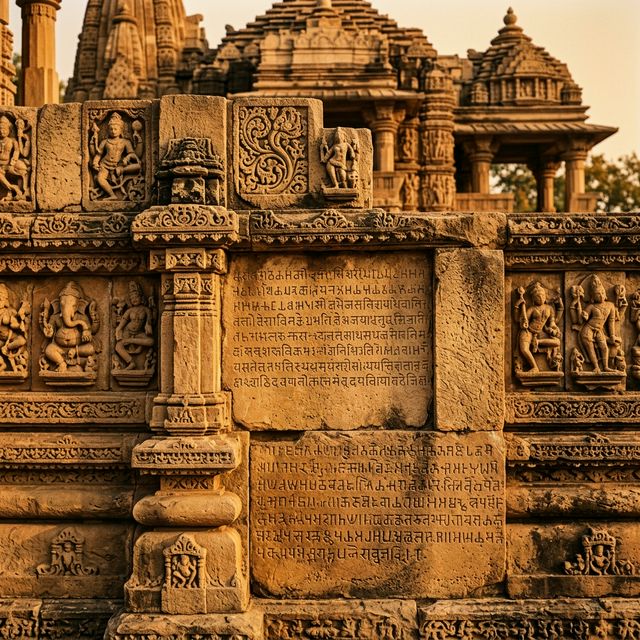
Discovered over a century and a quarter ago in Kharepatan, Ratnagiri District, this set of four copper plates are strung on a circular ring bearing a human-form Garuḍa seal with a hooded serpent. The text, composed in a mix of Sanskrit verse and prose, is engraved in Nāgarī characters.
Issued on the full moon tithi of Jyeṣṭha in the Śaka 930 (1008 CE), the charter records extensive religious endowments made by the Śilāhāra ruler Raṭṭarāja, who acknowledges the suzerainty of the Kalyāni Cālukya emperor Satyāśraya. Raṭṭarāja granted the revenues of three villages: Kūṣmāṇḍī, Asanavīra, and Vaḍaṅgula to Ātreya, a learned Saiva ascetic. He was a disciple of Ambhojaśambhu, belonging to the Karkaroṇī branch of the renowned Mattamayūra clan. The donation was made to support the five-fold worship of the deity Avveśvara and the maintenance of the temple complex. Additionally, the endowment included payment of specific maritime tolls from foreign vessels and ships arriving from Kandalamūlīya. It also mentions the arrangement for settlement of various artisanal and service families (devadāsīs, oilmen, gardeners, potters, and washermen) to serve the temple.
 Editor's Comment:
First Plate
1. siddham | oṃ namaḥ śivāya | helollālita caṇḍadaṇḍacaraṇāṅguṣṭhāgrabhāgā-
2. hatasvarggaṅgodgataśuktisaṃpuṭagalanmuktābhṛtaṃ tāṇḍave | pāṇau vīkṣya kapā-
3. lamāśvatha jaṭācandrāmṛtojjīvitaṃ kaṅkālaṃ ca yadadbhutaṃ smitamavatvīśena tadva-
4. ściram || gotraṃ bhittvā na bhūto na madhupavasatirnno sadā dharmavakro nākrānto da-
5. ṇḍakoṭyā na ca parapavanākampito nāntahīnaḥ | nādhastānnītamūlaḥ prakṛtira-
6. tighano no raṇe dattapṛṣṭhaḥ sopūrvvostīha vaṃśo yadukulatilako rāṣtrakūṭeśva-
7. rāṇām || tatrāsīddantidurggaḥ prabhurapi ca tataḥ kṛṣṇarājaḥ pitṛvyastasmādgovi-
8. ndarājastamanu nirupamo.asmājjagattuṅgadevaḥ | tatputromoghavarṣo ripuvanada-
9. hano.asyāpyathākālavarṣo naptāsya śrīndrarājo rucirataravapustatsutomoghava-
10. rṣaḥ || śṛṅgārarasanivāso vasantavadvaravadhūsamūhavṛtaḥ | haririva
11. tasya kanīyānbhrātā govindarājobhūt || pitṛvyastasyāsītpraṇayija-
Second Plate : First Side
12. natākalpaviṭapī kṛtāntorātīnāṃ nayaguṇanidhirbaddiganṛpaḥ | praticchandaḥ
13. sākṣātkṛtayuganṛpāṇāṃ kaliyuge sadācāraḥ śānto muniriva jagattuṅgatanayaḥ ||
14. śaṃbhoḥ ṣaḍānana ivātrimunerivendū rāmo yathā daśarathasya harerjjayantaḥ | tasyātmajo-
15. pi caturaṃbudhimekhalāyā bharttā bhuvaḥ samabhavadbhuvi kṛṣṇarājaḥ || sauraṃ bhittvā maṇḍalaṃ
16. yogadṛṣṭyā yāte tasminśaivasadmāvakāśam | tasya bhrātā khoṭikākhyastato.abhūtpṛthvībharttā
17. tyāgadhāmorjjitaśrīḥ || kakkalastasya bhrātṛvyo bhuvo bharttā janapriyaḥ | āsītpracaṇḍadhāmeva
18. pratāpajitaśātravaḥ || samare taṃ vinirjitya tailapobhūnmahīpatiḥ | cālukyānvayabhrā-
19. jiṣṇurarātigajakesarī || tasyātmajaḥ paraṃ jiṣṇuḥ khyātaḥ satyāśrayobhavat | kṣi-
20. tīśvaraḥ sattvavṛttirvikramaikarasorjjitaḥ || evaṃ pravarddhamānacālukyānvayaśrīsatyāśra-
21. yarāje raṭṭapāṭīmanuśāsati || āsīdvidyādharādhīśo garutmaddattajīvitaḥ |
22. jīmūtaketoḥ satputro nāmnā jīmūtavāhanaḥ || tataḥ silāravaṃśobhūtsiṃhalakṣmābhṛ-
23. tāṃ varaḥ | prabhūtabhūtasaubhāgyabhāgyavānūrjjitorjjitaḥ || nāmnā saṇaphulaḥ khyātaḥ
24. kṛṣṇarājaprasādavān | samudratīrasahyāntadeśasaṃsādhanobhavat || tatputro dharma
Second Plate : Second Side
25. evābhūnnāmnā dhammiyaraḥ paraḥ | pratāpavānmahādurggabalipattanakṛtkṛtī || tasmādai-
26. yaparājobhūdvijigīṣuguṇānvitaḥ | snātaścandrapurāsannanālikerāmbunā sa yaḥ |
27. babhūvāvasarastasmānnītiśāstrārthatattvavit | ekanetrapralagnāri kāṇḍaścaṇḍaparākramaḥ ||
28. ādityavarmmā putrobhūttejasādityavattataḥ | tasmādavasaro jāto jitārirddharmmavānnṛpaḥ ||
29. cemūlyacandrapurajakṣmābhṛtsāhāyyamadādyaḥ | tatobhavadindrarājastyāgabhogātisu-
30. ndaraḥ || tasmātprabhūtabhāgyobhūdbhīmo bhīmābhavikramaḥ | tejasā rāhuvadgrastacandramaṇḍala
31. ujjvalaḥ || tataścāvasaro rājā jātotīva vivekavān | prājñaḥ prājñajanāvāsaḥ
32. śūraḥ paramarūpavān || raṭṭanāmābhavattasmādrājā puṇyavatāṃ varaḥ | nītijño nīti-
33. śāstrārthavṛddhasevī jitendriyaḥ || paramabhaṭṭārakamahārājādhirājasatyāśrayade-
34. vānudhyātamāṇḍalikaśrīraṭṭarājaḥ sarvvāneva svasaṃbadhyamānapaurajānapadapradhā-
35. nāmātyavarggamāhūya saṃbodhayatyastu vaḥ saṃviditaṃ yathāntarlīnajarāpūtanārabdhagrāsaṃ yauva-
36. naṃ nirayapatanamiveṣṭaviyogaduḥkhaṃ vyādhijarāmaraṇasādhāraṇaṃ ca
37. śarīrakaṃ pavana calakamaladalagatajalalavasadṛśī dhanāyuṣī
Third Plate : First Side
38. matvā dānaphalañca vivekabudhyā | ukta ca munibhiḥ | agnerapatyaṃ prathamaṃ su
39. varṇṇa dyaurvaiṣṇavī sūryasutāśca gāvaḥ | lokatrayaṃ tena bhaveddhi dattaṃ yaḥ kāñcanaṃ
40. gāṃ ca mahīṃ ca dadyāt || iti munivacanamavadhārya pitroruddeśenātmanaśca śreyase śa-
41. kanṛpakālātītasaṃvatsara navaśateṣu triṃśadadhikeṣu pravarttamānakīlakasaṃvatsa-
42. rāntargata jyeṣṭhapaurṇamāsyāṃ śrīmadavveśvaradevapañcopacārapūjāpurarassarakhaṇḍasphu-
43. ṭitasaṃskārādyarthaṃ satapasvibhojanācchādanacchātravidvajjanābhyāgatādyupayogādyartha-
44. ñca | kūṣmāṇḍīgrāmastasyāghaṭṭanāni kathyante | pūrvvato maṇigrāmaprapā | dakṣiṇato vāparavaṭa-
45. grāmamārggaḥ | paścimataḥ sacāndalakapitthagrāmavāhalā | uttarataḥ kṣāranadī tathā.a
46. sanavīragrāmastasya pūrvvato dhāravāhalā | dakṣiṇataḥ kārapavarṇīgrāmanadī | paścimataḥ
47. samudraḥ | uttarato gavahaṇagrāmanadī | tathā vaḍaṅgulagrāmastasya pūrvvato bhogadevaparvva-
48. tayamalaprastaro dakṣiṇato.akhaḍadavāhalā | paścimataḥ paṭasaḍapāṣāṇaḥ uttarataḥ
49. stāmānagrāmasīsavīparvvataḥ || tathā devalakṣmīgrāme jīvalokaḥ | vyaṅgarule cā-
50. kāntaraḥ | sayyāpalyāṃ jūhakaḥ | tadetadgrāmatrayādikaṃ caturādhāṭavicchintaṃ sarva-
51. rājakīyāyābhyantarasiddhama cāṭabhaṭapraveśaṃ pūrvvadattadevadāyabrahmadāyavarjja śrīmatta-
Third Plate : Second Side
52. mayūrānvayakarkkaroṇīsantatiprasūtavidvadbrahmacāryācārya- bhogyamācandrārka pālanīyam | śrīma-
53. nmattamayūrānvayāntargatakarkaroṇī santānagurukramāyātasiddhāntatattvākapihṛtamohā-
54. ndhatamasānāṃ tapomahimapradhvastāśeṣasaṅgānāṃ prabodhapradīpaprakāśitasvargāpavargamārgāṇāṃ
55. samādhijayalabdhatribhuvanakīrttīnāṃ śrīmadambhojaśambhugurūṇāṃ caraṇakamalāntarlīnamadhu-
56. liḍbhyaḥ śrīmadātreyavidvadgurubhyo vidyādānasvarūpeṇa samadām | tathā dvīpāntarāyātavahi-
57. trātsvarṇṇagadiyāṇaṃ 1 cemūlyacandraparavarjjakandalamūlīyāyātapravahaṇātsvarṇṇadharaṇaṃ
58. dārikākuṭumbāni ca | tailikakuṭumbamekaṃ 1 mālākārakuṭumbaṃ 1 kumbhakārakuṭumbaṃ 1 raja-
59. kakuṭubmaṃ 1 | durgābhyantare ca jagatīpurārthaṃ bhūmiṃ tasyāghaṭṭanāni kathyante | āpūrvvato vasati-
60. prākāro dakṣiṇato markkaṭagopuraṃ paścimataḥ śīvaṭamārga uttarato mārgakūpaḥ || durgādba-
61. hiśca puṣpavāṭyarthaṃ pūrvvaprasiddhavaḍavābhuvam || tadayaṃ dharmmo māmakīnaṃ ātmanīnaiḥ bhār-
62. vibhirnarendrairanupālanīyaḥ | uktañca munibhiḥ | yānīha dattāni purā narendraidānāni
63. dharmmārthayaśaskarāṇi | nirmmālyavāntapratimāni tāni ko nāma sādhuḥ punarādadīta || ba-
64. hubhirvvasudhā bhuktā rājabhiḥ sagarādibhiḥ | yasya yasya yadā bhūmistasya tasya ta-
65. dā phalam || sadyo dānaṃ nirāyāsaṃ sāyāsaṃ dīrghapālanam | ata evarṣayaḥ
Fourth Plate
66. prāhurdānācchreyonupālanam || dattvā bhūmiṃ bhāvinaḥ pārthivendrānbhūyo bhūyo yā-
67. cate rāmabhadraḥ | sāmānyoyaṃ dharmaseturnṛpāṇāṃ kāle kāle pālanīyo bhavadbhiḥ ||
68. yastvevamabhyarthitopi kalikālamupitamanaskaḥ purātanadharmmadāyaluptiṃ kariṣyati
69. sa eva nirayaphalamanubhaviṣyati | uktaṃ ca | svadattāṃ paradattāṃ vā yo hareta vasundharā-
70. m | ṣaṣṭiṃ varṣasahasrāṇi viṣṭhāyāṃ sa kṛmirbhavet || ṣaṣṭiṃ varṣasahasrāṇi svargge tiṣṭha-
71. ti bhumidaḥ | ācchettā cānumantā ca tānyeva narakaṃ vrajet || iti munivacanānyavadhā-
72. rya samastāgāminṛpatibhiḥ pālanadharmmaphalalobha eva karaṇīyaḥ | na puna-
73. stallopakalaṅkaparairbhavitavyam | yathā caitadevaṃ tathā śrīraṭṭarājaḥ svahaste svahasta-
74. māropayati | svahastoyaṃ mama śrīraṭṭarājasya | mudraśuddhaṃ kriyāśuddhaṃ bhukti-
75. śuddhaṃ sacihnakam | rājasvahastaśuddhaṃ tu śuddhimāyāti śāsanam ||
76. śivamastu || sāndhivigrahikaśrīdevapālasutena lokapāryanāmnā likhita-
77. midam ||
Success! Oṃ! Obeisance to Śiva!
Verse 1
May that smile of Śiva afford you protection for a long time, the smile which appeared on his face when he saw at the time of his tāṇḍava (dance) that the skull in his hand had collected the pearls dropping from cavities of the oyster-shells turned up from the heavenly Gaṅgā, whose stream was struck by the tip of the large toe of his mighty staff-like leg raised sportively, and that the skeleton on his body had marvellously come to life by the dripping of nectar from the moon in his matted hair!
Verse 2
Wonderful is that vaṃśa (family) of the Rāṣṭrakūṭa lords, which is the ornamental mark of the race of Yadu—which, unlike the ordinary vaṃśa (bamboo), has not risen to power after destroying other members of the family unlike the ordinary bamboo (vaṃśa) which comes out after splitting the ground; which gives no shelter to drunkards as the bamboo does to the bees; which is never opposed to religion as the bamboo is curved by nature; which is never overwhelmed even by a crore of army—men as the bamboo can be bent by the curved tip of a stick; which is never terrified by the enemy as the bamboo is shaken by wind; which is not endless as the bamboo are innumerable; which has not caused loss to its own original territory as the bamboo strikes roots deep into the ground; which, by its nature, takes pleasure in enjoyment as the bamboo is not thick by nature; and which never shows its back to the enemy in fighting as the bamboo falls down on the ground.
Verse 3
There was first the king Dantidurga; thereafter, there flourished his uncle Kṛṣṇarāja I; after him, Govindarāja II; he was followed by Nirupama (Dhruva), and after him, Jagattuṅga (Govinda III). His son was Amoghavarṣa I, who was like fire to the forest of his enemies; then Akālavarṣa (Kṛṣṇa II); then his grandson, the illustrious Indrarāja III, and thereafter, his son Amoghavarṣa II, who had a very handsome form.
Verse 4
He had a younger brother named Govindarāja IV, who, like vasanta (spring), was an abode of the sentiment of love, and, like Kṛṣṇa, was always surrounded by multitude of excellent women.
Verse 5
There was his uncle, King Baddiga, son of Jagattuṅga, who was like a wishfulfilling tree to suppliants, the god of death to his enemies, a store of political wisdom, a veritable image, in the Kali-yuga, of the kings of the Kṛita-yuga, and who was of virtuous conduct and peaceful nature like a sage.
Verse 6
He had a son named Kṛṣṇarāja III even as Śambhu had the six-faced Kārttikeya, as the sage Atri had the Moon, as Daśaratha had Rāma, and Indra had Jayanta. He also became the lord of the Earth, which has the four oceans for her girdle.
Verse 7
When he, having pierced the orb of the Sun by his yogic vision, went to the abode of Śiva, his brother named Khoṭika became the lord of the Earth, his prosperity being set off by his charity and lustre.
Verse 8
His nephew was Kakkala, a lord of the Earth, who was dear to the people. Like the Sun of terrible lustre, he vanquished all his enemies.
Verse 9
Having vanquished him in battle, Tailapa became king, looking resplendent in the Cālukya family—a lion to the elephants in the form of his enemies.
Verse 10
His son is the well-known king Satyāśraya, fond of vanquishing his enemies, courageous by nature, and distinguished for his sole delight in valour.
While the illustrious Satyāśraya of the flourishing family of the Cālukyas in thus governing the Raṭṭapāṭī (i.e. the kingdom of the Rāṣṭrakūṭas)—
Verse 11
There was the lord of the Vidyādharas, Jīmūtavāhana by name, a good son of Jīmūtaketu, who sacrificed his life to Garuḍa.
Verse 12
From him was descended the Silāra family, the best among the royal families of Siṃhala—which became extremely powerful as it had the good fortune of the blessings of abundant beings.
Verse 13
In that family there was the well-known king Saṇaphulla by name, who had the favour of Kṛṣṇarāja. He occupied the country stretching from the shore of the ocean to the Sahaya mountain.
Verse 14
He had a son, Dhammiyara by name, who was another Dharma incarnate.
Valorous as he was. He, the fortunate one, founded the great fort of Balipattana.
Verse 15
After him, there was king Aiyapa, who had the qualities of a conqueror, who was crowned with the water of the coconut trees growing near Candrapura.
Verse 16
From him was born Avasara I, who was conversant with the principles of the science of politics; who, being of terrible valour, burnt with his sole eye the bundle of sticks in the form of his enemies.
Verses 17-18
From him was born his son named Ādityavarman, whose splendour was like that of the Sun. From him was born Avasara II, a righteous king, who vanquished his enemies, and who rendered military assistance to the rulers of Cemūlya and Candrapura. From him was born Indrarāja, who appeared very splendid by his liberality as well as the enjoyment of pleasures.
Verse 19
From him was born Bhīma of abundant fortune, valorous like the Pāṇḍava Bhīma, who, brilliant as he was, annexed Candramaṇḍala by his valour even as Rāhu devours the moon by his lustre.
Verse 20
From him was descended king Avasara III, possessed of great discrimination. Wise as he himself was, he gave support to learned men. He was brave and had a very handsome form.
Verse 21
From him was born the king, Raṭṭa by name, the foremost among the meritorious, conversant with political wisdom, and self-controlled, who waits upon those who are proficient in the principles of political science.
The Māṇḍalika, the illustrious Raṭṭarāja, who meditates on the feet of the illustrious paramabhaṭṭāraka, mahārājādhirāja Satyāśraya, having called together all residents of towns and villages and chief Amātyas connected with himself, informs them as follows: Be it known to you, that having realised that youth is being devoured by the demoness Pūtanā in the form of old age hidden inside the body, that the pangs of separation from dear persons are like those experienced in a hell, that the body is affected by diseases, old age and death, and that wealth and life are like the drops of water on a lotus-leaf tossed by wind, and having thought over the rewards of gifts and having understood the import of the sayings of sages, viz.,
“Gold was the first product of Agni, land belongs to Viṣṇu and the cows are offsprings of the Sun. So, he who gives in charity gold, a cow and land would get the merit of donating the three worlds, viz. those of Agni, Viṣṇu and the Sun.”
I have donated, in honour of my parents and for my own spiritual welfare, on the full-moon tithi of Jyeshṭha in the years nine hundred increased by thirty which have elapsed by the era of the Śaka king, the cyclic year being Kīlaka, for the worship with five-fold offerings of the holy Avveśvara, for the repairs of what may be broken and dilapidated of the god’s temple, for the food and raiment of the ascetics and for the use of students, learned people and visitors, as a reward of learning, to my learned preceptor, the illustrious Ātreya, who is a bee inside the lotuses in the form of the feet of his preceptor, the holy Ambhojaśambhu, who has dispelled the pitchy darkness of ignorance by the sun of true knowledge obtained from a series of preceptors of the Karkaroṇī branch of the famous Mattamayūra clan; who, by his great austerities, has destroyed all attachment to worldly objects; who, by the light of true knowledge, has revealed the way to heaven and liberation; and who has secured fame in the three worlds by his success in profound meditation (samādhi), - the following three villages—
(1) the village of Kūṣmāṇḍī, the boundaries of which are stated as follows—on the east, the cistern (prapā) of Maṇigrāma; on the south, by the road to the village of Vāparavaṭa; on the west, by the water-course of the village Sacāndalakapittha; on the north; and by a salt river (kṣāra-nadī);
(2) the village of Asanavīra; which has on the east Dhārāvāhalā; on the south, the river of the village Kāraparṇī, on the west, the sea; and on the north, the river of the village Gavahaṇa, and
(3) the village Vaḍaṅgula, which is bounded on the east by the twin rock of the Bhogadeva hill; on the south, by the water course of Akhaḍada; on the west, by the rock of Paṭasaḍa; and on the north, by the Sīsavī hill of the village Stāmāna;
Besides these, a jīvaloka (field) at the village of Devalakṣmī, a Cākāntara at the village of Vyaṅgarula and a Jūhaka at Sayyāpalī—these three villages and other gifts. Limited by their four boundaries specified above, which are not to be interfered with by any royal officer, together with the right of adjudication of suits, which are not to be entered by cāṭas and bhaṭas and which, with the exception of previously made gifts to gods and Brāhmaṇas, are to be enjoyed by the learned teachers of religious students belonging to the Karkaroṇī branch of the holy Mattamayūra clan, and are to be preserved as long as the Moon and the Sun endure.
I have, besides, assigned a gadiyāṇa of gold from every vessel coming from foreign lands, and a dharaṇa of gold from every ship coming from Kandalamūlīya with the exception of Cemūlya and Candrapura and also families of devadāsīs, a family of oilmen, a family of gardeners, a family of potters, a family of washermen and also land for the courtyard of the temple within the fort, the boundaries of which are stated as follows: on the east, the wall of a Jaina temple; on the south, the Monkey gate; on the west, the road to Śivaṭa; and on the north, a street-well; and also, for a flower-garden, the land formerly known as ‘the Mare’s ground’ outside the fort.
Therefore, future wise kings should preserve this religious gift of mine. And it has been said by the sages;-
(Here follow four verses about the preservation of gifts.)
Line 68
He who, though thus entreated, will abolish this old religious gift, his mind being clouded by the Kali age, will experience its effect in a hell.
And it has been said by the sages-
(Here follow two benedictory and imprecatory verses.)
Line 71
Having understood these sayings of the sages, all future kings should only covet the religious reward of the preservation of this gift and should not incur the infamy of its confiscation.
In confirmation of the above gift, Raṭṭarāja puts his hand to his signature:-
“This is the signature of Me, the illustrious Raṭṭārāja. “
Verse 27
A charter becomes authoritative when it is faultless in regard to its seal, faultless in regard to observance of rules, faultless as regards possession, and has the requisite marks, and is faultless as regards the king’s signature.
May there be bliss! This has been written by the son, named Lokapārya, of the Sāndhivigrahika, the illustrious Devapāla.
| Dynasty: | Śilāhāra |
| Ruler: | Raṭṭarāja |
| Date: | 22nd May 1008 (Jyeṣṭha Pūrṇimā, Śaka 930) |
| Place: | Kūṣmāṇḍī, Asanavīra, Vaḍaṅgula villages in Khārepāṭaṇ |
| Donee: | Preceptor Ātreya, disciple of Śaiva teacher Ambhojaśambhu |
| Language: | Sanskrit |
| Deities: | Aveśvara |
| Nature of grant: | Land donation, Religious endownments |
| Purpose: | For worship, temple repairs, sustenance of ascetics, students, teachers, and religious services |
| Provenance of inscription: | Kharepatan, Ratnagiri, Maharashtra |
| Type of Inscription: | Copperplate grant |
| Source: |
