
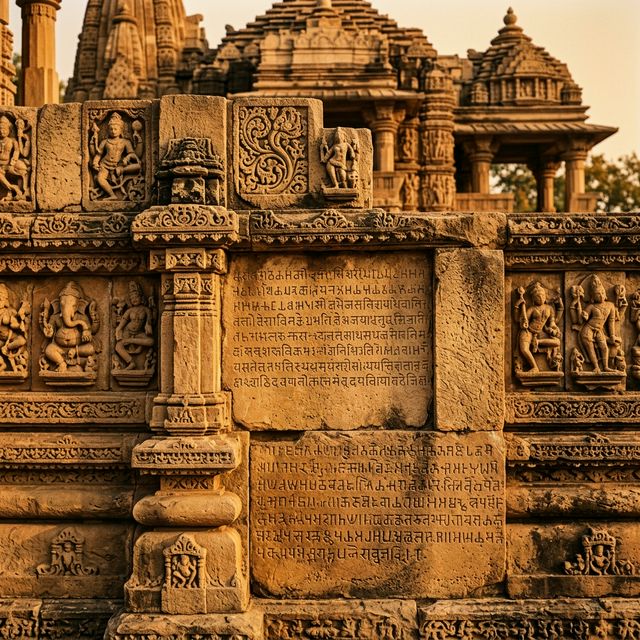
Discovered underground in Kharepatan, Ratnagiri district, Maharashtra, this set of three copper plates was issued by the Śilāhāra ruler Anantadeva I in the Śaka 1016 (1095 CE). Fastened by a ring bearing the royal Garuḍa seal, the Sanskrit text is engraved in the Nāgarī script. The charter documents a period of political instability following the reign of Mummuṇi, detailing Anantadeva’s suppression of a civil strife and his subsequent expulsion of Yavana forces that had devastated the Konkan region.
The text records a royal decree by the mahāmaṇḍaleśvarādhipati Anantadeva I, granting explicit customs exemptions to two merchants from Balipattana (modern Kharepatan): Bhābhaṇa and his brother Dhaṇāma. Issued on the first day of the bright fortnight of Māgha, Śaka 1016, the edict waives maritime transit duties for their commercial vessels and sailors entering major coastal ports, specifically at Thane, Nalasopara, Nagav and Chaul. The charter mandates that these trade privileges remain hereditary.
 Editor's Comment:
First Plate
1. siddham | labhate sarvvakāryeṣu pūjayā gaṇanā yakaḥ | vighnannighnansa vaḥ pāyāda-
2. pāyādgaṇanāyakaḥ || sa vaḥ pātu śivo nityaṃ yanmaulau bhāti jāhnavī |
3. sumeruśikharodgacchadacchacandrakalopamā || jīmūtaketutanayo niyataṃ
4. dayālurjjīmūtavāhana iti trijagatprasiddhaḥ | dehaṃ nijaṃ tṛṇamivākala-
5. yanparārthe yo rakṣati sma garuḍātkhalu śaṅkhacūḍam || tasyānvaye nikhila-
6. bhūpatimaulinūtnaratnadyuticchuritanirmalapādapīṭhaḥ | śrīsāhasāṅka
7. iva sāhasikaḥ kaparddī sīlāravaṃśatilako nṛpatirbbabhūva || tasmā-
8. dabhūcca tanayaḥ pulaśaktināmā sīmāsamaḥ suragurūditarājanīteḥ |
9. nirjjitya saṅgaramukhekhilavairivargga niṣkaṇṭakaṃ jagati rājyamakāri
10. yena || tataśca samabhūtsuto nṛpaśirovibhūṣāmaṇiḥ | śitaḥ sṛṇiri-
11. vāparorikariṇāṃ kaparddī laghuḥ | yadīyayaśasā jagatyatiśayena
12. śuklīkṛte na bhāti suravāraṇo na ca śaśī na dugdhāṃbudhiḥ || tasmādapya-
13. bhavadvibhūtipadavīpātraṃ pavitrīkṛtāśeṣakṣmāvalayo mahīpatila-
14. kaḥ śrīvappuvannaḥ sutaḥ | saṅgrāmāṅgaṇaraṅgiṇāsilatayā lūnaikadaṃ-
15. tā haṭhātsarvve yena vināyakā viracitā vidveṣiṇāṃ dantinaḥ || tasmā-
16. jjātastanūno rajanikara ivānanditāśeṣalokaḥ ślāghyaḥ śrījhañjha-
17. rājo divasakara iva dhvastaniḥśeṣadoṣaḥ | śaṃbhoryo dvādaśāpi
18. vyaracayadacirātkīrttanānisvanāmnā sopānānīva ma-
19. nye praṇatatanubhṛtāṃ svarggamārgodyatānām || bhrātā tasya ta-
20. tastatojjva layaśorāśiḥ prakāśīkṛtāśeṣakṣmāvalayo
Second Plate : First Side
21. balī balavatāṃ śrīgoggirājobhavat | cāpākarṣaṇaka-
22. rmmaṇi pravaṇatāṃ yasmingate bhūpatau bhīṣmadroṇapṛ-
23. thāsutaprabhṛtayaḥ sarvve tiraskāritāḥ || tasmādvismayakāri-
24. hāricaritaprakhyā takīrttiḥ sutaḥ śrīmānvajjaḍadevabhūpatirabhū-
25. dbhūcakracūḍāmaṇiḥ | dordaṇḍaikabalasya yasya sahasā saṅgrāmaraṅgāṃ-
26. gaṇe rājyaśrīḥ svayametya vakṣasi rati cakre murāreriva || jayanta i-
27. va vṛtrāreḥ purāreriva ṣaṇmukhaḥ | tataḥ śrīmānabhūtputraḥ saccaritro.a
28. parājitaḥ || karṇṇastyāgena yaḥ sākṣātsatyena ca yudhiṣṭhiraḥ | pratā-
29. pāddīptimārttaṇḍaḥ kāladaṇḍaśca yo dviṣām || śaraṇāgatasāmantā apa-
30. repi ca jagati rakṣitā yena | sa jayati yathārthanāmā śaraṇāgatavajrapañjaro devaḥ ||
31. yena svāgatamāgatāya vihitaṃ gommāya nānāvidhaṃ yenaivaiyapadevanāmni
32. calitaṃ rājyaṃ sthiraṃ kāritam | bhillammāmmaṇamambu vakṣitibhṛtāṃ dattaṃ ca yenābhayaṃ tasya
33. śrīvirudaṅkarāmanṛpateranyatkimāvarṇṇyate || śrīmānabhūttadanu vajjaḍadevanā-
34. mā bhūpālamastakamaṇistanayo nayajñaḥ | adyāpi yasya caritāni janāḥ sa-
35. mastā romāñcakañcukitagātralatā stuvanti || tadbhrātā ca tatorikasarinṛpo
36. jātaḥ satāṃ sammato dṛptārātikulācalaikadalane daṃbholilīlāṃ dadhat | gatvā
37. śaiśava eva sainyasahito dṛṣṭvā ca someśvaraṃ tasyāgre puturājñayā jagadalaṃ
38. yaḥ kīlayitvāgataḥ || tadbhrātṛjo vajjaḍadevasūnuḥ śrīcchittarājo nṛpatirbba-
39. bhūva | śīlāravaṃśaḥ śiśunāpi yena nītaḥ parāmunnatimunnatena || laṃbā-
40. lakāni kucakuṃbhaṭaṭopakaṇṭhaprabhraṣṭahāralatikāni nirañjanāni
Second Plate : Second Side
41. utkhātattikṣṇakaravālavidāritasya yontaḥpurāṇi paripanthijanasya ca-
42. kre || hatārinārīnetrāṃbhassekasaṃvarddhanādiva | brahmāṇḍamaṇḍapaṃ yasya kīrttiva-
43. llya dhirohati || dṛptārātiṣu kopakāladahanaḥ śaubhāgyanārāyaṇo vāra-
44. strīṣu tatonujaḥ samabhavannāgārjunaḥ kṣmāpatiḥ | yasyāmānuṣamūrjjitaṃ bhuja-
45. balaṃ dūrānniśamyadviṣāṃ nidrātīva raṇāṅgaṇavyasaninī dorddaṇḍakaṇḍūlatā ||
46. yadasamaśivirāntarmmattagandhebhadānaprasaradanilaśuṣyatsrotaso diggaje-
47. ndrāḥ | arinagaranidā hoddāmadigvyāpidhūmaprasarabhayanimīlallocanā no-
48. nmiṣanti || tadanu tadanujanmā mūrttimānmīnaketuḥ kṣataripuvibhavobhūnmummu-
49. ṇiḥ kṣoṇipālaḥ | vidhṛtadhanuṣi yasminvājinīrājanānte balabhidapi balī-
50. yānvārṣikaṃ cāpamaujjhat || tasminnṛpe pravarakīrttiśarīrabhāji nāgārjuna-
51. sya tanayo nayacakravarttī | bhūpo.abhavatparamadharmmaviśuddhadehaḥ sīlāra-
52. gotranṛparatnamanantapālaḥ || jāte dāyādavairivyasanini samaye yaira-
53. vāptaprabhāvairdhvastā devadvijātipramathavidhinā koṅkaṇakṣoṇireṣā |
54. tānugrānpāparāśīnmunayavanabhaṭānnkhaḍgadhārāmbuḥrāsai kṣiptvoccaiścandrabi-
55. mbe svakulapatisakho yaḥ svakīrttiṃ lilekha || cintāmaṇau praṇayināṃ naya-
56. nābhirāme kāme kuraṅgakadṛśāṃ jagadekavīre | nirvvairivīramavanīvala-
57. yaṃ vidhāya dharmmeṇa pālayati tatra narendracandre || atha svakīyapuṇyodayātsama-
58. dhigatapañcamahāśabda mahāsāmantādhipatitagarapuraparameśvara- śīlāranare-
59. ndrajīmūtavāhanānvayaprasūtasuvarṇṇagaruḍadhvajābhimānamahodadhiniḥ śaṅ-
60. kalaṅkeśvaravīracaritabhāratāvatāra arivīrapatanakedārako-
61. pakālānalatyāgajagajjhaṃ pajhañpaḍācāryapaścimamasamudrādhipatirā-
62. yapitā mahaśaraṇāgatavajrapaṃjaraprabhṛtisamastarājāvalīvirāji-
Third Plate
63. tamahāmaṇḍaleśvarādhipatiśrīmadanantadevakalyāṇavijayarājye nijabhujopā-
64. rjitānekamaṇḍalasametāṃ purīpramukhacaturdaśagrāmaśatīsamanvitāṃ sa-
65. mastakoṅkaṇabhuvaṃ samanuśāsati tathaitadrājyacintābhāraṃ samudvahati ma-
66. hāmātyaśrīnauvitakavāsaidaḥ | mahāsāndhivigrahikaśrīripibhaṭṭaḥ bhāṇḍāgā-
67. rika prathamacchepādīsenamahādevaiyaprabhuḥ | dvitīyacchepādī-
68. senapradhānaśrīsomaṇaiyaprabhuḥ | evamādiśrīkaraṇe pravartamāne sa ca ma-
69. hāmaṇḍaleśvaraḥ śrīmadananadevarājaḥ sarvvāneva svasaṃvadhyamānakān anyāna-
70. pi rājaputramantripurohitāmātyapradhānāpradhānaniyogikāṃ stathā rāṣṭrapati-
71. viṣayapatinagarapatigrāmapatiniyuktāniyuktarājapuruṣajanapadāṃ-
72. stathā hañjamanagarapauratrivarggaprabhṛttīṃśca praṇatipūjāsatkārasamāde-
73. śaiḥ sandiśatyastu vaḥ saṃviditaṃ yathā || śakanṛpakālātītasaṃvatsaradaśaśa-
74. teṣu ṣoḍaśādhikeṣu bhāvasaṃvatsarāntarggatamāghaśuddhapratipadāyāṃ yatrāṃ-
75. katopi saṃvat 1016 mahāmaṇḍalīkaśrīmadanantadevena śrīmadvalīpatta-
76. nīyamahāpradhānadurgaśreṣṭhisutamahāpradhāna- śrībhābhaṇaśreṣṭhinastadbhrā-
77. tṛ mahāsāndhivigrahikaśrīdhaṇāmaśreṣṭhinaḥ tayoryatpravahaṇaṃ śrīsthāna-
78. ke tathā nāgapurasūrppārakacemūlyādiṣu velākuleṣu caturdaśaśata-
79. kuṅkaṇābhyaṃtareṣu yatpravahaṇaṃ samāgacchati tasya yacchulkaṃ norikakarma-
80. karāṇāmapi praveśe nirgamepi śrīkuṅkaṇacakravartinā śrīmadanantade-
81. varājñā sīlāreṇa dattatāmmraśāsananibaddhaṃ śulkaṃ parityaktam | tatpu-
82. trapautrādīnāṃ śreṣṭhipāṇamaśreṣṭhikuḍukulaśreṣṭhimālaiyādīnā-
83. mapi pratipālanīyam || pārjitaṃ caitat śrīdharapaṇḍi tena rājadvārasthi-
84. tena kuṅkaṇacakravartinaṃ śrīmadanantadevaṃ samārādhaya || ||
Success!
Verse 1
May that Gaṇanāyaka (i.e. Gaṇapati) protect you from calamity—he who destroys obstacles and who, by means of worship, receives attention in all undertakings!
Verse 2
May that Śiva always protect you—he on whose head the Gaṅgā shines like the bright crescent of the moon as it rises over the peak of Sumeru!
Verse 3
Jīmūtavāhana, the ever compassionate son of Jīmūtaketu, is well-known in the three worlds—who, valuing his own body as not better than a straw, saved, indeed, Śaṇkhacūḍa from Garuḍa.
Verse 4
In his family was born king Kapardin I, the ornament of the Śīlāra race, who was adventurous like the illustrious Sāhasāṅka (i.e.Vikramāditya) and whose stainless foot-stool was covered with the splendour of fresh jewels on the heads of all kings.
Verse 5
From him sprang his son, Pulaśakti by name, who represented the limit of political wisdom taught by Bṛhaspati, the preceptor of gods; who, having vanquished all enemies in the forefront of the battlefield, ruled over the world, free from trouble.
Verse 6
From him again sprang his son, the younger Kaparadin (i.e., Kapardin II), the crest-jewel of kings, who was as it were a sharp goad to the elephants in the form of his enemies; the world being exceedingly whitened by his fame, neither the heavenly elephant (Airāvata) nor the moon nor the milk-ocean could be distinguished.
Verse 7
From him again sprang his son, the illustrious Vappuvanna, the worthy abode of prosperity, an ornament of royalty, who sanctified the whole circle of the earth. Having one of their tusks forcibly cut off by the creeper-like sword of him who was delighted to fight on the field of battle, all the elephants of the enemies were turned into Vināyakas i.e. they become Gajānana, who has only one tusk.
Verse 8
From him sprang his praiseworthy son, the illustrious Jhañjha, who delighted all people even as the moon does, and who destroyed all blemishes even as the sun dispels all darkness; who erected twelve temples of Śiva, named after himself, which served, as it were, as steps to pious people, ready to repair to the path of heaven.
Verse 9
Then there rose his brother, the illustrious Goggirāja, who having a mass of brilliant fame, brightened the entire circle of the earth, and who mighty among the mighty; when that king bent down in the act of drawing the string of his bow, Bhīṣma, Droṇa, the son of Pṛthā (i.e. Arjuna) and others felt surprised in their minds.
Verse 10
From him sprang a son named the illustrious Vajjaḍadeva I, famed for his astounding and attractive deeds, the crest-jewel of the circle of the earth. Royal fortune, approaching him, all of a sudden and of her own accord, on the battle-field, felt delighted while sporting on the bosom of him whose strength lay solely in his own arm, as it does on that of Murāri.
Verse 11
To him was born an illustrious and virtuous son named Aparājita as Jayanta was to Indra and as the six-faced Kārttikeya was to Śiva.
Verse 12
He was Karṇa himself in respect of liberality, Yudhiṣṭhira in that of truthfulness, the refulgent Sun in that of valour, and was the rod of the god of death to his enemies.
Verse 13
Victorious is that king, who protected even the feudatories of other kings when they sought refuge with him, and who rightly obtained the title of "the adamantine cage giving protection to those who seek it.”
Verse 14
What else can be described of him who welcomed in various ways Gomma, who resorted to him for protection, who caused to be made firm the infirm rule of Aiyapadeva, who gave protection to Bhillama, Ammaṇa and Mambuva, and who was thus veritable Rāma among title-holders.
Verse 15
From him was born the son named Vajjaḍadeva II, who was conversant with political wisdom and was a veritable crest-jewel of kings,—whose deeds all people even now praise, with their creeper-like bodies having clothes of horripilation.
Verse 16
Then there was born his brother, king Arikesarin, who had the grace of the thunderbolt in destroying the principal mountains in the form of arrogant foes; who, even when he was a boy, went with an army to Someśvara and having seen that god, came back after offering him the whole world by the order of his father.
Verse 17
Thereafter his brother’s son the illustrious Chittarāja became king, who, noble as he was, raised his Śīlāra family to great eminence, though he was then only in his boyhood.
Verse 18
He caused the ladies in the harems of his enemies slain by his sharp sword drawn out of its scabbard to have dangling unbraided hair, to discard necklaces from their pitcher-like breasts and to have eyes without collyrium applied to them.
Verse 19
The creeper of his fame rises above the bower of the Brāhmāṇḍa as if because it is made to grow with the sprinkling of water in the form of tears from the eyes of the wives of the enemies slain by him.
Verse 20
Thereafter, his younger brother Nāgārjuna became king—he who, resembling Nārāyaṇa in regard to the good fortune of courtesans, was, by his anger, the fire of destruction to his arrogant foes. Having heard from afar about the superhuman power of his arms, the itching of the strong arms of his enemies, fond of fighting on the battlefield, goes to sleep as it were.
Verse 21
The quarter-elephants, the streams of whose ichor have dried up by the breezes blowing over the rutting juice of the intoxicated scent-elephants in his unique camp, open their eyes after a long time—the eyes which were closed for fear of the great masses of smoke spreading from the burning of his enemies’ cities and enveloping all quarters.
Verse 22
When that king (viz., Mummuṇi) attained the body of excellent fame (i.e. died), Ananatapāla, the son of Nāgārjuna, the princely jewel in the Sīlāra family, the Sovereign in respect of political wisdom, who has a pure form on account of his performance of highest duty, became king.
Verse 23
He—who drove out those violent and vile Yavana soldiers of Muna, who, having become powerful, had devastated this Koṅkaṇa country, harassing gods and Brāhmaṇas, by means the torrents of water in the form of the sharp edge of his sword, when there was trouble in the kingdom owing to hostile kinsmen—inscribed his fame on the disc of the moon, as he helped the head of his family.
Verse 24
While the moon-like Chief among kings in righteously governing the earth, having freed it from hostile warriors, he who is like the wish-fulfilling jewel to suppliants, a veritable lovely god of love to deer-eyed women and a unique warrior in the world—
Line 57-72
Now, while the mahāmaṇḍaleśvarādhipati, the illustrious Anantadeva—who by his religious merit, has obtained the five mahāśabdas, who is adorned with all royal titles such as mahāsāmantādhipati, ‘the Lord of the City of Tagara, ‘a king of the Sīlāra family’ ‘a scion of the family of Jīmūtavāhana’, ‘he who has the ensign of the golden Garuḍa’, ‘he who is the ocean of pride’, ‘the fearless lord of Laṅkā,’ ‘an incarnation of the heroic descendant of Bharata’, ‘he who is Śiva causing the downfall of the warriors of his enemies’, ‘he whose anger is like the fire of world-destruction’, ‘he who has surpassed the world in liberality’, ‘he who is the foremost among heroes (Jhampaḍas)’, ‘the lord of the Western Ocean’, ‘Brahmā among kings’, ‘an admantine cage to such as seek his refuge’, and so forth—is governing the whole Koṅkaṇa country containing fourteen hundred villages headed by Purī, together with several maṇḍalas (countries) conquered by his own arm—while his government, consisting of the mahāmātya, the illustrious Admiral Vāsaida, the mahāsāndhivigrahika, the illustrious Riṣibhaṭṭa, the senior Treasury Officer, the mahāpradhāna, the illustrious Mahādevaiyaprabhu, the junior treasury officer, the pradhāna, the illustrious Somaṇaiyaprabhu and so forth, is bearing the burden of the cares of his administration—the mahāmaṇḍaleśvara, the illustrious Anantadevarāja addresses, with salutation, honour and respect, all assembled princes, counsellors, the family priest, the ministers, the principal and minor officers, whether connected with him or not, and also the heads of the rāṣṭras, viṣayas, towns and villages, royal servants whether formally appointed or not, the villagers as also the artisans, guilds and the three classes among townsmen as follows:-
Line 73-80
“Be it known to you that on the first tithi on the bright fortnight of Māgha in the cyclic year Bhāva, when ten centuries of years increased by sixteen—in figures 1016 have passed by the era of the Śaka king, I, the mahāmāṇdalika, the illustrious Anantadeva, the Śīlāra king, the emperor of Kuṅkaṇa, have exempted, by this copper-plate charter, the ships of these two, viz. the mahāpradhāna, the illustrious Bhābhaṇa-śreṣṭhin, who is the son of the mahāpradhāna, the illustrious Durga-śreṣṭhin, of the prosperous Balipattana, and his brother, the mahāsāndhivigrahika, the illustrious Dhaṇāma-śreṣṭhin—the ships that might call the prosperous Sthānaka, and also at Nāgapura, Śūrpāraka, Cemūlya and other ports situated in the country of Kuṅkaṇa consisting of fourteen hundred villages, and also the cess that may be levied for the ingress and egress of their sailors.
Line 81-84
This should be observed also in the case of their sons and grandsons such as the śreṣṭhin Pāṇama, the śreṣṭhin Kuḍukala, the śreṣṭhin Mālaiya and others.”
This grant was secured by Śrīdhara Paṇḍita, the door-keeper of the king, by propitiating the Kuṅkaṇa-Cakravartin, the illustrious Anantadeva.
| Dynasty: | Śilāhāra |
| Ruler: | Anantadeva I |
| Date: | 9th January 1095 CE (Māgha śuddha pratipadā, Śaka 1016) |
| Place: | Chhatrapati Shivaji Maharaj Vastu Sanghralaya, Mumbai |
| Donee: | Bhābhaṇa-śreṣṭhin and Dhaṇāma-śreṣṭhin |
| Language: | Sanskrit |
| Nature of grant: | Tax Abolition, Administrative Order |
| Purpose: | To support maritime commerce and honor the services of merchant families |
| Provenance of inscription: | Kharepatan, Ratnagiri, Maharashtra |
| Type of Inscription: | Copperplate grant |
| Source: |
Bibliography & Research
- Barnett, L. D. (1916). No. 28 Inscriptions At Narendra. Epigraphia Indica, XIII, 298-326, here p 316 and 323.
- Dikshit, M. G. (1953). Panjim Plates of Jayakeshi (I) Saka 981. Indica: The Indian Historical Research Institute Silver Jubilee Commemoration Volume, 89-94.
- Fleet, J. F. (1867-70). Some further inscriptions relating to Kadamba Kings of Goa. Journal of the Bombay Branch of the Royal Asiatic Society, IX, 262-313.
- Hodivala, S. H. (1920). Studies in Parsi History. Bahauddin College, Junagadh, pp 80-82.
- Hodivala, S. K. (1920). Parsis in Ancient India. The Sanj Vartaman Press.
- Mirashi, V. V. (Ed.). (1977). Corpus Inscriptionum Indicarum, Vol. VI: Inscriptions of the Śilāhāras. Archaeological Survey of India, pp xv-xvi and 115-120.
