
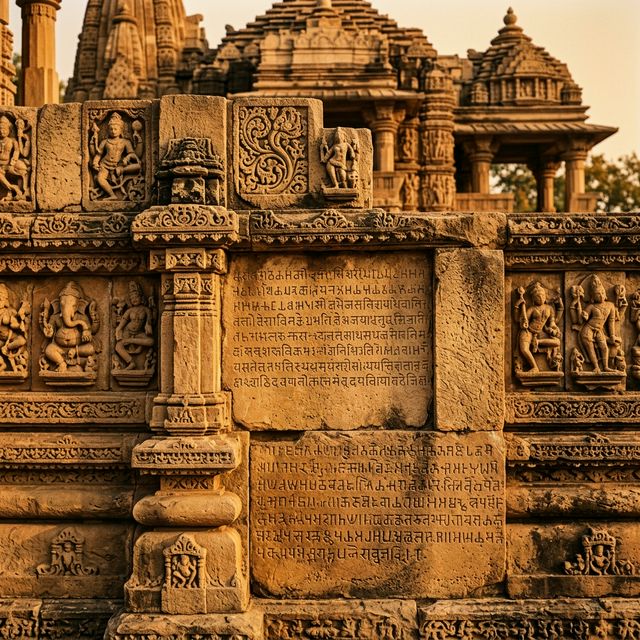
This Sanskrit language and Nāgarī script inscription, found in Cave 11 at Kanheri near Mumbai, constitutes the earliest known record of the Śilāhāra dynasty till date. Originally documented by Dr. E. W. West and later analysed by Dr. Kielhorn, this inscription is dated to the Śaka 765 (c. 843-844 CE). It belongs to the reign of the Śilāhāra ruler Pullaśakti, who acknowledges the suzerainty of the Rāṣṭrakūṭa emperor Amoghavarṣa I.
The inscription documents a series of financial endowments made by a high-ranking official named Viṣṇugupta, son of the sarvādhyakṣa Pūrṇahari. Viṣṇugupta deposited multiple perpetual endowments (akṣaya-nīvī) in the form of drammas for the maintenance of the Buddhist establishment at Kṛṣṇagiri (modern Kanheri, Mumbai, Maharashtra). The funds were distributed in precise amounts where twenty drammas were alloted for the worship of the Buddha, three drammas for structural repairs of the vihāra, five drammas for the monks' raiment, and one dramma for the purchase of religious texts. The text concludes with a strict injunction for the miscreants.
1. siddham śrīmahārājādhirājaparameśvarapṛthvīvallabha- śrīmadamoghavarṣaśrīmahārājasya pravarddhamānavijayarājye tatprasādāvāptamahāsāmantako-
2. ṅkaṇavallabhaśrīkaparddipādānudhyātaśrīpullaśaktimahādhipe purīprabhṛtikoṅkaṇaviṣayaṃ samagraṃ praśāsati tatpādopajīvī purāṇāmātyo bhadra-
3. śrīviṣṇugupto sarvādhyakṣa śrīpūrṇṇaharisutaḥ śrīkṛṣṇagirau śrīmadāryasaṅghaṃ praṇamyātikṛpayā dadāti śrībhagavataḥ pūjārtha viṃśatiṃ drammāṇāṃ
4. ihāsminneva vihāre vyastavyākīrṇṇapariṣkaraṇārthaṃ drammāṇāṃ trayaṃ cīvarīyo āryasaṃghasya drammāṇāṃ pañca dāpanīyāḥ pustakārtthameko drammaḥ
5. akṣainīvirdrammāścatvāriṃśaccatvāriṃśadiha | ekaṃ drammaśata viṃśatyuttaram | ete drammāḥ kalatra putravatpratipālanīyāḥ saṃvat 765 |
Success! During the increasingly victorious reign of the illustrious mahārājādhirāja, parameśvara, pṛthvīvallabha, the illustrious mahārāja Amoghvarṣa I, while the great Chief, the illustrious Pullaśakti is governing the whole country of Koṅkaṇa headed by Purī—Pullaśakti who meditates on the feet of the illustrious Kapardin I and who has obtained the titles of mahāsāmanta and koṅkaṇavallabha by his (i.e. Amoghvarṣa’s) grace—the respectable old amātya, the illustrious Viṣṇugupta, son of the sarvādhyakṣa, the illustrious Pūrṇahari, after having made obeisance to the holy community (saṅgha) at the famous Kṛṣṇagiri, has donated, out of great kindness, twenty drammas for the worship of the holy Buddha; three drammas for the repairs of what may be damaged or ruined in this very vihāra. For the raiment of the venerable community, five drammas shall be expended and for religious books, one dramma. As a perpetual endowment, he has deposited here forty drammas and forty, and also one hundred and twenty drammas. The disposition as to the expenditure of these drammas should be guarded like one’s wife and sons. In the year 765.
| Dynasty: | Śilāhāra |
| Ruler: | Pullaśakti |
| Date: | 843-44 CE (Śaka 765) |
| Place: | Kanheri Caves (ancient Kṛṣṇagiri, present-day Borivali, Mumbai) |
| Donee: | Āryasaṅgha at Kānherī |
| Language: | Sanskrit |
| Deities: | Buddha |
| Nature of grant: | Monetary donations |
| Purpose: | To support Buddhist religious and educational activities at Kānherī |
| Provenance of inscription: | Kanheri caves, Borivali, Maharashtra |
| Type of Inscription: | Stone inscription |
| Source: |
