
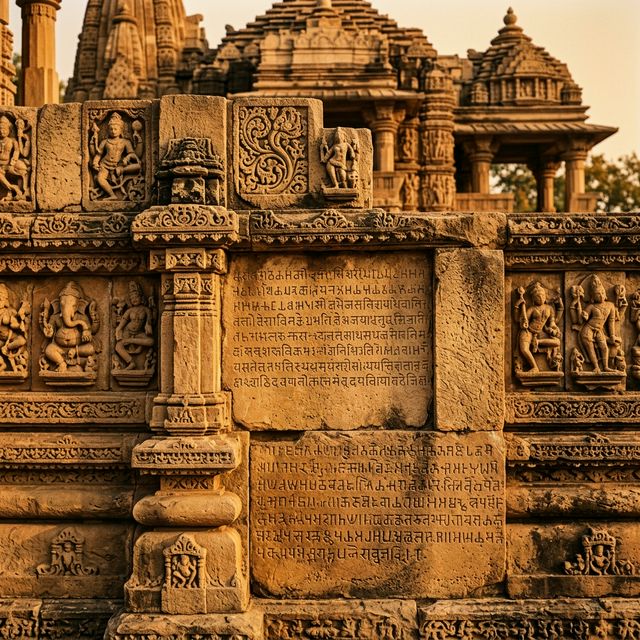
Located on the architrave of Cave 12 at Kanheri, this Sanskrit inscription is engraved in Nāgarī characters. First documented by E. W. West in 1862 and subsequently analysed by F. Kielhorn, the inscription consists of five primary lines along with additional characters on a column capital. The epigraph dates to Śaka 799 (877 CE).
The charter acknowledges the supreme sovereignty of the Rāṣṭrakūṭa monarch Amoghavarṣa I and the subordinate rule of his mahāsāmanta, Kapardin II, who governed the Konkan territory. It records a perpetual endowment of one hundred drammas by an individual named Veva to the Buddhist monastic community living at the Kṛṣṇagiri mahāvihāra. This financial deposit was specifically given for a meditation room and to provide clothing for the monks. The agreement was formalised before the assembly of ācāryas and witnessed by specific individuals, including Dharmākaramitra and Avighnākara, concluding with severe imprecatory warnings against misappropriation.
 Editor's Comment:
1. siddham | svasti | śakanṛpakālātītasaṃvatsaraśateṣu saptasu navanavatyadhikeṣvaṅkataḥ 799 mahārājādhirāja parameśvaraśrī-
2. madamoghavarṣadevapravarddhamānavijayarājye tatprasādīkṛtakoṅkaṇavallabhamahāsāmantaśekharaśrīkaparddi- pravarddhamānādhipatye śrīmatkṛṣṇagiri mahāvi-
3. hāre bhadraśrīvevaḥ bhikṣūṇāṃ tatrasyārya saṅghasya drammāṇāṃ śatamekaṃ dattvopaśamanasadṛśāṃ cīvarikādilābhasamanvitāṃ koliveśmikāṃ kṛtvā nyavīviśatseyamāryabhikṣoṃre-
4. vānukampāmupādāya yāvaccandrārkkādayaḥ pratapanti tāvatpratipālyā | yastu na pratipālayiṣyati sa pañcānantaryakarmmakāryavīcyādiṣu mahadduḥkhamanu bhaviṣyati | vyavastheyaṃ
5. ācāryasaṅghasya purata ārocya pratiṣṭhāpya likhāpitā | sākṣiṇaścācāryadharmmākaramitraḥ gomyavighnākaraḥ pattiyānayogaḥ | puṇyena prāpyante śrīpṛ-
6. thvyādaya iti |
Line 1-3 -
Success! Hail! When seven hundred and ninety-nine—in figures 799—years of the era of the Śaka king had passed and during the increasingly victorious reign of the mahārājādhirāja and parameśvara, the illustrious Amoghavarṣa I, and during the prosperous rule of the illustrious Kapardin II, the mahāsāmanta and the lord of Konkana graciously granted by him (i.e. Amoghvarṣa I), the respectable Veva has made over a hundred drammas to the venerable community dwelling in the mahāvihāra on the famous hill of Kṛṣṇagiri, and has thereby established a room suitable for meditation together with the clothing and other gifts to be made to the monks. This endowment should, out of compassion for the venerable monks, be preserved as long as the moon, the sun and other luminaries’ shine. He who will not preserve this endowment shall be guilty of the five sins which result in immediate retribution and shall suffer great pain in the Avīci and other hells.
Line 4-6 –
This deed has been approved in the presence of the community of the ācāryas and has been confirmed by it and has been caused to be written. Witnesses of this are the ācārya Dharmākaramitra, the Gomin Avighnākara and Pattiyānayoga.
Fortune, earth and so forth are obtained by one’s religious merit.
| Dynasty: | Śilāhāra |
| Ruler: | Kapardin II |
| Date: | Śaka 799 (877-78 AD) |
| Place: | Kanheri Caves (ancient Kṛṣṇagiri, present-day Borivali, Mumbai) |
| Donee: | Āryasaṅgha at Kānherī |
| Language: | Sanskrit |
| Deities: | Buddha |
| Nature of grant: | Monetary donations |
| Purpose: | To record a perpetual donation by Veva to the Mahāvihāra |
| Provenance of inscription: | Kanheri caves, Borivali, Maharashtra |
| Type of Inscription: | Stone inscription |
