
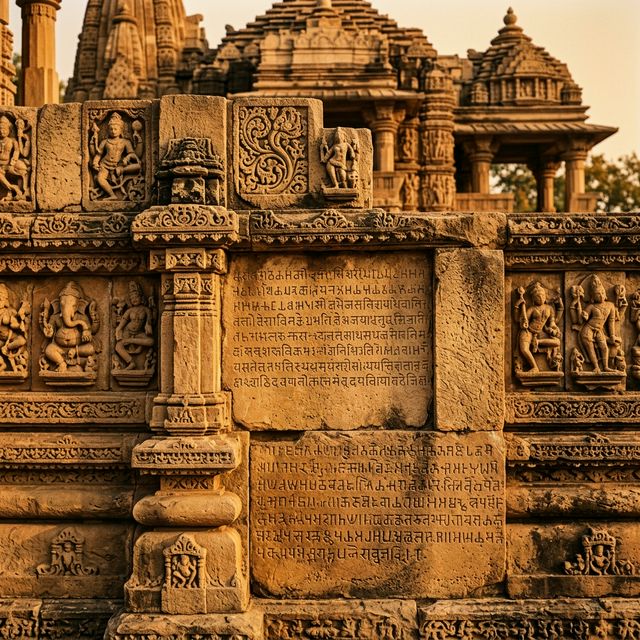
The Janjirā Plates (Set II) are a companion set of Sanskrit copper-plate charter discovered at Chikhali Pakhadi, Raigad district, Maharashtra. Issued by the Śilāhāra ruler Aparājitadeva in Śaka 915 (993 CE), the inscription consists of three plates engraved in Nāgarī script. Currently housed in the Baroda Museum, the text duplicates the Rāṣṭrakūṭa genealogy found in Set I, tracing the lineage from Dantivarman to the fall of Karka II. It functions as a legal deed recording a land transaction within the Purī-Konkan region to the same Ṛgveda brahmaṇa, validated by royal sanction and the attestation of state officials at the capital Sthānaka (modern Thane).
The charter records the grant of an orchard (ārāmaka) situated near the Cammelevā-khāḍī in Sālaṇaka village, within the Pāṇāḍa viṣaya. The donation was made during a solar eclipse to the kramavid brāhmaṇa Kolama of the Kāśyapa gotra for the performance of obligatory rites such as bali, caru, vaiśvadeva, and agnihotra. The grant includes rights to udraṅga and uparikara taxes, as well as fines for ten offences (daśāparādha). The document closes with the signatures of the mahāmātya Keśapārya and the sāndhivigrahika Jhañjhamaiya and was written by the kāyastha scribe Uddāma.
First Plate
1. siddham | sa vovyādvedhasā dhāma yannābhikamalaṅkṛtam | haraśca yasya kāntendukalayā kamalaṅkṛtam || kurvantvāmnāyapūtāni vedhaso vadanā-
2. nyalam | carācarajagatsṛṣṭināmadhāmāni vaḥ śubham || āsīdgovindarājaḥ kṣitipatirasamaḥ karkkarājastatobhūdbhabhartā
3. śrīndrarājaḥ punarabhavadato dantivarmeti sūnuḥ | khyātaḥ śrīkṛṣṇarājaḥ kṣapitaripurabhūtkarkkarājasya sūnustasmā-
4. dgovindarājastadanu tadanujaḥ śrīdhruvāṅkādhirājaḥ || jagattuṅgoṅgajastasya guṇottuṅgobhavattataḥ | vallabhomoghavarṣaḥ
5. satkṛṣṇarājastataḥ sutaḥ || jagattuṅgāṅgajaḥ śrīmānindradevastatobhavat | nityavarṣo bhuvo bharttā vikramottuṅgaśaṅki-
6. taḥ || janaharṣakṛte varṣanghana iva ghanakavāridhārābhiḥ | tasmādamoghavarṣo varṣāvadhirājyabhājanaṃ jātaḥ ||
7. tasyānujo haririvoddhṛtabhūtalaśrīrgovindarājanaranāthasuvarṇṇavarṣaḥ | sannandakācyutasudarśanacakraci-
8. hraḥ siṃhāsanī gurubalaḥ puruṣottamobhūt || pitṛvyaḥ svarṇṇavarṣasya nityavarṣānujaściram | kurvvannakaṅṭakaṃ rājyaṃ
9. tapasā sāhasena ca || śrīmatkarkkararāṣṭrakūṭakaṭakesadvaṃśasaṅgharṣato raudradrohadavapratāpaśamakaṃ nistriṃ-
10. śadhārājalaiḥ | yenākāri samuddhṛtendradhanuṣā bhūpāśmabhirvidyutā bhāti śrīmadamoghavarṣasughano.asaddhūli-
11. vidhvaṃsanāt || atha gatavati tasminvaddigendre narendre suvimalamapi śaṃbhorddhāma śubhraṃ vidhātam kanakakala-
12. śadhārāpātadhauteva kanyā tadanu narapatiśrīḥ kṛṣṇarājaṃ samāgāt || colo lolo bhiyā bhūdgajapatirapata-
13. jjāhnavīgahvarāntarvvājīśastrāsaśeṣaḥ samabhavadabhavacchailaradhre tathāndhraḥ | pāṇḍyaśaḥ khaṇḍitaśrīranuja-
14. jaladhijalaṃ dvīpapālāḥ pralīnā yasmindattaprayāṇe sakalamapi sadā rājakaṃ na vyarājat || ā cañcatsindhu-
15. vīcīnicayaparicitopatyakāt paścimādrerā pūrvvādudyadarkkaprakharaharikhurotkhātamūrddhno mahīdhrā-
16. t | ā vitteśālayādā daśavadanapuro maṇḍalāgraprabhāvaiḥ pṛthvīmekātapatrāmakuruta sukṛtī yo
17. jagadgītakīrtiḥ || tasminnastamite vibhau vidhivaśādākrāntabhūmaṇḍale lokāhlādini śatrupaṅkajarudhi pro-
18. tkṛṣṭarociṣmati | śītāṃśāviva divyasaṅgagatike rājādhirāje tataḥ śrīmatkhoṭṭigadeva ityabhidhayā rā-
19. jye sthitaḥ sadyaśāḥ || tadanu madanamūrtiṃ bhāgyasaubhāgyabhājaṃ bhuvanabhavanadīpaṃ suprabhūtaprabhūtim | niru-
20. pamanṛpasūnuṃ kakkaleśaṃ nareśaṃ narapatikṛtasevaṃ rājalakṣmīrjjagāma || tatra kṣitīśe nṛpatipradīpe pracaṇḍa-
21. tailappasamīraṇena | vidhyāpite duṣyamakālabhāvātkathāvaśeṣe sati raṭṭarājye ||
22. jīmūtaketutanayo.avatatāra yosmiñjīmūtavāhana iti prathitaḥ pṛthivyām | śīlāravaṃśatila-
23. kaḥ svaśarīradānatrātāhilokasamavādyagarutmadaṃghaḥ || abhavadahitamarddī tasya vaṃ-
24. śe kaparddī vibudhajanasatuṣṭaḥ śreṣṭhagopṛṣṭhatuṣṭaḥ | priyajalagiridurggaprīṇitātme-
25. ṣṭavarggaḥ parapurabhayakarttā raudranāgendrahartā ||
Second Plate: First Side
26. vipulamatirudīrṇṇaḥ karṇṇavatsvarṇṇavarṣaiḥ | sapulakapulaśaktiḥ śaktiyuktasta-
27. to.abhūt | abhavadiha na dīnastasya sūnuḥ kaparddī jitaparavaladaṇḍākhaṇḍa-
28. pṛthvītaraṇḍaḥ || tasmādbhuvanataraṇḍaḥ khaṇḍitadorddaṇḍacaṇḍaripudaṇḍaḥ | jajñe yaśa-
29. sā maṇḍitamakhaṇḍabhūmaṇḍalaṃ yena || jhañjhanāmā sutastasmādvappuvannādabhūdasau | udi-
30. toditatā yena vaṃśasya prakaṭīkṛtā || caturaścaturāsyopi na kṛtranāṅgadituṃ guṇān | śara-
31. dabhrasitān yasyācaturāsye tu kā kathā || tasyānujo nijabhujorjjitanirjjitāriḥ | śrī-
32. goggirāja iha suprathitaprabhāvaḥ | śrījhañjharāṇakaguṇāndviguṇāndadhānarastyāgādbhuja-
33. ṅgavijayīrmmaḍijhañjhanāmā || paramaṇḍalaprasādhanasatkīrttiguṇākaraḥ kṛtī tadanu |
34. kṣitipo vajjaḍadevaḥ suśrīko rājyamadhitaṣṭhau || anavaratadānaśīlaḥ pratāpavānnītividyaśo-
35. nilayaḥ | sūnustasya ca rājye śrīmānaparājito jātaḥ || krūrārātiyamaḥ sukāntibhavanaṃ ka-
36. lpadrumaḥ prārtthināṃ sthānaṃ netrasukhasya dhairya jaladhiḥ saubhāgyakandāṅkuraḥ | sadvidyānilayaḥ
37. kalāguṇanidhirnnītau ca vācaspatirddharmasyāspa damuttamaṃ vimaladhīrlakṣmīvilāsāvadhiḥ ||
38. siddhāṃ saṃyānabhūmiṃ pṛthutarapuṇakaṃ deśamājñāvidheyaṃ sahyaṃ pratyantakāntaṃ nijabhaṭakalitaṃ
39. saṅgamādīśvarārakhyam | nāmākhyānaprasādhyaṃ cipulaṇaviṣayaṃ naṣṭavaiṣamyabhāvaṃ kṛtvā tejonu-
40. bhāvādbaravibhavavidhṛtsvājñayā yaḥ praśāsti || ā lāṭadeśādbhuvi bhillamīyadeśaṃ vidhāyā-
41. vadhimatra yasya | ā paścimābdheratha candrapūrvaṃ puraṃ vidhṛtya prabhutāprabhāvaḥ || śrīmatā keśapā-
42. ryeṇa mahāmātyena mantriṇā | saṃyuktosau vibhātīha guruṇākhaṇḍalo yathā || iti pūrvvaṃ
43. śrīmānyakheṭakaṭakāvāsitaparamabhaṭṭārakamahārājādhirāja- parameśvaraśrīmatkṛṣṇarā-
44. jadevapādānudhyātaparamabhaṭṭārakamahārājādhirājaparameśavara- śrīmatkhoṭṭigadeva-
45. pādānudhyātaparamabhaṭṭārakamahārājādhirājaparameśvara- śrīmatkakkaladeve sañjā-
Second Plate: Second Side
46. tāpāye raṭṭarājye ca naṣṭabhraṣṭe sati || svatejonubhāvātsamadhigatāśeṣamahāśabda mahāsāma-
47. ntādhipatitagarapuraparameśvaraśīlāranarendrajīmūtavāhanānvaya- prasūtasuvarṇṇagaru-
48. ḍadhvajābhimānamahodadhimalagalagaṇḍadīptimārtaṇḍa- gaḍaruddhaphoḍigaṇḍaragaṇḍapaści-
49. masamudrādhipatikoṅkaṇavallabharājagaṇḍakandarppanannī- samudrabirudaṅkarāmasahajavidyā-
50. dharakaligalāṅkuśavillaviḍeṅgamaṇḍalīkatrinetraprabhṛtisamasta- rājāvalīsamalaṅkṛta-
51. mahāmaṇḍaleśvaraśrīmadaparājitadevarājaḥ sarvvāneva yathāsaṃbadhyamānakānāgāmigrā-
52. mabhoktṛsāmantarājaputrādhikāripurapatitri vargasthānanagaraprabhṛtipradhānāpradhānāñ
53. janānpraṇatipūjāsamādeśaiḥ samanubodhayatyastu vaḥ saṃviditaṃ yathā || calā vibhū-
54. tiḥ kṣaṇabhaṅgi yauvanaṃ kṛtāntadantāntaravarti jīvitam | tathāpyavajñā paralokaśāsane
55. aho nṛṇāṃ vismayakāri ceṣṭitam || sakalametadasāratayādhiṣṭhitaṃ vinaśvarasvabhā-
56. vaṃ dharma evaikaḥ sahāyaḥ śāśvataśceti vicintyāsmābhirayaṃ pitroraihikāmuṣmikaphalā-
57. vāptaye ātmanaśca puṇyayaśobhivṛddhaye || śakanṛpakālātītasaṃvatsaraśateṣu
58. navasu pañcadaśottareṣvaṅkataḥ saṃvat || 915 || vijayasaṃvatsarāntarggataśrāvaṇaba-
59. hulapañcadaśyā maṅkatopi śrāvaṇavadi 15 ravāvadyeha śrīsthānakāvāsake saka-
60. lakalmaṣatamaḥ paṭalocchedanapaṭīyasi paramapuṇyasaṃbhārakāriṇi svarggāpavargga-
61. kāraṇabhūte sañjātasūryagrahaṇamahāparvvaṇi caturdaśagrāmaśatopalakṣitapurī-
62. koṅkaṇamaṇḍalāntaḥpātipāṇāḍaviṣayāntarvvartti sālaṇakagrāme || cammelevā-
63. khāḍī tasyāmārāmakaḥ | yasya cāghāṭanāni || pūrvvato rājapathaḥ | dakṣiṇato vi-
64. prarudropādhyāyārāmakaḥ | paścimato viprasīhappaiyārāmakaḥ ||
65. uttarato rājapathaḥ | evamayaṃ caturāghāṭanopalakṣitaḥ sodraṅgaḥ
Third Plate: First Side
66. soparikaraḥ savṛkṣamālākulaḥ svasīmāparyantaḥ sakāṣṭhatṛṇodakope-
67. taḥ sadaṇḍadaśāparādhaḥ pradhānanidhānaikadoṣabāhyaḥ itarasamastā-
68. putrālīyakakumārīsāhasa prabhṛtidaṇḍadoṣasamanvitaḥ pūrvadattadevadāya-
69. brahmadāyavarjjitaḥ samastāyasthānasahitaḥ sarvvotpattisaṃyukto.acāṭabhaṭaprave-
70. śo.aparipanthanīyaḥ sarvvābhyantarasiddhisamupeto yathākramaṃ hastodakādivi-
71. dhipūrvvakaṃ kāśyapagotrabrah vṛcaśākhāya karahāṭavinirggatāya puṇakadeśīyakha-
72. ṭakavāstavyāya iha kāryābhyāgatāya brahmacāriṇe brāhmaṇakolamakramavide
73. vipragṛhītasahasraharidevasutāya balicaruvaiśvadevāgnihotrakratu-
74. kriyāgatābhyāgatanityakarmādivyavahārārtthametatsaṃ taterapi yathocitabrā-
75. hmaṇyakriyākāṇḍapravartanārtthaṃ ca ātmanaḥ pitrorapi puṇyayaśaḥśreyortthaṃ ca pra-
76. dattaḥ || tadayaṃ nikaṭacaturāghāṭanaviśuddhācaṇdrārkkakālamaryādayā mayā samā-
77. gāminṛpatibhiścāsatkarmagaṃbhīradarī- prapātabhayabhīrubhirjvaladanalasphuli-
78. ṅgasahasrabhīṣaṇāvīcinirayaprapātavedanāgamaśaṅkitaiḥ sarvvairapyasya eta-
79. tsantateścānupālanīyo.anumantavyaśca | yo vā.ajñānatimirapaṭalāvṛtamatirā-
80. cchindyādācchidyamānaṃ vā.anumodeta sa pañcabhirmahāpātakairupapātakaiśca sama-
81. stairapi saṃyuktaḥ syāt || uktaṃ ca bhagavatā vedavyāsena | ṣaṣṭi varṣasahasrāṇi sva-
82. rgge tiṣṭhati bhūmidaḥ | ācchettā cānumantā ca tānyeva narake vaset || vindhyāṭavīṣva-
83. toyāsu śuṣkakoṭaravāsinaḥ | mahāhayo hi jāyante bhūmidāyāpahārakāḥ || sva-
84. dattāṃ paradattāṃ vā yo hareta vasundharām | ṣaṣṭi varṣasahasrāṇi viṣṭhāyāṃ jāyate kṛmiḥ ||
Third Plate: Second Side
85. gāmekāṃ svarṇṇamekaṃ vā bhūmerapyekamaṅgulam | harannarakamāpnoti yāvadābhūtasaṃplavam || pañca paśvanṛte hanti da-
86. śa hanti gavānṛte | śatamaśvānṛte hanti sahasraṃ puruṣānṛte || hanti jātānujātāṃśca hiraṇyārtthenṛtaṃ
87. vadan | sarvaṃ bhūmyanṛte hanti mā sma bhūmyanṛtaṃ vādīḥ || agnerapatyaṃ prathamaṃ suvarṇṇaṃ bhūrvaiṣṇevī sūryasutā-
88. śca gāvaḥ | lokatrayaṃ tena bhaveddhi dattaṃ yaḥ kāñcanaṃ gāṃ ca mahīṃ ca dadyāt || svadattāṃ paradattāṃ vā yatnādrakṣa-
89. kṣa narādhipa | mahīṃ mahībhujāṃ śreṣṭha dānācchreyonupālanam ||bahubhirvvasudhā bhuktā rājabhiḥ sagarādibhiḥ |
90. yasya yasya yadā bhūmistasya tasya tadā phalam || dhavalānyātapatrāṇi dantinaśca madolvaṇāḥ | bhūmidā-
91. nasya puṣpāṇi phalaṃ svarggaḥ purandara || sarvvānetānbhāvinaḥ pārtthivendrānbhūyo bhūyo yācate rāmabha-
92. draḥ | sāmānyoyaṃ dharmaseturnṛpāṇāṃ kāle kāle pālanīyo bhavadbhiḥ || evaṃ cānyat | śāsanadātā
93. lipijñopi lekhakahastena svamatamāropayati | mataṃ mama mahāmaṃḍaleśvaraśrīmadaparāji-
94. tadevarājasya śrīmadvajjaḍadevasūnoriti | yathā caitadevaṃ tathā | yadatra proktamanuktaṃ
95. vā likhitamalikhitaṃ yannūnākṣaramadhikākṣaraṃ vā tatsarvvaṃ pramāṇamiti || madvaṃśajā ca para-
96. mahīpativaṃśajā vā pāpādapetamanaso bhuvi bhāvibhūpāḥ | yepālayanti mama dharmamimaṃ sama-
97. staṃ teṣāmayaṃ vinihitoñjalireṣa mūrddhni || śrīmadgaṇḍaragaṇḍarājaniyamācchrīkeśa-
98. pāryābhidhe.amātyedhiṣṭhitasandhivigrahapade śrījhañjhamaiye sati | cakkaiyasya sutena śāsa-
99. namaho uddāmanāmnā dhruvaṃ kāyasthānvayajena sādhu likhitaṃ tatkolamārtthe matam ||
100. maṅgalamiti ||
Success!
Verse 1
May he, Viṣṇu, whose navel-lotus Brahmā has made his abode, protect you, and also Śiva, whose head has been adorned by a lovely digit of the moon!
Verse 2
May the faces of Brahmā, sanctified as they are by the recitation of the Vedas, which are the abode of the names of all creatures and things in the creation of the movable and immovable worlds, secure your well-being completely!
Verse 3
There was the incomparable king Govindarāja I; thereafter, there was Karkarāja I. Then there was the king, the illustrious Indrarāja I, and thereafter his son Dantivarman. Then there was the well-known and illustrious king Kṛṣṇarāja I, the son of Karkarāja I, who exterminated his enemies. From him was born Govindarāja II, and thereafter reigned his younger brother, the illustrious Emperor Dhruva.
Verse 4
His son, eminent on account of his merits, named Jagattuṅga (Govinda III), reigned after him. Thereafter reigned his son Amoghavarṣa I, known as Vallabha, and thereafter reigned his son Kṛṣṇa II.
Verse 5
Thereafter, there reigned the illustrious Indradeva III, the son of Jagattuṅga, known as Nityavarṣa, the lord of the earth, who was feared on account of the eminence of his valour.
Verse 6
From him was born Amoghavarṣa II, who ruled only for a year, and who, to the delight of the people, poured forth large streams of gold even as a cloud pours large showers of water.
Verse 7
Then there sat on the throne his younger brother, the illustrious king Govindarāja IV, known as Suvarṇavarṣa, who rescued royal fortune even as Hari, in his Boar incarnation, lifted the earth, and who, being of great might and having an invincible and well-equipped army that delighted all good people, was Puruṣottama (Viṣṇu) himself, who bore the excellent Nandaka sword and the unfailing Sudarśaṇa discus.
Verse 8
Then there reigned for a long period Amoghavarṣa III, the uncle of Suvarṇavarṣa (Gold-rainer, i.e. Govinda IV), the younger brother of Nityavarṣa (i.e. Indra III), ridding his kingdom of troublesome people by his austerities and adventurous spirit.
Verse 9
The illustrious Amoghavarṣa III, having destroyed all wicked people—he who, looking resplendent, raised the bow of his elder brother Indra and with the sharp edge of his sword and the assistance of princes, put an end to the terrible battle in the capital of the illustrious Rāṣṭrakūṭa prince Karkara, caused by a conflict of wicked people—even as a beneficent cloud removes all dust and, with the rainbow appearing high up in the sky, extinguishes wild fire caused by the friction of bamboos by means of hail-stones and lightning.
Verse 10
Therefore, when that king Baddiga (Amoghavarṣa III) went to the abode of Śambhu to make it look brighter with his fame, though it was already very bright, the girl in the form of royal fortune went over to Kṛṣṇarāja III, having bathed, as it were, under the showers from golden vessels.
Verse 11
When he marched for victory, none of the princes looked bright—the Chola trembled through fear; the lord of elephants fled to the caves caused by the stream of the Gaṅgā; the lord of horses was overwhelmed with apprehension; and the Andhra king sought shelter in the cavity of a mountain. The Pāṇḍya king was deprived of his royal fortune, and the rulers of the islands disappeared in the waters of the ocean.
Verse 12
He, i.e. Kṛṣṇa III, the righteous king, whose fame was sung by the whole world, by the might of his sword, made the earth have only one royal umbrella—the earth stretching from the western mountain, the lands near which are familiar with the rushing waves of the ocean, to the eastern mountain, the peak of which is dug up by the hard hoofs of the horses of the rising Sun, and from Himālaya, the abode of the lord of wealth (Kubera), to the city of the ten-faced Rāvaṇa (i.e. Laṅkā).
Verse 13
When that lord, the Emperor, who overran the whole world, who delighted the people and who, being possessed of bright splendour, destroyed the enemies even as the moon of great brightness withers day-lotuses, disappeared and obtained heavenly abode by the decree of fate, the king known by the name of the illustrious Khoṭṭigadeva sat on the throne.
Verse 14
Thereafter, there was born Kakkaladeva, the son of Nirupama, who had the form of the god of love, whose spotless fame is well-known throughout the world, and who was waited upon by a multitude of princes.
Verse 15
When that king, the lord of the people, was destroyed through misfortune by the mighty Tailappa, even as a bright lamp is put out by a strong storm, the kingdom of the Raṭṭas was reduced to a tale of the past.
Verse 16
There appeared here Jīmūtavāhana, the son of Jīmūtaketu, well-known on the earth, the ornament of the Śīlāra family, who, the faultless one, by offering his own body, saved all serpents from Garuḍa.
Verse 17
In his family was born Kapardin I, the destroyer of enemies, who was greatly pleased with learned people, who was most praiseworthy and contented on the surface of the earth, who was fond of residing inside a water-fort, who pleased his favourite people, who caused consternation to the enemies’ cities and destroyed dreadful Nāga kings.
Verse 18
From him there was the mighty Pulaśakti, with his body horripilated, who, large-hearted as he was, was generous like Karṇa with his showers of gold. Then there was his son Kapardin II, the magnanimous one, who vanquished the armies of the enemies and was a saviour to the whole earth.
Verse 19
Then was born from him Vappuvanna, the saviour of the world, who exterminated with his long arms the mighty armies of his enemies and who, with his fame, adorned the entire circle of the earth.
Verse 20
From that Vappuvanna was born that well-known son named Jhañjha, who manifested the greater and greater rise of his family.
Verse 21
Even the four-faced Brahmā was not able to enumerate all his good qualities, white like autumnal clouds—what to say of persons who are not endowed with four faces!
Verse 22
Then there reigned his younger brother, the illustrious Goggirāja, who by his arms vanquished powerful enemies and whose power was well-known; who possessed in a double degree the good qualities of the illustrious Jhañjha by his liberality; who won a victory over the Nāgas and bore the name of Īrmaḍi Jhañjha.
Verse 23
Thereafter, the meritorious and illustrious king Vajjaḍadeva obtained the kingdom—he who had a multitude of merits and excellent fame acquired by the conquests of his enemies’ kingdoms.
Verse 24
To him was born a son, the illustrious Aparājita by name, who ruled his kingdom, who was in the habit of bestowing gifts unceasingly, who was valorous, proficient in political science and an abode of glory.
Verse 25
He, Aparājita, is the God of death to cruel foes; he is an abode of excellent splendour, the wish-fulfilling tree to suppliants, a source of delight to the eyes of the people, an ocean of courage, a sprouting root of good fortune, an abode of good learning and a store of artistic excellence. He is Bṛhaspati in respect of political wisdom; he is an excellent abode of religious merit; he has a clear intellect and exhibits the highest dalliance of the Goddess of prosperity.
Verse 26
Possessing the power of Hara (Śiva), he by his prowess rules impartially by his commands over the Saṁyāṇa country, which he has conquered, the large Puṇaka country which is submissive to him, the Sahya territory which has lovely surroundings, Saṅgameśvara won by his soldiers, and the Chipulaṇa territory which submitted to him the moment his name was mentioned.
Verse 27
His power of supremacy extends from the country of Lāṭa to that of Bhillama, and from the western ocean to Candrapura.
Verse 28
Joined with the mahāmātya and mantrin, the illustrious Keśapārya, he shines here like Indra united with Bṛhaspati.
Line 42-45
In the past, the Raṭṭa kingdom was overthrown and destroyed after the calamities that befell the illustrious paramabhaṭṭāraka, mahārājādhirāja, parameśvara Kakkaladeva, who meditated on the feet of the illustrious paramabhaṭṭāraka, mahārājādhirāja, parameśvara Khoṭṭigadeva, who meditated on the feet of the illustrious paramabhaṭṭāraka, mahārājādhirāja, parameśvara Kṛṣṇarāja in Mānyakheṭa.
Line 46-52
The mahāmaṇḍaleśvara, the illustrious King Aparājitadeva, who is adorned with all royal titles obtained by his valour such as:
“he who has obtained the five mahāśabdas (the right to the five musical instruments),”
Mahāsāmantādhipati (the foremost among the Mahāsāmantas),
Tagarapuraparameśvara (the lord of the city of Tagara),
“he who is a Śīlāra king born in the family of Jimūṭavāhana,”
“he who has the banner of the Golden Eagle,”
“he who has the titles of Abhimānamahodadhi (the great ocean of pride), Vimala-gala-gaṇḍa (the hero with a spotless neck), Dīptimārtaṇḍa (the Sun of splendour), Gaṇḍa-ruddha-phoḍi (the rescuer of people captured by hostile warriors), Gaṇḍara-gaṇḍa (the hero of heroes), Paścimasamudrādhipati (the lord of the Western Ocean), Koṅkaṇa-vallabha (the lord of Koṅkaṇa), Rāja-gaṇḍa-kandarpa (Cupid in the form of the royal hero), Nanni-samudra (the ocean of truth), Birudaṇka-Rāma (Rāma among title-holders), Sahaja-Vidyādhara (Vidyādhara by birth), Kali-gal-āṇkusa (the goad of the neck of the Kali Age), Villa-viḍeṅga (clever in the use of the bow), and Maṇḍalikatrinetra (Śiva among Māṇḍalikas),”
King Aparājitadeva informs, by salutation, honour and order, all people, whether prominent or otherwise, according as they may be concerned—such as future village-headmen, sāmantas, princes, officers, heads of towns, the three classes of townsmen, and local guilds—as follows:
Line 53
“Be it known to you—
Verse 29
Prosperity is unstable, youth is momentary, life is, as it were, in the jaws of the God of Death. Notwithstanding this, people are indifferent as regards the acquisition of the other world. Oh! How astonishing is this action of men!
Line 55-75
Having realised that all this is unsubstantial and transitory by nature and that religious merit is the only real and eternal friend, We have donated, for the acquisition of the reward by our parents in this world and the next, and for the increase of our own religious merit and fame, here at our residence in the prosperous sthānaka, today, on Sunday, the 15th tithi of the dark fortnight of Śrāvaṇa in the cyclic year Vijaya and the expired year nine hundred increased by fifteen, in figures 915, of the era of the Śaka king, on the very holy occasion of a solar eclipse, which is effective in dispelling the mass of darkness in the form of all sins, and leads to the attainment of heaven and liberation by the accumulation of great religious merit—
—to the celibate Brāhmaṇa Kolama, who has mastered the Krama recension of the Vedas, who is of the Kāśyapa gotra and the Ṛgveda śākhā, who is a son of the Brāhmaṇa Haradeva, proficient in the Sāmaveda, who hails from Karahāṭa and is a resident of Khēṭaka in the deśa (territorial division) of Puṇaka, and who has come here for some purpose—
—for the performance of the obligatory rites such as bali, caru, vaiśvadeva, agnihotra, reception of guests who may come, and also to his descendants for the performance of the appropriate religious rites—for the acquisition of religious merit, fame and welfare of ourselves and also of our parents—
—the ārāmaka (orchard) in the Chammēlēvā-khāḍī situated in the village Sālaṇaka, comprised in the viṣaya (district) of Pāṇāda in the maṇḍala (country) of Purī-Koṅkaṇa, consisting of fourteen hundred villages, the boundaries of which are as follows:—
on the east, a royal road;
on the south, the ārāmaka of the Brāhmaṇa Upādhyāya Rudra;
on the west, the ārāmaka of the Brāhmaṇa Sīhapā-iya;
on the north, a royal road.
The ārāmaka, thus defined with its four boundaries, together with udraṅga and uparikara, together with clusters of trees in it, extending to its boundaries, together with wood, grass, and water, together with the right to levy fines for the ten offences, but exclusive of principal deposits, together with the right to fines levied for crimes against unmarried girls and the right to the property of sonless persons, together with all sources of income and the right to all produce, but excluding the previously made grants to gods and Brāhmaṇas, and free from obstruction and from the entrance of cāṭas and bhaṭas.
Line 76-80
Therefore, this gift of the ārāmaka, with its four boundaries well determined, should be protected and agreed to as long as the moon and the sun is endured by us and by future rulers, who should be afraid of falling into the deep vale of evil deeds, apprehensive of the agonies caused by falling into the hell of Avīci, terrible with the masses of thousands of sparks of burning fire.
Whoever, with his mind clouded by the mass of darkness of ignorance, would confiscate this gift or would allow it to be confiscated, would incur all five major sins together with the minor ones.
Line 81
And it has been said by the holy Vedavyāsa:—
(Here follow eleven benedictory and imprecatory verses.)
Line 92
Besides, he who has granted this charter, though he knows writing, records his approval here by the hand of the scribe:
“This has been approved by Me, the mahāmaṇḍaleśvara, the illustrious King Aparājitadeva, the son of the illustrious Vajjaḍadeva. Whatever is explicitly stated or not stated, whatever is written or not written, whatever is deficient or redundant in syllables—all that is authoritative.”
Verse 34
To those future rulers on the earth, whether born in our family or in the families of other kings, who with their minds turned away from sin will protect this religious gift of mine—I fold my hands on my head in salutation.
Line 97-100
While the illustrious Keśapārya is acting as Amātya and the illustrious Jhañjhamaiya is occupying the post of the Minister for Peace and War, by the order of the illustrious King Aparājitadeva, who is the hero of heroes, this charter has indeed been written correctly by the son of Cakkaiya, named Uddāma, born in a Kāyastha family, for the sake of the Brāhmaṇa Kolama.
May there be well-being!
Glossary
Agnihotra – Vedic fire ritual performed daily by a householder.
Amātya – Minister, a high officer in the royal administration.
Ārāmaka – Orchard or grove granted to a Brāhmaṇa.
Avīci – A terrible hell in Hindu cosmology, filled with blazing fire.
Bali – An offering of food or oblation, part of daily ritual.
Bhaṭa – Soldier or armed retainer; often excluded from entering gifted land.
Biruda – Royal title or epithet assumed by a king.
Caru – Cooked food offering, part of ritual sacrifices.
Cāṭa – Informer, policeman, or revenue-collector; excluded from granted land.
Deśa – Territorial division or province.
Gotra – Lineage or clan of a Brāhmaṇa, traced to an ancient seer.
Mahāmātya – Chief minister, high-ranking court official.
Mahāmaṇḍaleśvara – Feudatory overlord or governor of a large province.
Mahāsāmantādhipati – Chief among the great feudatories (sāmantas).
Maṇḍala – Administrative division of a kingdom, larger than viṣaya.
Nandaka – Legendary sword of Viṣṇu.
Paramabhaṭṭāraka, Mahārājādhirāja, Parameśvara – Royal epithets meaning “Supreme Lord, Great King of Kings, Supreme Sovereign.”
Puṇaka – A country or region mentioned in the inscription.
Puṇya – Religious merit acquired through good deeds and gifts.
Sāmanta – Feudatory chief, subordinate ruler.
Śākhā – Branch or recension of a Vedic text.
Śāsana – Royal charter or grant (in this case, inscribed copperplate).
Sthānaka – The royal residence or capital city of the king.
Sudārśana – The divine discus (cakra) of Viṣṇu.
Tithi – Lunar day in the Indian calendar.
Uparikara – Taxes, cesses, or subsidiary dues attached to land.
Udraṅga – Additional rights or privileges connected with land.
Vaiśvadeva – Daily domestic offering made to the gods.
Viṣaya – District, administrative division smaller than maṇḍala.
| Dynasty: | Śilāhāra |
| Ruler: | Aparājitadeva |
| Date: | 29th August 993 CE, Sunday, (15th tithi of the dark fortnight of Śrāvaṇa, Śaka year 915) |
| Place: | Baroda Museum, Gujarat |
| Donee: | Brāhmaṇa Kolama |
| Language: | Sanskrit |
| Nature of grant: | Land donation |
| Purpose: | Religious merit for self and parents; support of Brahmaṇa rituals |
| Provenance of inscription: | Cikhalapakhadi, Murud Janjira, Raigad, Maharashtra |
| Type of Inscription: | Copperplate grant |
| Source: |
Bibliography & Research
- Gadre, A. S. (1943). VI–VII Two Baroda Museum copper-plate grants of the Shilahara Aparajitadeva S 915 (AD 993). In Important inscriptions from the Baroda State: Volume I (pp. 35-46) Śrī-Pratāpasiṃha Mahārāja Rājyābhisheka Granthamālā, Memoir No. 2. Baroda.
- Mirashi, V. V. (Ed.). (1955). Corpus Inscriptionum Indicarum, Vol IV (Part 1): Inscriptions of the Kalacuris. Archaeological Survey of India, p. cxviii.
- Mirashi, V. V. (Ed.). (1977). Corpus Inscriptionum Indicarum, Vol. VI: Inscriptions of the Śilāhāras. Archaeological Survey of India, pp xii and 28-35.
- Narasimhachar, R. (1911). The Chalukyan genealogy according to the Kannada poet Ranna. The Indian Antiquary, 40, 41–43.
