
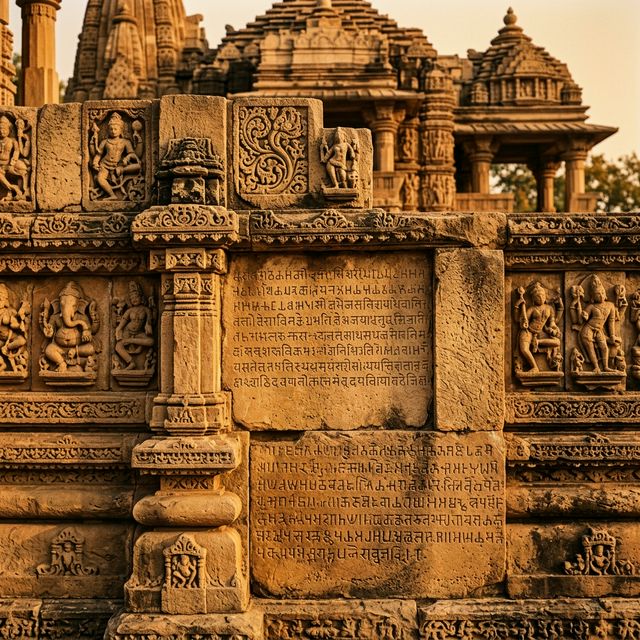
This Kannada stone inscription was discovered in Herle, Kolhapur District, Maharashtra. The epigraph, belonging to the first half of the twelfth century CE, is engraved in standard Kannada script of that period. The text is composed in a mixture of Kannada prose and verse, opening and closing with Sanskrit invocations and imprecations. It traces the genealogy of the Kolhapur Śilāhāra from Jagatiga I to Gaṇḍarāditya.
The record belongs to the reign of the Śilāhāra king Gaṇḍarāditya, who is described as ruling from his capital at Vaḷavāḍa. The primary goal of the inscription was to document a religious endowment made on the lunar eclipse in the Śaka 1040 (1118 CE). The grant, comprising one mattar of tax-free land and a garden in Eḍenāḍa, was dedicated to the tīrthaṅkara Chandraprabha. This deity was housed in a basadi constructed by the Nema gāvuṇḍa at the village of Vagubana-Herilage, executed at the specific instance of Nāgaladevī, who is presumed to be the king's mother. The donation, through the ritual pouring of water, was formally received by the Jaina ascetic Śāntivīra Siddhāntadeva, the head (āchārya) of the Kolhāpura tīrtha.
1. siddham | śrīmatparamagaṃbhīrasyādvādāmoghalāñchanam | jīyāttrai-
2. lokyanāthasya śāsanaṃ jinaśāsanam || satataṃ tribhuvanacan-
3. dra vratiparanīnāgacandrasaiddhāntigaraṃ | nutavibudhabālacandra-
4. vratipottamaraṃ dharātalaṃ vaṇṇisuguṃ || dharegellaṃ tanna peṃpaggaḷise guru-
5. janāmnāyasaddharmmarakṣāparanādaṃ dāniyādaṃ caturacaritanādaṃ su-
6. saiddhāntikāgresaranādaṃ bāḷacandravrati yatitiḷakaṃ bhāppu vikhyāta-
7. kollāpuratīrthādhīśacandraprabhajinabhavanācāryyanācāryyavaryyaṃ ||
8. surataruge śākhe nimirdakurisidoḍeṃvante bāḷacandramunīndrā | bharaṇargge śiṣya-
9. nesedaṃ parahitanaudāryyaśāntivīramunīndran || surataruvaṃ palañcale-
10. vutirppudu dānada peṃpu lokadol śaradamaḷodghavaṃ nagutamirppudu kīrtti-
11. ya korbbu niccaluṃ | girivaranāthanol seṇasutirppudu dhairyyada bippenalke
12. tāṃ dharegatisevyanādanaticāruguṇotkaravārddhi nemaṇaṃ || atiśayaśīḷa-
13. dol vinuta sītege pāsaṭi cārurūpinoḷ ratiganusāṭhitāṃ subhaginoḷgiri-
14. jātege toḍu bhogadu | nnatikeyoḷindrakāntege samaṃ saleyendu manonurāgadiṃ stu-
15. tiyisutirppudī dharaṇi nemana kāmini mailiyakkanaṃ || svasti | samastapraśa-
16. stisahitaṃ jīmūtavāhanānvayaprasūtaṃ khacaracakravartti śilāhārana-
17. rendraṃ maṇḍalikaḍaṅgeyavarmma saptāṅgarājyalakṣmīsvīkṛta maṇḍalikatriṇetra śiḷā-
18. hāravaṃśaprāgutpanna bhojadevaprabhṛtikṣatriyarājyalakṣmīpratidinapravarddhamāna-
19. gaṇḍarādityadevar valavāḍada nelevīḍinalsukhasaṅkathāvinodadiṃ rājyaṃ geyyutta-
20. miral śakavarṣa 1040 neya viḷaṃvisaṃvatsarada somagrahaṇaparvvanimitta-
21. māgi yeḍenāḍavaliya vaguvanaherilageyal nemagāvuṇḍaṃ māḍisida
22. basadige nāgaladebiyara peḷikeyindeḍenāḍal mattarkkeyyumeraḍu vāvi-
23. ya naḍuve devarige pūdonṭamumaṃ kollāpurada tīrtthada vasadiyācāryyar
24. śāntivīrasiddhāntadevara kālaṃ karcci dhārāpūrvvakaṃ māḍi sarvva namasyamāgi koṭṭa-
25. dara sīmāsaṃbandhamentendaḍāgneyada deseyal naṭṭa kallu nairityada deseyal
26. haḷḷadiṃ mūḍal naṭṭa kallu vāyavyada deseyal vaḍagaṇindaṃ banda haḷḷada mūḍa-
27. lu īśānyadal naṭṭa kallintu caturāghāṭaśuddhi | na viṣaṃ viṣamityāhuḥ de-
28. vasvaṃ viṣamucyate | viṣamekākinaṃ hanti devasvaṃ putrapautrakam || svada-
29. ttāṃ paradattāṃ vā yo hareta vasundharām | ṣaṣṭiṃ varṣasahasrāṇi viṣṭhāyāṃ
30. jāyate kṛmiḥ || maṅgalamahāśrīḥ | śrīḥ | śrīḥ |
Verse 1
Success! May the religion of the lord of the three worlds, viz. the religion of Jina, the unfailing characteristic of which is the extremely profound Syādvāda, be victorious!
Verse 2
The world incessantly praises the ascetics Tribhuvanacandra, Nāgacandra-Saiddhāntika and the excellent ascetic Bālacandra, who is eulogised by the wise.
Verse 3
With his greatness pervading the entire world, the best among the preceptors, an ornament among the ascetics, Bālacandra-vratī, the Ācārya of the Candraprabha-Jīnabhavana, the Chief of the famous Kollapuratīrtha, became engaged in the protection of the good practices of his worthy preceptors, became a donor, became a person of charming character, and became the leader among the great Saiddhāntikas.
Verse 4
As if a high-grown branch had sprouted out of the divine tree, there shone the disciple of Bālacandra, the ornament of ascetics, Śāntivīra-munīndra, who was good to others and was munificent.
Verse 5
Nemaṇa, an ocean of abundant good qualities—the greatness of whose munificence was as if, confronting the divine trees, the pride of whose fame was, as if, ever laughing at the brilliance of the clear autumnal sky, the greatness of whose courage was, as if, vying with the lord of the mountains—came to be much honoured by the world.
Verse 6
This world lovingly eulogises Mailiyakka, the wife of Nemaṇa, as resembling the respected Sītā in pre-eminent character, as equal to Rati in charming beauty, as similar to Pārvatī in good fortune, and as equal to the wife of Indra (i.e. Śacī) in the greatness of her enjoyment.
Line 15-20
While Gaṇḍarādityadeva, endowed with all the titles, born in the lineage of Jīmūtavāhana, the emperor of the Khacara family, the king of the Śilāhāras, the Māṇḍalika, Ḍaṃgeya-Barmma, who had made his own the seven members of the royal fortune, a Śiva to the Māṇḍalikas, who is every day augmenting the royal fortune of the Kṣatriyas such as Bhojadeva who were his predecessors in the Śilāhāra family, is ruling from his capital at Valavāḍa in the enjoyament of pleasant conversations,
Line 20-21
In the Śaka year 1040, Vilambi-saṃvatsara, on the occasion of a lunar eclipse –
Line 21-24
A grant of one mattar of land free from taxes in Eḍenāḍa and a garden to the deity in between two wells was made with the pouring of water after washing the feet of Śāntivīra-Siddhāntadeva, the Ācārya of Kollāpuratīrtha, on instructions from Nāgaladevi, to the basadi caused to be built by Nema-gāvuṇḍa at Vagubana- Herilage in Eḍenāḍa.
Lines 24-27
Its boundaries are: in the south-east, a stone set up; in the south-west, a stone set up to the east of the rivulet; in the north-west, the east of the rivulet flowing from the north; in the north-east, a stone set up. Thus are the boundaries demarcated.
Line 27-30
(Here occur two usual imprecatory verses and a maṅgala –vākya.)
| Dynasty: | Śilāhāra |
| Ruler: | Gaṇḍarāditya |
| Date: | 5th June or 30th November 1118 (Cyclic year Vilamba, Jyeśaṭha or Margaśirsa pūrṇima, Śaka 1040) |
| Place: | Herle, Kolhapur |
| Language: | Kannada and Sanskrit |
| Nature of grant: | Land donation |
| Purpose: | Grant of land to the temple |
| Provenance of inscription: | Herle, Kolhapur, Maharashtra |
| Type of Inscription: | Stone inscription |
| Source: |
