
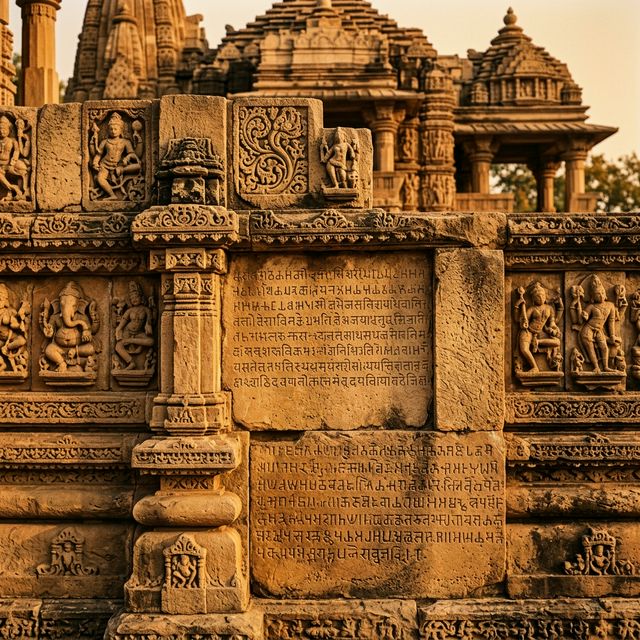
This stone inscription, bearing the motifs of the sun, moon, and the traditional ass-curse, was identified near Jogeshwari caves in Mumbai. Currently preserved in Cintra, Portugal, the artifact was likely transported there by the 16th century Indo-Portuguese viceroy, Don Joan de Castro. Engraved in Nāgarī script and the language being Sanskrit, the record features the sun and moon motifs.
The inscription records a royal decree exempting thirteen specific houses associated with the temple of the goddess Jogeśvarī from the customary house-tax. Issued by Aparāditya I, in Śaka 1059 (1137 CE), the order was executed in the presence of secretariat officials of the Salsette district. The exempted properties belonged to essential temple personnel, including the monastery head (maṭhapati), the worshipper of the liṅga (pujāri), the gardener (māli), and the potter (kumbhakāra). The grant was formalised on the twelfth tithi of the bright fortnight of Caitra and concluded with the appointment of trustees who were responsible for ensuring the perpetual enforcement of this tax exemption.
 Editor's Comment:
1. śakasaṃvat 1059 piṅgala saṃvatsare cai-
2. tra-śuddha 12 pūrvam | adya iha samadhigata-aśeṣa-
3. pañcamahāśabda mahāsāmantādhipatitaragaraparameśvara śrīlāha-
4. ranarendra jīmūtavāhanānvayaprasūta suvarṇagaruḍadhvajābhimānamahodadhi paści-
5. masamudrādhipati tyāgajagajjhampajhapaḍācāryaśaraṇāgatavajrapañjara iti ādi sa-
6. masta rājāvalīvirājita mahāmaṇḍaleśvarādhipati śrīmadaparādityadeva kalyā-
7. ṇa vijayarājye | tathā etatprasādāvāptasamastamaṇḍalacintābhāram samudvahati mahāmā-
8. tya śrīmālīkhetayaṭhākure | mahāsāndhivigrahika śrī amuka | śrīkaraṇabhāṇḍāgāre pra-
9. thamacchepāṭī mahāpradāna śrīlakṣmaṇeyaprabhu dvitīyacchepāṭī śrīamuka i-
10. tyādi śrīkaraṇe satyasminkāle pravartamāne sati || aṇitapallāviṣa-
11. yāntaḥsthitadeṇakavāhyagata śrīaparādityadevena śrīpurigrāma-
12. nāivāsame ṣaṭṣaṣṭīdeṇakasahyārakṛtaṣaṭṣaṣṭīkaraṇe niyu
13. kta taṭhādi divākaranāyakaviṣṇubhaṭṭasenamahallūṭhākurasya vartamāne |
14. iha bhūmideṇakanirmuktau gṛhāṇi 13 gṛhavikaraḥ śrījogeśvarīdevi-
15. saṃvatkamaṭhapatigṛham 1 tathā liṅgapūjipujārīgṛham 1 bhuṭṭevalagṛham 1 mā-
16. līgṛham uttarīgṛham 1 kumbhakāragṛham 1 āratīgṛham 1 mācalāgṛhe 2 gā-
17. ma gṛham 2 parakīgṛham 1 vāsikāgṛham 1 ubhasatkegṛhe 3 .
18. atratyā santatiḥ kṣitisamaye śrīaparādityadeva atyakam nirūpitam pradattam
19. sādhakāḥ ia sthāne jogadeva āṣṭhakaḥ tathā mahallūṭhākura abhbhayāsutaḥ i-
20. tyeva satyapi yo cālīṃ cālavīvo ca vāvamadabhuvājalapātre sādha-
21. kakivaya sthāne paṭṭakilaṭha nikṣiptām ||
22. maṅgalam mahāśrīḥ ||
Line 1 to 6
In the śaka year 1059 and the cyclic year Piṅgala, on the 12th tithi of the bright fortnight of Chaitra today, on the aforementioned tithi, here
In the beneficial and victorious reign of the illustrious Aparādityadēva (I), the mahāmaṇḍalēśvarādhipati, who is adorned with all royal titles such as the mahāsāmantādhipati, ‘he who has obtained the five mahāśabdas’, ‘the sovereign lord the city of Tagara’, ‘the illustrious Śilāhāra king’, ‘he who is born in the family of Jīmūtavāhana’, ‘he who has the banner of the golden eagle’, ‘the great ocean of pride’, ‘the lord of the Western Ocean’, ‘a veritable Jhampadāchārya who excels the world in charity’, ‘an adamantine cage for the protection of those who seek refuge’
Line 7 to 9
And while the Government, consisting of the mahāmātya, the illustrious Mālikhētaya Ṭhākura, the mahāsāndhivigrahika, the illustrious Amuka, the senior officer of the government treasury, the mahāpradhāna, the illustrious Lakshmaṇēyaprabhu, the junior officer, the illustrious Amuka, and others, is bearing the burden of the cares of administering the whole maṇḍala obtained by his favour at such a time
Line 10 to 17
The illustrious Aparādityadēva encamped outside Dēṇaka comprised in the vishaya of Aṇitapallā, has granted exemption from the house tax of the following 13 houses in the presence of the officer Divākaranāyaka, Vishnubhattasēna, and Mahalū Ṭhākura employed in the secretariat of ṣaṭṣaṣṭi in the division of Dēṇaka-66 in regard to the village Śrīpurī, the names of the houses being as follows - one house of the owner of the matha of the holy goddess Jōgēśvarī, also one house of the worshipper of the Linga, one house of Bhuttēvala, one house to the north of the house of the gardener, one house of the potter, one house of the Āratī, one house of Māchalā, two houses of Gāsāma, one house of Parakī, one house of Vāsikāra, two houses of Ubhashta.
Line 18 to 21
Here, on the occasion of this land grant, the illustrious Aparādityadēva has appointed the following trustees for this grant viz. Jōgadēva Āshthaka, Mahalū Ṭhākura, the son of Ambhayā. They should continue this exemption and get it continued. The document has been deposited with the Paṭṭakila.
May there be happiness and great prosperity!The reference highlights the religious importance of Goddess Jogeśvarī as a major Śākta deity in the region.
| Dynasty: | Śilāhāra |
| Ruler: | Aparāditya I |
| Date: | 5th April 1137 CE (Caitra śuddha, 12 śaka 1059, Piṅgala samvatsara) |
| Donee: | The care takers of Jogeshvari temple |
| Language: | Sanskrit |
| Deities: | Jogeśvarī |
| Nature of grant: | Administrative order |
| Purpose: | To allot houses for officials and care takers of the Jogeśvari temple. |
| Type of Inscription: | Stone inscription |
| Source: |
Bibliography & Research
- Altekar, A. S. (1936). The Śilāhāras of Western India. In: Bhandakar (Ed.). Indian Culture, 2, pp 393-434, here pp 411-415.
- Barnett, L. D. (1916). No. 28 Inscriptions At Narendra. Epigraphia Indica, XIII, 298-326, here p 316 and 323.
- Dikshit, M. G. (1953). Panjim Plates of Jayakeshi (I) Saka 981. Indica: The Indian Historical Research Institute Silver Jubilee Commemoration Volume, 89-94.
- Fleet, J. F. (1867-70). Some further inscriptions relating to Kadamba Kings of Goa. Journal of the Bombay Branch of the Royal Asiatic Society, IX, 262-313.
- Kalhana. (1892). The Rajataranjini (Durgaprasad, Ed.; Vol. Vol I). Government Central Book Deposit.
- Mirashi, V. V. (Ed.). (1977). Corpus Inscriptionum Indicarum, Vol. VI: Inscriptions of the Śilāhāras. Archaeological Survey of India, pp xvii-xviii and 127-130, 133-142, and 270, line 7.
