
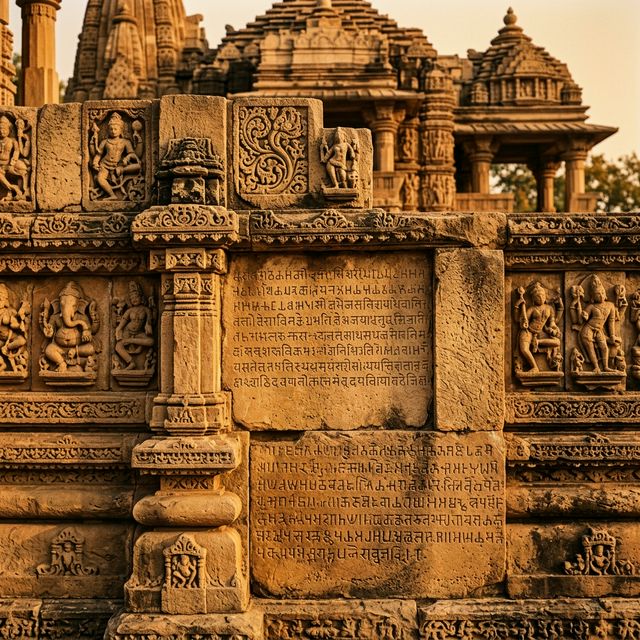
This stone inscription, discovered in an open field near Chaudharapada, Thane district, Maharashtra, belongs to the reign of the Śilāhāra ruler Keśīdeva II. Engraved on a large stone slab topped with a relief of the sun, moon, and a kalaśa, the record is composed in Sanskrit, using both prose and verse, and engraved in the Nāgarī script.
The text opens with an invocation to Vināyaka and a verse praising the deity Śumpeśvara. The primary administrative directive, issued on Śivarātri, in Śaka 1161 (1240 CE) under the supervision of ministers was the royal grant of Brahmapurī to four brāhmaṇas: Somanāyaka, Sūryanāyaka, Govindanāyaka, and Nāunāyaka. Additionally, the king donated the hamlet of Manjasapallī, situated in Bopagrāma, to support the brāhmaṇas who were responsible for the perennial worship of Śiva. The charter concludes with imprecations warning against the revocation of the granted land.
1. siddham | oṃ namo vināyakāya || namāmi bhuvanotpattisthitisaṃhārakāriṇam | śrīmatṣuṃpeśva-
2. raṃ bhaktajanasarvārttihāriṇam || śrīvidyādharavaṃśamaṇḍanamaṇirjīmūtaketoḥ ku-
3. le vikhyotostyaparārkkarājatanayaḥ śrīkeśipṛthvīpatiḥ | yasyāpārapavitra-
4. pauruṣanidherālokya rājyasthitiṃ śrīrāmādimahībhujāṃ bhagavatī dhatte
5. dharā na smṛtim || śakasaṃvat 1161 vikārisaṃvatsarāntarggatamāgha va di 14
6. caturddaśyāṃ bhaume śivarātrau parvvaṇi adyeha samastarājāvalīsamalaṅkṛ-
7. tamahārājādhirājakoṅkaṇacakravarttiśrīkeśidevakalyāṇavi-
8. jayarājye tathaitatprasādātsamastarājamaṇḍalacintābhāraṃ samudvahatsu
9. mahāmātya śrījhaṃpaḍaprabhumahāsāndhivigrahika rājadeva paṇḍitaśrī-
10. karaṇabhāṇḍāgārānantaprabhupramukheṣu satsu etasminkāle pravarttamāne
11. sati brahmapurīgrāmadānaśāsanaṃ samabhilikhyate yathā || śrīṣoṃpeśva-
12. radevapūjanasadāvyāsaktasarvvāntaraḥ | satpātradvijasomanāyaka ba-
13. ṭoḥ santānabhogyasthitim | śrīmadbrahmapurīṃ purāribhavanakṣmābhṛnmanohā-
14. riṇīṃ | vīraḥ kārayati sma vismayamayīṃ śrīkeśipṛthvīpatiḥ || baṭuka-
15. nāmāni kathyante | somanāyakaḥ | sūryyanāyakaḥ | govindanāyakaḥ | nāū-
16. nāyakaḥ | iti catvāro vaṭukāḥ || nirvvāhāya purāripūjakavaṭuśreṇīdvi-
17. jānāṃ sadā bopagrāmagatā svasīmasahitā māñjesapallī purā dattā śrīśi-
18. varātriparvvaṇi vibhoḥ ṣoṃpeśvarasyāgrataḥ śrīmatkeśinareśvareṇa vimalā can-
19. drārkkatārāvadhi || rājyasya mantriṇānyairvvā karttavyaṃ dharmmapālanam | dharma-
20. dhvaṃse hi jāyate sarvadā narakasthitiḥ || tathā coktaṃ pūrvācāryamuni-
21. bhiḥ | suvarṇṇamekaṃ gāmekāṃ bhūmerapyekamaṅgulam | harannarakamāpnoti yā-
22. vadābhūtasaṃplavam || maṅgalaṃ mahāśrīḥ | śubhaṃ bhavatu || lekhakapāṭha kayoḥ ||
Success! Oṃ! Obeisance to Vināyaka!
Verse 1
I bow to the God Ṣumpeśvara, who is the cause of the creation, maintenance and destruction of the world and who removes all miseries of his devotees!
Verse 2
There is the illustrious king Keśideva, son of King Aparārka II, who is a gem adorning the illustrious family of the Vidyādharas and who is well-known in the family of Jīmūtaketu. Having seen the mode of the administration of him who is a store of immeasurable and holy valour, the divine Earth does not remember with regret the ancient kings such as Rāma.
Line 5
In the śaka year 1161, the cyclic year being Vikārin, on the holy occasion of the Śivarātri, on Tuesday, the fourteenth tithi—(in figures) 14—in the dark fortnight of Māgha—on this day, here, during the beneficial and victorious reign of the mahārājādhirāja, Koṅkaṇa-cakravartin, the illustrious Keśideva adorned with all royal titles, while the following ministers are bearing the burden of the cares of the whole kingdom entrusted to them by his favour, viz. the mahāmātya, the illustrious Jhamapaḍaprabhu, the mahāsāndhivigrahika Rājadeva Paṇḍita, and the state treasury officer Anantaprabhu and others,—at such a time the royal order for the gift of the village Brahmapurī is being written as follows:-
Verse 3
The brave and illustrious king Keśī, whose heart is wholly and always devoted to the worship of the holy Shompeśvara has caused to be established the wonderful and famous Brahmapurī attractive on account of the mount-like temple of Purāri (Śiva), to be enjoyed by the descendants of the worthy Brāhmaṇa Somanāyaka.
Line 14
The names of the Brāhmaṇas are recorded here:- Somanāyaka, Sūryanāyaka, Govindanāyaka, Nāūnāyaka—these are the four Brāhmaṇas.
Verse 4
The illustrious king Keśin II has granted, in the presence of the holy Shompeśvara, Māñjasapallī, included in the village Bopagrāma, free from all obligations, extending to its boundaries, to be enjoyed as long as the moon, the sun and the stars endure, for the all-time maintenance of the multitude of Brāhmaṇas who will worship Purāri (Śiva).
Line 19
The minister and others should preserve this religious gift. On the destruction of it, the offender will have to dwell in a hell.
And it has been declared by the sages who are our ancient teachers:-
(Here follows an imprecatory verse)
May there be happiness and great prosperity! May it be well with the writer and the reader!
Glossary
Śivarātri – The auspicious festival dedicated to Śiva, the occasion of the grant.
Śumpeśvara – The presiding Śiva deity to whom the endowment was dedicated.
| Dynasty: | Śilāhāra |
| Ruler: | Keśideva II |
| Date: | 24th January 1240 CE (Cyclic year Vikārin, Māgha kṛṣṇa 14, Śaka 1161) |
| Place: | Caudharapada |
| Donee: | Brāhmaṇas Somanāyaka, Sūryanāyaka, Govindanāyaka, Nāūnāyaka (and their descendants) |
| Language: | Sanskrit |
| Deities: | Śumpeśvara (Śiva) |
| Nature of grant: | Land donation |
| Purpose: | For the permanent maintenance of Brāhmaṇas worshipping Śumpeśvara (Śiva) |
| Provenance of inscription: | Caudharapada, Thane district, Maharashtra |
| Type of Inscription: | Stone Inscription, Gadhegal, Ass-curse stone inscription |
| Source: |
