
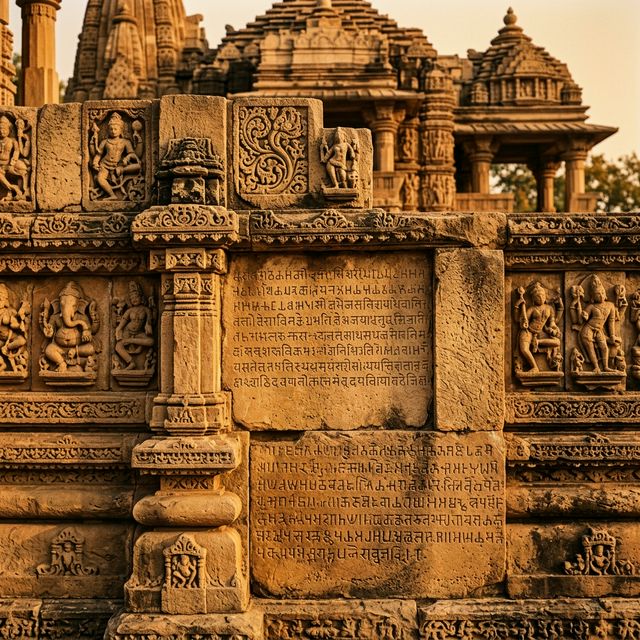
The stone epigraph discovered at Chanje near Uran in the Kolaba district belongs to the reign of Someśvara. Engraved in Nāgarī characters on a slab, the record features a pūrṇa kalaśa flanked by the sun and moon symbols. The text is composed in Sanskrit influenced Marathi.
Issued during a solar eclipse in Śaka 1182 (1260 CE), the charter opens with an invocation to Gaṇapati. It documents a royal endowment made by mahārājādhirāja Someśvaradeva of an orchard named “Konthale-sthāna”, situated in Chanje near Uran, to the deity Uttareśvara housed at Sthānaka (modern Thane). The record defines the boundaries of the orchards, including all natural resources, total tax exemptions, and an additional monetary gift of ten visovas and 162 poruttha drammas.
1. oṃ namo vināyakāya | laṃbodara namastubhyaṃ satataṃ modakapriyaṃ ||
2. avighnaṃ kuru me deva sarvakāryeṣu sarvadā || adyeha samastarā-
3. jāvalīsamalaṅkṛta | mahārājādhirāja | koṅkaṇacakrava-
4. rttiśrīsomeśvaradevarāyakalyāṇavijayarājye tathaitatprasādā-
5. vāptasamastamaṇḍalacintābhāraṃ samudvahati mahāmātya śrījhāṃpaḍaprabhu
6. mahāsāndhivigrahika mā-ināku | bebalaprabhu | pomadepaṇḍita | śrīkaraṇabhāṇ-
7. ḍāgāre prathamacchepāṭī govenāku | ityetasminkāle pravartamāne sati śa-
8. kanṛpakālatītasaṃvatsaraśateṣvekādaśasu | dvyaśītyadhīkeṣu atrāṃṅkatopi
9. śaka saṃvat 1182 raudrasaṃvatsare caitra vadi 15 somadine | sūryoparāge u-
10. raṇa āgarābhū | cāṇḍijegrāmapratibaddhakonthalesthānavāṭikābhū | asya cā-
11. ghāṭanāni | pūrve | sānu ṭhākurācī vṛti | dakṣiṇeṃ viṣnukanhācī vṛti | paścimeṃ
12. rājamārga | uttareṃ virā | evaṃ caturāghāṭanāni | svasīmāparyataṃ satṛṇakāṣṭho-
13. dakopetaṃ bhaṇadāyādyādisaṃbandhavivarjitaṃ sarvvotpatti sahitaṃ siddhāyāt porutthadra-
14. māṇāṃ daśa visova dviṣaṣṭyadhikaṃ drammāṇāmekaśataṃ | aṅkatopi dra 162
15. śrīsthānakīyaśrīuttareśvaradevāya śāsanaprativaddhaṃ kṛtvā | mahārājaśrī-
16. someśvaradevena udakātisarggeṇa pradattam || vartamānasyāsya dharmasya paripan-
17. thanā na kenāpi kāryā | svadattāṃ paradattāṃ vā yo hareta vasundharām | ṣaṣṭi varṣasaha-
18. srāṇi viṣṭhāyāṃ jāyate kṛmiḥ || maṅgalaṃ mahāśrīḥ | śubhaṃ bhavatu ||
Success! Obeisance to Vināyaka!
Verse 1
Obeisance to you, O Lambodara,—you who are always fond of modakas! O God, remove all obstacles from all my undertakings at all times.
Line 2
This day, here, during the beneficial and victorious reign of the mahārājādhirāja, Koṅkaṇacakravartī, the illustrious Someśvaradevarāya, who is adorned with all titles, while the mahāmātya, the illustrious Jhāmpaḍaprabhu, the mahāsāndhivigrahī Māināku, Bebalaprabhu, Pomadepaṇḍita and the senior minister in charge of the state treasury, viz. Govenāku are bearing the burden of the cares of the whole maṇḍala entrusted to them by his (i.e. the King’s) favour,—at such a time, when eleven hundred years increased by eighty-two have elapsed by the era of the śaka king—in figures, the śaka year 1182—in the cyclic year Raudra, on the occasion of a solar eclipse, on monday, the 15th tithi of the dark fortnight of Caitra, the Mahārāja, the illustrious Someśvaradeva, has donated to the god, the divine Uttareśvara of the prosperous city Sthānaka, with the pouring out of water, the land covered the orchard in Konthale-sthāna in the village Cāṇḍije situated near Uraṇa, the boundaries of which are as follows:—on the east, the field of Sānu Ṭhākura, on the south, the field of Viṣṇukanhā, on the west, a royal road, and on the north, waste land—the land thus bounded on the four sides, together with grass, wood and water, exempted from all encumbrances and claims of debt, inheritance, etc, and inclusive of all produce and also ten visovas and the Poruttha-drammas numbering a hundred increased by sixty-two in figures, 162 drammas—after recording the gifts in a royal charter.
None should cause any obstruction to the present religious gift.
(Here follows an imprecatory verse.)
May there be happiness and great prosperity! May there by well-being!
Glossary
Uttareśvara – Śiva temple at Sthānaka (Thane), beneficiary of the grant.
Poruttha-dramma – A unit of revenue; here, 162 drammas were donated.
Sthānaka – Present-day Thane, an important Śilāhāra capital and religious centre.
| Dynasty: | Śilāhāra |
| Ruler: | Someśvaradeva |
| Date: | 12th April 1260 CE (Cyclic year Raudra, Caitra kṛṣṇa 15, Śaka 1182) |
| Place: | Cānje village near Uraṇa |
| Donee: | The temple of Uttareśvara |
| Language: | Sanskrit mixed with Marathi |
| Deities: | Uttareśvara |
| Nature of grant: | Land donation, Monetary donation |
| Purpose: | For worship and service of Śrī Uttareśvara at Sthānaka |
| Provenance of inscription: | Found at Cānje (modern Uran taluka, Raigad district, Maharashtra) |
| Type of Inscription: | Stone Inscription, Gadhegal, Ass-curse inscription |
| Source: |
Bibliography & Research
- Altekar, A. S. (1936). The Śilāhāras of Western India. In: Bhandakar (Ed.). Indian Culture, 2, pp 393-434, here pp 417-418.
- Ganguly. D. C. (2001) Chapter VII: The Yādavas of Devgiri. In Ramkrishnan, S. (Ed.) History and Culture of the Indian People: The Struggle for Empire (5th ed., Vol. V, p 192). Bharatiya Vidya Bhavan.
- Mirashi, V. V. (Ed.). (1977). Corpus Inscriptionum Indicarum, Vol. VI: Inscriptions of the Śilāhāras. Archaeological Survey of India, pp xx and 175-177.
- Sankalia, H. D., & Upadhyaya, S. C. (1935–1936). Six Śilāhāra inscriptions of the Prince of Wales Museum. Epigraphia Indica, 23, 269-281, here 278-281.
- Tripathi, S. (2006, April). Ships on Hero Stones from the West Coast of India. International Journal of Nautical Archaeology, 35(1), 88-96.
