
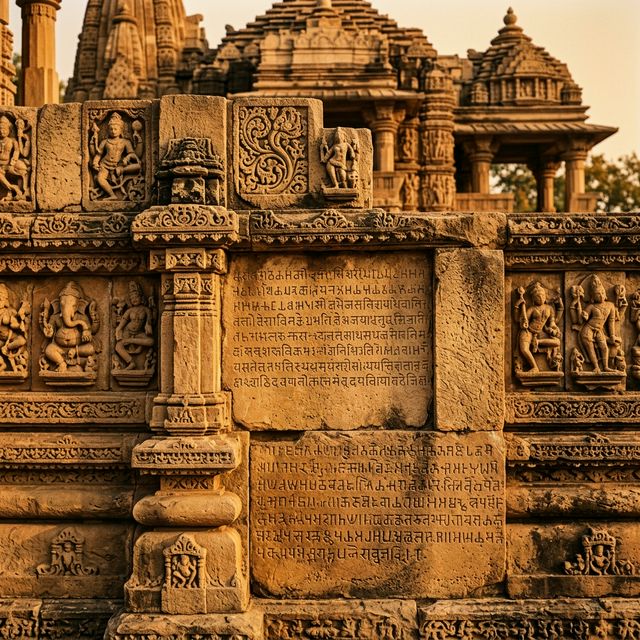
Discovered in 1881 at Chanje near Uran in Raigad district, Maharashtra, this epigraph belongs to the reign of the Śilāhāra Aparāditya I. Engraved in the Nāgarī script, the text is composed in irregular Sanskrit prose and bears the date Śaka 1060 (1139 CE). The stele features the customary solar and lunar motifs at its crest, ending with the traditional ass-curse panel at the base.
The inscription records a tripartite endowment executed by Aparāditya I for three distinct spiritual purposes through the ritual pouring of water. First, he donated a mango field in the village of Nāguma to his royal council for his personal spiritual merit. Second, he transferred two orchards explicitly including all associated natural assets such as trees, grass, wood, and water to the same assembly to secure the spiritual welfare of his mother, Līlādevī. Finally, the record registers a third grant, executed on a solar eclipse, conveying an added tax-exempt orchard in Chaṇḍijā to a community of astrologers living in Vāḍu at the pilgrimage center of Muru. The text concludes with a standard imprecise formula warning against confiscating these endowments.
 Editor's Comment:
1. siddham | svasti | jayaścābhyudayaśca | śakanṛpakālātītasaṃvatsa-
2. raśateṣu daśasu ṣaṣṭyadhikeṣu yatrāṅkatopi śakasaṃvat 1060
3. māgha śuddha 1 pūrvaṃ samastarājāvalīvirājitamāmaṇḍaleśvarā-
4. dhipatiśrīmadaparādityadevakalyāṇavijayarājye tathaitatprasādā-
5. t samastamaṇḍalacintābhāraṃ samudvahati mahāmātyaśrīsoḍhalanā
6. yaku | mahāsāndhivigrahikaśrī-amuka | śrīkaraṇabhāṇḍāgāra-
7. prathamasthepāṭī mahāpradhānaśrīlakṣmaṇaiyaprabhuḥ | dvitīyasthepā-
8. ṭīsenaśrī-amuka ityādiśrīkaraṇe satyetasmin kāle prava-
9. rtamane śrīmadaparādityadevena svakīyapariṣade ātmaśreyorthaṃ
10. nāgusamadhyavarti āmrakṣetraṃ svakīyamātuḥ śrīlīlādevyāḥ śre-
11. yorthaṃ śrīdharakramavidārāmaṃ kcchasiyānāyakasya ca ārāma-
12. mabhyantarīkṛtya savṛkṣamālākulaṃ satṛṇakāṣṭhodakopetaṃ svasī-
13. māparyataṃ pūrvvataḥ pañjama dakṣiṇataḥ aṃvaḍā paścimataḥ pagārā uttaratomā-
14. rgaḥ | udakātisargeṇa ārāmaḥ pradattaḥ | tathā śrīmadaparādityadevena sū-
15. ryaparvaṇi | murukṣetre vādujyotiṣikebhyaḥ caṇḍijāgrāmīṇā-
16. rāmakaḥ udakātisargeṇa namasyavṛttyā pradattaḥ | ityasya yo-
17. nyathā karoti tasya pūrvvapurupā ekaviśatisaṅkhyakā rauravama-
18. hārauravāndhatāmisrādinarakaṃściramanubhaviṣyanti mahāśrīḥ |
Line 1-13
Success! Hail! May there be victory and prosperity!
In the years one thousand increased by sixty which have passed by the era of the śaka king—in figures, the śaka year 1960—the month Māgha, the bright fortnight, I—on the aforementioned day,—during the beneficial and victorious reign of the mahāmaṇḍaleśvaradhipati, the illustrious Aparādityadeva I, who is decorated with all royal titles, and while the government consisting of the mahāmātya, the illustrious Soḍhala Nāyaka, the mahāsāndhivigrahika, the illustrious Amuka, the senior government treasury officer, the mahāpradhāna, the illustrious Lakṣmaṇeyaprabhu, the junior treasury officer, the illustrious Amuka and others, is bearing the burden of the cares of the whole maṇḍala,—at such a time the illustrious Aparādityadeva has donated to his own pariṣad, with the pouring out of water, the Āmra (mango) field situated in the village Nāguma for his own spiritual welfare, and the orchard belonging to the kramavid Śrīdhara including the orchard of Kacchasivā-Nāvaka—together with the rows of trees, together with grass. Wood and water, and extending to its boundaries—which is bounded on the east by a salty field, on the south by Ambaḍā, on the west by Pagārā and on the north by a public way—for the spiritual welfare of his mother, the illustrious Līlādevī.
Line 14-15
Again, the illustrious Aparādityadeva has donated, with the pouring out of water and with exemption from taxes. The orchard in the village Cāṇḍijā of the astrologers of the place Vādu at the holy place of Muru on the occasion of a solar eclipse.
Line 16-18
The ancestors, twenty-one in number, of his who would alter this, will experience pangs in the hells of Raurava. Mahāraurava and Andhatāmisra for a long time.
May there be happiness and great prosperity!
| Dynasty: | Śilāhāra |
| Ruler: | Aparāditya I |
| Date: | 3rd January 1139 CE (Māgha śuddha 1, Śaka 1060) |
| Donee: | Royal pariṣad of Caṇḍijā and Astrologers of Vādu |
| Language: | Sanskrit |
| Nature of grant: | Land donation |
| Purpose: | For the spiritual welfare of the King's pariṣad and specifically for the merit of the King’s mother Śrī Līlādevī |
| Provenance of inscription: | Chanje village near Uran, Raigad, Maharashtra |
| Type of Inscription: | Stone inscription, Gadhegal or Ass curse Inscription |
| Source: |
Bibliography & Research
- Altekar, A. S. (1936). The Śilāhāras of Western India. In: Bhandakar (Ed.). Indian Culture, 2, pp 393-434, here pp 411-415.
- Barnett, L. D. (1916). No. 28 Inscriptions At Narendra. Epigraphia Indica, XIII, 298-326, here p 316 and 323.
- Dikshit, M. G. (1953). Panjim Plates of Jayakeshi (I) Saka 981. Indica: The Indian Historical Research Institute Silver Jubilee Commemoration Volume, 89-94.
- Fleet, J. F. (1867-70). Some further inscriptions relating to Kadamba Kings of Goa. Journal of the Bombay Branch of the Royal Asiatic Society, IX, 262-313.
- Kalhana. (1892). The Rajataranjini (Durgaprasad, Ed.; Vol. Vol I). Government Central Book Deposit.
- Mirashi, V. V. (Ed.). (1977). Corpus Inscriptionum Indicarum, Vol. VI: Inscriptions of the Śilāhāras. Archaeological Survey of India, pp xvii-xviii and 130-132, 133-142, and 270, line 7.
