
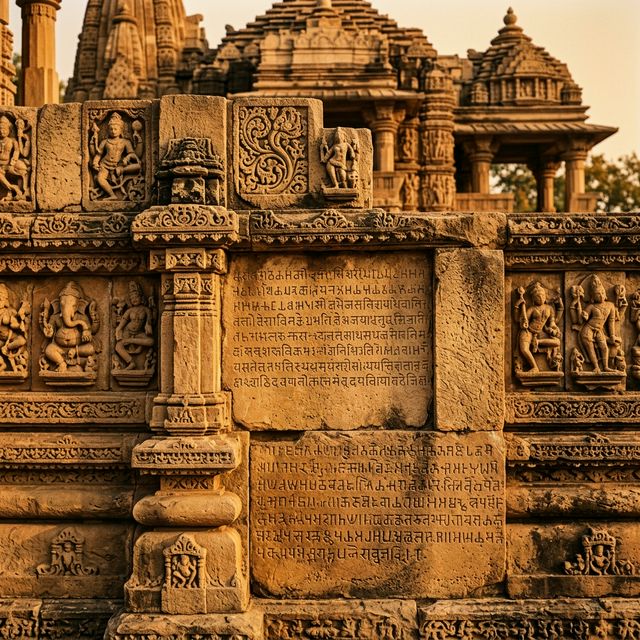
The Bhāṇḍup plates of Chittarāja, discovered on the island of Mumbai and now housed in the British Museum, are a copper-plate charter issued in Śaka 948 (1026 CE). Edited by Bühler and Fleet, the inscription records a land grant by the mahāmaṇḍaleśvara Chittarāja of the Śilāhāra dynasty. Unlike earlier records, this grant omits the Rāṣṭrakūṭa genealogy, focusing instead on the Śilāhāra lineage from Jīmūtavāhana to Chittarāja. The text clarifies the succession after Aparājita, indicating that he was followed by Vajjaḍa II and then by his brother Keśideva, before the throne passed to Vajjaḍa's son, Chittarāja.
The charter records the grant of a field in the village of Noura (modern Nahur), situated in the Ṣaṭṣaṣṭi viṣaya (modern Salsette), to the Chaṇḍoga brāhmaṇa Āmadevaiya of the Parāśara gotra. The donation, made on a solar eclipse, was intended to support the performance of the six brahmanical duties and rites such as bali, caru, and agnihotra. The field's boundaries are meticulously defined, bordering the village of Gomvaṇi (modern Gowhan) and a royal road (rāja-patha). The document was verified by high-ranking officials, including the sarvādhikārin Nāgaṇaiya and a specialised karṇāṭa-sāndhivigrahika, and was scribed by the treasury officer Jogapaiya.
 Editor's Comment:
First Plate
1. siddham | jayaścābhyudayaśca || labhate sarvvakāryeṣu pūjayā gaṇanāyakaḥ | vighnam nighnansa vaḥ pāyādapāyā-
2. dgaṇanāyakaḥ || sa vaḥ pātu śivo nityaṃ yanmaulau bhāti jāhnavī | sumeruśi kharodgacchadacchacandrakalopa-
3. mā || jīmūtaketutanayo niyataṃ dayālurjīmūtavāhana iti trijagatprasiddhaḥ | dehaṃ nijaṃ tṛṇa-
4. mivākalayanparārthe yo rakṣati sma garuḍātkhalu śaṅkhacūḍam || tasyānvaye narapatiḥ samabhūtkapa-
5. rddī sīlāravaṃśatilako ripudarppamarddī | tasmādabhūcca tanayaḥ pulaśaktināmā mārttaṇḍamaṇḍa-
6. lasamānasamiddhadhāmā || jātavānatha laghuḥ sa kaparddī sūnurasya sakalairarivarggaiḥ | yadbha-
7. yena salilāñjaliruccairddīyate sma nijarājyasukhāya || tasmādabhūcca tanayo bhuvanaikavīraḥ śrīvappuva-
8. nna iti saṅgararaṅgavīraḥ | śrījhañjha ityabhavadasya sutaḥ sukīrttirbhrātātha gogginṛpatiḥ sama-
9. bhūtsumūrttiḥ || tasmādvismayakārihāricaritaprakhyātakīrttiḥ sutaḥ śrīmānvajjaḍadevabhū-
10. patirabhūdbhacakracūḍāmaṇiḥ | dorddaṇḍaikabalasya yasya sahasā saṅgrāmaragāṅgaṇe
11. rājyaśrīḥ svayameva vakṣasi rati cakre murāreriva || jayanta iva vṛtrāreḥ purāre-
12. riva ṣaṇmukhaḥ | tataḥ śrīmānabhūtputraḥ saccaritroparājitaḥ || karṇṇastyāgena yaḥ
13. sākṣātsatyena ca yudhiṣṭhiraḥ | pratāpāddīptimārttaṇḍaḥ kāladaṇḍaśca yo dviṣām ||
14. tasmādabhūdvajjaḍadevanāmā śrīkeśidevaśca nṛpatistatobhūt || tadbhrātṛ-
15. jo vajjaḍadevasūnuḥ śrīchittarājo nṛpatirbabhūva | śīlāravaṃśaḥ śiśunā-
Second Plate: First Side
16. pi yena nītaḥ parāmunnatimunnatena || atha svakīyapuṇyodayātsamadhigatāśeṣapañcamahā-
17. śabda mahāsāmantādhipatitagarapuraparameśvaraśilāhāra- narendrajīmūtavāhanā-
18. nvayaprasūtasuvarṇṇagaruḍadhvajasahajavidyādhara- tyāgajajjhampimaṇḍalikaśikhā-
19. maṇiśa raṇāgatavajrapañjaraprabhṛtisamasta- rājāvalīsamalaṅkṛtamahāmaṇḍaleśvaraśrī-
20. macchittarājadeve nijabhujopārjjitānekamaṇḍalasametāṃ purīpramukhacaturddaśagrāma-
21. śa tīsamanvitāṃ samastakoṅkaṇabhuvaṃ samanuśāsati tathaitadrājyacintābhāramudvahatsu sarvvādhikā-
22. riśrīnāgaṇaiyasāndhivigrahikaśrīsīhapaiyakarṇṇāṭasāṃ dhivigrahikaśrīkaparddi śrīkaraṇā-
23. dipañcapradhāneṣu satsu asmin kāle pravarttamāne sa ca mahāmaṇḍaleśvaraśrīmacchita-
24. rājadevaḥ sarvvāneva svasaṃbadhyamānakānanyānapi samāgāmirājaputramantripurohi-
25. tāmātyapradhānāpradhānanaiyogikāṃśca rāṣṭrapativiṣayapatinagarapatigrāmapa-
26. tiniyuktāniyuktarājapuruṣajanapadāṃstathā hamyamananagarapauratrivarggaprabhṛtīṃśca
27. praṇatipūjāsatkārasamādeśaiḥ sandiśatyastu vaḥ saṃviditaṃ yathā || calā vibhūtiḥ
28. kṣaṇabhaṅgi yauvanaṃ | kṛtāntadantāntaravartti jīvitam || asāraḥ saṃsāraḥ sahajajarāmaraṇasādhāra-
29. ṇaṃ śarīrakaṃ pavanacalitakamalinīdalagatajalalavataralatare dhanāyuṣī iti matvā
30. draḍhayanti dānaphalam | tathā coktaṃ bhagavatā vyāsena || agnerapatyaṃ prathamaṃ suvarṇṇaṃ bhūvaiṣṇa-
Second Plate : Second Side
31. vī sūryasutāśca gāvaḥ | lokatrayantena bhaveddhi dattaṃ yaḥ kāñcanaṃ gāṃ ca mahīṃ ca dadyāt || iti dharmmādha-
32. rmmavicāracārucirantanamunivacanānyavadhāryya mātāpitrorātmanaśca śreyortthinā mayā śaka-
33. nṛpakālātītasaṃvatsaraśateṣu navasu aṣṭacatvāriṃśadadhikeṣu kṣayasaṃvatsarāntarggata kā-
34. rttikaśuddhapañcadaśyāṃ yatrāṅkatopi saṃvat 847 kārttika śuddha 15 ravau sañjāta āditya-
35. grahaṇaparvvaṇi sutīrtthe snātvā gaganaikacakracūḍāmaṇaye kamalinīkāmukāya bhagava-
36. te savitre nānāvidhakusumaślāghyamarghyaṃ dattvā sakalasurāsuraguruṃ trailokyasvāminaṃ bha-
37. gavantamumāpatimabhyarcya yajanayājanādhyayanādhyāpa nādiṣaṭkarmmaniratāya kratukriyā-
38. kāṇḍaśauṇḍāya parāśaragotrāya cchandogaśākhine mahābrāhmaṇāya āmadevaiyā-
39. ya vipranoḍamaiyasutāya yajanayājanādhyayanādhyāpanādiṣaṭkarmmakaraṇāya āgatā-
40. bhyāgatanityanaimittikasaṃvyavahārārtthaṃ balicarukavaiśva devāgnihotrakratukriyā-
41. dyupasarppaṇārtthaṃ svaparigrahapoṣaṇārtthaṃ ca śrīsthānakābhyantaraṣaṭṣaṣṭiviṣayāntaḥ pāti-
42. no-uragrāmāntarvvarti voḍaṇibhaṭṭa kṣetraṃ yasya cāghāṭanāni pūrvvataḥ goṃvaṇimaryādā dakṣi-
43. ṇataḥ gorapavalīmaryādā paścimato rājapathaḥ pūrvvottarato goṃvaṇi-
44. maryādā evaṃ caturāghāṭanopalakṣitaṃ svasīmāparyantaṃ samastotpattisaṃyuktaṃ
45. acāṭabhaṭapraveśaṃ anādeśyaṃ anāsedhyaṃ udakātisarggeṇa namasyavṛttyā paramayā bha-
Third Plate
46. ktyā pratipāditam | tadatra sānvayabandhorapi bhuñjato bhojayato vā kṛṣataḥ karṣayato vā
47. na kenāpi paripanthanā karaṇīyā || yata uktameva mahāmunibhiḥ | bahubhirvvasudhā bhu-
48. ktā rājabhiḥ sagarādibhiḥ | yasya yasya yadā bhūmistasya tasya tadā phalam || dattvā bhūmiṃ bhāvinaḥ
49. pārtthivendrānbhūyo bhūyo yācate rāmabhadraḥ | sāmānyoyaṃ dharmmaseturnṛpāṇāṃ kāle kāle pālanī-
50. yo bhavadbhiḥ || iti maharṣivacanānyavadhārya sarvvairapi samāgāmibhirbhūpālaiḥ pālanadha-
51. rmmaphalalobha eva karaṇīyaḥ | na punastallopanapāpakalaṅkāgresareṇa kenāpi bhavitavyam ||
52. yastvevamabhyartthitopi lobhādajñānatimirapaṭalāvṛtamatirācchindyādācchidyamānamanu-
53. modeta vā sa pañcabhirapi pātakairupātakaiśca lipto rauravamahārauravāndhatāmisrā-
54. dinarakāṃściramanubhaviṣyati | tathā coktaṃ vyāsena || svadattāṃ paradattāṃ vā yo hareta vasuṃ-
55. dharām | sa viṣṭhāyāṃ kṛmirbhūtvā kṛmibhiḥ saha pacyate || yathā caitadevaṃ tathā śāsanadātā-
56. lekhakahastena svamatamāropayati | yathā mataṃ mama mahāmaṇḍaleśvaraśrīcchittarājadevasya ma-
57. hāmaṇḍaleśvaraśrīmadvajjaḍadevarājasūnoryadatra śāsane likhitam || likhitaṃ caitanmayā
58. śrīmadrājānujñayā bhāṇḍāgārasenajogapaiyena bhāṇḍāgārasenamahākaviśrīnāga-
59. laiyabhrātṛsutena | yadatronākṣaramadhikākṣaraṃ vā tatsarvvaṃ pramāṇamiti || śrīrbhavatu ||
Success! May there be victory and prosperity!
Verse 1
May that Gaṇanāyaka (i.e. Gaṇapati) protect you from calamity—he who destroys obstacles and who, by means of worship, receives attention in all undertakings!
Verse 2
May that Śiva always protect you—he on whose head the Gaṅgā shines like the bright crescent of the moon as it rises over the peak of Sumeru!
Verse 3
Jīmūtavāhana, the ever compassionate son of Jīmūtaketu, is well-known in the three worlds—who, valuing his own body as not better than a straw, saved, indeed, Śaṇkhacūḍa from Garuḍa.
Verse 4
In his family there arose Kapardin I, an ornament of the Śilāra race, who quelled the arrogance of his enemies. From him was born his son, Pulaśakti by name, who resembled the orb of the sun by his brilliant splendour.
Verse 5
Then was born his son, younger Kapardin (i.e. Kapardin II), through fear of whom all his enemies offered libations of water to the pleasure derived from their kingdoms.
Verse 6
From him was born his son named the illustrious Vappuvanna, a unique warrior on the earth, courageous on the field of battle. His famous son was the illustrious Jhañjha. Thereafter, his brother Goggi of handsome form became king.
Verse 7
From him sprang a son named the illustrious Vajjaḍadeva I, famed for his astounding and attractive deeds, the crest-jewel of the circle of the earth. Royal Fortune, approaching him, all of a sudden and of her own accord, on the battlefield, felt delighted while sporting on the bosom of him whose strength lay solely in his own arm, as it does on that of Murāri.
Verse 8
To him was born an illustrious and virtuous son named Aparājita as Jayanta was to Indra and as the six-faced Kārttikeya was to Śiva.
Verse 9
Who was veritable Karṇa in liberality and Yudhiṣṭhira in truthfulness, who was the brilliant sun in valour and the rod of Yama to his enemies.
Verse 10
From him was born the elder son named Vajjaḍadeva and then the illustrious brother Keśideva.
Verse 11
Next his nephew, the illustrious Chittarāja, became king; the great prince, who, though a child, raised the Śīlāra race to high eminence.
Line 16-48
Now, while the mahāmaṇḍaleśvara, the illustrious Chittarājadeva—who, by his religious merit, has obtained the right to the five mahāśabdas and who is adorned with all royal titles such as mahāsāmantādhipati, ‘the lord of the City of Tagara,’ ‘a king of the Śīlāhāra family,’ ‘a scion of the family of Jīmūtavāhana,’ ‘he who has the ensign of the golden Garuḍa,’ ‘he who is a born Vidhyādhara,’ ‘he who has surpassed the world in liberality,’ ‘he who is the crest-jewel of (i.e. the foremost among) the māṇḍalikas,’ ‘he who is an adamantine cage to suppliants’ and so forth—is ruling over the entire Koṅkaṇa country consisting of fourteen hundred villages headed by Purī, together with several maṇḍalas conquered by his own arm, and while the five ministers such as the sarvādhikārin, the illustrious Nāgaṇaiya, the sāndhivigrahika, the illustrious Sīhapaiya, the karṇāṭa-sāndhivigrahika, the illustrious Kapardin and the Śrīkaraṇa are shouldering the burden of the cares of his government,—at this time the mahāmaṇḍaleśvara, the illustrious Chittarājadeva addresses, with salutation, honour and respect, all the assembled princes, counsellors, the family priest, the ministers, the principal and subordinate officers, whether connected with him or not, as well as the heads of the rāṣṭras, viṣayas, towns, villages, officials and non-officials, government servants and village people as also artisans, guilds and the three classes of townsmen and others as follows:
“Be it known to you that realising that prosperity is unsteady, youth is momentary and life lies in the jaws of Death, that the body is subject to old age and death natural is this world, and that life is fickle like drops of water on a lotus leaf tossed by wind, they confirm the religious rewards of gifts. Having considered the sayings of ancient sages which are delightful owing to their distinguishing between what is righteous and what is not, such as the following of holy Vyāsa—
‘Gold was the first-born of Fire, land sprang from Viṣṇu, and the cows are the off springs of the Sun. He who gives gold, land and a cow gains the religious merit of giving the three worlds,’ and being desirous of acquiring the spiritual welfare of my parents and of myself, I—having bathed at an excellent tīrtha on Sunday, the fifteenth tithi of the bright fortnight of Kārttika of the cyclic year Kṣaya after nine hundred years increased by forty-eight by the era of the Śaka king had passed—in figures the year 948, the tithi 15 of the bright fortnight of Kārttika, on an eclipse of the Sun and having offered an arghya beautiful with flowers of various kinds to the divine Sun, the sole crest-jewel of the sky, and the lover of the lotus-plant, and having worshipped the divine Śiva, the lord of the three worlds and the guru of all gods and demons—I have given with great devotion, and as a gift free from taxes, confirming it with the pouring out of water—to the great Brāhmaṇa Āmadevaiya, the son of the Brāhmaṇa Noḍamaiya, who is always engaged in the performance of the six duties of sacrificing for himself and for others, studying the Vedas etc. and teaching them to others, and so forth, who is proficient in the performance of sacrifices, who belongs to the Parāśara gotra and the Chaṇḍoga śākhā,—for the performance of his six religious duties, viz. sacrificing for himself and for others, studying and teaching of the sacred texts and so forth, for the reception, daily and occasional, of the guests who may come in and out of season, for the performance of bali, caru, vaiśvadeva and agnihotra and so forth and for the maintenance of his family—the field of Voḍaṇibhaṭṭa extending to its own limits, together with all its produce, which is situated in the village of Noura, included in the viṣaya of Ṣaṭṣaṣṭi comprising the prosperous city of Sthānaka, the boundaries of which are as follows: on the east the boundary of Goṃvaṇi, on the south the boundary of Gorapavalī, on the west a royal road; on the north-east the boundary of Goṃvaṇi—which is not to be entered by cāṭas and bhāṭas, not to be assigned and not to be attached.”
“Therefore, none should cause any obstruction while he together with his descendants and relatives enjoys it or causes it to be enjoyed, cultivates it or causes it to be cultivated; for it has already been said by great sages:
(Here follow two benedictory and imprecatory verses.)
Line 50
Having known these sayings of great sages, all future rulers should covet only the religious merit accruing from the protection of the grant. None should incur the disgrace and sin of confiscating it. He who, on the other hand, though thus entreated, will confiscate it or allow it to be confiscated, with his mind clouded by the darkness of ignorance as a result of greed, will incur all the five sins together with minor sins and will experience for a long time the pangs of hells such as Raurava, Mahāraurava and Andhatāmisra.
And this has been declared by Vyāsa: -
(Here follows an imprecatory verse.)
Line 55
And as it is, the giver of the charter records his approval by the hand of the scribe: “What is written in this charter has been approved by Me, the mahāmaṇḍaleśvara, the illustrious Chittarājadeva, the son of the mahāmaṇḍaleśvara, the illustrious Vajjaḍadevarāja.”
And this has been written by me, the treasury officer Jogapaiya, the nephew of the treasury officer, the great poet Nāgalaiya.
Whatever is written here-in deficient or redundant syllables—all that is authoritative. May there be prosperity!
Glossary
Agnihotra – Daily Vedic fire ritual performed by householders at sunrise and sunset.
Arghya – Libation or offering of water (often with flowers, rice, etc.) made to a deity during worship.
Bali – Ritual offering of food to deities, spirits, and living beings as part of daily rites.
Bhāṇḍāgārasena – Treasury officer; here, Jogapaiya, who authored the charter, nephew of the poet Nāgalaiya.
Bhaṭa – Armed soldier; usually excluded from entering gifted land.
Cāṭa – Policeman or military attendant; like bhaṭas, barred from intruding on grant lands.
Caru – Oblation of boiled rice offered in Vedic rituals.
Chāndoga Śākhā – A branch (śākhā) of the Sāmaveda; the Vedic school to which the donee Brāhmaṇa belonged.
Dānaphala – Religious merit accruing from acts of donation.
Gotra – Lineage or clan traced to an ancient sage; the donee belonged to the Parāśara gotra.
Lekhaka – The scribe who engraved or wrote the charter.
Mahāmaṇḍaleśvara – Title meaning “Great Lord of a maṇḍala (province),” borne by Chittarāja.
Mahāsāmantādhipati – Title meaning “foremost among the great feudatories (sāmantas).”
Maṇḍalika-śikhāmaṇi – Title: “crest-jewel among the maṇḍalikas,” i.e. the foremost among provincial chiefs.
Pañca-Mahāśabda – The “five great sounds” (conch, kettle-drum, trumpet, cymbals, and bheri-drum) symbolising sovereignty.
Raurava, Mahāraurava, and Andhatāmisra – Hell realms in Hindu cosmology; punishments for those who violate religious gifts.
Ṣaṭkarman – The six duties of a Brāhmaṇa: studying, teaching, sacrificing for oneself, sacrificing for others, giving, and receiving gifts.
Śaṃkara / Umāpati – Śiva, praised in the invocatory verses.
Śāsanadātā – “Donor of the charter,” the king granting land.
Śīlāhāra / Śīlāra – Dynasty ruling over northern and southern Koṅkaṇa, claiming descent from Jīmūtavāhana.
Sthānaka – Capital of the northern Śilāhāras, identified with modern Thane.
Suvarṇagaruḍadhvaja – Title: “he whose banner bears the golden Garuḍa.”
Tīrtha – Sacred bathing place; Chittarāja bathed in one during the solar eclipse before making the grant.
Udakātisarga – Ritual pouring of water to confirm a gift.
Vaiśvadeva – Domestic daily offering to all gods.
Viṣaya – District-level administrative unit.
| Dynasty: | Śilāhāra |
| Ruler: | Chittarāja |
| Date: | 30th October 1026 CE (Kārttika śukla 15, Śaka 948) |
| Place: | British Museum, London |
| Donee: | Brāhmaṇa Āmadevaiya |
| Language: | Sanskrit |
| Nature of grant: | Land donation |
| Purpose: | For performance of six religious duties by the donee |
| Provenance of inscription: | Bhandup, Mumbai, Maharashtra |
| Type of Inscription: | Copperplate grant |
| Source: |
Bibliography & Research
- Altekar, A. S. (1936). The Śilāhāras of Western India. In: Bhandakar (Ed.). Indian Culture, 2, pp 393-434, here pp 409-410.
- Barnett, L. D. (1915-16). Bankapur Inscription of the time of Somesvara I and the Kadamba. Harikersarin, Saka 977. In Dasia (Ed.) Epigraphia Indica, XIII, pp 168-176.
- Bühler, G. (1876). Bhandup plates of Chittarāja: Śaka year 948. The Indian Antiquary, 5, 276–281. Bombay: Education Society’s Press.
- Fleet, J. F. (1913–1914). Bhandup plates of Chittarajadeva, Śaka 948 (A.D. 1026). In Epigraphia Indica (Vol. XII, pp. 250–268). Archaeological Survey of India.
- Mirashi, V. V. (Ed.). (1977). Corpus Inscriptionum Indicarum, Vol. VI: Inscriptions of the Śilāhāras. Archaeological Survey of India, pp xiii-xiv, 54-60, and 200-206, here 202&206.
