
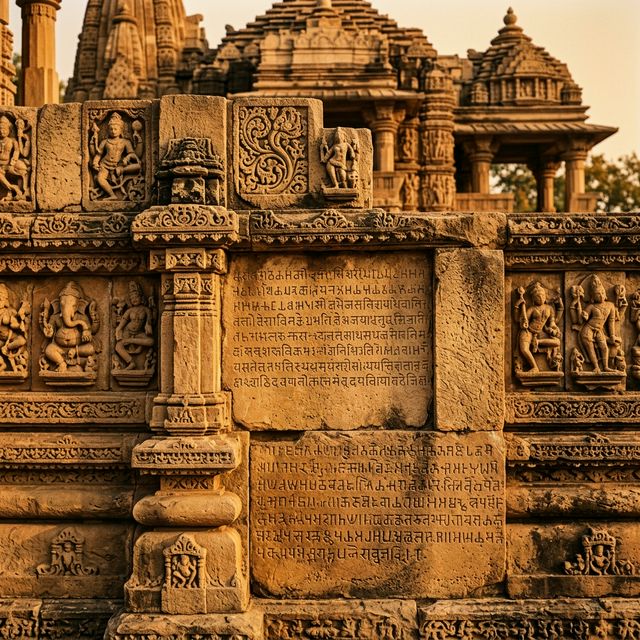
This inscription, engraved on a stone originally identified near a Jaina temple in Bamani, Sangli district, Maharashtra, records donations by the Śilāhāra king Vijayāditya. Written in Sanskrit with concluding portions in Old Kannada language, the record is engraved in the Old Kannada script. It was first documented by Major Graham and later edited by Dr. Kielhorn. The record dates to Śaka 1073 (1150 CE).
The record begins with an invocation to Jaina doctrine before tracing the direct lineage of the ruler Śilāhāra Vijayāditya from Jatiga. While stationed at the military camp of Vaḷavāḍa, Vijayāditya granted a field, a flower garden, and a house in Maḍalūra village to a Pārśvanātha basadi. This temple was constructed by Codorekāma gāvuṇḍa, and the grant was facilitated at the request of the king's maternal uncle, sāmanta Lakṣmaṇa. The grant was officially made to ascetic Arhanandi Siddhāntadeva of the Mūla Saṅgha and Kundakunda lineage after washing his feet. The donation, intended for temple repairs and the sustenance of ascetics, was formally engraved by the Govyoja, son of goldsmith Bammayoja.
1. svasti || jayatyamalanānārtthapratipattipradarśakam | arhatapurudeva-
2. sya śāsanaṃ mohaśāsanam || śrīśilāhāravaṃśe jatigo nāma kṣi-
3. tīśassañjātastatputrau goṅkalagūvalau | tatra goṅkalasya sūnu-
4. rmmārasiṃhadevastadapatyaṃ gaṇḍarādityadevastasya nandanaḥ | samadhiga-
5. tapañcamahāśabdamahāmaṇḍaleśvaraḥ | tagarapura-
6. varādhīśvaraḥ | śrīśilāhāravaṃśanarendraḥ | jīmūtavāhanā-
7. nvayaprasūtaḥ | suvarṇṇagaruḍadhvajaḥ | maruvakkasarppaḥ | ayyanasiṃ-
8. gaḥ | ripumaṇḍalikabhairavaḥ | vidviṣṭagajakaṇṭhīravaḥ | iḍuvarādityaḥ |
9. kaliyugavikramādityaḥ | rūpanārāyaṇaḥ | giridurggalaṅghanaḥ | śa-
10. nivārasiddhiḥ | śrīmahālakṣmīlabdhavaraprasāda ityādināmāvalivirājamāna-
11. śrīmadvijayādityadevaḥ | valavāḍasthiraśivire sukhasaṅkathāvi-
12. nodena vijayarājyaṃ kurvvan | śakavarṣeṣu trisaptatyuttarasaha-
13. srapramiteṣvatīteṣu aṅkatopi 1073 pravarttamānapramodasaṃvatsa-
14. re bhādrapadapaurṇṇamāsyāṃ śukravāre somagrahaṇaparvvanimittaṃ pa-
15. ṇaturage gollānugatamaḍalūragrāme saṇagamayyacandha….
16. vvayoḥ putreṇa | punnakabvāyāpatyā jantagāvuṇḍahemma-
17. gāvuṇḍayo pitrā codhorekāmagāvuṇḍena kāritāyāḥ
18. śrīpārśvanāthavasaterddevānamaṣṭavidhārccaṇa nimittaṃ | vasateḥ kha-
19. ṇḍasphuṭitajīrṇṇoddhārārtthaṃ | tatra sthitayatīnāmāhāra-
20. dānārtthaṃ ca tasminneva grāme kuṇḍideśadaṇḍena niva-
21. rttanacaturtthabhāgapramitaṃ kṣetraṃ | tenaiva daṇḍena triṃ-
22. śatstaṃbhapramāṇapuṣpavāṭī dvādaśahastapramāṇa-
23. gṛhaniveśanaṃ ca sa rājā nijamātulalakṣmaṇasāmantavijñā-
24. panena tasyaiva gotradānārtthaṃ śrīmūlasaṅghadeśīyaga-
25. ṇapustakagacchakṣullakapuraśrīrūpanārāyaṇacaityāla-
26. yasyācāryyaḥ || śrīmāghanandisiddhāntadevo viśvamahī-
27. stutaḥ | kulacandramuneḥ śiṣyaḥ kundakundānvayāṃ-
28. śumān || api ca | rodomaṇḍalamaṅga kiṃ svavapuuṣā
29. vyāpnoti śakradvipaḥ kiṃ kṣīrāṃbudhirāvṛṇoti bhuvanaṃ gaṅgāṃbu-
30. kiṃ veṣṭate | styānoyaṃ priyasusthiraḥ samarucatkiṃ sāndracandrāta –
31. po yatkīrttyetthamabhūdvitarkaṇamasau śrīmāghanandī jayet || ta-
32. nmunīndrasyāṃtevāsināmarhannandisiddhāntadevānāṃ pādau
33. prakṣālya dhārāpūrvvakaṃ sarvvanamasyaṃ sarvvabādhāparihāramācan–
34. drārkkatāraṃ saśāsanaṃ dattavān || svadattāṃ paradattāṃ vā yo hareta vasu-
35. ndharām | ṣaṣṭiṃ varṣasahasrāṇi viṣṭhāyāṃ jāyate kṛmiḥ || na viṣaṃ viṣami-
36. tyāhurddevasvaṃ viṣamucyate | viṣamekākinaṃ hanti devasvaṃ pu-
37. trapautrakam || api ca || savatsāṃ kapilāṃ śastryā hatvāsyā
38. māṃsaśoṇite | gaṅgāyāṃ sotti yo gṛhṇātyamūṃ dharmmorvvarāṃ
39. naraḥ || tatpātaka phalenāsau yāvaccandrādivākaram | tāvadghorataraṃ duḥkha-
40. maśnute narakāvanau || anyacca || mātussārddrakapālena sotti mā-
41. taṅgaveśmasu | śvamāṃsaṃ bhikṣayā labdhaṃ gayāyāṃ dharmabhūharaḥ ||
42. bhadramastu jinaśāsanāya || saṃpadyatāṃ pratividhānahetave | anya-
43. vādimadahastimastakasphāṭanāya ghaṭane paṭīyase || akkasāle baṃ-
44. mmyojanaputra | abhinandadevara guḍḍa govyojana khaḍaraṇe ||
Hail!
Verse 1
Victorious is the teaching of the Arhat Purudeva, which removes delusion and shows faultless understanding of various things.
Line 2-26
In the illustrious Śilāhāra family there was born a king named Jatiga. His sons were Goṅkala and Guvala. Of them, Goṅkala had a son named Mārasiṃhadeva; his offspring was Gaṇḍarādityadeva. His son, the illustrious Vijayādityadeva—who is shining with the titles such as ‘the mahāmaṇḍaleśvara,’ ‘he who has obtained the five mahāśabdas,’ ‘the lord of Tagara, the best of towns,’ ‘a king born in the illustrious Śilāhāra race,’ ‘a scion of the family of Jīmūtavāhana,’ ‘he who has the banner of the Golden Eagle,’ ‘a serpent to the hostile army,’ ‘a lion-like son of his father,’ ‘a veritable Bhairava to the hostile feudatories,’ ‘a lion to the elephants that are his foes,’ ‘the Sun of archers,’ ‘Vikramāditya of the Kali age,’ ‘Nārāyaṇa in respect of a handsome form,’ ‘he who has seized hill fortresses,’ ‘he who is successful even on Saturdays,’ ‘he who has obtained a boon by the favour of the Goddess Mahālakṣmī,’ while governing victoriously, diverting his mind by peasant conversation at the permanent camp of Valavāḍa—has donated together with a royal charter—when the Śaka years one thousand and seventy-three, in figures 1073, have expired and the cyclic year Pramoda is current, on the holy occasion of a lunar eclipse of Friday, the full-moon tithi of Bhādrapada—a field measuring one fourth of a nivartana by the rod of the Kuṇḍi-deśa, a flower-garden measuring thirty stambhas by the same rod, and a house measuring twelve cubits in the village mentioned below as gifts free from all taxes, free from all molestations and to be enjoyed as long as the moon, the sun and the stars endure, after washing the feet of Arhanandi-siddhāntadeva, the disciple of the great sage—
Verse 2
The holy Māghanandi-siddhāntadeva, who is praised by the whole world, who is a disciple of the sage Kulacandra and is the Sun to the Kundakunda clan and who is the preceptor of the Caitya temple of the holy Rūpanārāyaṇa at Kṣullakapura belonging to the Pustaka Gaccha of the Mūlasaṅgha and Deśīyagaṇa. And again,
Verse 3
May that Māghanandin be victorious! While the world is enveloped by his glory, such conjectures as the following are made—Is the elephant of Indra pervading the expanse of heaven and earth by his body? Is the milk-ocean covering the whole world? Is the water of the Gaṅgā surrounding it on all sides? Is the thick, pleasant and lasting moon-light shining?
Line 31-34
The King has made the aforementioned gifts by pouring out water at the request of his (i.e. the king’s) maternal uncle Lakṣmaṇa Sāmanta and as gifts of his family for the eightfold worship of the gods at the temple of the holy Pārśvanātha constructed at the village of Maḍalūra comprised in Paṇaturagegolla by Codhorekāma-gāvuṇḍa, son of Saṇagamayya and Caṃdha ….vvā, husband of Punnakabbā, and father of Janta-gāvuṇḍa and Hemma-gāvuṇḍa, for repairs of what may be broken or dilapidated and for providing food to the ascetics living there.
(Here follow five benedictory and imprecatory verses.)
Line 42-43
May it be well with the teaching of the Jina! —the teaching which takes counter measures, which is skillful in tearing open the temples of the intoxicated elephants that are other opposing disputants, and in synthesizing its own doctrine.
Line 43
This was engraved by Govyoja, the son of the goldsmith Bammayoja and lay-disciple of Abhinandadeva.
| Dynasty: | Śilāhāra |
| Ruler: | Vijayāditya |
| Date: | 8th September 1150 CE (Cyclic year Pramodā, Friday, Bhādrapada pūrṇimā Śaka 1073) |
| Place: | Basavanna temple, Shedbal (Belagavi) |
| Donee: | Assemblies of merchant guilds; Jaina basadi & local temple |
| Language: | Sanskrit and Kannada |
| Deities: | Pārśvanātha |
| Nature of grant: | Religious endowment |
| Purpose: | To earmark revenues for Jaina basadi and local temple |
| Provenance of inscription: | Shedbal, Belagavi, Karnataka |
| Type of Inscription: | Stone inscription |
| Source: |
